Boston Dynamics Veterans Launch Dynamic Creatures
Dynamic Creatures emerged from stealth as Boston Dynamics' official entertainment and hospitality partner, building mobile character robots for hotels, theme parks, and museums, backed by founder Marc Raibert and led by two Boston Dynamics veterans.


The two executives who spent years building Boston Dynamics' most advanced legged robots for warehouses, disaster response, and defense-adjacent research have chosen to spend their next act making a robot in a purple poodle costume greet hotel guests. Dynamic Creatures, a Boston, Massachusetts-based robotics startup founded by former Boston Dynamics chief strategy officer Marc Theermann and former Robotics and AI Institute technical leader Farbod Farshidian, emerged from stealth Tuesday as an officially designated entertainment and hospitality partner of Boston Dynamics, building mobile, interactive character robots for theme parks, hotels, casinos, museums, and cruise ships. The company's backers include Eniac Ventures, Kindred Ventures, Heliad, Sunshine Lake, and BlueGrass Ventures, along with a pair of angel investors who give the launch an unusual degree of insider credibility: Boston Dynamics founder Marc Raibert and robotics investor Lukas Ziegler.
That founder-and-funder lineup resolves what would otherwise look like a strange pivot. Theermann and Farshidian are not leaving advanced robotics behind for a softer, lower-stakes business; they are betting that the mobility, perception, and control technology built for warehouse and defense applications is now mature enough to be repurposed for a commercial category that has never had access to genuinely capable, autonomous mobile robots before: live, guest-facing entertainment. Raibert's willingness to personally back that bet, as the person who spent decades building Boston Dynamics into the industry's most technically respected legged-robotics company, is a stronger signal about the underlying technology's readiness than almost any other endorsement Dynamic Creatures could have secured.
Why Hospitality Robotics Has Been Stuck in Animatronics
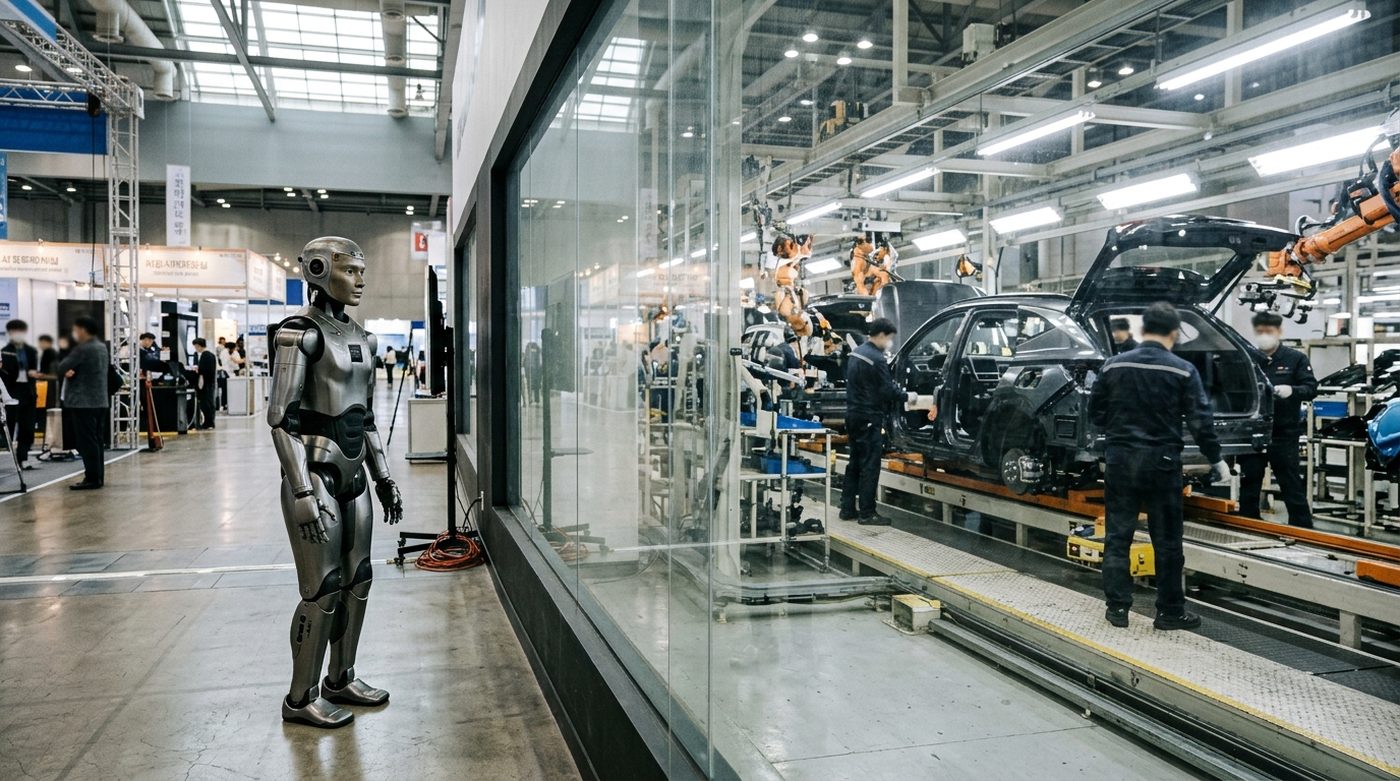
Theme parks and hospitality venues have deployed robotic characters for decades, but almost entirely as fixed or rail-guided animatronics, elaborate but immobile figures that perform pre-programmed sequences from a single location, unable to move through a crowd, respond to an individual guest's actions, or move between different areas of a venue during a single shift. That category has a mature, well-understood cost structure and reliability profile precisely because it does not attempt genuine autonomous mobility among the public. Dynamic Creatures is targeting the harder, previously unsolved version of the same commercial need: a character that can walk through a hotel lobby, respond in real time to how a guest approaches it, and adapt its behavior to unscripted situations, using the same categories of perception and locomotion technology that took Boston Dynamics more than a decade of iteration to make reliable enough for industrial and defense customers.
The company's operating system, which it calls SnowJay, is described as integrating AI, robotics, perception, and behavioral programming into what Dynamic Creatures characterizes as characters that "move naturally through guest environments, understand the context of an interaction and respond in real time." That framing matters commercially because it draws a sharp line against the animatronics incumbents: a fixed animatronic figure's cost is almost entirely upfront capital and a maintenance contract, while a mobile, context-aware character robot introduces an ongoing software and behavioral-tuning cost that has no real precedent in themed entertainment procurement. Venue operators evaluating Dynamic Creatures against a traditional animatronics vendor will need a materially different total-cost-of-ownership model, one that accounts for software updates, behavioral retraining, and a service response time closer to what an industrial robot deployment requires than what an animatronics maintenance contract has historically assumed.
Two Product Paths, Two Different Sales Cycles
Dynamic Creatures is offering both platform-based characters, built on existing Boston Dynamics hardware such as Spot, and fully custom robots designed around a specific brand, environment, or story. That split creates two distinct sales motions with very different economics. A platform-based character built on Spot, a quadruped already in commercial production with an established supply chain and service network, can plausibly reach a venue faster and at lower unit cost, trading a Boston Dynamics dog-shaped chassis for character costuming and behavioral software layered on top. A fully custom robot, purpose-built to match a specific intellectual property or brand character, requires the kind of bespoke mechanical design, tooling, and testing that any custom hardware program demands, with a correspondingly longer development timeline and higher upfront cost that only a well-capitalized venue operator or major entertainment brand is likely to commission at this stage.
For a venue operator evaluating Dynamic Creatures today, the platform-based route is the more realistic near-term option, and the more useful test of whether the underlying mobility and interaction technology performs reliably in front of real, unpredictable guests over an extended run rather than a controlled demo. The custom-robot business, more ambitious and more lucrative per unit if it succeeds, is also the harder one to validate before a venue has already committed capital, since each custom character is effectively a first-of-its-kind hardware program with the schedule and reliability risk that implies.
The Market Dynamic Creatures Is Actually Selling Into
Hospitality and entertainment venues have distinct commercial incentives from the industrial and logistics customers that have driven most of the capital into legged and mobile robotics over the past five years. A warehouse operator buys a mobile robot to reduce labor cost or increase throughput, and can measure the return on that purchase in units picked per hour. A hotel, casino, or theme park buying a character robot is purchasing a guest-experience differentiator and, implicitly, a marketing asset: a novel, photogenic robot character generates social-media attention and repeat-visit incentive in a way a warehouse robot never will, which means the return on investment calculation for Dynamic Creatures' customers looks more like a marketing and guest-satisfaction spend than an operational-efficiency one. That distinction should shape how Dynamic Creatures prices and sells the product: a venue operator evaluating a six or seven-figure character-robot program will want evidence of guest engagement, dwell time, and repeat-visit lift, not the uptime and cycle-time metrics that dominate industrial robotics sales conversations.
A Category Without an Incumbent to Beat
Dynamic Creatures is not entering a market with an entrenched, technically comparable competitor already serving hospitality and entertainment venues with genuinely mobile, autonomous character robots at scale. Service robots have made inroads into hospitality, delivery robots ferrying room service and reception robots handling check-in among them, but those deployments are built for functional efficiency rather than character-driven guest engagement, and they generally rely on far simpler mobility platforms operating on wheels across flat, predictable indoor floor plans. The legged-robot mobility Dynamic Creatures inherits from Boston Dynamics' platforms opens venue types those wheeled service robots cannot easily reach, from uneven outdoor theme-park terrain to multi-level museum galleries, which is a genuine differentiation rather than a marketing claim, though it also means Dynamic Creatures carries a higher per-unit hardware cost than a wheeled delivery robot competitor would.
That absence of a direct incumbent cuts both ways commercially. It gives Dynamic Creatures room to define the category and its pricing on its own terms rather than competing on cost against an established player, but it also means the company cannot point to a comparable competitor's deployment history to reassure a cautious venue operator that guest-facing mobile robotics has already been proven safe and reliable somewhere else first. Every early customer Dynamic Creatures signs will, in effect, be underwriting the category's first real-world reliability test, a role most large hospitality and entertainment brands are typically reluctant to accept without either a steep discount or unusually strong contractual protections against reputational and safety risk.
The Reliability Bar Guests Will Not Forgive
The single biggest commercial risk facing Dynamic Creatures is also the most obvious one: a character robot that malfunctions, freezes, or behaves unpredictably in front of paying guests does immediate, visible brand damage in a way an industrial robot's downtime never does on a factory floor. A warehouse robot that stops working delays a shipment; a hotel-lobby character robot that stops working, or worse, behaves erratically near a child, becomes a viral video and a reputational liability for both Dynamic Creatures and the venue that deployed it. That asymmetry means the company's actual product is not just the robot but the safety and behavioral-reliability engineering wrapped around it, and any venue considering a deployment should demand a detailed account of how Dynamic Creatures handles edge cases, unexpected guest interactions, and graceful failure modes, well before signing a contract that puts a mobile, semi-autonomous machine in a crowd of paying customers.
Dynamic Creatures has the pedigree, the capital, and the founder-level endorsement to make a credible run at a category that has been technically out of reach for the hospitality and entertainment industry until now. Whether that translates into paying venue contracts depends on evidence the company has not yet published: a named pilot location, a measurable guest-engagement result, and, most critically, a public track record of operating safely and reliably in front of the unpredictable public the animatronics industry has spent decades learning to design around rather than genuinely interact with. The company that solves guest-facing mobile robotics reliably will not just have built a better mascot. It will have proven mobile robotics is ready for the one environment every other robotics category has been able to avoid: a crowd of people who did not sign a safety waiver before walking up to say hello.
Hero image credit: Dynamic Creatures, Inc. (via The Robot Report).
This analysis draws on Dynamic Creatures' own public launch disclosures alongside independent trade-press coverage of the company's founding team and funding. It is for general information purposes only and does not constitute investment, financial, or legal advice.