Agility Robotics' Nasdaq Merger Vote Set for November 2
The SEC declared Agility Robotics and Churchill Capital Corp XI's S-4 registration statement effective, setting a November 2, 2026 shareholder vote on the US$2.5 billion SPAC merger that would list Agility on Nasdaq as AGLT.

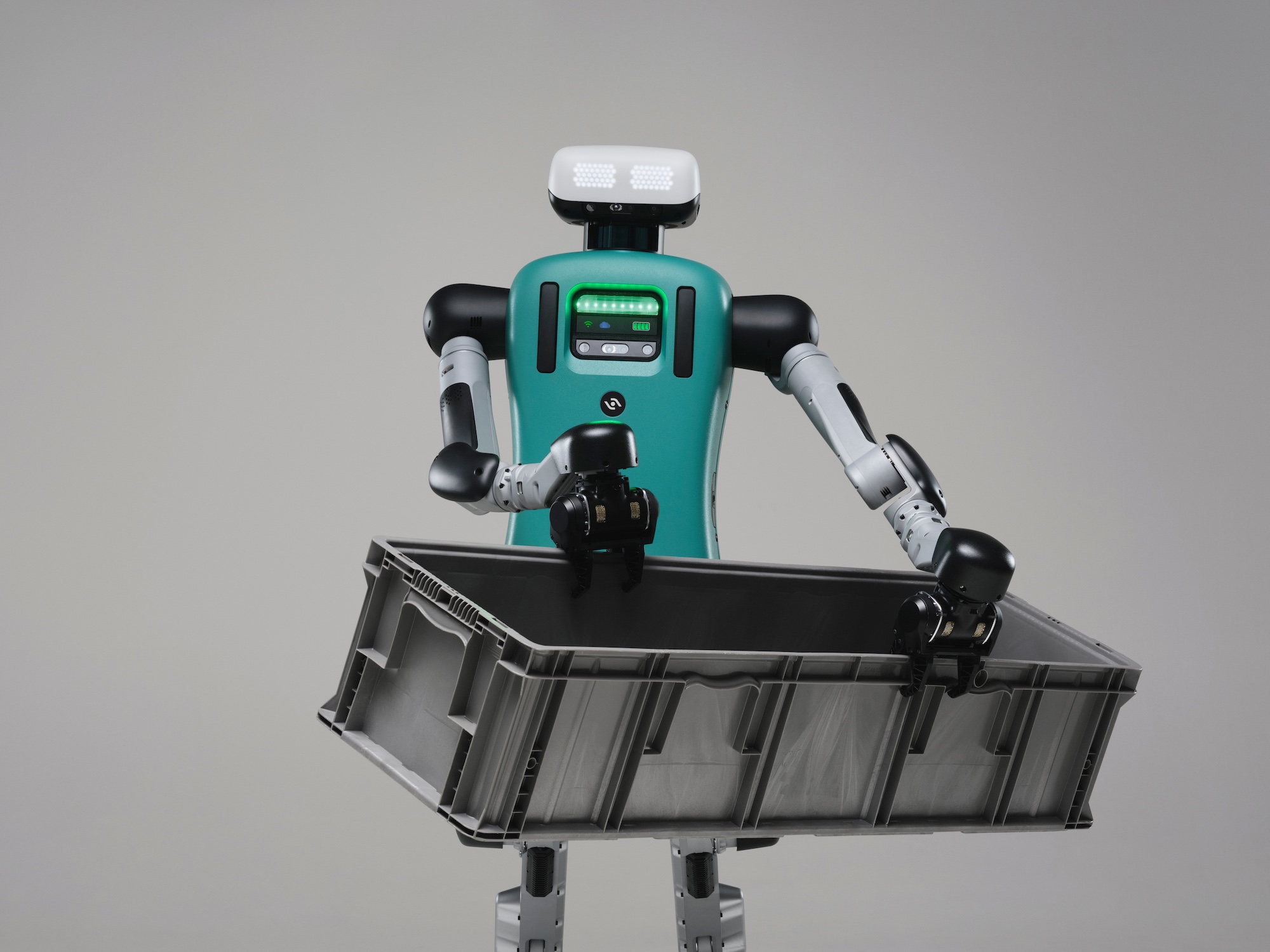
Churchill Capital Corp XI shareholders will vote on November 2, 2026, on the merger that would take Agility Robotics public, after the U.S. Securities and Exchange Commission (SEC) declared the companies' joint Form S-4 registration statement effective on October 13, 2026. The vote clears the way for a deal worth US$2.5 billion, first agreed in June 2026, that would list the Corvallis, Oregon-based maker of the Digit humanoid robot on Nasdaq under the ticker "AGLT," with closing expected later in November 2026 pending shareholder approval and other customary closing conditions.
For a company most buyers know as a logistics automation vendor, not a public-markets story, the mechanics matter. Agility Robotics builds Digit, a bipedal humanoid designed to move totes, cases, and boxes in warehouse and manufacturing environments rather than perform general-purpose labor. Its route to the public markets runs through a special purpose acquisition company (SPAC), a cash shell already listed on Nasdaq that merges with a private operating business to bring it public without a traditional initial public offering (IPO). Churchill Capital Corp XI is that shell. The SEC's decision to declare the S-4 effective is a procedural gate, not a seal of approval: regulators confirmed the disclosure document meets their filing requirements so shareholders can vote on complete information, and the filing itself says plainly that the step is not an SEC endorsement of the investment. What the effectiveness ruling does is set the clock: Churchill XI's shareholder meeting is now locked for November 2, and a close shortly after is the company's stated expectation.
A SPAC listing turns a private vendor's balance sheet into public information
Procurement teams evaluating Digit for warehouse or logistics automation rarely think about capital structure until something goes wrong, a vendor runs short of cash mid-deployment, support slows, or a planned expansion stalls. The SPAC route matters here because it converts Agility from a privately held company, whose finances buyers had to take on faith, into a Nasdaq-listed entity with public financial disclosure obligations the moment the deal closes. That shift is itself a vendor-stability signal independent of the robot's performance specs: audited quarterly filings, a public share price, and SEC oversight create a visibility layer that private venture-backed robotics vendors do not offer.
The financing attached to the merger is the concrete evidence worth weighing. Agility expects more than US$620 million in gross proceeds from the transaction, split between roughly US$424 million held in Churchill XI's trust account, the pool of cash a SPAC raised in its own 2025 initial public offering and has held in trust awaiting a merger target, assuming no shareholders choose to redeem their shares for cash instead of rolling into the combined company, and approximately US$200 million from a private investment in public equity (PIPE), a parallel round in which the newly public company sells stock directly to institutional investors to supplement the SPAC's own trust funds. That PIPE is led by Foxconn, the Taiwanese electronics manufacturer and contract assembler that is itself an Agility strategic investor, lending a supply-chain signal to the capital raise: a manufacturing partner with direct interest in Agility scaling production is putting money behind the listing, not simply underwriting a financial transaction.
The trust account number is where SPAC risk actually lives
Here is the hard truth about SPAC mergers that enthusiasm about a Nasdaq debut tends to obscure: the US$424 million trust figure is explicitly qualified as holding "assuming no redemptions." SPAC shareholders have the right to redeem their shares for a pro-rata slice of the trust rather than hold stock in the merged company, and high redemption rates have gutted the cash position of numerous SPAC mergers after the headline deal size was announced. If a meaningful share of Churchill XI's shareholders redeem ahead of or at the November 2 vote, the US$424 million trust contribution shrinks, and the combined company closes with less cash than the top-line US$620 million figure implies, even though the Foxconn-led PIPE funding is structured separately and is not subject to the same redemption mechanic. This is the SPAC structure's central risk for anyone assessing Agility as a long-term vendor: the deal size announced in June 2026 and the proceeds confirmed this week are ceiling figures, not guaranteed floors, until the shareholder vote and redemption deadline actually pass.
Put plainly for a buyer without a finance background: going public through a SPAC is less like Agility selling shares to the public for the first time and more like Agility merging into a company that already has a pile of cash sitting in a bank account, with some number of that company's current shareholders able to pull their share of the cash out the door before the merger closes. The bigger that pile when the music stops, the more capital Agility actually gets to deploy. The vote on November 2 is when shareholders decide whether to approve the deal at all; the redemption decisions determine how much cash survives that approval.
The money is earmarked for scale, not runway
Agility has stated the transaction proceeds are intended to fulfill existing customer orders, expand commercial deployments, scale production of its newer Digit platform, and continue investment across its robotics, physical artificial intelligence (AI), software, safety, and manufacturing infrastructure. That stated use of funds, manufacturing scale-up and deployment expansion rather than bridging an operating shortfall, is the detail procurement teams should anchor on when judging what a successful close would mean for them directly. A vendor raising public capital to build more robots and support more customer sites reads differently than one raising capital to cover burn, and the disclosed use of proceeds points toward the former.
The listing has been building toward this moment for months. Agility named new public-company board members ahead of its planned Nasdaq debut in late September 2026, and its chief executive officer joined a Pentagon-linked robotics initiative in early October 2026, both signals of a company positioning itself for the governance and visibility expectations of a public listing well before the regulatory machinery caught up. The November 2 vote and the SEC's S-4 effectiveness are the first dates on the calendar that convert that positioning into an enforceable timeline.
What the vote resolves and what it does not
A successful November 2 vote would not, by itself, resolve every open question a buyer should ask about Agility as a long-term automation partner. It would confirm that Agility has cleared the regulatory and shareholder-approval hurdles standing between it and a Nasdaq listing, and it would fix, give or take redemptions, how much capital the company has to execute the plans in its own disclosures. It would not, on its own, demonstrate that the capital translates into faster delivery times, broader geographic support coverage, or lower total cost of ownership for a buyer signing a multi-year deployment contract. Those are operational outcomes that play out over the quarters following a close, not outcomes a shareholder vote can deliver directly.
What the vote does resolve is a binary that has hung over every conversation about Agility's balance sheet since the SPAC agreement was announced in June 2026: whether the company gets access to public capital markets at all, and roughly how much it brings through the door when it arrives. For a warehouse operator or logistics firm weighing a multi-year Digit contract against alternatives from privately held competitors, that is the first concrete checkpoint. The vendor-stability question a buyer should carry into any such negotiation is not whether Agility's humanoid robot can pick and place in a given facility; the current round of customer deployments with manufacturers and logistics operators has already made a working case for that. The open question is whether the company behind the robot will still be standing, well capitalized, and investing in support infrastructure three years into a service contract. A clean close with the trust account largely intact, plus the Foxconn PIPE funds, strengthens that case. A close dragged down by heavy redemptions weakens it, even if the merger itself still goes through.
A clear read on vendor stability ahead of the vote
The verdict for procurement teams evaluating Digit heading into November is straightforward: the SEC's S-4 effectiveness and the fixed November 2 vote date are genuine progress, removing regulatory uncertainty and setting a hard deadline where none existed before, but they are not yet evidence of final capitalization. The US$620 million gross proceeds figure, anchored by the Foxconn-led PIPE commitment that does not depend on shareholder redemption behavior, is the strongest piece of concrete financial backing disclosed to date, and it is reinforced by the stated intent to spend it on fulfilling orders and scaling manufacturing rather than covering losses. Buyers negotiating multi-year Digit contracts should treat the actual trust account balance confirmed at closing, not the June 2026 headline deal size, as the number that tells them how much runway Agility is carrying into its first years as a public company, and should revisit vendor financial diligence once that closing figure is public.
This account synthesizes Agility Robotics' own public disclosures and press statements regarding the proposed business combination, as of the stated publication date.
This article is provided for general information purposes only and does not constitute investment, procurement, legal, or engineering advice. Figures reflect the sources listed above as of the stated information cut-off and may change without notice.