AEVEX Lands Third US Drone Contract in Four Months
AEVEX Corp secured US$20.5 million in new one-way attack drone awards, its third such contract since May, even as the company faces active securities fraud litigation buyers should weigh separately from its product roadmap.


SOLANA BEACH, California, September 9, 2026. AEVEX Corp is booking new government drone contracts and defending against a securities fraud lawsuit in the same week, a split screen that procurement teams evaluating the company as a supplier should read carefully rather than pick one side of. The company announced Tuesday it secured US$20.5 million in new US government awards to deliver and further develop one-way attack drone systems, its third such award disclosed so far in 2026, a day after closing its acquisition of maritime autonomy specialist BlackSea Technologies.
AEVEX Corp, headquartered in Solana Beach, California and trading on the New York Stock Exchange under the ticker AVEX, builds uncrewed aircraft, AI-enabled mission software, and intelligence, surveillance, and reconnaissance systems for defense customers. The company went public in April 2026 and has reported nearly 100 percent year-over-year revenue growth for 2026, with more than 95 percent of its fiscal 2026 revenue already sitting in funded backlog, a figure that matters to buyers because it signals contracted, not merely projected, demand. Chief executive Roger Wells framed Tuesday's award as evidence of customer confidence, saying AEVEX customers continue to rely on the company's ability to design, build, and deliver autonomous capabilities with precision, reliability, and speed.
A Third Award in Four Months Tells the Real Story
The US$20.5 million figure is smaller than AEVEX's August award of US$41 million for the same one-way attack system category, and larger than a US$18.5 million award in May, giving buyers a rough sense of the deal size range this specific product line commands from government customers on a recurring basis. AEVEX did not name the specific government agency behind Tuesday's award or specify which of its drone models, marketed under names including Dagger, Disruptor, and Dominator, are covered, consistent with the company's pattern on prior one-way attack contract disclosures.
What the pattern across three awards in four months actually demonstrates is production cadence rather than any single contract's size. A company landing repeat orders in the same narrow product category from what appears to be the same customer base is showing that its systems are moving from initial evaluation into sustained, repeat procurement, which is a more meaningful signal for a potential buyer or investor than any individual award's dollar figure. AEVEX says it has delivered more than 5,000 one-way attack uncrewed aircraft over the past three years, a volume that puts the company among the more established suppliers in a category that has grown rapidly as militaries worldwide have watched loitering munitions prove decisive in recent conflicts.
The Manufacturing Bet Behind the Contract Wins
AEVEX's ability to keep winning repeat one-way attack awards rests on a manufacturing buildout the company has been assembling through acquisition rather than solely organic investment. Its purchase of select assets from RapidFlight, branded internally as building a drone factory of the future, added additive manufacturing capacity that lets the company print structural drone components rather than tool up traditional molds for every design iteration, shortening the time between a design change and a deliverable aircraft. For a one-way attack system, where operational feedback from the field often drives rapid design revisions, that manufacturing flexibility is a genuine competitive advantage over a supplier locked into slower, mold-based production.
The company has been expanding that physical footprint aggressively. AEVEX opened new facilities in Florida and Virginia on September 3, announced a strategic collaboration with autonomous manufacturing company Divergent on September 2, and closed the BlackSea Technologies acquisition on September 8, a deal the company describes as extending its reach into multi-domain autonomous systems beyond air, into maritime uncrewed vessels. Taken together, that is four material corporate moves inside a single week, a pace of activity that buyers should read as a company scaling aggressively to meet demand it believes is durable, while also carrying the integration risk that comes with absorbing multiple acquisitions and new facilities simultaneously.
Why One-Way Attack Systems Became a Recurring Budget Line
One-way attack drones, sometimes called loitering munitions or kamikaze drones in less formal usage, occupy a specific tactical niche between traditional guided missiles and larger reusable strike aircraft. They are cheaper per unit than a cruise missile, can loiter over a target area before committing to an attack rather than flying a fixed trajectory, and are consumed on use rather than recovered, which changes how militaries budget for them. Rather than a large one-time capital purchase followed by years of maintenance on a small fleet, one-way attack systems generate recurring consumption-driven demand, since every unit expended in training or combat needs to be replaced. That consumption model is the structural reason AEVEX can plausibly expect a fourth, fifth, and sixth award in this category over the coming year rather than treating Tuesday's contract as a one-off.
Recent conflicts have accelerated that demand curve globally, as militaries have watched relatively low-cost loitering munitions achieve results against far more expensive armored and naval targets, prompting a broad reassessment of how much budget should shift from exquisite, expensive platforms toward larger inventories of expendable systems. AEVEX's positioning, an established US manufacturer with more than 5,000 units already delivered and a recently expanded production footprint, puts it in a reasonable position to capture a share of that budget shift, competing against both larger defense primes entering the category and smaller specialized drone startups trying to scale production for the first time.
The Governance Question Buyers Should Not Skip
The part of this week's news that a purely product-focused reading would miss is that AEVEX is simultaneously the subject of active securities fraud litigation. Multiple law firms issued investor notices between September 7 and September 9 inviting AEVEX shareholders who have lost money to join proposed class action lawsuits against the company, with at least one notice citing an October 20 deadline to seek lead plaintiff status. The public notices do not specify the exact allegations driving the litigation, and AEVEX has not issued a detailed public response addressing the claims as of this writing.
For a government or commercial buyer, an active securities fraud investigation is not automatically disqualifying, but it is a governance signal that belongs in a formal vendor risk assessment rather than being ignored because the product roadmap looks strong. Litigation of this kind typically centers on disclosure practices around financial results or forward guidance rather than product performance, meaning it does not necessarily bear on whether AEVEX's drones work as advertised. It does, however, bear on management credibility and the possibility of financial or leadership disruption at a company a buyer may be depending on for multi-year sustainment and follow-on orders. Procurement teams should ask AEVEX directly what the litigation concerns before finalizing any contract that assumes years of continued supplier stability.
A useful diligence checklist for a defense integrator or allied government considering AEVEX as a new supplier would include the following: request the specific allegations underlying the securities litigation directly from AEVEX's investor relations team rather than relying on plaintiff-firm solicitation notices, which are written to attract class members and do not represent a neutral account of the underlying facts. Ask whether any named executives face personal liability exposure that could affect continuity of leadership during a multi-year program. And confirm whether the additive manufacturing capacity acquired through the RapidFlight and Divergent arrangements is fully qualified for the specific drone variant being purchased, since newly acquired production lines often need additional certification cycles before they can support the same quality and reliability standards as an established facility.
None of that diligence should be read as a reason to avoid AEVEX outright. Companies scaling as quickly as AEVEX has in 2026, with revenue growth near 100 percent and four major corporate moves in a single week, routinely generate exactly this mix of genuine commercial momentum and governance noise. The distinction that matters for a buyer is separating the two rather than letting either one alone drive the purchasing decision. A one-way attack system that performs reliably in the field is still a reliable system regardless of what a securities litigation discovery process eventually finds about the company's investor disclosures, and a strong disclosure record would not make a poorly performing drone acceptable either.
What the Numbers Say About Where This Goes Next
AEVEX carries a market capitalization of roughly US$966 million as of this week, a valuation that already prices in continued growth in its one-way attack and broader autonomous systems business. The company's near-100-percent revenue growth rate and its greater than 95 percent funded backlog ratio are both genuinely strong operating metrics that support a bullish read on demand. The open question the securities litigation raises is whether the market's confidence in those growth figures, and in management's characterization of them to investors, will hold up as the lawsuit progresses through discovery.
For a defense or commercial buyer evaluating AEVEX purely as a drone supplier, the practical verdict is that the company's product and manufacturing trajectory looks credible on its own terms, backed by three repeat government awards in a single product category within four months. The litigation is a separate track that a buyer's own diligence process, not this company's marketing materials, needs to resolve before committing to AEVEX as a long-term, sole-source or primary supplier for a mission-critical program.
Production Capacity Is the Metric to Track From Here
The single number worth tracking over the next two quarters is not AEVEX's stock price or the outcome of the securities litigation, but the company's stated production throughput at its expanded Florida, Virginia, and RapidFlight-derived additive manufacturing sites. AEVEX has been explicit that its competitive pitch rests on being able to convert field feedback into design changes and deliverable hardware faster than legacy defense manufacturers. If the company can demonstrate a measurable increase in units delivered per quarter following this month's facility expansions, that is concrete evidence the acquisition strategy is paying off operationally, independent of how the litigation resolves. If throughput does not move despite the added footprint, that is a signal the expansions were more about narrative than near-term capacity, a distinction buyers evaluating AEVEX as a scaling supplier should watch for in the company's next quarterly disclosures.
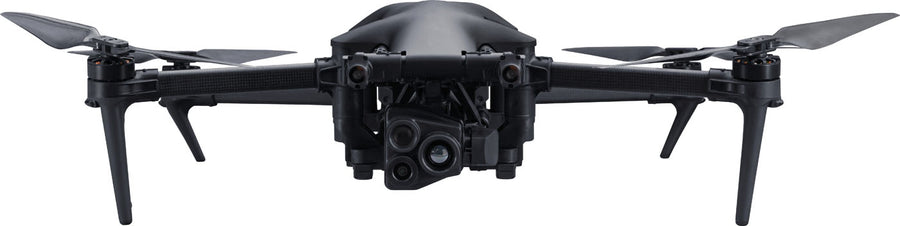
Hero image credit: AEVEX Corp.
This analysis draws on AEVEX Corp's public contract announcement, investor relations disclosures, and publicly filed investor notices regarding pending litigation. It is for general information purposes only and does not constitute investment, financial, or legal advice.