AeroVironment Backlog Hits US$1.5 Billion on Record Quarter
AeroVironment posted record US$480.5 million quarterly revenue and a 37 percent jump in funded backlog to US$1.5 billion, narrowing its net loss as its five-domain expansion strategy faces its first real financial test.


SIMI VALLEY, California, September 9, 2026. AeroVironment reported record first-quarter revenue of US$480.5 million for its fiscal 2027 and a funded backlog that grew 37 percent year over year to US$1.5 billion, the defense technology company said after markets closed Tuesday. The results, which beat Wall Street's revenue estimate of roughly US$459.9 million, land at a moment when AeroVironment has been one of the most active dealmakers in US defense technology, announcing new contracts and facility expansions on an almost weekly cadence through the second half of the summer.
AeroVironment, listed on the Nasdaq under the ticker AVAV, builds uncrewed aircraft, loitering munitions, ground robotic systems, and space and cyber capabilities for the US military and allied governments. The company has spent the past two years expanding from its original focus on small tactical drones into a broader portfolio spanning what it calls five operating domains: air, land, sea, space, and cyber. Tuesday's earnings report is the first full quantitative look at how that broader portfolio is performing financially, rather than the individual contract-by-contract announcements that have dominated AeroVironment's public disclosures in recent weeks.
The Backlog Number Matters More Than the Beat
A revenue beat against analyst expectations is a useful signal, but the more consequential figure in Tuesday's report for a buyer or partner evaluating AeroVironment as a long-term supplier is the funded backlog, which reached a record US$1.5 billion, up 37 percent from the same period last year. Funded backlog represents contracted work that customers have committed budget to, as distinct from a sales pipeline of opportunities still being pursued. A 37 percent increase in that figure over twelve months tells a buyer that AeroVironment's order intake has been running well ahead of its revenue recognition, which typically means either the company is intentionally building a cushion of future work or that production capacity has become the binding constraint on how fast it can convert orders into delivered, billable product.
Given the pace of contract announcements AeroVironment has made in recent weeks, including new international orders and expanded production ventures, the more likely explanation is the latter: demand for AeroVironment's systems has been outrunning the company's ability to manufacture and deliver them. For a customer placing a new order today, that backlog growth is worth asking about directly in terms of expected delivery timelines, since a company sitting on a year-plus of contracted but undelivered work may not be able to promise the fast turnaround that was realistic when its backlog was smaller.
The Loss Narrowed for a Specific, Traceable Reason
AeroVironment posted a net loss of US$5.1 million, or US$0.10 per diluted share, a sharp improvement from a net loss of US$67.4 million, or US$1.44 per diluted share, in the same quarter a year earlier. The company attributed the improvement to higher gross margins and reduced operating expenses rather than to one-time accounting items, which is the more reassuring version of a loss-narrowing story for a buyer evaluating supplier financial stability. A narrower loss driven by structural margin improvement tends to be durable quarter over quarter, whereas a narrower loss driven by a one-time gain or expense reversal typically reverses in the following period and should not be extrapolated forward.
Adjusted earnings per share came in at US$0.59, ahead of analyst expectations, using a non-GAAP measure that strips out acquisition-related and other one-time costs the company treats as not representative of ongoing operations. The gap between that adjusted figure and the GAAP net loss per share is a reminder that AeroVironment's aggressive acquisition and expansion strategy, including recent moves into ground robotics and space systems, is still generating real integration costs that show up in the unadjusted numbers even as the underlying operating business improves.
Guidance Sets a High Bar the Backlog Has to Clear
AeroVironment's guidance for the full fiscal year points to revenue of between US$2.125 billion and US$2.225 billion, adjusted EBITDA of US$305 million to US$325 million, and adjusted earnings per share of US$3.02 to US$3.34. Measured against the US$480.5 million reported for the first quarter alone, that full-year guidance implies the company expects revenue to accelerate meaningfully across the remaining three quarters rather than simply running at the current quarterly pace times four, a plan that is consistent with, and arguably requires, the backlog conversion the company is signaling with its 37 percent funded backlog growth.
For investors and larger institutional buyers such as allied defense ministries evaluating AeroVironment as a multi-year strategic supplier, the guidance range itself is less informative than how confidently the company hits the low versus the high end of it over the next three quarters. A company that consistently lands near the top of its own guidance range is signaling accurate internal forecasting and reliable execution, both of which matter more to a buyer planning a multi-year procurement relationship than the specific dollar figure in any single quarter's press release.
Five Domains Is a Diversification Story, Not Yet a Proven One
AeroVironment's expansion beyond small tactical drones into land, sea, space, and cyber systems has been the dominant narrative in the company's public communications over the past two years, and Tuesday's earnings report is the first quarter where investors can start to ask whether that diversification is showing up in the numbers rather than only in press releases. The company's earnings disclosure did not break out revenue by domain in a way that lets an outside observer isolate how much of the US$480.5 million came from legacy small unmanned aircraft systems versus the newer ground robotics, maritime, space, and cyber lines. That lack of segment-level disclosure is worth noting directly, because it means buyers and investors are currently being asked to trust the diversification narrative on the strength of the consolidated top-line number rather than being shown which new domains are actually generating meaningful revenue yet.
The distinction matters commercially because a single-domain company and a genuinely diversified five-domain company carry different risk profiles for a long-term buyer. A defense ministry building a multi-year relationship with AeroVironment on the assumption that it is now a diversified multi-domain prime, rather than primarily a drone company with adjacent side bets, should ask for domain-level revenue and backlog figures directly in procurement discussions rather than relying on the consolidated numbers in the quarterly press release. Until that breakdown is public, the safest assumption for a buyer is that legacy air-domain products, the drones and loitering munitions AeroVironment has built its reputation on, still represent the large majority of both revenue and backlog, with the newer domains still in an earlier, less financially material stage.
Comparing the Quarter to the Rest of the US Drone Sector
AeroVironment's results land against a broader pattern across the US uncrewed systems sector this earning season, where several competitors have also reported strong year-over-year revenue growth alongside continued net losses or thin margins, reflecting an industry still investing heavily in production capacity ahead of confirmed long-term demand. That context matters for interpreting AeroVironment's own numbers: a US$5.1 million net loss alongside 37 percent backlog growth is a relatively strong position within that competitive set, not an outlier either direction. The company is neither burning cash at a rate that should alarm buyers about its near-term viability, nor is it yet demonstrating the kind of sustained profitability that would let it fund expansion entirely from operating cash flow rather than continued reliance on debt or equity markets.
For a buyer comparing AeroVironment against smaller, less established competitors bidding for the same government contracts, the practical advantage AeroVironment can point to is exactly the combination Tuesday's report demonstrates: a large, growing, funded backlog that gives the company revenue visibility most earlier-stage drone companies cannot match, financed by a public company balance sheet with continued access to capital markets. That scale advantage is real, and it is the reason large institutional buyers often prefer an established, publicly traded supplier like AeroVironment over a better-priced but thinly capitalized startup, even when the startup's product specifications look competitive on paper.
What This Quarter Changes for Buyers Already in the Queue
The practical question for any organization with an existing AeroVironment order already in the backlog, or considering placing one, is whether Tuesday's results change the delivery-timeline conversation. A company converting a record backlog into revenue at a rate consistent with its own guidance is executing as planned, which is the outcome a buyer wants. A company whose backlog keeps growing faster than its revenue conversion, quarter after quarter, without a corresponding increase in disclosed manufacturing capacity, is a company where near-term delivery promises deserve more scrutiny than the headline financial beat alone would suggest.
Tuesday's report does not resolve that question definitively either way. The 37 percent backlog growth is impressive on its own, but AeroVironment did not use the earnings release to disclose a matching increase in production capacity or headcount that would explain how it plans to convert that backlog into revenue fast enough to hit its full-year guidance. Buyers with orders in the queue should ask AeroVironment directly for an updated delivery schedule against this new backlog figure rather than assuming the timeline quoted when the order was placed still holds, since backlog growing 37 percent faster than revenue is, almost by definition, a signal that something in the delivery pipeline is running behind the pace of new orders.
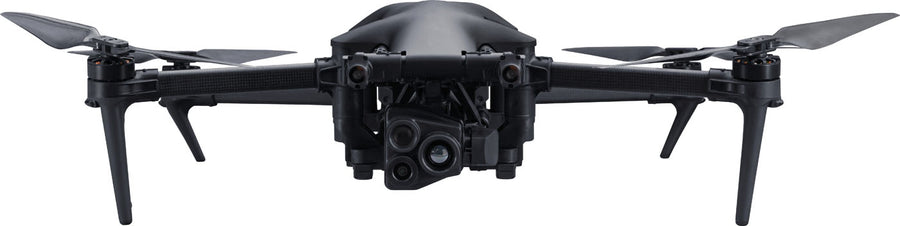
Hero image credit: AeroVironment, Inc.
This analysis draws on AeroVironment's public fiscal 2027 first-quarter earnings disclosures and investor guidance. It is for general information purposes only and does not constitute investment, financial, or legal advice.