The Most Important Robot xAI Shipped This Month Has No Body
xAI's Grok Bot, in early beta since August 11, is a software teammate on a persistent cloud computer with messaging, approvals, connectors, and learned routines. Read from a fleet operator's seat, it is the operating model physical robots will inherit: approval-gated autonomy, account-scoped state, and a lock-in that lives in learned routines rather than hardware. A column on why the control layer is being decided on laptops before the humanoids arrive.
The most important robot xAI shipped this month has no body
On August 11, xAI opened the beta of Grok Bot, a system of persistent AI teammates that work on a cloud computer, with messaging, approvals, connectors, and routines. The bots work on a persistent cloud machine with a browser, a filesystem, and a terminal, with each bot getting its own screen. You message one the way you would message a colleague. It goes away, works across your tools, and comes back when something needs your approval. Show it a multi-step process once and, where the feature is available, it can turn that demonstration into a reusable skill and eventually a routine.
If you run physical robots for a living, that description should stop you. Strip out the word "cloud" and it is a near-perfect description of what every fleet operator has been trying to buy for five years.
The word "bot" is doing real work here
Whether or not xAI intended the robotics analogy, the word "bot" is worth taking seriously. "Bot" has been quietly migrating from hardware to software for a decade, but Grok Bot pushes the idea further: a named, persistent agent with its own working environment, its own memory, and a supervisor who approves exceptions. That is the organizational shape of an autonomous mobile robot deployment. It is also, increasingly, the organizational shape of knowledge work.
The product's access tiers tell you who xAI thinks its first customers are: SuperGrok Heavy subscribers, plus Cursor Ultra and Cursor Teams Premium subscribers, with enterprise access rolling out separately. Cursor is the coding environment SpaceX agreed in June to acquire for US$60 billion, a deal that closed on August 14, completing what I argued was a vertical stack from rockets to compute to models to developer tooling. Grok Bot launched with access bundled into Cursor's top individual and team tiers, less than two months after the acquisition announcement.
The brain is being assembled before the body.
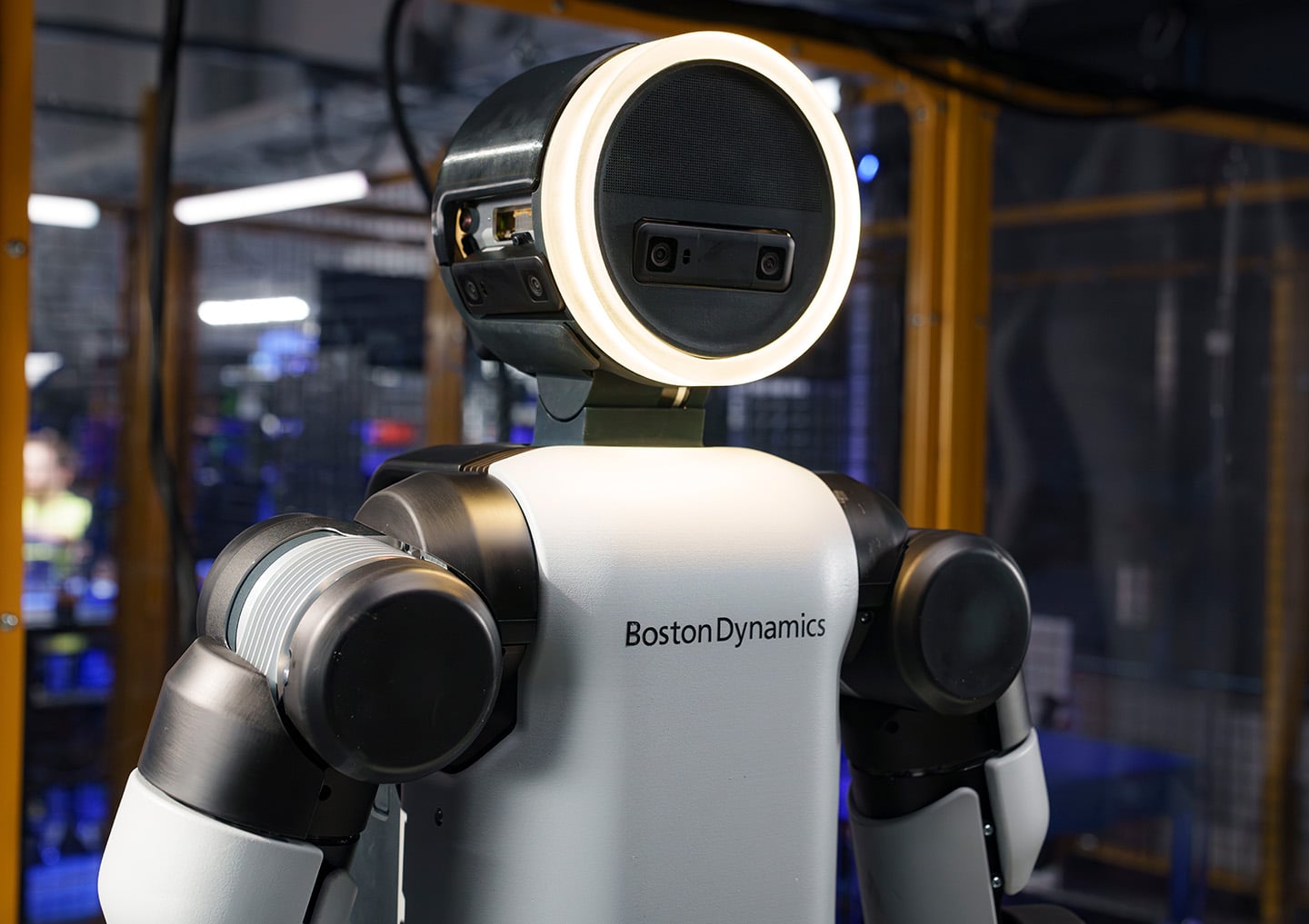
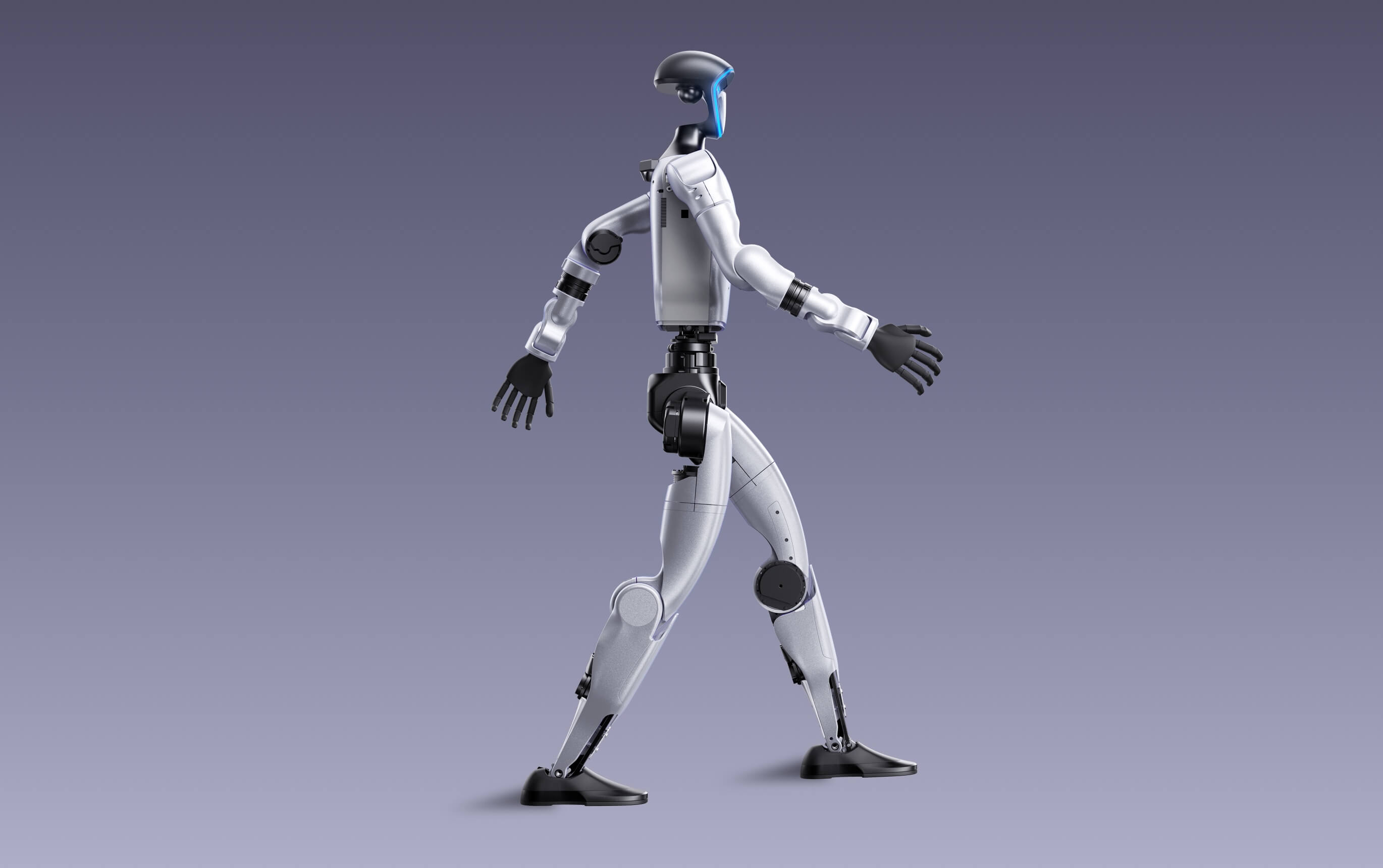
Optimus, when it arrives in volume, could become a new pair of hands attached to an operating model that will already have been tested at scale on desks.
Here is the contrarian claim: the robotics industry has spent the last two years arguing about humanoid form factors, actuator torque, and dexterous hands, while the layer that will actually determine who controls deployed fleets is being decided in software products that never touch a factory floor.
Approvals are the product, not the model
Read the announcement as a fleet operator and one feature matters more than any benchmark: the teammate comes back when something needs approval. Everything else it can handle autonomously within the permissions, skills, and routines it has been given.
That is exactly the governance primitive that mature robot operations converge on.
Warehouse fleets do not fail because a robot cannot drive an aisle. They fail at the exception boundary: the blocked path, the mis-scanned pallet, the firmware rollout nobody authorized, the human who needs to decide in thirty seconds whether a stalled unit should retry or hold. The operator's real question is never simply "can the machine act?" It is "which actions require a person, and how fast does the person get the decision?"
Grok Bot's answer is a messaging thread with approval gates.
Robot fleet software has been inching toward the same design through dashboards, alerting rules, and teleoperation queues, usually bolted together from three vendors. A software product that makes approval-gated autonomy the default interaction model is, whether xAI intends it or not, a reference design for how people will expect to supervise machines.
What I look for in any autonomy product now is the shape of that boundary. Who defines what needs approval? Can the operator tighten it? Is there a log a safety auditor could read? Can high-risk actions be forced through human review?
The safety standards the mobile robot world already lives by, such as ISO 3691-4 for driverless industrial trucks, formalize where autonomous operation must yield to defined safety conditions, controls, and human intervention. Software teammates are arriving without anything directly comparable, and the first serious buyers will help determine what those rules eventually look like.
The computer belongs to the account, and so does the lock-in
One architectural detail deserves more attention than it is getting.
The persistent computer is scoped to the account, not to the individual bot. Multiple bots share files, browser sessions, and app logins on one machine, while each gets its own screen. That is what makes handoffs between them cheap.
For productivity, this is elegant.
For procurement, it is the oldest story in enterprise software: the value accrues to the place where the state lives.
Context that compounds instead of resetting is the pitch, and it is a real benefit. But compounding context is also compounding switching cost. A fleet manager who lets a teammate learn a hundred routines across the warehouse management system, the maintenance ticketing tool, and vendor portals has built something valuable on infrastructure they do not own, with no obvious portability path documented today.
Robotics buyers know this pattern from hardware. The fleet controller that ties you to one vendor's robots is the reason integrators fight over interoperability standards. The same fight is coming for agent platforms, and it will be harder to see because the lock-in is in learned routines, accumulated context, permissions, and operating history rather than proprietary connectors alone.
The honest tradeoffs
Three caveats before anyone rewrites their automation roadmap.
First, this is a beta, and the evidence of what it can finish is still largely the vendor's own. The announcement's use cases come from xAI's internal operations: outbound sales, marketing campaigns, office operations, bug fixes, and related knowledge-work tasks. Those are valuable, and they are also favorable workloads for a software agent.
The claim that matters — that these systems can close the gap between ninety percent done and one hundred percent done — remains a vendor proposition until outside teams publish completion, intervention, rollback, and approval rates.
Those are the benchmarks I want to see.
Second, a persistent cloud environment capable of running routines around the clock introduces a cost structure beyond model tokens alone.
For reference, Grok 4.6's public API pricing starts at US$2 per million input tokens and US$6 per million output tokens below the higher-context pricing threshold. Requests exceeding 200,000 tokens move into a more expensive pricing tier. But model tokens are only one part of the economics of an always-on agent. Persistent compute, browser sessions, tool calls, connectors, storage, and long-running routines sit around that model usage.
Buyers should ask for the monthly bill of a teammate that is genuinely busy, not just the subscription tier price.
Third, the approval gate is only as good as the person holding it.
A supervisor who approves everything in a messaging thread has recreated rubber-stamp automation with better branding. Operations teams that already run robot fleets know this, which is why approval latency, intervention frequency, override rates, and failure recovery matter as much as raw autonomy.
Software teammates need the same discipline.
Nothing about putting an approval button in a chat window guarantees that discipline will exist.
Why this matters from where I sit
I run a robotics data platform, and this month we moved our own daily publishing workflow onto scheduled cloud agents with routines, human approval before anything goes live, and connectors into our own systems.
Not because it was fashionable.
Because the alternative — a person pasting a three-thousand-character prompt into a chat window every morning — does not survive contact with a real operating calendar.
That experience changed how I think about automation.
The unit of automation is no longer the task.
It is the teammate.
And the interface to that teammate is increasingly a conversation with a clear boundary around what it may decide alone.
Physical robots will inherit that interface.
Think about the progression happening in software now:
Task automation → persistent agent → learned operating routine → exception escalation → human supervisor.
Now compare it with where physical robotics is going:
Scripted behavior → autonomous robot → persistent fleet state → exception handling → human fleet supervisor.
Those are not identical technologies. But they are converging on the same operating model.
That is why companies building fleet software should be studying agent products at least as hard as they study actuators. The expectations of the people who will supervise their robots are being set right now, on laptops, one approval at a time.
The body is coming.
The operating model arrived on August 11.
Image: xAI. This column reflects the author's analysis of public product documentation and announcements available as of August 21, 2026.
Disclaimer: This article is for general information purposes only and does not constitute investment, legal, or procurement advice. Readers should verify details with primary sources before making business decisions.