Wujie Power Secures Over USD 200 Million in Angel Round to Advance Embodied AI General Brain
Wujie Power, a Chinese embodied AI startup founded in 2025 by veterans of Horizon Robotics and Li Auto, announced on June 26 that it has completed an angel round of over USD 200 million. The round was led by JD.com-affiliated funds, C Capital, Hony Capital, and Fengyuan Investment, with existing backers Sequoia China and Linear Capital following on. The company has already secured nearly USD 100 million in global orders within its first year, and its second-generation robot K15 has entered mass production. The raise signals growing institutional conviction that the intelligence layer, not the robot body, will capture the most value in the physical AI market.
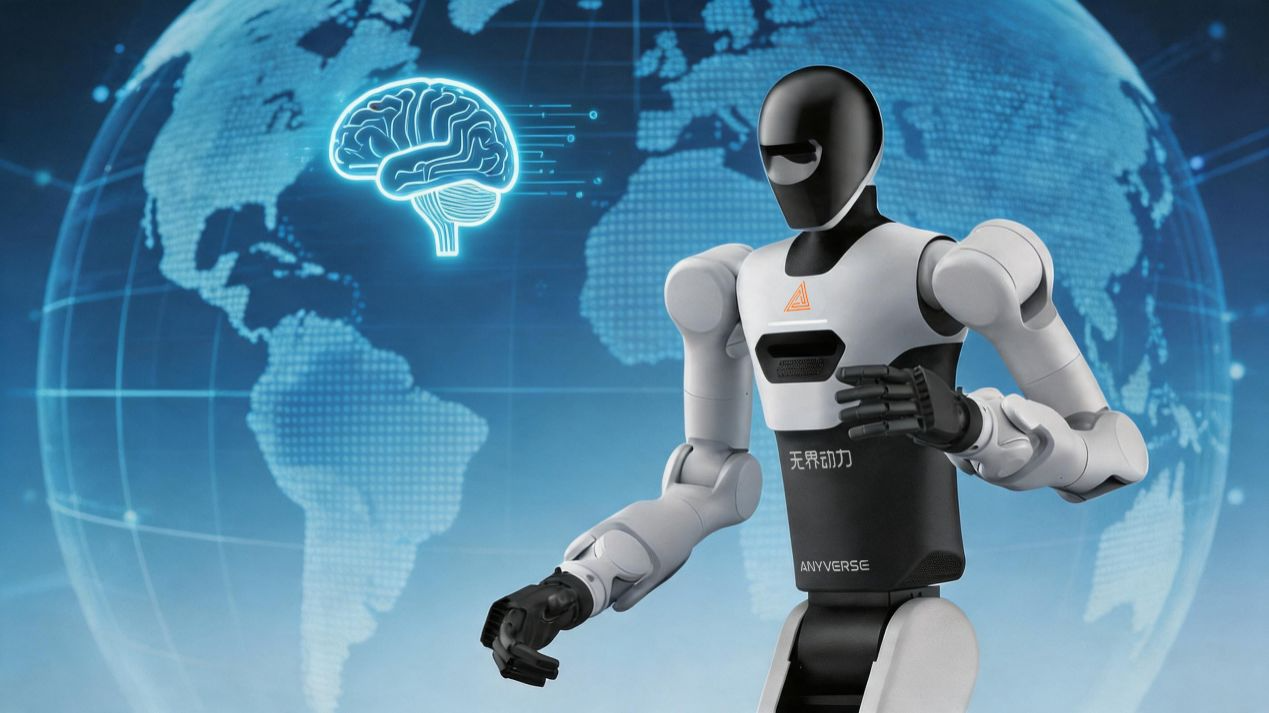
Most people outside China have not heard of Wujie Power. That is about to change.
The company was founded in 2025 by Zhang Yufeng, formerly the president of the intelligent driving division at Horizon Robotics, and Xia Zhongpu, a key architect of end-to-end autonomous driving models at Li Auto. Both founders came from the front lines of China's autonomous driving industry, where they had already navigated the full cycle from research breakthrough to large-scale commercial delivery. Zhang Yufeng led Horizon's intelligent driving business from zero to the top position in Chinese market share, and oversaw a 2.4 billion euro technology partnership with Volkswagen Group, one of the first times a Chinese AI company exported core autonomous driving technology to a global automaker at that scale.
Their thesis is straightforward: autonomous driving was the first large-scale deployment of physical AI in the real world, and the lessons from that industry, particularly around model generalization, real-world data loops, and hardware-software integration, apply directly to humanoid robots. Wujie Power was built to apply those lessons from day one.
What Wujie Power Actually Builds
The company does not lead with the robot body. Its core product is the Multi-modal Architecture ("MWA"), an embodied general brain built on a latent space world model combined with reinforcement learning. In plain terms, the MWA is designed to give robots the ability to understand physical cause and effect, to predict how objects will behave, and to adapt to new environments without requiring bespoke reprogramming for every new task or factory floor.
This technical approach places Wujie Power in a distinct camp within the embodied AI field. Where many competitors rely on vision-language-action models that require large volumes of demonstration data, Wujie Power's latent space architecture is designed to reduce data dependence by learning physical laws rather than memorizing specific actions. The company's co-CTO Xia Zhongpu led a team of fewer than 40 engineers to produce the first working demo in just six weeks, a pace that reflects the team's engineering discipline from their autonomous driving years.
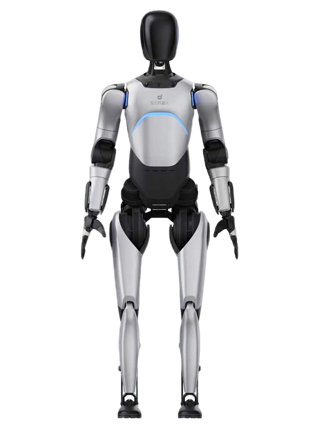
The second-generation robot body K15 has entered batch production and serves as the hardware platform for deploying the MWA in real customer environments.
From Lab to Factory Floor in Under a Year
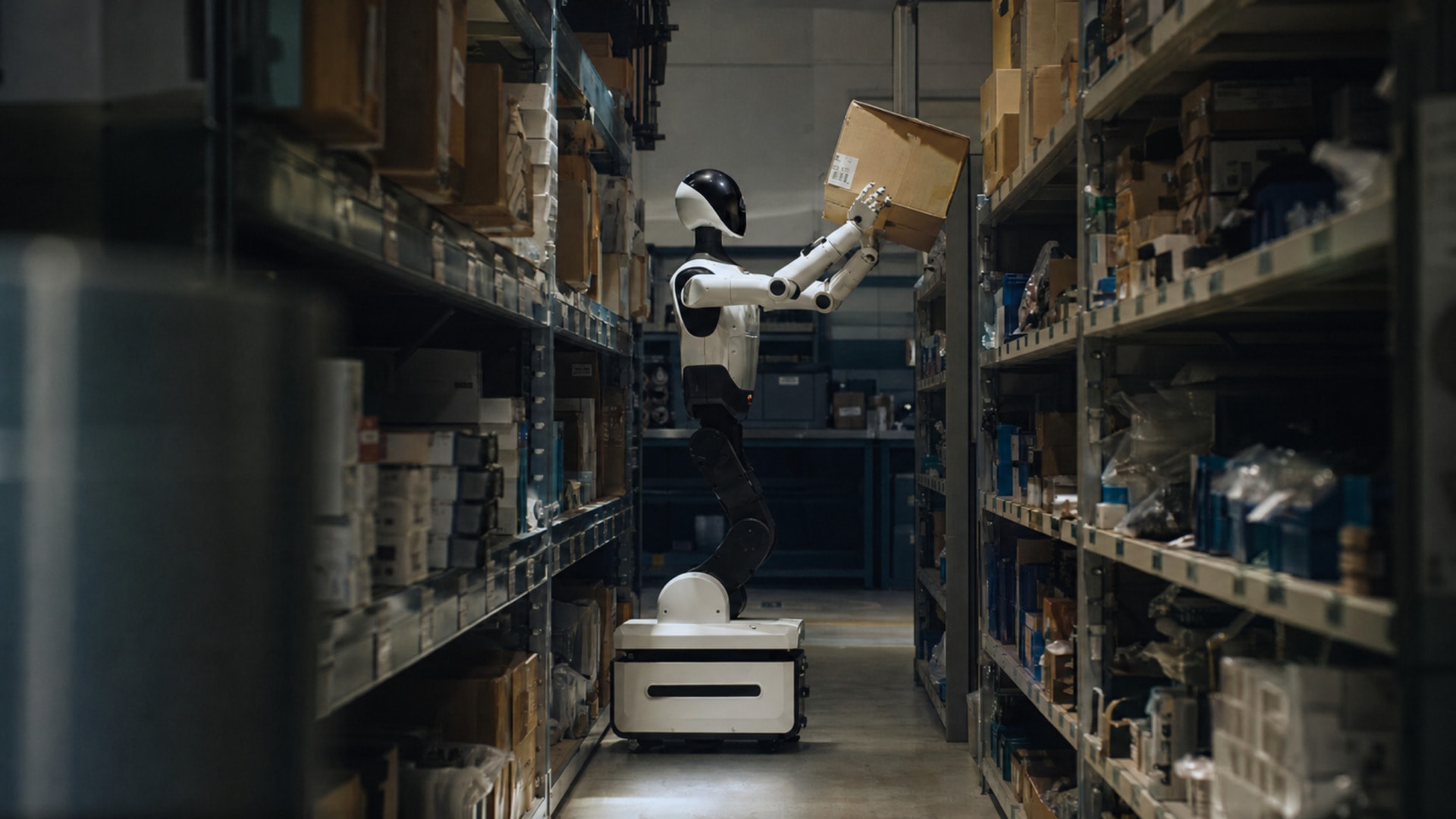
What makes the June 26 financing announcement notable is not just the size of the round. It is the commercial traction behind it. Within its first year of operation, Wujie Power has signed global orders worth nearly USD 100 million. Its customers include Envision Group, a global green energy technology company, where it signed an overseas order exceeding 500 million RMB to develop integrated smart energy and robotics solutions. It has also deployed robots with ZF LIFETEC and OMV Group, addressing complex flexible automation challenges in automotive component testing that the industry had struggled to solve for two years. In commercial services, it has begun working with international chain coffee brands to deploy robots in high-dynamic human-machine environments.
The angel round announced on June 26 was completed just one month after a previous large raise, bringing cumulative first-half 2026 financing to several hundred million dollars. A Pre-A round of nearly USD 200 million is also reported to be close to completion.
Wujie Power is not building a robot. It is building the cognitive infrastructure that makes all robots commercially viable across different hardware platforms and industries. The founding team's track record in autonomous driving gives it a credibility that most pure robotics startups cannot match, and its early commercial traction, nearly USD 100 million in orders within the first year, suggests the software-first thesis is already finding real-world validation. For international observers, Wujie Power is the kind of company that tends to be underestimated until it is not.
Primary Sources:
Wujie Power (无界动力) — Official Company Announcement via WeChat Official Account (June 26, 2026)
Disclaimer: All editorial content is independently written by RobotAIGeek based on publicly available Chinese and English-language sources. Quoted material is attributed to its original publisher and not independently verified by RobotAIGeek.