Weave Robotics Opens Pre-Orders for Isaac 1 Home Robot: The USD8,000 Bet on Household Automation
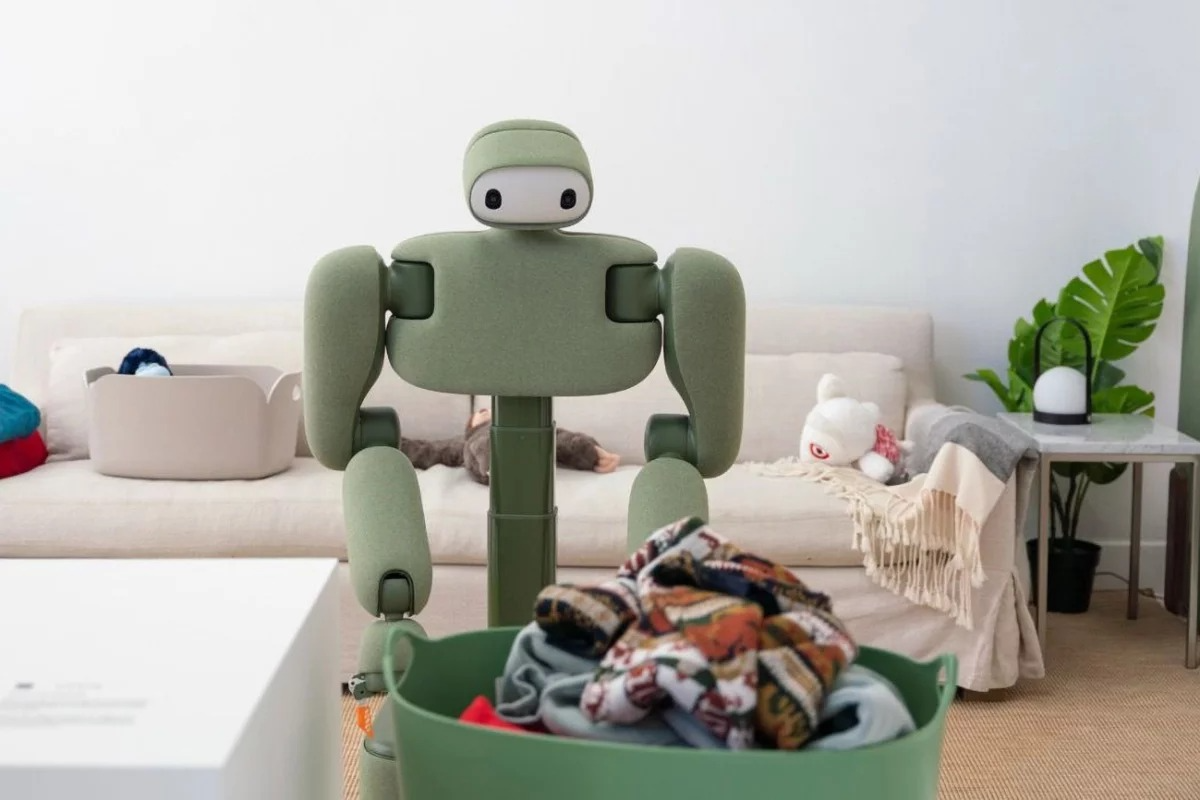
Weave Robotics, a San Francisco startup founded in 2024 by two former Apple engineers, has opened pre-orders for Isaac 1, a mobile home robot that folds laundry, makes beds, and tidies clutter. It costs USD8,000 upfront or USD449 per month, with a USD250 deposit and deliveries starting in California this fall. The company already ships its stationary Isaac 0 laundry robot to paying customers, which makes this one of the most credible tests yet of whether households will pay real money for chore automation.
What Did Weave Robotics Announce?
Weave Robotics opened pre-orders for Isaac 1 on July 1, 2026. The mobile home robot costs USD8,000 or USD449 per month, reserved with a USD250 deposit. Isaac 1 folds laundry, makes beds, and tidies rooms, with deliveries beginning fall 2026 in California before expanding to other US regions.
The Company Behind the Robot
Weave Robotics was founded in 2024 by Evan Wineland and Kaan Dogrusoz, friends and former roommates from Carnegie Mellon University who both built their careers at Apple. Wineland was a lead AI product manager on next generation Siri and Apple Intelligence. Dogrusoz managed machine learning robotics research and earlier shipped the Double Tap gesture on the Apple Watch. The two started prototyping in their living room, joined Y Combinator's Summer 2024 batch, and now run a team of about ten people in San Francisco. The company designs its own actuators, end effectors, and linkage systems, and assembles its robots in California.
The record that separates Weave from most humanoid startups is shipping. Its first product, Isaac 0, a stationary laundry folding robot priced at USD7,999, launched in February 2026 and has been delivered to homes and businesses across California nearly every week since. Weave reports more than 2,000 hours of field operation and over 1,000 pounds of laundry folded weekly across its deployed fleet. For buyers evaluating a pre-order, that history matters more than any demo video, because it shows the company can build, deliver, and support hardware in real homes.
The Capability: What Isaac 1 Actually Does
Isaac 1 moves through the home on a wheeled base and extends its height from three feet up to five feet nine inches, which lets it work at floor level, countertop height, and high shelves. Its task set covers collecting dirty clothes, folding and putting away laundry, making beds, straightening cushions, and clearing everyday clutter. Weave describes the goal as a daily reset, so the home is back in order after movie night, playtime, or the morning rush.
The design decisions show an understanding of what living with a robot means in practice. Detachable fabric panels give the machine a soft, furniture-like appearance. Physical shutters cover the head cameras so occupants can see at a glance when the robot is not recording. Each unit ships with a matching charging station and privacy screen so the robot has a designated place when idle.
One fact deserves plain statement: Isaac 1 is not fully autonomous. Weave says the robot will be teleoperated when needed to guarantee task completion, meaning a remote human operator takes control when the onboard AI gets stuck. That approach is honest about the state of robot manipulation in 2026, and it carries a privacy consequence. Camera feeds from inside the home reach remote operators during assisted sessions, so the strength of Weave's privacy controls deserves as much buyer attention as its folding performance.
Market Integration: What USD8,000 Buys Against the Alternatives
The price places Isaac 1 in the territory of a premium appliance package rather than a vehicle, and the USD449 monthly plan brings entry below the cost of many recurring cleaning services. The value question depends on the alternatives, and the home robot market now spans a wide price range.
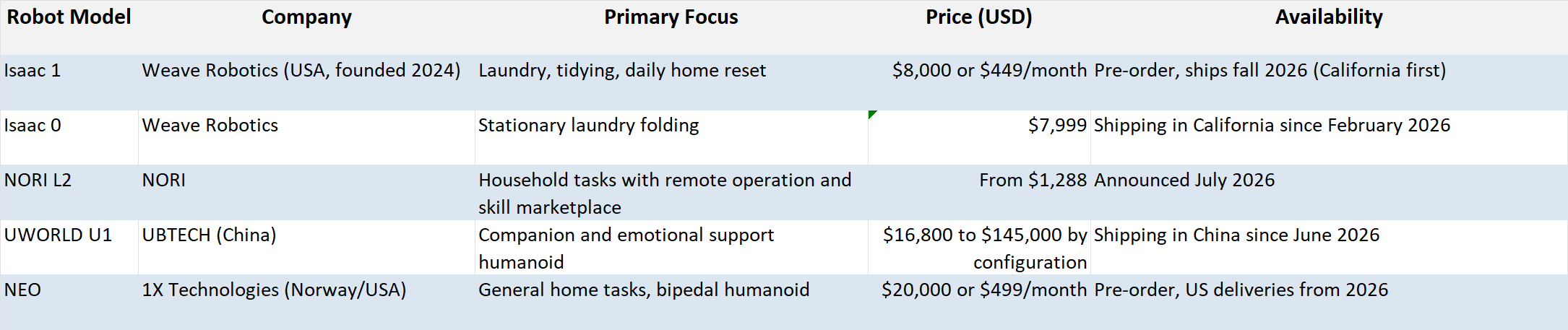
The comparison exposes each maker's strategy. NORI's L2 undercuts the field at 1,288 dollars but leans heavily on remote operators, effectively selling teleoperated labor in a robot shell. UBTECH's UWORLD U1 sells companionship rather than chores, with top configurations priced like a luxury car. The closest functional rival is the 1X NEO, a bipedal humanoid promising general home tasks at USD20,000, more than double Isaac 1's price, and it also depends on teleoperation for tasks beyond its autonomy. Weave chose wheels and a telescoping torso over legs, and that restraint is a feature: wheels are cheaper, quieter, more stable, and safer around children and pets, and nothing on Isaac's task list requires walking.
Home Robots Are Now a Purchase Decision
The chore robot category has crossed from promise into purchase decision, and this launch sets three markers. The price floor for a mobile, laundry-capable home robot now sits at USD8,000, with subscription pricing signaling that makers know most households will not pay five figures upfront. Teleoperation has become the industry's standard bridge to autonomy, since every serious home robot shipping in 2026, from Isaac 1 to the NEO, uses remote operators to cover autonomy gaps, which makes privacy policy a core comparison point alongside capability. And Weave's pace stands out: the company moved from a stationary single-task machine to a mobile multi-task robot in roughly five months, a consumer electronics cadence rather than a traditional robotics one.
A quotable way to put it: the home robot race in 2026 is not about which machine looks most human, it is about which company can ship, support, and iterate hardware in real homes at a price a household can justify.
The Next Bottleneck
Buyers and industry watchers should keep expectations grounded. Weave is a ten person startup taking deposits for hardware that has not shipped, in a category where manufacturing at scale has broken far larger companies. Early buyers are funding the production ramp, and the California-first rollout means most customers wait beyond the fall window. The teleoperation dependence also means the real cost of running Isaac 1 includes Weave's ongoing operations staff, which the monthly plan presumably prices in. In simple terms, a family buying Isaac 1 is hiring a robot with a human coach on call: most days the robot works alone, but when it fumbles a fitted sheet, a person steps in remotely, and the household is trusting that person as much as the machine.
Skeptics inside the industry will note, fairly, that a five month gap between Isaac 0 and Isaac 1 means the new robot's mobility and tidying skills have little field history, and that 2,000 fleet hours is thin evidence next to the tens of thousands of hours industrial robot fleets log before a capability is called proven. The counterpoint most coverage misses is that no competitor in the home segment has meaningfully more residential deployment data, so Weave's modest but real track record still leads the category. The gap between demo performance and deployment reality remains the deciding factor, and fall 2026 deliveries will show whether Weave's record extends from dozens of units to thousands.
Sources:
3. Weave Robotics official site and About page
4. Y Combinator company profile, Weave Robotics S24
Disclaimer: This article is for informational purposes only and does not constitute financial, investment, or legal advice. Market conditions and product specifications are subject to change.