WaiV Robotics Solves Drone Landings on Moving Ships From Stealth
UK startup WaiV Robotics emerged from stealth on July 6 with an autonomous recovery system that lets commercial drones land on moving vessels without anyone on deck, targeting offshore inspection, defence, and emergency response markets.
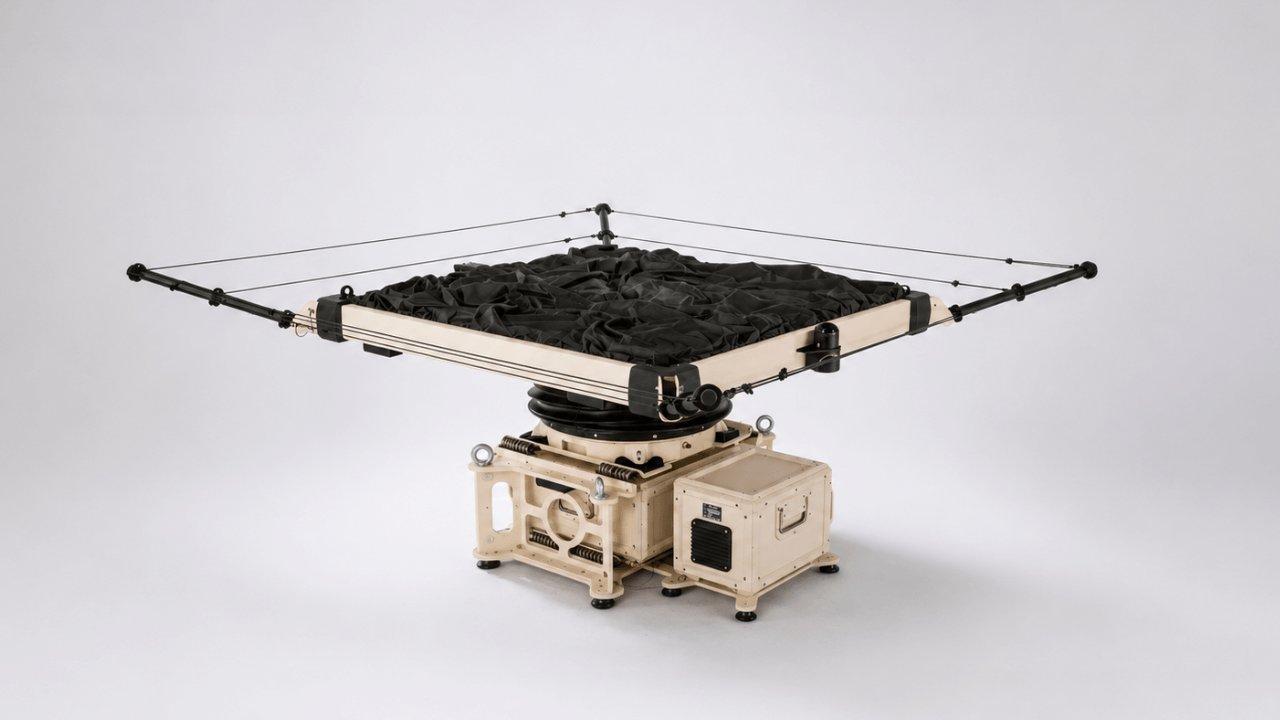
WaiV Robotics, a United Kingdom-based startup, emerged from stealth on July 6, 2026 with an autonomous recovery system that allows commercial drones to land safely on vessels that are constantly moving with the sea, without requiring a person on deck to assist. Founder and chief executive Johnny Carni said the technology is aimed at offshore inspection, defence, and emergency response operators, all of which currently lose significant operational time and accept meaningful risk trying to recover drones on moving ships using existing methods.
Why Is Landing a Drone at Sea So Difficult?
Commercial drones are generally engineered to land slowly and gently on stationary ground, using GPS as a stable position reference and visual markers on the ground that an onboard camera can track down to touchdown. Neither approach works reliably at sea, since a vessel pitches, rolls, and yaws continuously with the waves, while also drifting laterally and changing heading. By the time a drone has descended toward a marker it identified moments earlier, the vessel, and the marker along with it, has typically already moved, which is why most maritime drone operations today still require either a skilled human pilot performing a manual landing or a large, expensive, purpose-built recovery net or cradle system.
What Does WaiV Robotics's System Actually Do?
WaiV Robotics's autonomous recovery system combines three integrated subsystems that work together to let a drone hold a stable position relative to a moving vessel and then autonomously execute takeoff and landing in both day and night conditions. The company says the system is designed for straightforward integration with major existing drone platforms, including those from DJI, rather than requiring operators to buy an entirely new, proprietary drone fleet. As of its July 6 stealth exit, the system was undergoing environmental qualification testing, including salt spray, humidity, and vibration testing, to confirm it can withstand sustained harsh maritime conditions rather than only performing in calmer test scenarios.
Company Background: Who Is Behind WaiV Robotics?
WaiV Robotics is led by founder and chief executive Johnny Carni and has so far operated in stealth mode, meaning it has been developing its technology privately before this public unveiling rather than seeking early press coverage or public fundraising announcements. The company's initial commercial focus is Europe and the United States, with offshore energy infrastructure inspection and remote asset monitoring identified as its first target markets, and potential expansion into Asia under consideration as the technology matures.
Why This Matters Beyond One Startup's Product Launch
Offshore wind farms, oil and gas platforms, and undersea cable routes all require regular visual and sensor inspection, work that is expensive and sometimes dangerous when performed by helicopter or vessel-based human crews. Drones can already fly those inspection routes cheaply, but the recovery problem has kept most maritime drone programs limited to calm-weather trials or reliant on a human-in-the-loop landing procedure, which caps how far operators can scale drone-based inspection programs. A reliable, DJI-compatible autonomous recovery system, if it holds up through WaiV Robotics's ongoing environmental qualification testing, would remove one of the more stubborn bottlenecks preventing offshore inspection and defence programs from running drones at meaningfully larger scale.
How WaiV Robotics Fits Europe's Maritime Robotics Push
WaiV Robotics's emergence lands inside a broader European push to build homegrown maritime autonomy capability. The Netherlands' Ministry of Defense separately signed a multi-year, multi-million euro partnership with Dutch defense technology firm Intelic in early July 2026 to build a software-first, interoperable unmanned systems ecosystem for both aerial and ground drones, while France's Thales agreed the same week to acquire maritime robotics firm Exail Technologies in a 3.9 billion euro deal. Compared with those large, capital-intensive moves by established defense primes, WaiV Robotics represents the earlier-stage, narrower end of the same trend: a small team solving one specific, well-defined technical bottleneck, drone recovery on a moving vessel, rather than building a full autonomous systems platform from the outset. If the recovery system holds up through qualification testing, WaiV Robotics becomes a plausible acquisition or integration target for exactly the kind of larger primes now consolidating maritime autonomy capability across Europe.
The Industry Reality of Stealth Launches in Hardware Robotics
Software startups routinely launch loudly and iterate in public, but hardware robotics companies solving a genuinely hard physical engineering problem, like stabilizing a drone landing against a moving, unpredictable surface, often need years of quiet testing before a product is reliable enough to survive public scrutiny. WaiV Robotics's decision to stay in stealth until its recovery system had matured to the environmental qualification stage, rather than announcing an early prototype, is itself a signal about how difficult the underlying engineering problem actually is, and it should temper expectations for how quickly this specific system will be ready for unsupervised commercial deployment at sea.
The Simple Explanation
Landing a drone on a ship at sea is a bit like trying to land a small plane on a runway that is constantly tilting, sliding, and rotating beneath you. Human pilots manage it through skill and practice, but that does not scale to fleets of drones flying inspection routes all day. WaiV Robotics built a system that lets the drone track the moving deck itself, continuously adjusting in real time so it can set itself down safely without a person guiding it in.
What Independent Verification Would Look Like
Because WaiV Robotics's July 6 disclosure comes from a single interview-based report rather than an independently audited test result, buyers and investors should look for three concrete markers before treating the technology as commercially proven: published environmental qualification test results covering salt spray, humidity, and vibration tolerance; a named pilot customer with a defined offshore site and timeline; and third-party confirmation that the DJI compatibility claim holds across multiple drone models rather than a single reference platform. None of those markers were available as of July 6, 2026, which is why this item is being routed to the review queue as a same-day disclosure rather than a fully verified commercial milestone.
Strategic Implications for Offshore Operators
Offshore wind, oil and gas, and defence organizations currently relying on manual drone landing procedures or helicopter-based inspection should treat WaiV Robotics's stealth exit as an early signal worth tracking rather than an immediately deployable solution, since the system remains in environmental qualification testing as of July 6, 2026 with commercial pilots described only as planned for later in the summer. Procurement teams evaluating offshore drone programs over a 12 to 24 month horizon should request qualification test results and DJI compatibility specifics directly from WaiV Robotics before budgeting for a fleet-wide rollout, given that maritime environmental testing frequently uncovers issues that extend a hardware startup's timeline well past its initial public announcement.
Disclaimer
This article is based on publicly available sources cited above and is provided for informational purposes only. RobotAIGeek makes reasonable efforts to verify facts at the time of publication, but robotics pricing, specifications, funding terms, and deployment timelines can change. Readers should confirm details directly with the companies or sources named before making purchasing, investment, or deployment decisions.
Source Evidence
· Tech.eu, "How WaiV Robotics is solving one of maritime drones' biggest challenges," July 6, 2026, https://tech.eu/2026/07/06/how-waiv-robotics-is-solving-one-of-maritime-drones-biggest-challenges/