Ukraine's Brave1 Defense Cluster Launches Grant Competition for Armed Humanoid Combat Robots
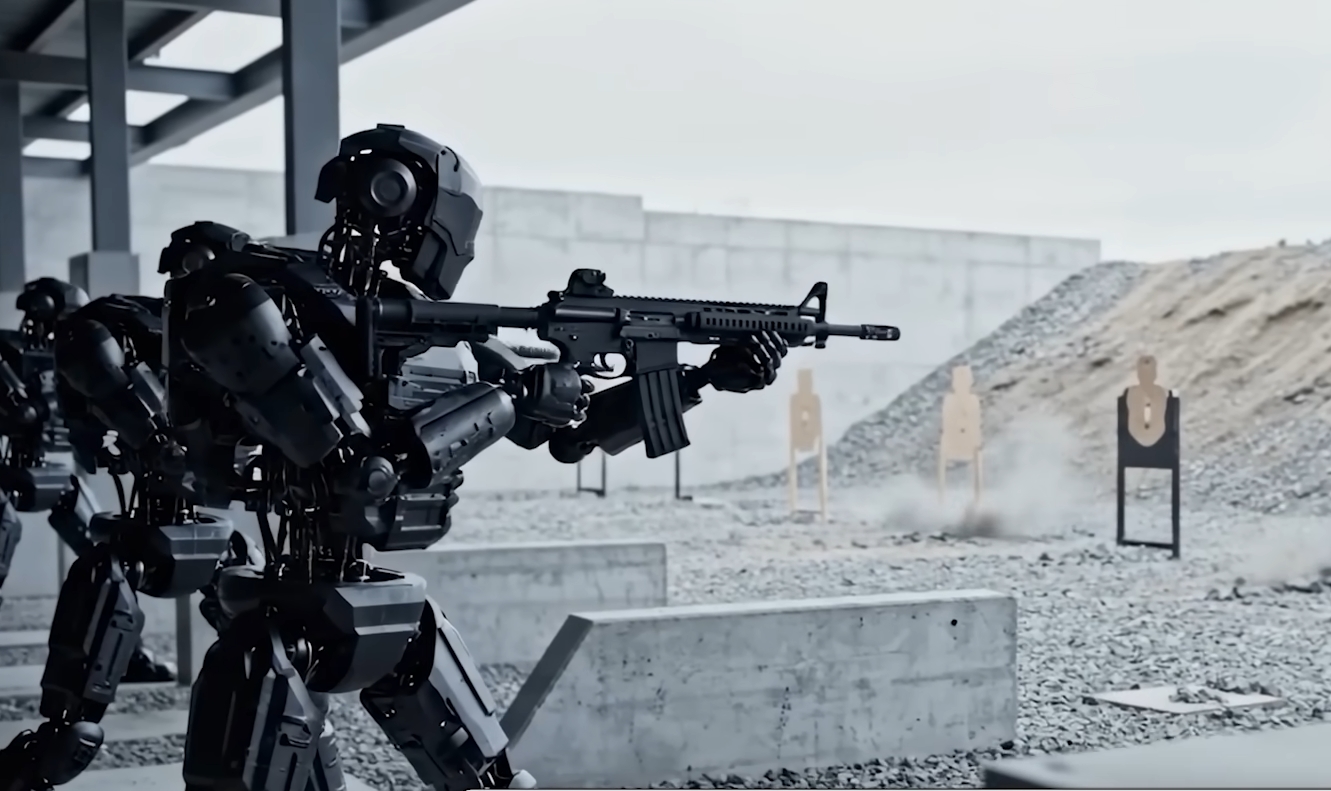
Ukraine's state defense technology cluster Brave1 has launched a grant competition to develop armed humanoid robots for frontline missions, announced by Brave1 CEO Andriy Hrytsenyuk at the Brave1 Advantage event in Kyiv. The goal is to robotize the first line of combat contact and reduce risks to Ukrainian soldiers. Developers will start with simple humanoid platforms and add more advanced capability over time. Unlike the United States and China, this program is aimed purely at defense scenarios. Ukraine has already tested Foundation's Phantom MK-1 humanoid soldier robots, so this competition formalizes a direction the country has been quietly exploring. For the robotics industry, it is an early signal that humanoids are entering the defense procurement pipeline, with all the funding, ethical, and export control questions that follow.
What Was Announced
The announcement came from Brave1 CEO Andriy Hrytsenyuk during the Brave1 Advantage event, first reported by the Ukrainian defense outlet Militarnyi, whose correspondent attended. Brave1 will run a grant competition inviting developers to build humanoid robots for the needs of Ukraine's Defense Forces. The stated objective is maximum robotization of the first line of combat contact, keeping human soldiers out of the most dangerous positions while holding ground and completing missions under fire.
Hrytsenyuk framed the program as consistent with where the global industry is heading, noting that humanoid robotics is developing rapidly in the United States and China. The difference is focus. While American and Chinese humanoid companies chase factory, warehouse, and household applications, the Ukrainian program is built exclusively around defense needs and military use cases.
How the Program Will Work
The competition takes a deliberately staged approach. Ukrainian developers will first concentrate on simpler humanoid platforms covering basic mobility, load carrying, and weapon operation. As those platforms prove themselves in testing and field use, the program expects them to gradually take on more complex functionality, including greater autonomy and more sophisticated combat roles. This mirrors how Ukraine scaled its drone industry: start with achievable hardware, iterate quickly against real operational feedback, and let doctrine develop alongside the technology.
Why Humanoids and Why Now
Ukraine has become the world's primary proving ground for defense technology, and humanoid robots are the newest arrivals. The country has already received Phantom MK-1 humanoid soldier robots from the American company Foundation for effectiveness evaluation, so Brave1's competition builds on hands-on experience rather than speculation.
That experience also explains the program's realism. As Militarnyi notes, current humanoid robots are heavy and expensive, need regular recharging, break down, and frequently lose balance. A humanoid's movement depends on roughly 20 motors, every one of which has to work flawlessly, and deploying humanoids alongside regular troops can create additional risks for those troops. The staged structure of the grant competition is a direct answer to these limitations: prove the basics first, then expand.
The appeal, despite the hurdles, is what the human form factor offers on the ground. Unlike aerial drones, which transformed reconnaissance and strike missions, a humanoid can in principle navigate trenches and buildings designed for people, use existing tools and vehicles, and physically hold a position. Ground robots are widely seen as the next phase of the robotized battlefield after aerial and naval drones, and Ukraine already fields tracked and wheeled ground robotic complexes for logistics and evacuation. Humanoids would extend that family into the most exposed roles.
What This Means for the Robotics Industry
For readers following the robotics market, three implications stand out. First, defense is becoming a real revenue lane for humanoid platforms. Most humanoid startups pitch factories and homes; Brave1 has just created a state-backed funding channel for combat-oriented humanoids, and Foundation's Phantom MK-1 shipment shows Western startups are already responding. Second, the requirements of the battlefield, including reliability without maintenance crews, long battery life, and balance on broken terrain, are exactly the weaknesses of today's humanoids, so any hardware progress made under military pressure will feed back into commercial platforms, much as drone warfare accelerated civilian drone autonomy. Third, armed humanoids will sharpen the regulatory and ethical debate around autonomous weapons. The program's early emphasis on remote operation keeps a human in the loop for now, but the stated trajectory toward greater autonomy will draw scrutiny from arms control bodies and could shape export rules that affect the entire humanoid sector.
What to Watch Next
Key details are still to come, including the grant amounts, the competition timeline, and which Ukrainian or international developers enter. Worth watching alongside those specifics: whether Foundation's Phantom MK-1 evaluation translates into procurement, whether other defense tech ecosystems in Europe copy the Brave1 model, and how quickly the first Ukrainian-built humanoid prototypes appear at the testing stage. Given how fast Brave1's drone competitions have moved from announcement to fielded systems, the first results may arrive sooner than the industry expects.
Sources:
1. Militarnyi (original report, July 2, 2026)
2. The Defense Post (July 3, 2026)
Disclaimer: This article is for informational purposes only and does not constitute financial, investment, or legal advice. Market conditions and product specifications are subject to change.