TARS and Tianhai Electronics Deploy Embodied AI Robots on Automotive Wire Harness Lines in a Global First
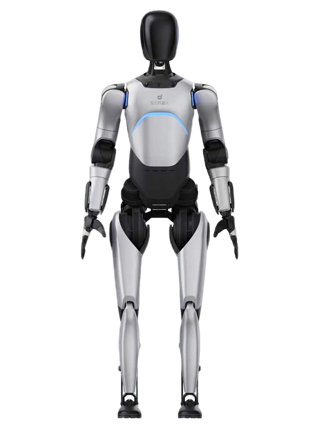
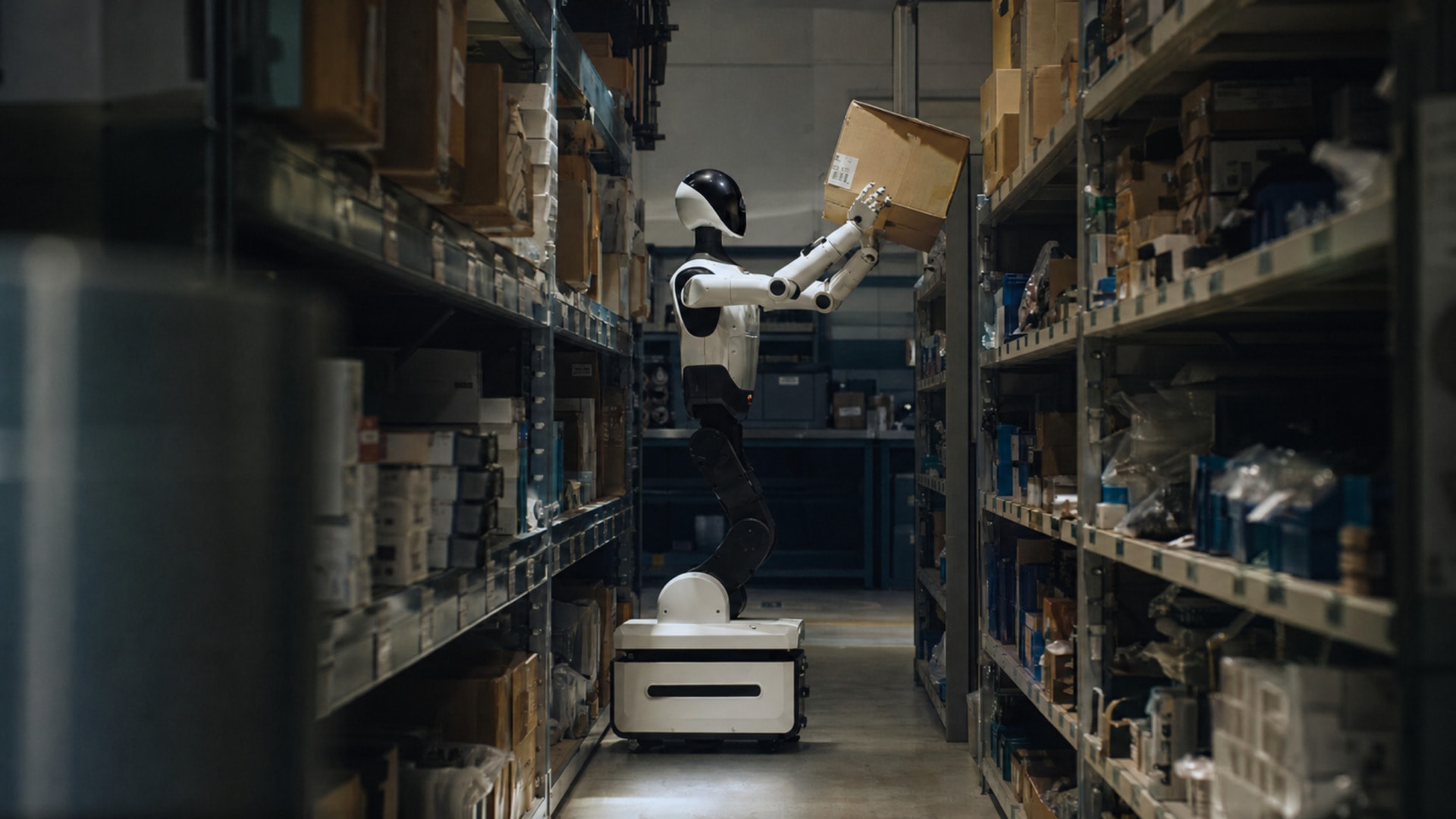
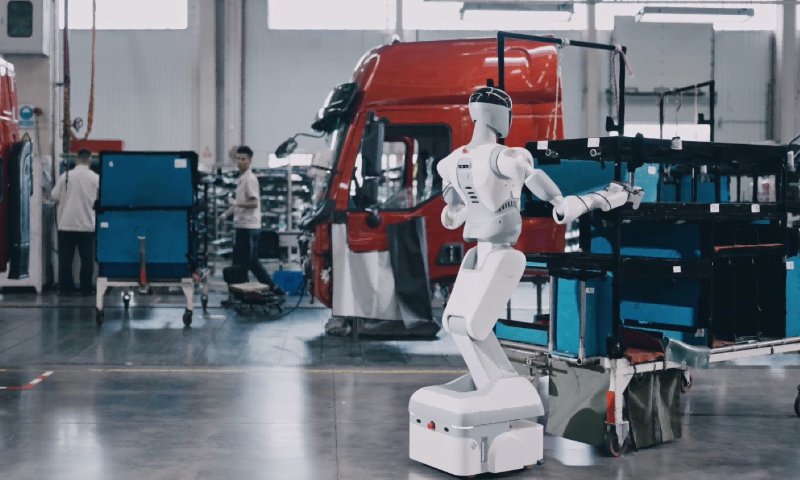
Embodied intelligence startup TARS (它石智航) has signed a strategic cooperation agreement with Tianhai Automotive Electronics Group (THB Electronics) to deploy 100 A-series robots on automotive wire harness assembly lines at an Aptiv-affiliated factory in Jiading, Shanghai. The deployment covers 8 production processes, 33 application scenarios, and 46 workstations, representing a significant milestone in automating complex flexible material manipulation. The roadmap targets a 10,000-unit industrial ecosystem by 2028.
Two Companies, Two Very Different Journeys Converging into on One Unsolvable Problem
To understand why this deployment matters, it helps to know who is behind it.
Tianhai Automotive Electronics Group, known internationally as THB Electronics, was founded in 1969 in Henan Province. Over more than five decades, the company grew from a domestic connector manufacturer into one of China's most established automotive electronics suppliers. Its subsidiary, Henan THB Electric Co., Ltd., is credited with pioneering the domestic production of automotive connectors in China. Today, THB Electronics supplies high and low voltage wiring harnesses, connectors, and automotive electronics to globally recognised automakers including General Motors, Ford, Volkswagen, and major domestic brands such as FAW, SAIC, and NIO. The group operates production bases across China, from Harbin in the northeast to Guangzhou in the south, and maintains a nationally recognised corporate technology centre. In 2021, Guangzhou Industrial Control Holdings became a major shareholder, marking a new chapter in the group's expansion. THB Electronics is, in short, a company with deep institutional knowledge of the wire harness industry and the manufacturing discipline to match.
Its partner in this deployment could not be more different. TARS (它石智航, or Itstone Zhihang) was founded on February 5, 2025, by Dr. Chen Yilun alongside a team drawn from Tsinghua University, Huawei, and Baidu. The Shanghai-based company was built around one objective: to create trustworthy, general-purpose embodied AI systems that could operate reliably in the physical world, not in a laboratory, but on a real factory floor.
In the roughly 16 months since its founding, TARS has raised capital at a pace that few startups anywhere in the world have matched. It closed a $120 million angel round led by Lanchi Ventures and Qiming Venture Partners, followed by a $122 million Angel+ round, and then a landmark Pre-A round of over $455 million in April 2026, led by Hillhouse Ventures and Hongshan (Sequoia China). That last round set the record for the largest single-round financing in China's embodied intelligence history, and the company's post-investment valuation is now ranked first in the sector.
The technology driving all of this investor confidence is the AWE (AI World Engine) model, now at version 3.0. AWE is a general-purpose embodied foundation model, meaning it is designed to learn and generalise across a wide range of physical tasks rather than being programmed for one specific routine. It learns from real-world human operational data captured through TARS's proprietary SenseHub system, which records the nuanced physical expertise of skilled workers and converts it into training material for the model. This human-centric approach is what allows AWE to adapt to the variability of real manufacturing environments. The model runs on TARS's T-series and A-series robot hardware, which is engineered to minimise the gap between what the AI decides and what the robot actually does in the physical world.
In December 2025, TARS demonstrated this capability publicly by having its robot perform hand embroidery, a task requiring sub-millimeter precision, adaptive force control, and coordinated bimanual manipulation of flexible thread. The demonstration was not a publicity stunt. It was a direct proof of concept for the task that TARS had always been targeting: flexible wire harness assembly.
It is worth noting that TARS is not the only company pursuing this problem. In Japan, Yazaki Corporation and NEC Corporation announced in November 2023 that they had used AI to automatically generate motion plans for multi-robot wire harness assembly, reducing programming time from 40 days to one day. They targeted commercialisation in 2025, though no confirmed production deployment at scale has been publicly announced. In the United Kingdom, Q5D Technology has developed a five-axis additive manufacturing robot that deposits insulated wires directly onto 3D components such as vehicle headliners, debuting its largest model, the SQ25W, in March 2025. Q5D's approach differs fundamentally from TARS in that it deposits wires onto rigid substrates rather than assembling pre-cut flexible harnesses. In the United States, a Nissan-sponsored team at the University of Tennessee demonstrated a prototype robotic system for wire insertion in June 2025, but Nissan's own industrial engineer confirmed that the system was not yet manufacturing-ready. In Germany, the ARENA2036 Robotics Challenge in 2025 focused specifically on automating partial wire harness assembly, with participants developing extensible skills for cable routing, acknowledging that the process remains one of the least automated in automotive manufacturing.
The distinction that TARS claims, and that has not been publicly contradicted, is the deployment of embodied AI robots across a multi-process, multi-scenario flexible wire harness assembly line in live production, at a scale of 100 units, within a commercial factory environment.
The Problem That Stumped Automation for Decades
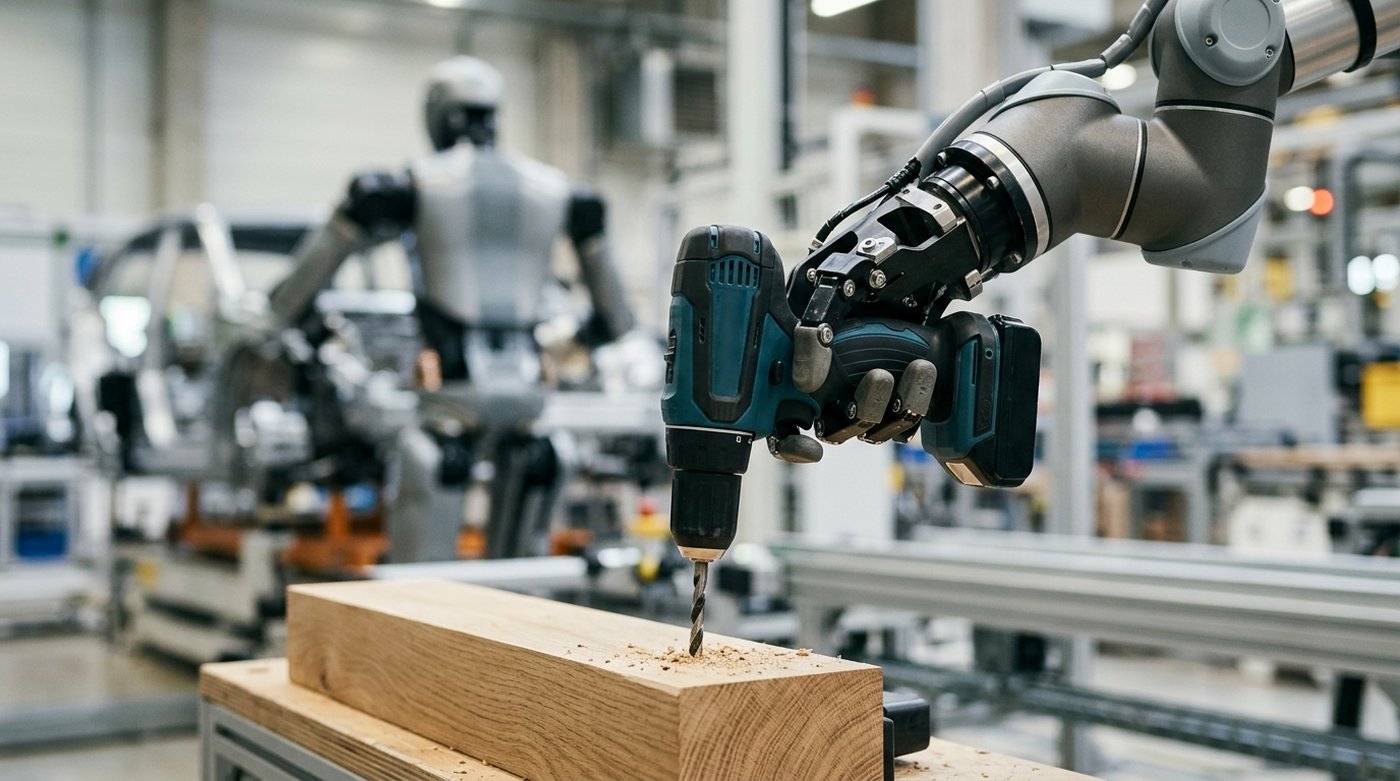
Automotive wire harnesses are the nervous system of a vehicle. A single modern car contains anywhere from 1,500 to 3,000 individual wires bundled into harnesses that can stretch up to 3 kilometres in total length. Assembling them requires workers to grasp, route, insert, and crimp flexible cables with high precision, adapting constantly to slight variations in cable stiffness, connector orientation, and spatial layout. Because the cables deform unpredictably when handled, traditional industrial robots, which excel at rigid, repeatable tasks, have never been able to reliably automate this process. The industry has long referred to flexible wire harness assembly as the "Goldbach Conjecture" of industrial automation: theoretically solvable, but practically intractable.
In March 2026, TARS set a Guinness World Record for the most sub-millimeter wire harnesses assembled by a robot in one hour, a milestone that validated AWE's ability to handle the unpredictability of flexible material manipulation at production-line speed.
The Jiading Deployment and the 10,000-Unit Roadmap
The agreement signed on June 26 translates that laboratory milestone into a live factory floor. The initial deployment at the Aptiv-affiliated Tianhai facility in Jiading, Shanghai, covers 8 core production processes, 33 application scenarios, and 46 workstations. One hundred A-series robots will be deployed in 2026.
The Jiading cluster is designed to serve as a proving ground for the AWE model. By deploying robots across 33 distinct scenarios within a single factory environment, TARS can collect highly diverse, real-world operational data. This human-centric data collection approach transforms skilled workers' operational expertise into trainable and reusable data assets.
The scaling roadmap is aggressive. TARS plans to move from the initial 100 units in 2026 to 1,000 units across the broader Yangtze River Delta region in 2027. The ultimate goal is to establish a 10,000-unit industrial ecosystem by 2028, firmly cementing the region as a global hub for physical AI manufacturing.
For THB Electronics, the partnership addresses a structural challenge that has constrained the wire harness industry globally. Labour costs in flexible assembly are high, turnover is significant, and quality consistency is difficult to maintain at scale. Deploying TARS robots across 33 scenarios within a single factory also generates a continuous stream of real-world operational data, which feeds back into AWE model improvements, creating a compounding improvement loop that benefits both companies.
The pairing of a 56-year-old manufacturing institution with a 16-month-old AI startup reflects a broader pattern emerging in China's industrial landscape. Established suppliers with deep process knowledge are increasingly turning to physical AI companies to solve the automation problems that conventional robotics never could. The TARS and THB Electronics deployment does not exist in a vacuum. Yazaki, Q5D, Nissan, and European research consortia have all been working on the same problem. What separates this deployment is the claim of live, multi-process, multi-scenario production at scale, something that none of the competing efforts have publicly achieved. Furthermore, the Jiading project demonstrates that Chinese robotics companies are no longer just building hardware prototypes. They are building integrated, data-generating industrial ecosystems designed to accelerate the training of general-purpose embodied AI models at scale.
Primary Sources:
1. EqualOcean — Chinese embodied AI Company TARS raised $455 million in a Pre-A round (April 16, 2026)
2. Gasgoo — Embodied AI tech firm TARS secures $120 million in angel funding (March 27, 2025)
3. PRNewswire — TARS Demonstrates a Robot That Can Perform Hand Embroidery (December 22, 2025)
4. THB Electronics — Company Profile and Development History
5. Jiefang Daily — 它石智航具身智能示范项目落地嘉定 (June 26, 2026)
6. TOM Tech — 它石智航携手天海电子,全球率先实现柔性线束机器人规模化装配 (June 27, 2026)
7. ews18a — Embodied AI Robots Deployed at Scale in Automotive Wiring Harness Production for the First Time (June 26, 2026)
Disclaimer: All editorial content is independently written by RobotAIGeek based on publicly available Chinese and English-language sources. Quoted material is attributed to its original publisher and not independently verified by RobotAIGeek.