Taiwan Think Tank Warns of China Shock in Physical AI
Taipei based think tank DSET warns of a whole of nation industrial push by Beijing in advanced robotics and physical artificial intelligence, drawing parallels to earlier electric vehicle and drone strategies while highlighting regional sourcing vulnerabilities.
Evaluating the Industrial Scope of Physical Artificial Intelligence
Global supply chain directors face a critical juncture as industrial automation transitions from digital software models to physical machinery. Recent analytical assessments from the Research Institute for Democracy, Society, and Emerging Technology in Taipei indicate that Beijing is organizing a comprehensive industrial campaign across advanced robotics and physical artificial intelligence. Procurement officers must evaluate how state directed manufacturing capacity alters component availability, pricing structures, and vendor risk profiles across international markets.
The assessment released by the Taipei based research organization highlights structural parallels to past industrial policies that successfully transformed localized manufacturing support into dominant international export positions. During earlier transitions in electric vehicle production and commercial drone manufacturing, coordinated subsidies and municipal pilot zones enabled domestic firms to scale production volumes rapidly. Current policy directives embed advanced robotics and autonomous machinery directly into municipal economic planning across major industrial centers, establishing vast testing environments where autonomous systems accumulate operational data at unprecedented scales.
International procurement teams can no longer rely on traditional market assumptions where commercial viability depends solely on commercial capital allocation. State backed financial mechanisms, municipal pilot zones, and coordinated supply chain matchmaking ensure that hardware manufacturers receive immediate capital injections and streamlined regulatory approvals. By transforming domestic factory floors into active testing grounds, industrial strategists bypass traditional friction curves in commercial adoption, achieving scale and functional maturity simultaneously.
Structural Mechanics of the State Backed Deployment Strategy
Understanding the operational velocity of Chinese robotics manufacturers requires examining the mechanics of the deployment first strategy. Traditional technology development paradigms often prioritize heavy venture capital investment in foundational frontier models before pursuing commercial productization. In contrast, domestic robotics firms emphasize immediate real world operational deployment across factories, hospitals, ports, and public facilities.
This operational environment generates continuous streams of real world performance data that feed directly into machine learning pipelines, enabling rapid improvements in robotic perception, autonomous decision making, and physical manipulation. Localized ecosystem coordination further reinforces this advantage. State supported financing mechanisms and municipal pilot zones ensure that hardware manufacturers receive immediate capital injections and streamlined regulatory approvals. By transforming every domestic factory floor into an active testing ground, industrial strategists bypass the traditional friction of slow commercial adoption curves, achieving scale and functional maturity simultaneously.
Procurement executives evaluating hardware vendors must analyze how this operational velocity impacts long term supplier reliability. When manufacturers iterate rapidly based on continuous operational telemetry from domestic deployment zones, component specifications and software interfaces evolve at speeds that traditional western supply chains struggle to match. However, this velocity introduces specific dependencies that require careful evaluation by international buyers seeking long term operational stability.
Operational managers assessing factory automation must also account for the physical wear characteristics of high duty cycle robotics operating in rigorous industrial environments. When autonomous systems run continuous shifts in heavy manufacturing plants, maintenance protocols depend on immediate access to replacement actuators, sensor modules, and control boards. If supplier lead times fluctuate due to regional export control adjustments or local utility rationing, production lines risk severe downtime. Consequently, supply chain teams are establishing regional parts buffers and qualifying secondary vendors to insulate assembly operations from external supply shocks.
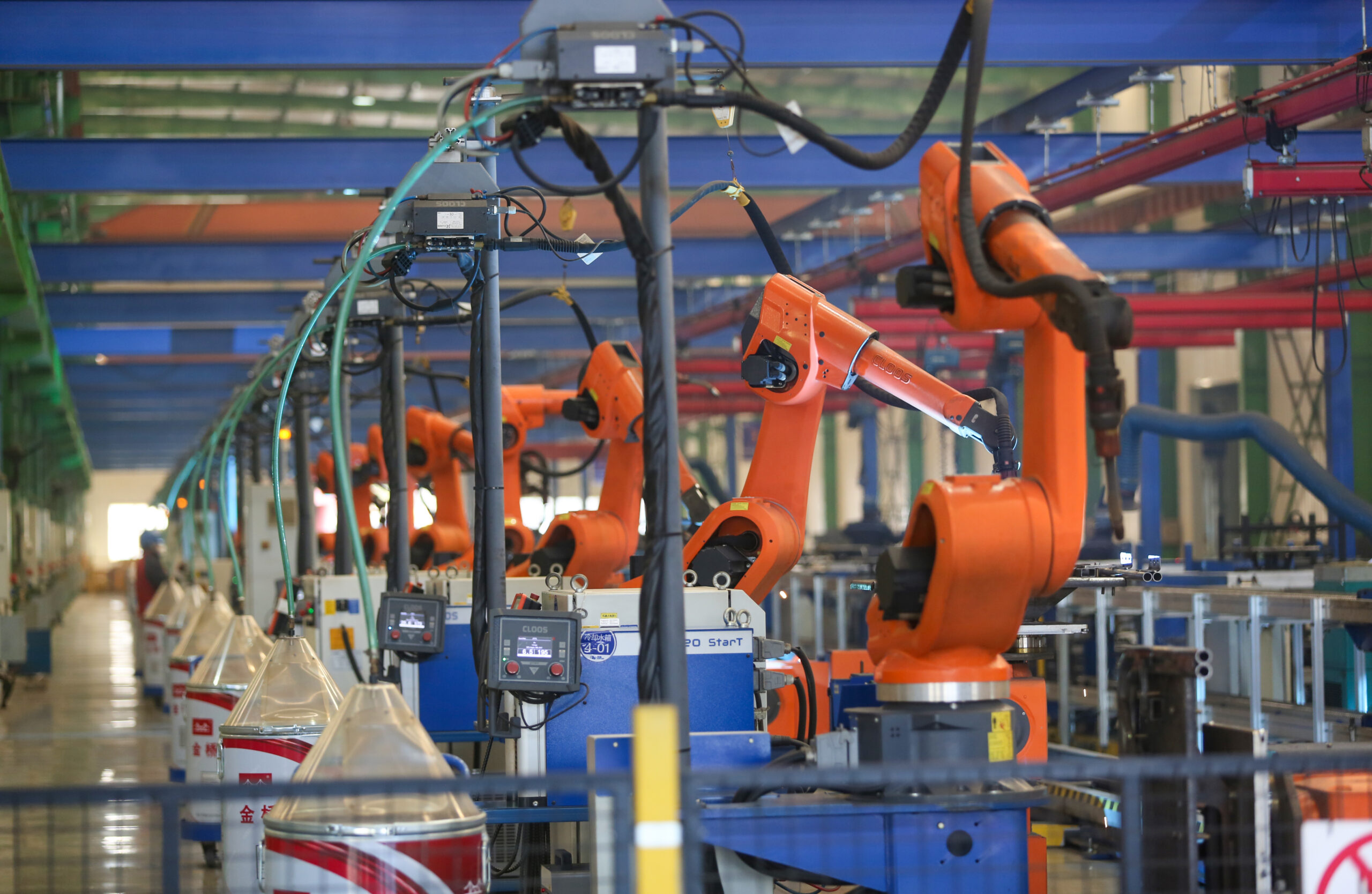
Extended factory automation rollouts require detailed supervision of power distribution, sensor calibration schedules, and safety interlock validation. When industrial robots operate alongside human technicians in high throughput assembly zones, facility engineers must verify that motion control software handles unexpected physical obstructions safely. Sourcing directors tracking these operational parameters find that localized ecosystem support in major industrial clusters accelerates initial deployment speed, but also creates concentrated vendor dependencies that complicate cross border maintenance agreements and spare parts replenishment cycles.
Component Bottlenecks and Semiconductor Export Controls
Despite formidable manufacturing momentum and extensive state backing, the physical artificial intelligence ecosystem continues to grapple with severe structural bottlenecks that limit complete self sufficiency. High end components required for high performance robotic articulation, including precision harmonic reducers, advanced servo motors, and high capacity ball screws, remain heavily dependent on specialized suppliers located in Japan and Germany. Additionally, domestic robotics developers rely extensively on advanced physics simulation platforms engineered by Western software providers to train complex movement algorithms before deploying them onto physical hardware.
Semiconductor constraints represent another critical vulnerability for the scaling of physical artificial intelligence systems. Advanced training compute necessary for frontier artificial intelligence models relies heavily on cutting edge semiconductors that are restricted by sweeping export controls implemented by the United States and its allies. While domestic chip development initiatives continue to expand, training large scale physical intelligence models without unimpeded access to leading edge hardware forces firms to rely on alternative pathways, including model distillation, transshipment networks, and remote data center access in third jurisdictions. These persistent structural dependencies indicate that complete technological autonomy remains an intermediate horizon rather than an immediate reality.
Supply chain risk managers must account for these bottlenecks when structuring procurement contracts. Relying on single source component providers or assuming complete domestic self sufficiency in advanced automation hardware exposes organizations to severe regulatory, cybersecurity, and operational continuity risks. Evaluating component provenance down to the sub assembly level is essential for maintaining operational resilience against sudden export restriction adjustments.
Industrial procurement audits frequently reveal hidden dependencies on foreign sub components embedded within supposedly localized hardware assemblies. When engineering teams test high performance servo drives and precision gearboxes, identifying the exact origin of metallurgical alloys and silicon chips becomes a complex compliance task. Sourcing directors must implement rigorous traceability protocols to verify that component vendors do not rely on restricted inputs that could trigger unexpected import bans or export compliance violations in secondary markets.
Comparative Operating Frameworks for Global Procurement
Global procurement officers and supply chain directors must evaluate complex geopolitical and industrial variables by reassessing vendor selection criteria. Relying exclusively on mainland manufacturing hubs for automated hardware may offer short term cost advantages, but it exposes organizations to severe regulatory and operational continuity risks. Conversely, immediate disengagement from established manufacturing ecosystems is impractical given the scale and pricing competitiveness of existing industrial supply chains.
The comparative matrix illustrates that no single sourcing paradigm eliminates all operational hazards. Regional multi sourcing secures advanced precision engineering and trusted compliance, but it demands higher capital outlays and longer lead times. Meanwhile, component standardization offers modular flexibility and mitigates vendor lock in, yet requires rigorous governance to prevent interoperability friction. Procurement decision makers must therefore tailor their sourcing architecture to specific operational thresholds, ensuring that core national security and intellectual property assets remain insulated from external disruption.
Evaluating these tradeoffs requires a methodical approach to supply chain tiering. Organizations must classify automation assets according to their criticality, data handling requirements, and exposure to cross border regulatory shifts. Non critical peripheral hardware can leverage cost competitive regional ecosystems, while core operational control units demand stringent multi sourcing protocols and verified component provenance.
To make this concept intuitive for non technical stakeholders, consider how commercial shipping operates across international waters. A cargo fleet does not rely on a single harbor or a single supplier for vessel maintenance, even if one port offers the lowest service fees. Instead, operators maintain relationships across multiple regional ports and stock standardized replacement parts that fit vessels regardless of where they were originally assembled. If one regional hub experiences administrative or physical disruption, the fleet redirects operations to alternate facilities without halting global delivery schedules. Industrial automation procurement requires the exact same structural redundancy.
Yet, a common misconception among corporate planners is that diversifying supplier networks guarantees complete immunity from supply chain shocks. The hard truth is that redundant sourcing does not eliminate systemic exposure; it merely shifts the burden of risk management from purchasing agents to systems engineers. When an enterprise attempts to integrate multi sourced components across diverse regional standards, engineering teams often encounter severe interface friction, protocol mismatches, and compliance overhead that can temporarily degrade system performance and stall deployment timelines.
Procurement leaders, operations directors, and corporate boards must conduct exhaustive audits of their automation assets, identifying hidden component dependencies, software telemetry endpoints, and jurisdictional vulnerabilities. By building robust cross-border collaboration among aligned jurisdictions and investing in trusted supply-chain alternatives, operators can pursue physical-AI capability while protecting operational continuity.
Disclaimer: This article is for informational purposes only and does not constitute investment advice, legal counsel, or an endorsement of any company or product mentioned. Readers should conduct their own research and consult qualified professionals before making decisions based on this content.