Siemens Introduces End-to-End Solution to Accelerate Humanoid Robot Development and Manufacturing
Siemens Digital Industries Software has launched a comprehensive end-to-end solution designed to accelerate the development and manufacturing of humanoid robots. Featuring seamless Unified Robot Description Format (URDF) export from Siemens NX, formerly known as Unigraphics, and advanced validation through Process Simulate, the platform bridges the gap between mechanical design, software training, and factory floor deployment. The solution aims to standardize the fragmented toolchain that has historically slowed the commercialization of physical AI.
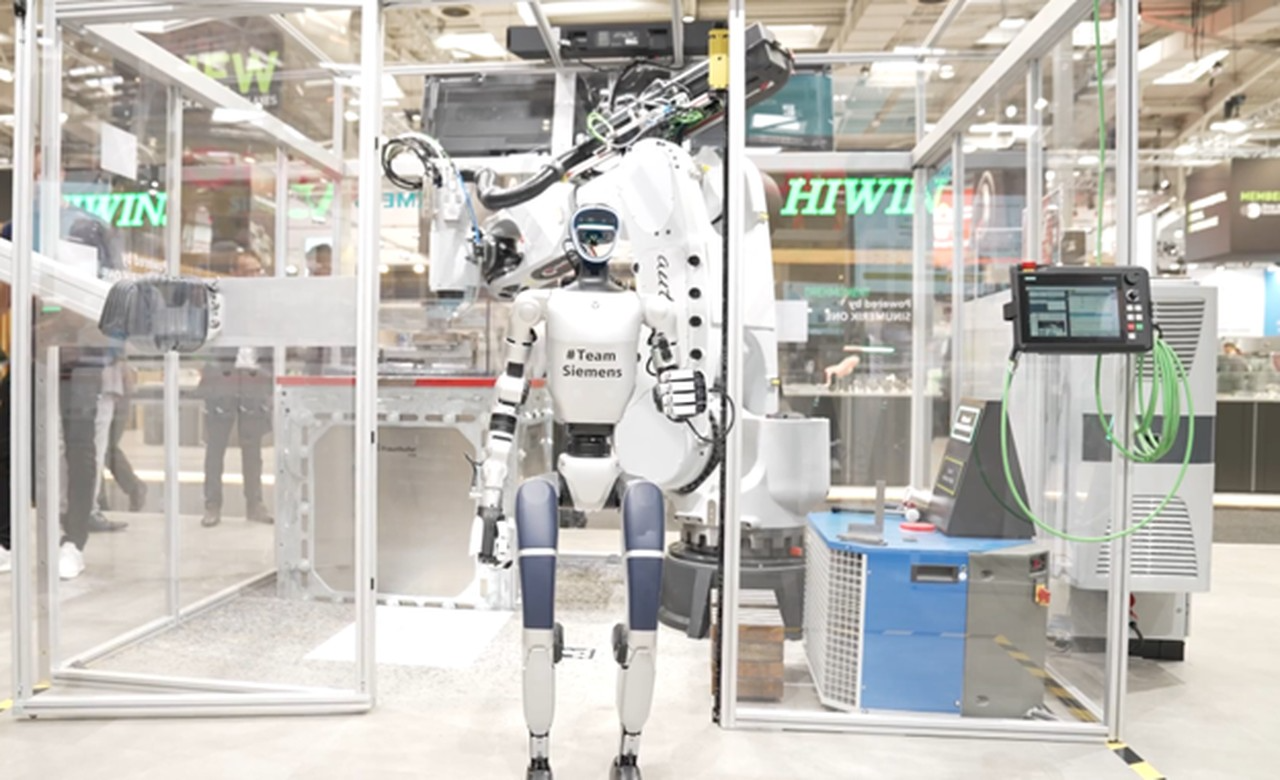
Siemens Digital Industries Software has launched a comprehensive end-to-end solution designed to accelerate the development and manufacturing of humanoid robots.
The platform has emerged as one of the most consequential software infrastructure plays in the global robotics race. By integrating its flagship NX design software with Process Simulate and Opcenter production tools, Siemens is offering a unified digital thread that reflects the growing conviction among industrial giants that standardized software toolchains are the key to scaling physical AI.
Solving the Toolchain Bottleneck for Physical AI
The centrepiece of the Siemens announcement is its seamless Unified Robot Description Format (URDF) export capability. One of the most persistent obstacles to developing humanoid robots has been the fragmented workflow between mechanical engineers designing the hardware and AI researchers training the software. Translating complex CAD models into the physics simulators required for reinforcement learning has historically been a manual, error prone process.
Siemens addresses this directly by allowing native NX assemblies to be exported directly as URDF files. This provides AI researchers with immediate, physically accurate models of the robot, ensuring that the simulation environment perfectly matches the physical hardware.
The Industrial Advantage and What It Means for Competitors
Siemens' deep integration into the global manufacturing ecosystem provides it with a structural advantage that pure play simulation startups cannot easily replicate. By linking robot design (NX) with factory validation (Process Simulate) and actual production scaling (Opcenter), Siemens is offering a complete pathway from prototype to mass manufacturing.
For competitors in the industrial software space, Siemens' ability to dictate the data standard for humanoid development represents a formidable moat.
In short, Siemens is not building a humanoid robot, it is building the digital infrastructure that makes all humanoid robots commercially viable. If their end-to-end solution delivers on its promise, the company that controls the engineering toolchain may ultimately control how physical AI is integrated into the global economy. The robotics startups that adopt this unified pipeline early will gain a measurable engineering velocity advantage over those that continue to rely on fragmented, open-source workflows."
Primary Sources: