Qingdao Launches Haier AI Family-Robot Center to Scale Embodied Robotics
Haier opens an AI family-robot experience centre in Qingdao, showcasing assistive exoskeletons and domestic companion systems as part of regional embodied-AI infrastructure.
Demographic aging across modern metropolitan regions creates acute operational pressures for households managing eldercare responsibilities alongside demanding professional schedules. Traditional caregiving models rely heavily on human endurance, frequently stretching family members to physical and emotional exhaustion. In densely populated urban areas, the ratio of active caregivers to aging dependents continues to widen, exposing systemic vulnerabilities in residential support structures. Addressing these compounding strains requires moving beyond fragmented consumer gadgets toward integrated assistive environments where advanced technology supports daily routines without adding operational complexity or cognitive overload. On August 16, 2026, the coastal manufacturing hub of Qingdao unveiled a specialized facility designed to address this exact operational frontier, signaling a decisive transition from theoretical automation concepts to tangible spatial validation, empirical testing, and institutional scaling across domestic ecosystems. As urban households face rising care costs and labor shortages, the demand for reliable, ergonomically sound robotic assistants has transformed from a speculative future concept into an immediate industrial priority that requires coordinated public investment, rigorous regulatory oversight, and sustained private sector innovation across multiple engineering disciplines.
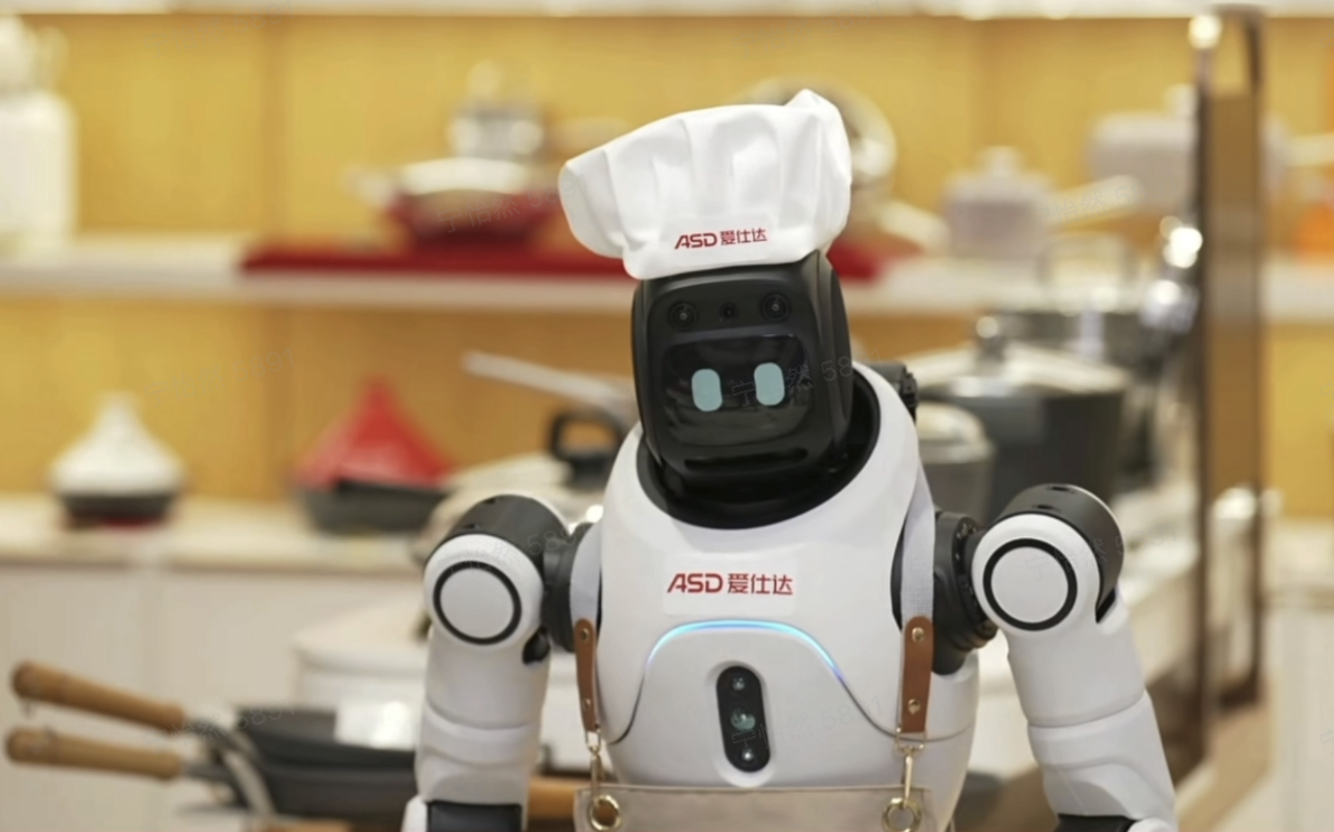
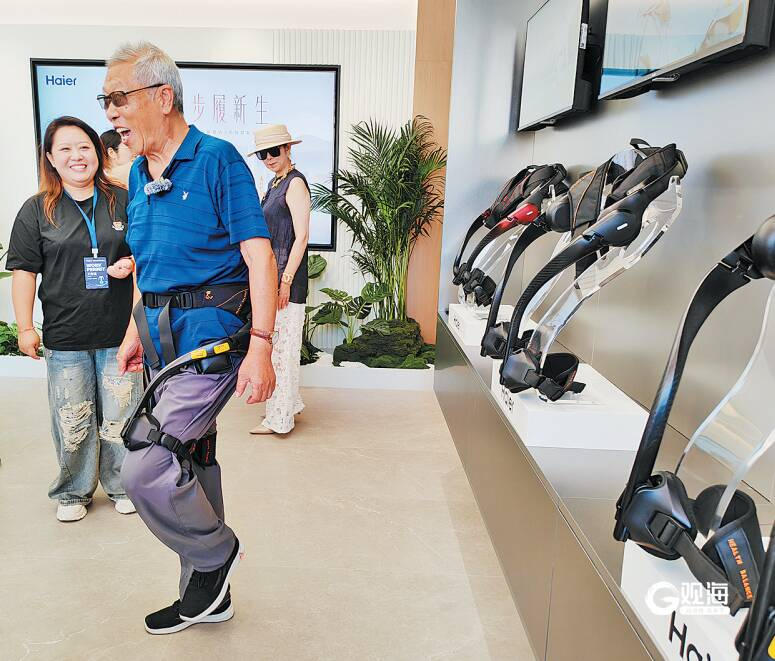
The newly opened artificial intelligence family-robot experience centre in Qingdao establishes a rigorous physical benchmark for assistive technology evaluation. Rather than functioning as a conventional retail storefront for isolated household gadgets, the facility operates as an immersive validation zone configured for realistic simulation. Reporting from Qingdao indicates that the centre concentrates explicitly on family and eldercare environments, reflecting an acute awareness of society's most pressing demographic bottlenecks. Visitors encounter specialized systems configured for laundry management, culinary assistance, companion interactions, and physical mobility support. This spatial strategy acknowledges that domestic automation cannot be evaluated in sterile laboratory conditions or online shopping portals; it requires contextualized testing environments that mirror actual residential living quarters, complete with spatial constraints, ambient lighting variations, and unpredictable human traffic patterns.
Haier Group, a globally recognized multinational home appliances and consumer electronics manufacturer headquartered in Qingdao, anchors this initiative alongside key regional technological partners. The corporation's active involvement reflects a broader industrial pivot from traditional white goods toward intelligent, embodied systems capable of contextual reasoning and physical interaction. By embedding robotic solutions within a simulated home setting, developers, healthcare specialists, and institutional stakeholders can observe direct interactions between users and autonomous or assistive machinery. This methodology bridges the persistent gap between laboratory prototyping and practical residential deployment, ensuring that equipment functionality aligns directly with actual household workflows, safety parameters, and ergonomic requirements. Haier's integration of robotics into home ecosystems demonstrates how legacy appliance manufacturers are repositioning themselves as providers of comprehensive ambient intelligence, combining cloud computing, edge processing, and physical actuators into unified consumer offerings that harmonize with domestic routines and alleviate caregiver fatigue.
Economic analyses of eldercare infrastructure indicate that municipal backing is vital for mitigating initial capital expenditure risks for technology developers. By establishing shared testing grounds, local governments absorb a portion of the infrastructural burden, allowing enterprises to focus on hardware reliability, software optimization, and user interface refinement. This public-private synergy accelerates the maturation of the domestic robotics sector, transforming academic research into deployable commercial solutions without compromising safety standards or operational diligence. Regional coordination ensures that technological innovations directly target the specific structural challenges faced by aging urban populations, thereby maximizing the societal return on municipal investment and supporting long-term economic resilience across manufacturing and service sectors.
Engineering Constraints Governing Lightweight Assistive Exoskeletons
Assistive exoskeletons and companion systems must overcome strict biomechanical, material science, and power management limitations to achieve reliable operation in residential settings. The primary technical constraint involves balancing mechanical output with lightweight wearability, ensuring that assistive devices reduce user fatigue without imposing cumbersome weight penalties during daily movement. Supporting coverage of the Qingdao exhibition highlights critical engineering achievements such as Haier's W3 exoskeleton, engineered as a 1.65 kilogram design specifically geared toward women's gait support. Maintaining such an exceptionally low mass while delivering sufficient assistive torque requires sophisticated actuator design, high-density battery integration, and advanced structural materials. Unlike industrial exoskeletons built for heavy lifting in controlled factory environments, domestic assistive devices must accommodate unpredictable human movement, varying user physiologies, and highly intuitive control interfaces. The integration of artificial intelligence algorithms allows these systems to anticipate gait patterns and provide synchronized mechanical assistance, transforming abstract robotic concepts into viable personal mobility aids. However, engineers and industry specialists caution that current deployments remain firmly within structured testing parameters rather than universal consumer distribution, as real-world biomechanical variability demands continuous algorithmic tuning and rigorous safety margin verification.
Power efficiency and thermal management represent secondary yet critical engineering hurdles in exoskeleton design. Compact lithium ion power packs must deliver sustained electrical current across hours of continuous ambulation while remaining cool against the user's clothing. Actuator gearboxes must operate with minimal acoustic noise to prevent sensory irritation in domestic environments. Addressing these interconnected challenges necessitates extensive bench testing, gait analysis trials, and iterative prototyping, functions that are directly supported by specialized regional testing facilities equipped with advanced motion capture and physiological monitoring tools.
"The true measure of embodied intelligence in domestic environments is not the autonomy of a standalone machine, but its seamless integration into the delicate choreography of human caregiving and daily household survival."
Municipal Validation Infrastructure And Industrial Clustering Mechanisms
Individual product demonstrations gain true industrial significance only when supported by comprehensive regional infrastructure. Qingdao has systematically cultivated an expansive ecosystem for embodied artificial intelligence development, supported directly by municipal government policies designed to accelerate high-tech manufacturing and robotics adoption. According to official municipal disclosures, the city hosts eight provincial-level embodied artificial intelligence training grounds alongside dedicated rehabilitation and testing centres. These facilities provide the necessary testing beds for software tuning, hardware durability trials, and regulatory compliance assessments across diverse operational scenarios.
The scope of this regional commitment is underscored by the municipal rehabilitation training centre, which currently encompasses forty-five specialized enterprises and two hundred seventeen distinct sets of assistive products. This dense corporate clustering creates a collaborative supply chain where sensor manufacturers, actuator specialists, and software developers can integrate components rapidly. Municipal reports document significant cooperation agreements stemming from collaborative projects anchored within this hub. This networked infrastructure enables continuous data collection, iterative hardware refinement, and rigorous safety validation, ensuring that technologies entering the validation pipeline meet high standards of reliability before encountering end users. National industrial strategies further amplify these regional efforts, aligning local manufacturing capabilities with strategic state objectives for advanced robotics leadership. By anchoring commercial development within certified testing grounds, Qingdao ensures that technological advancements undergo rigorous evaluation before reaching wider deployment phases.
Separating Speculative Demonstration Claims From Commercial Deployment Realities
A critical examination of the Qingdao initiative reveals a necessary distinction between exploratory validation facilities and commercial mass-market adoption. Industry observers must separate promotional demonstrations and customer service pilots from verified scale deployment. While the establishment of qualitative experience centres and associated rehabilitation hubs marks a substantial milestone, domestic robotics still faces formidable economic, regulatory, and technical barriers.
Mass-market retail availability of fully autonomous household labor remains constrained by high hardware production costs, complex maintenance requirements, and the unpredictability of unstructured home environments. Universal safety and operational performance across diverse demographic groups have not yet been definitively established on a commercial scale. Neither the participating enterprises nor municipal authorities claim immediate market profitability or certified medical benefits from the current generation of companion and assistive robots. Recognizing these boundaries prevents premature hype cycles and directs research priorities toward resolving fundamental engineering challenges. The value of the Qingdao centre lies precisely in its role as a controlled validation ground where limitations can be identified, safety protocols refined, and user feedback systematically integrated into subsequent design iterations, ensuring sustainable long-term industry growth and preventing misinformed consumer expectations regarding automated domestic labor.
Integrating Advanced Assistive Automation Across Urban Residential Ecosystems
ELI5 Bridge: Imagine trying to teach a brand new student how to cook dinner in a busy family kitchen without any prior training. The student might know recipe books by heart, but when pots start boiling over, family members walk across the floor unexpectedly, and ingredients are misplaced, pure book knowledge falls short. Testing a robot in an isolated factory laboratory is exactly like studying recipes in a quiet classroom. The real world of a residential home is noisy, cluttered, and constantly changing. That is why Qingdao opened a simulated home environment. It acts like a practice stage where robots can test their balance and assistance capabilities under messy, realistic conditions before anyone relies on them for vital daily caregiving support.
Hard Truth Rebuttal: Skeptics often argue that glittering showroom displays of walking exoskeletons and robotic companions signal an imminent revolution in household labor where aging parents will soon be fully cared for by autonomous machines. This narrative misinterprets the operational reality of physical artificial intelligence. Showroom demonstrations occur in pristine, highly controlled simulation spaces engineered specifically to highlight successful interactions. They do not reflect the chaotic acoustic profiles, uneven flooring, erratic human movements, and unexpected physical obstructions encountered in ordinary residential homes. High hardware manufacturing costs and complex maintenance requirements mean that ordinary families cannot simply purchase plug-and-play domestic servants today. Acknowledging these severe practical limitations is essential for preventing misplaced consumer trust and ensuring that engineering investments focus on incremental gait support, reliable safety validation, and sustainable institutional frameworks rather than ungrounded futuristic promises.
The convergence of municipal policy, industrial manufacturing prowess, and specialized testing infrastructure in Qingdao illustrates a mature trajectory for embodied robotics. By anchoring development within comprehensive service ecosystems rather than relying on isolated product launches, stakeholders can address the complex realities of aging populations and residential care demands. The transition from manufacturing household appliances to engineering intelligent assistive systems represents a profound evolution in industrial capability, requiring cross-disciplinary collaboration among software developers, biomechanical engineers, and healthcare practitioners. Integrating empirical field data from municipal rehabilitation centres ensures that future product iterations respond directly to genuine clinical and domestic requirements rather than speculative market trends.
As these regional validation grounds generate longitudinal performance data and refine mechanical designs, the boundary between experimental prototypes and reliable assistive tools will continue to narrow. The success of this endeavor depends on sustained commitment to empirical testing rather than speculative marketing. Through disciplined spatial validation and rigorous adherence to safety and performance standards, initiatives like the Qingdao Haier centre lay the foundational architecture for a sustainable, resilient future in assistive robotics, demonstrating how industrial capability can be successfully marshaled to serve pressing societal needs. As national initiatives continue to align manufacturing clusters with strategic state objectives, the broader ecosystem moves steadily toward robust, field-tested automation solutions that genuinely support families and caregivers while establishing rigorous benchmarks for the entire robotics industry.
Disclaimer: This article is for informational purposes only and does not constitute investment advice, legal counsel, or an endorsement of any company or product mentioned. Readers should conduct their own research and consult qualified professionals before making decisions based on this content.