LG Electronics Opens Paraná Smart Factory in Brazil with AI and Robots
LG Electronics inaugurated its new Paraná State home-appliance factory in Brazil, a US$310 million and BRL 1.5 billion investment integrating Vision AI and articulated robotics to slash delivery times across Latin America.
Industrial supply chains across South America have long depended on centralized import models and long-distance transport networks originating outside the continent. These import-reliant distribution frameworks introduce structural vulnerabilities, exposing regional enterprises to chronic maritime congestion, customs clearance delays, and foreign exchange volatility. Capital allocation strategies among major consumer electronics manufacturers are shifting away from distant offshore fabrication toward hyper-localized production hubs. Establishing manufacturing campuses within primary regional markets allows multinational corporations to align production directly with consumer demand centers, bypass oceanic shipping bottlenecks, and secure operational continuity across emerging industrial corridors.
Regional supply chain architecture in the consumer appliance sector requires continuous evaluation of inventory holding costs versus transit predictability. When manufacturing facilities are located thousands of miles from destination consumer markets, enterprises face extended replenishment cycles that hinder responsiveness to sudden shifts in regional demand. By establishing a dedicated production facility directly inside Brazil, industrial operators can maintain leaner inventories, reduce working capital tied up in oceanic transit, and eliminate the risk of product obsolescence caused by sluggish supply chain lead times.
LG Electronics inaugurated a new home appliance manufacturing facility in Paraná State, Brazil, representing a capital investment of approximately United States Dollars 310 million. Spanning about 770,000 square meters, the campus establishes an annual production capacity of approximately 600,000 refrigerators, cutting regional delivery times by up to 80 percent.
Strategic Investment and Regional Manufacturing Infrastructure
Expanding manufacturing footprints in emerging markets requires balancing substantial upfront capital expenditure against the long-term imperative of supply chain resilience. LG Electronics structured the Paraná campus to complement its established production base in Manaus, which has operated in Amazonas for nearly three decades. By creating a dual-hub framework within Brazil, the corporation doubles its domestic manufacturing footprint, enabling more efficient geographic distribution across diverse state boundaries. The decision to invest approximately United States Dollars 310 million, expressed equivalently as Brazilian Real 1.5 billion, reflects a calculated bet on regional market stability and domestic consumer demand growth across Latin America.
The physical scale of the Paraná installation provides the necessary floor space to integrate heavy assembly lines alongside automated material handling equipment. Designing a modern manufacturing campus involves mapping raw material intake pathways, sub-assembly staging zones, and finished goods dispatch bays to minimize internal transport friction. Logistics engineers configured the facility layout to streamline the flow of steel panels, compressors, electronic control boards, and insulation materials directly to the primary assembly lines, ensuring consistent throughput velocity throughout every operating shift.
Maintaining high manufacturing velocity across an annual output volume of approximately 600,000 refrigerators requires precise synchronization of mechanical component delivery and automated sub-assembly validation. Operating metrics at the facility correspond to an average production rhythm equivalent to generating a finished refrigerator every 14 seconds of operational uptime. This sustained output rate depends entirely on eliminating bottlenecks in material staging areas and ensuring that automated handling equipment feeds components into primary workstations without interruption.
Integrating Artificial Intelligence Vision and Articulated Robotics
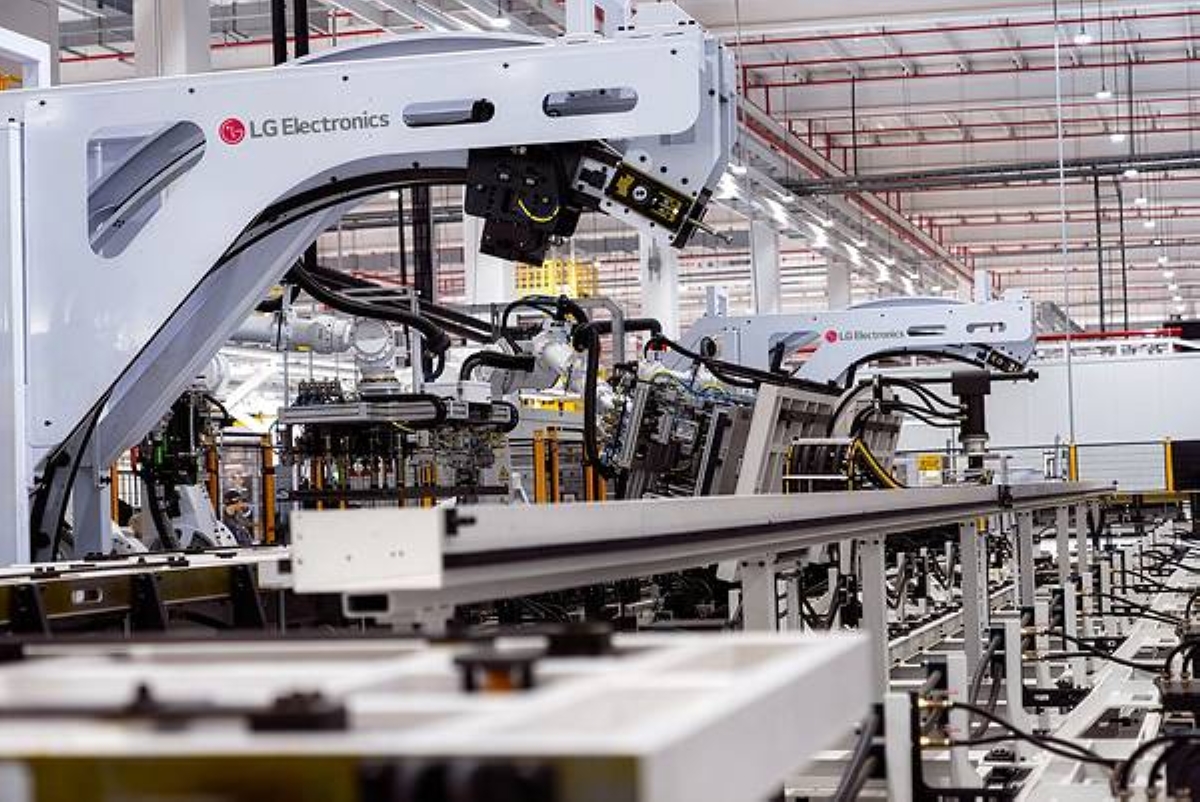
Factory floor operations at the Paraná campus rely on advanced industrial automation rather than traditional manual assembly methods. To ensure consistent manufacturing quality, the facility deploys artificial intelligence based vision inspection systems across the production lines. High-resolution optical sensors evaluate component dimensions, surface integrity, and alignment tolerances in real time. When operational anomalies or surface defects are detected by the inspection architecture, the system immediately flags or diverts the affected unit, preventing downstream defects from compounding during later assembly stages.
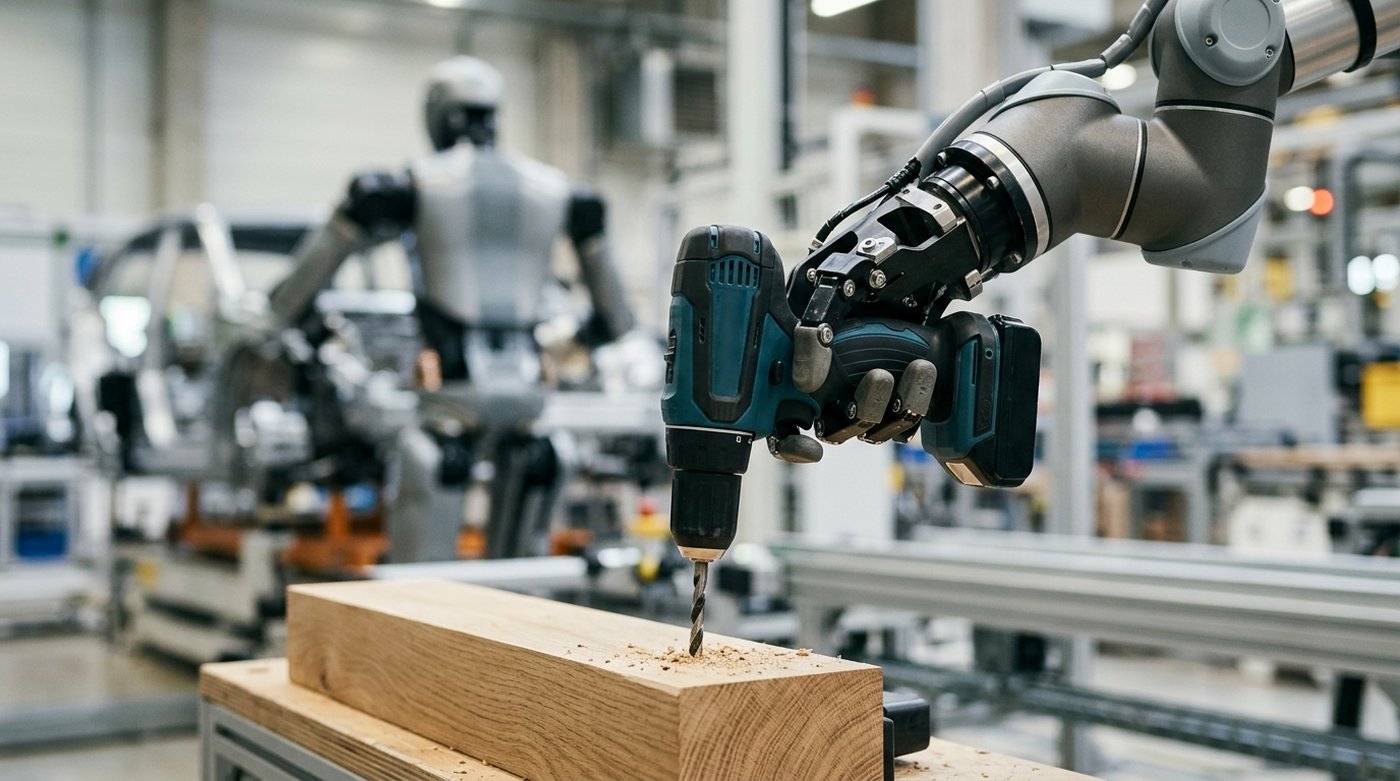
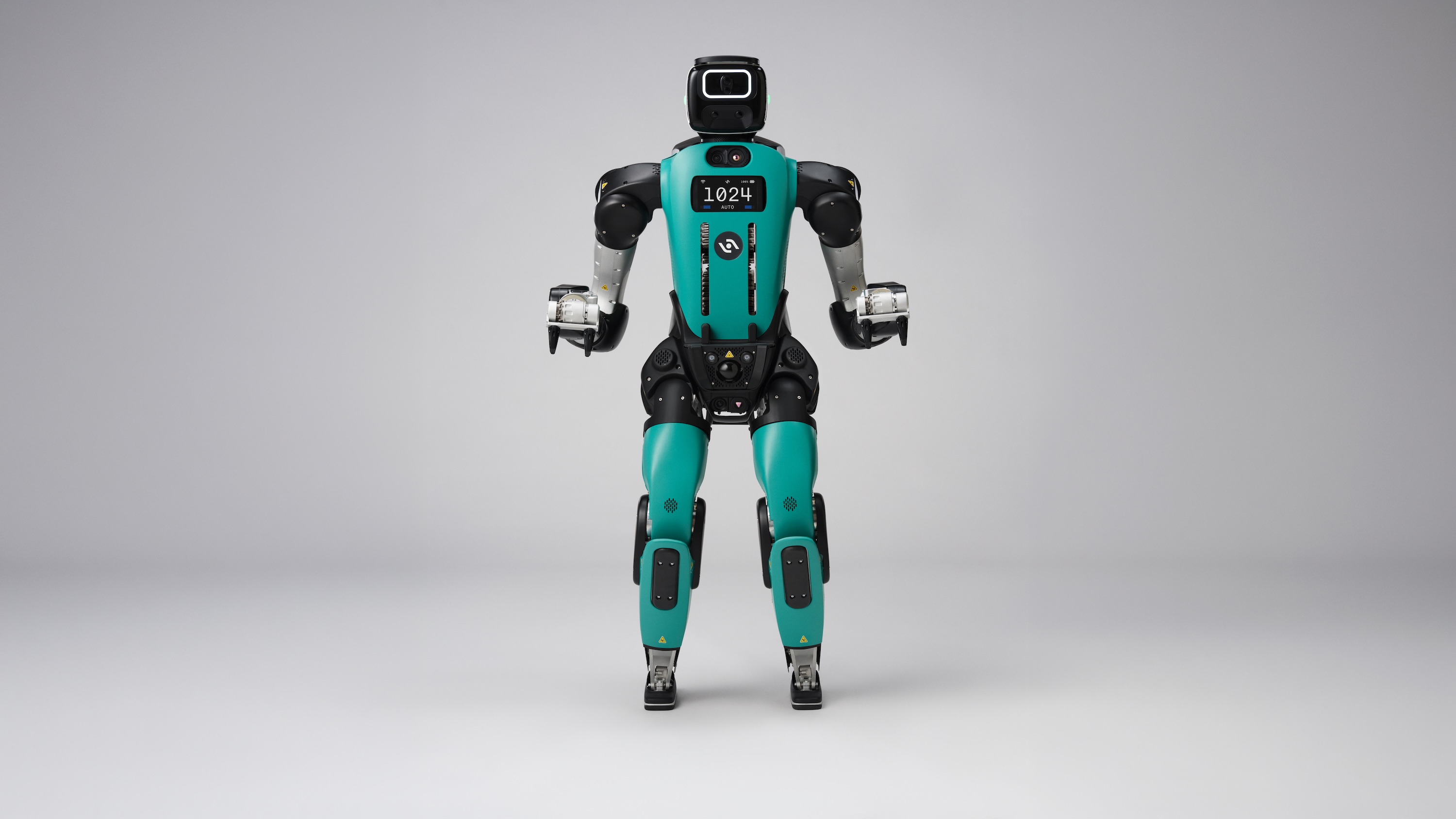
Articulated robots work in coordination with these vision inspection systems to execute physically demanding and higher-risk operational workflows. Operating within heavy payload parameters, robotic arms lift, rotate, and position large refrigerator chassis and structural doors with exact repeatability. Tasks that previously required significant physical exertion by human operators, such as transporting heavy steel assemblies or operating in elevated thermal zones during polyurethane insulation injection, are now handled by automated machinery. This integration of artificial intelligence oversight and robotic physical execution establishes a new benchmark for heavy appliance manufacturing quality and workplace safety in the region.
The combination of artificial intelligence oversight and robotic mechanics addresses critical labour challenges associated with heavy industrial production. Manufacturing large domestic appliances involves repetitive lifting of metallic components weighing tens of kilograms, creating ergonomic strain and safety risks in traditional factories. Automating these high-strain lifting operations through articulated robotic arms protects human operators from physical fatigue while maintaining uniform cycle times that manual labour cannot sustain over extended shifts.
Tailoring Appliance Specifications to Regional Consumer Realities
Operating within the South American consumer market requires meticulous attention to regional electrical and climatic specifications. Refrigerators manufactured at the Paraná facility are developed based on extensive local consumer research conducted by a Brazil-based research and development team comprising approximately 40 professionals. This dedicated engineering team ensures that appliance designs align precisely with domestic housing layouts, storage habits, and regional home-entertaining preferences across Brazil.
Brazil presents a complex electrical infrastructure characterized by concurrent regional standards operating across both 127V and 220V grid configurations depending on the municipality and regional utility provider. LG Electronics engineered the manufacturing lines at the Paraná factory to produce appliances equipped with bi-voltage compatibility, ensuring seamless interoperability and safety compliance for end users regardless of regional grid variations. Beyond electrical adaptability, the manufactured units incorporate light emitting diode based internal sanitization technologies designed to suppress bacterial growth, addressing the specific operational challenges posed by hot and humid domestic environments.
Regional climatic conditions impose rigorous performance requirements on domestic refrigeration equipment. High ambient temperatures and elevated relative humidity levels accelerate internal cooling demands and increase susceptibility to moisture condensation and bacterial proliferation. Integrating specialized ultraviolet illumination modules within refrigerator interiors provides continuous sanitation without relying on chemical additives. The Paraná installation houses specialized optical sub-assembly stations designed to install these sanitization components with micrometric precision, ensuring hermetic sealing and uniform light distribution in every unit leaving the facility.
Comparative Analysis of Regional Localization Versus Import Models
Industrial decision-makers continually weigh the capital expenditure of constructing localized smart factories against the perceived operational flexibility of import-dependent sourcing models and remote automation retrofits. To evaluate these operational approaches, industrial strategists examine distinct manufacturing and supply chain architectures.
The comparative matrix illustrates that while domestic smart factory localization demands substantial upfront capital investment, it provides decisive operational advantages in lead time reduction, quality assurance, and regional market responsiveness. Import-dependent manufacturing exposes enterprises to systemic vulnerabilities, including foreign exchange volatility, port congestion, and extended order cycles. Meanwhile, retrofitting remote automation into legacy facilities often encounters structural bottlenecks that limit throughput efficiency compared to purpose-built smart factories engineered from the ground up with digital intelligence and articulated robotics.
Operational Trade-Offs and Supply Chain Resilience Realities
Critics often argue that localized smart factories in emerging economies merely shift vulnerability from maritime shipping logistics to domestic component sourcing bottlenecks. While relying on domestic sub-tier suppliers exposes plants to local economic fluctuations, this counterpoint overlooks the profound agility gained by controlling final assembly within the destination market. Sourcing raw materials closer to regional assembly plants reduces exposure to global shipping rate volatility and geopolitical trade disruptions. Additionally, local engineering teams can iterate faster on product modifications when manufacturing occurs adjacent to end-user markets, resulting in superior product alignment with regional consumer preferences.
To understand artificial intelligence vision inspection without getting lost in technical terminology, consider a high-speed sorting operation. Imagine an expert human inspector standing at a fast-moving assembly line, wearing specialized magnifying glasses that instantly catch microscopic surface scratches or alignment errors on every passing metallic panel. Vision artificial intelligence performs this exact role digitally at high speed, utilizing neural networks trained on reference images to evaluate physical items instantly, while articulated robots act as tireless mechanical assistants that lift heavy steel doors into place without fatigue or hesitation.
Baek Seung-tae, president of the LG Home Appliance Solution Company, emphasized the strategic rationale behind the new campus during the inauguration. The executive noted that the Paraná facility strengthens production capabilities, enabling the enterprise to ensure a stable product supply and deliver appliances tailored to the evolving needs of consumers in Brazil and across Latin America. Over the mid-to-long term, the factory is positioned to serve as a strategic production and export hub, supporting regional growth while enabling flexible responses to shifting global supply chains and evolving market conditions.
As industrial automation continues to mature, facilities equipped with artificial intelligence vision inspection and articulated robotics will define the competitive frontier for consumer electronics and home appliance manufacturing. The Paraná project serves as a clear case study in balancing massive capital deployment with targeted regional market penetration. Through disciplined engineering and strategic localization, industrial leaders can build robust operational defenses against global supply chain volatility while delivering superior value to regional markets and securing long-term competitive advantages.
Disclaimer: This article is for informational purposes only and does not constitute investment advice, legal counsel, or an endorsement of any company or product mentioned. Readers should conduct their own research and consult qualified professionals before making decisions based on this content.