Japan Bets $6.2 Billion on Physical AI to Challenge US and China in the Robot Era
Japan is investing up to $6.2 billion in a SoftBank-led consortium to build Noetra, a domestic physical AI foundation model designed for robots, manufacturing, and other real-world tasks.

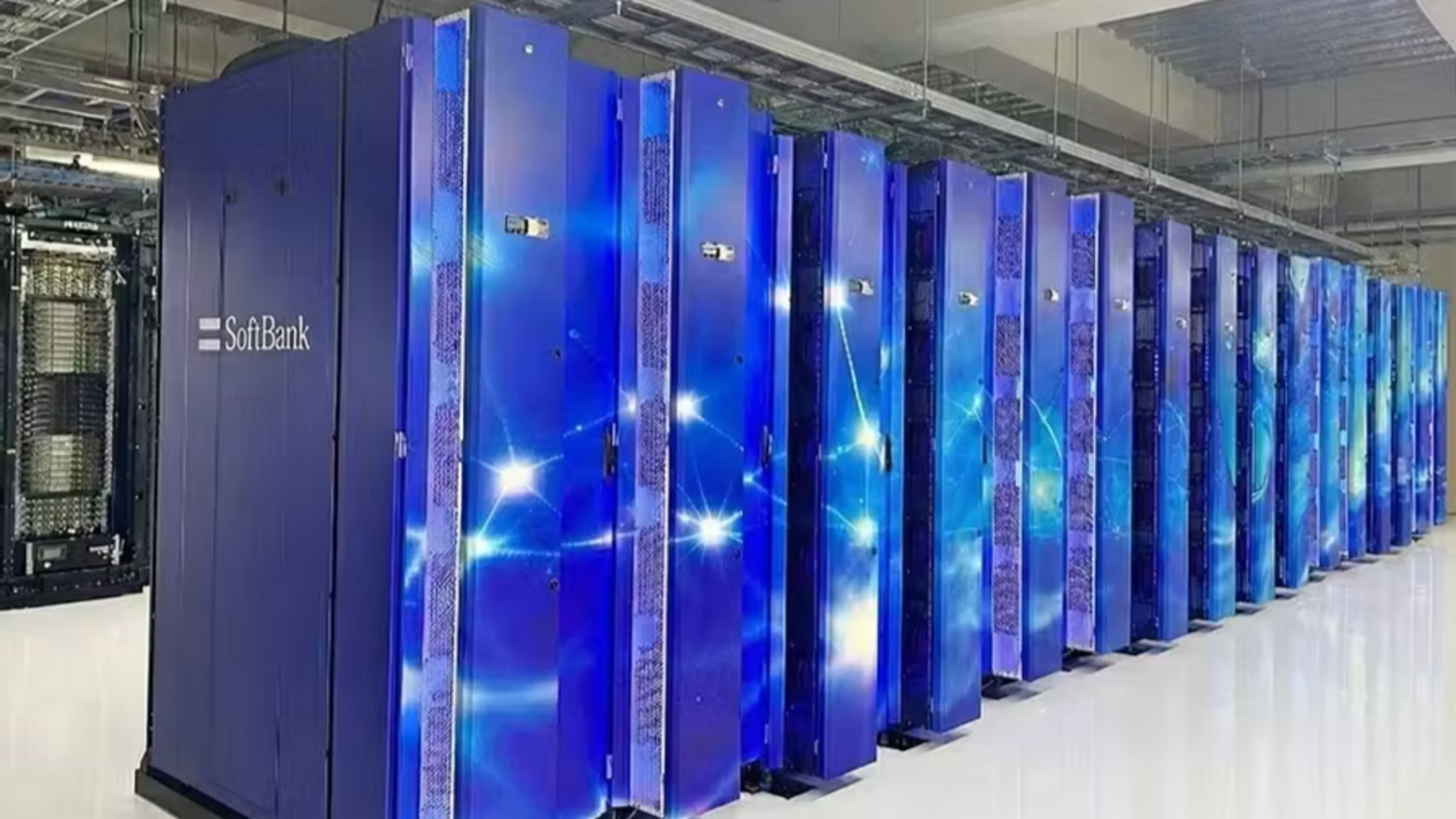
Japan made its most decisive move yet in the global race for robotics supremacy on Tuesday, July 1, 2026, as Tokyo announced it will provide up to 1 trillion yen (approximately $6.16 billion) to back a SoftBank-led consortium of nine companies — including Honda Motor, NEC, and Sony — to develop a domestic artificial intelligence foundation model purpose-built for controlling physical machines. The effort, channeled through a newly formed company called Noetra, marks a pivotal escalation in Japan's strategy to compete with the United States and China in what NVIDIA CEO Jensen Huang has called "the next great wave of AI": Physical AI — AI that understands real-world spatial structure, physical laws, and dexterous manipulation.
What Is Noetra, and Why Does It Matter?
Noetra (formerly known as Nihon AI Kiban Moderu Kaihatsu) is not just another corporate AI startup — it is a national instrument. Backed by SoftBank Corp., Sony, Honda, NEC, Fujitsu, Rakuten, and Preferred Networks, the consortium will coordinate with Japan's National Institute of Advanced Industrial Science and Technology (AIST) to build a multimodal foundation model specifically trained on Japanese industrial data: factory floors, elder care facilities, logistics warehouses, disaster response sites, and even the decades-long Fukushima Daiichi decommissioning operation. The five-year program targets a first model release as early as this fiscal year (FY2026), with iterative improvements each subsequent year as more on-site data flows in from partner manufacturers. The government will fund an initial 387.3 billion yen in FY2026 under Japan's Ministry of Economy, Trade and Industry (METI), with additional tranches after year one, scaling to the total 1-trillion-yen commitment.
A physical AI foundation model is trained not on text and images, but on sensor data, robotic motion trajectories, force-torque feedback, and environmental interaction logs — enabling a machine to plan, grasp, assemble, and adapt in the physical world, not just reason about it digitally.
Japan holds decades of high-quality manufacturing and operational data across automotive, semiconductor, precision machinery, and healthcare sectors — exactly the input Physical AI models need to generalize across real-world tasks.
The Strategic Ambition: 30% of Global AI Robot Market by 2040
The Noetra announcement is the crown jewel of a broader policy framework. According to METI's Physical AI Strategy — unveiled in mid-June 2026 — Japan has set a target of ¥10.5 trillion (roughly $65 billion) in combined public-private investment across 17 strategic sectors by fiscal 2040, aiming to capture over 30% of the global AI robot market and grow domestic robotics output to ¥20 trillion. Toyota alone has committed approximately ¥800 billion to robotics R&D; Fanuc has pledged ¥350 billion to factory automation. The METI strategy names 17 priority sectors — from automotive assembly and electronic precision manufacturing to disaster response infrastructure and elder care — in each of which physical AI-powered robotics is expected to become the dominant labor-augmentation model. Meanwhile, Japan Airlines and GMO AI & Robotics have already launched the country's first airport humanoid demonstration at Haneda, trialing robots for baggage handling and cabin cleaning in a live two-year program that began May 2026.
The Japanese government targets ¥3 trillion from the public sector; the remaining ¥7.5 trillion is expected to come from private firms and international joint ventures, deployed progressively through fiscal 2040.
The foundation model is designed to be widely available to Japanese companies — not a closed proprietary system — so that domestic SMEs in manufacturing can access and build upon it, accelerating the diffusion of physical AI capabilities across the supply chain.
The Technical Foundation: Multimodal Models for the Real World
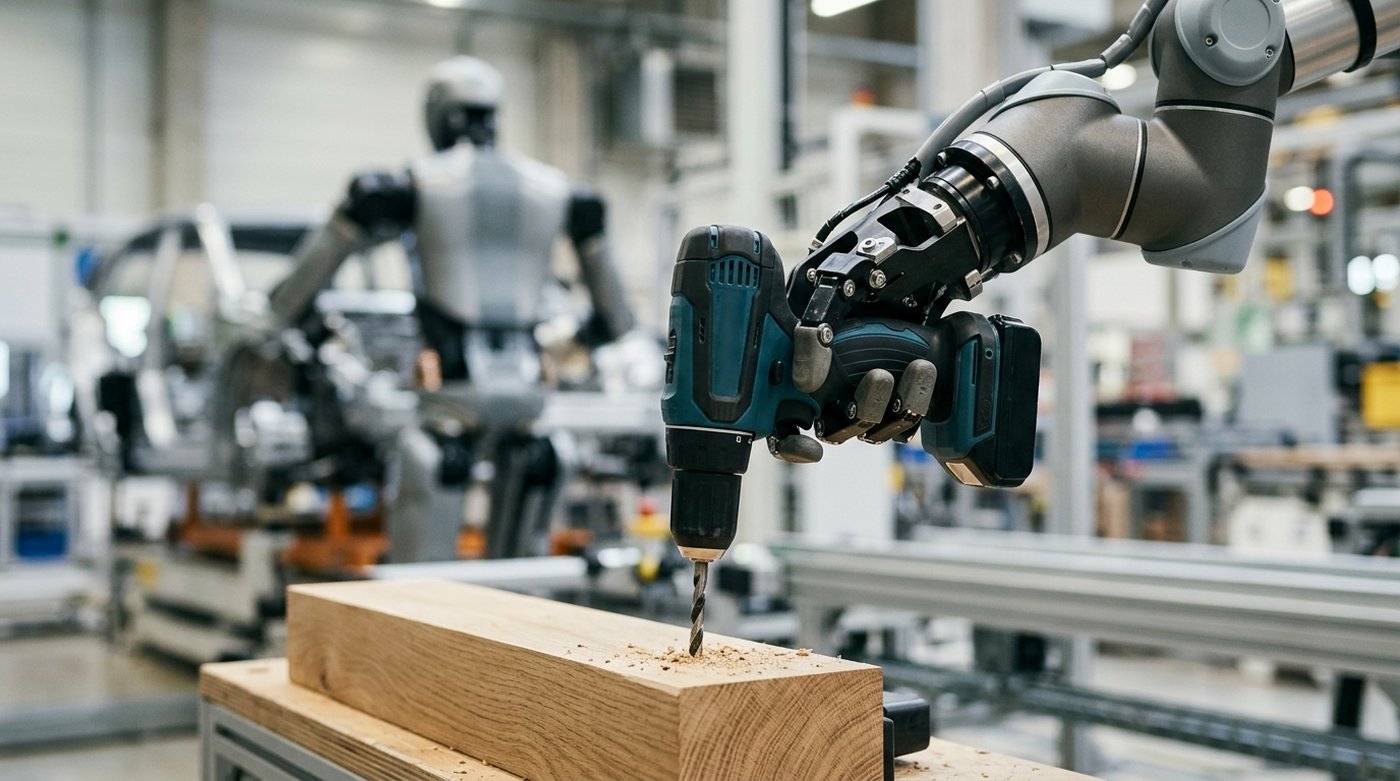
The core technical bet is this: where American foundation models (OpenAI, Google DeepMind) and Chinese rivals (Huawei, Zhipu AI) have trained largely on digital data, Japan's Noetra will train on embodied, physical-world data. SoftBank engineers and Preferred Networks — the Tokyo-based deep learning pioneer behind the AI systems used in Toyota's manufacturing operations — will jointly build the model architecture. The multimodal approach combines visual perception, language understanding, proprioceptive feedback from robotic joints, and tactile sensor streams into a unified model capable of making fine-grained manipulation decisions. At Robot Technology Japan 2026 in Nagoya, Agile Robots and its subsidiary Franka Robotics demonstrated a complementary proof of concept: dual-arm Franka Research 3 systems integrated with NVIDIA Isaac GR00T and Google DeepMind's Gemini Robotics foundation model, achieving 1 kHz control cycles with joint-level torque sensing for tasks including precision electronics insertion and engine cylinder-head assembly — illustrating the level of technical fidelity Noetra's model will need to match or exceed.
Japan's deepest competitive advantage is not its government funding — it is 60 years of precision manufacturing operational data that no foreign AI company can easily replicate.
Preferred Networks brings its proven deep learning infrastructure — previously used in Toyota's factory automation and cancer cell detection systems — to Noetra's architecture team, contributing model training expertise and Japan-specific robotic learning pipelines.
Traditional industrial robots are programmed for fixed, repetitive tasks in controlled environments. Physical AI models learn generalizable policies from diverse sensor data, allowing robots to adapt to variability — different parts, unstructured environments, and unexpected physical conditions — without reprogramming.
The Bigger Picture: A Geopolitical Race in Hardware-Native AI
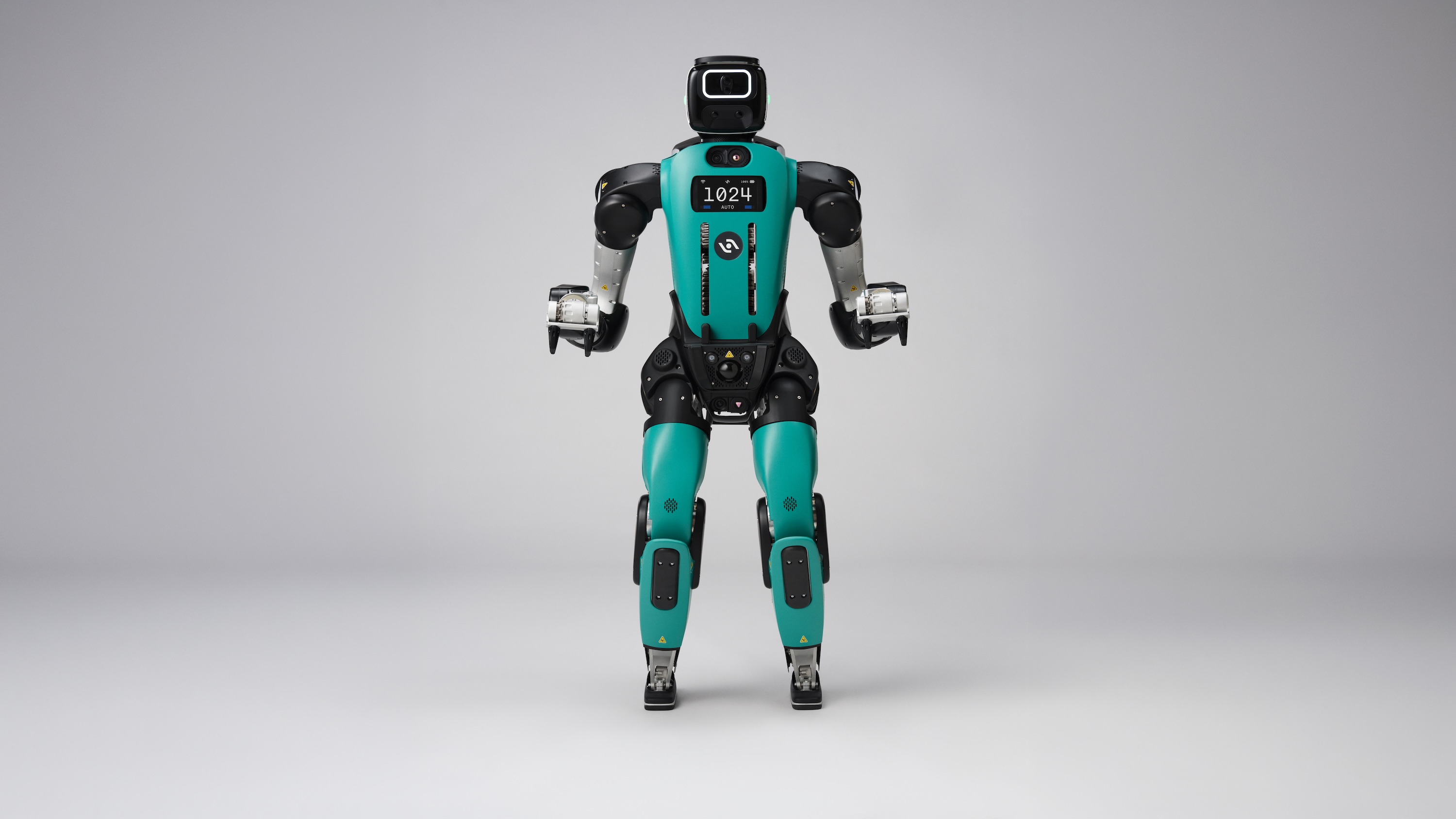
Japan is not acting alone. South Korea simultaneously announced its "Three Major Mega Projects" targeting a 20% share of the global humanoid robot market, and has pledged investments on the order of 100 trillion won (approximately ¥10.5 trillion) through parallel national programs. China, meanwhile, already leads in deployed industrial robots, with Unitree, Fourier Intelligence, and UBTECH fielding commercially operating humanoids at scale. The United States relies on Figure AI, Agility Robotics, Boston Dynamics, and the Physical Intelligence (π.ai) research lab to maintain its frontier-model edge. Japan's strategic positioning is distinct: rather than racing to deploy the most robots fastest, Tokyo is betting that whoever owns the foundation model layer for physical AI will collect rents from every robotics application built on top of it — a platform strategy, not just a hardware race. If Noetra delivers a capable multimodal physical AI model on schedule, it could shift the architecture of the global robotics ecosystem in Japan's favor, giving Japanese manufacturers, software developers, and systems integrators a structural home-field advantage in the industry's most consequential transition since the birth of the programmable robot.
News References
Nikkei Asia — "Japan backs SoftBank-led AI models with up to $6.2bn in chasing US, China"
URL: https://asia.nikkei.com/business/technology/artificial-intelligence/japan-backs-softbank-led-ai-models-with-up-to-6.2bn-in-chasing-us-china
Published: July 1, 2026 — 01:21 JST
The Japan Times — "Japan announces aid for domestic AI development project"
URL: https://www.japantimes.co.jp/business/2026/06/30/companies/physical-ai-meti-aid-model/
Published: June 30, 2026
The Asahi Shimbun — "Noetra selected for 1-trillion-yen project to create physical AI"
URL: https://www.asahi.com/ajw/articles/16686174
Published: June 30, 2026
Vesper News — "Japan targets $65bn in public-private physical AI investment by 2040"
URL: https://www.vespernews.com/en/news/c77fb3db-15de-4f64-a983-b150d22ebe01
Published: June 19, 2026