Asia's Robotics Surge in June 2026
Asia's robotics landscape accelerated sharply in June 2026, led by China's 10,000-robot deployment mandate, Alibaba's Qwen-Robot Suite, Zhiyuan's autonomous ping-pong humanoid, LG's humanoid data factory, and new moves from Vietnam, Singapore, and Hong Kong.

Asia's robotics landscape is shifting gears — and fast. In the span of just a few weeks in June 2026, the region unleashed a string of headline-grabbing breakthroughs: a humanoid robot serving customers solo in a Hong Kong convenience store, a Peking University-backed algorithm enabling fully autonomous table tennis, South Korea building its first dedicated robot training facility, and Alibaba rewriting the rules of how machines understand the physical world. The question is no longer can Asia lead the global robotics race — it's how far ahead is it pulling?
China's 10,000-Robot Mandate: From Demo Stage to Factory Floor
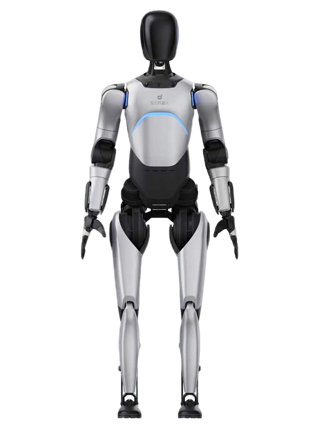
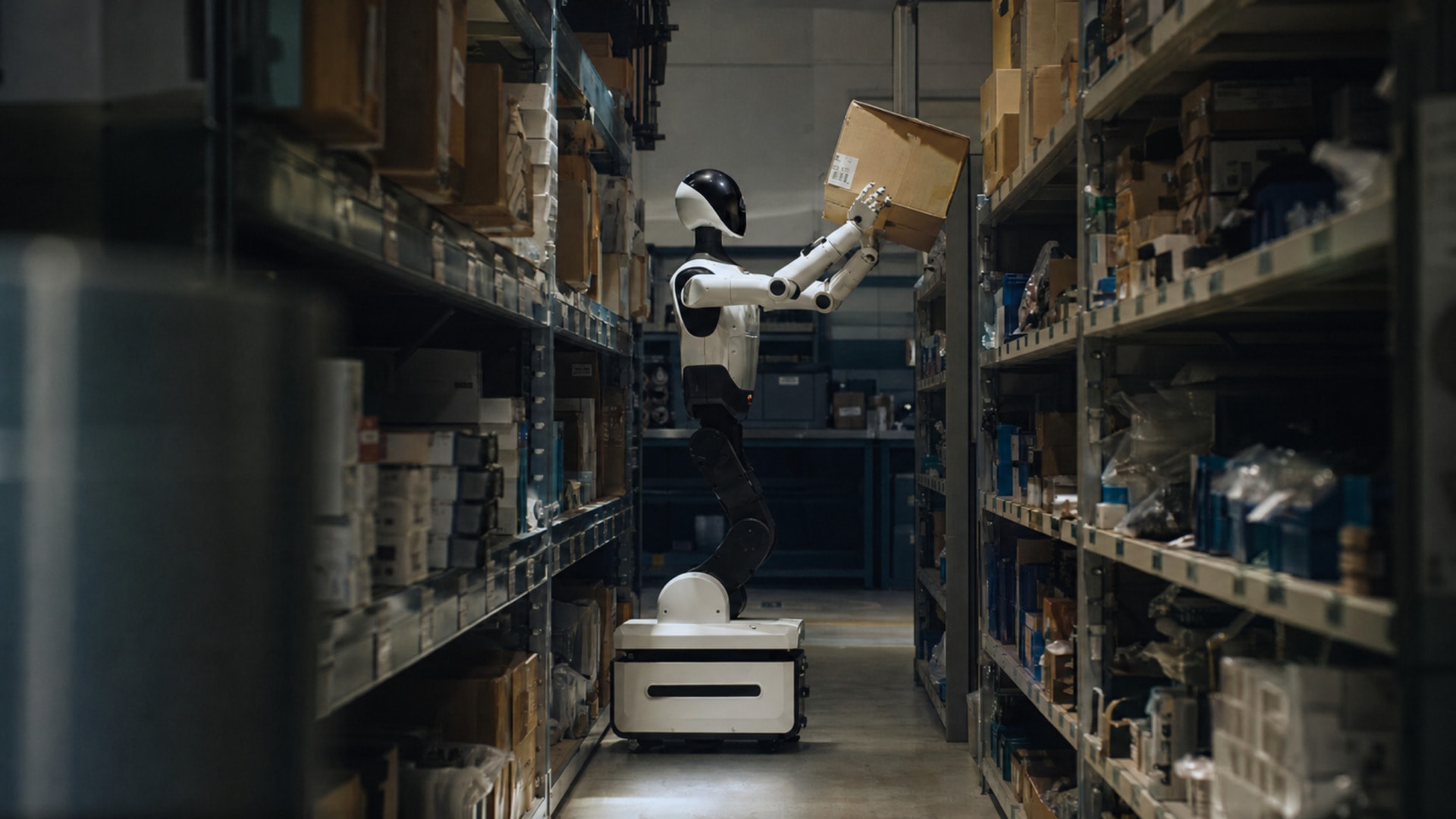
China isn't just building humanoid robots — it's deploying them at national scale. A joint directive issued in early June 2026 by the Ministry of Industry and Information Technology (MIIT) and the State-owned Assets Supervision and Administration Commission (SASAC) has set a jaw-dropping target: more than 10,000 humanoid robots in verified, regular commercial use by year's end. Local governments and state-owned enterprises were given until the end of June to submit deployment plans, with progress reports due in November. Target sectors include manufacturing, healthcare, logistics, and disaster relief — not simulated environments, but real-world operations.
The directive reflects a deliberate strategic pivot. Beijing is explicitly telling the industry to move beyond headline-grabbing demonstrations and into what officials are calling "work mode" — task-oriented, integrated systems that can handle messy, unpredictable real-world conditions. The goal is to identify more than 100 high-value industrial applications and get robots running reliably in those roles within the year.
Q: Is China's 10,000-robot target realistic by end of 2026?
A: Industry observers say "achievable but ambitious." China already has the manufacturing scale and supply chain depth. The harder challenge is reliability — robots need to perform consistently outside controlled demos. That's exactly why the directive targets verified deployment, not just installation.
Q: Which sectors will see the first wave of deployments?
A: Manufacturing and logistics top the list, where tasks are more structured. Healthcare and disaster relief will follow as reliability standards mature.
Alibaba's Qwen-Robot Suite: The AI Brain Humanoids Have Been Waiting For
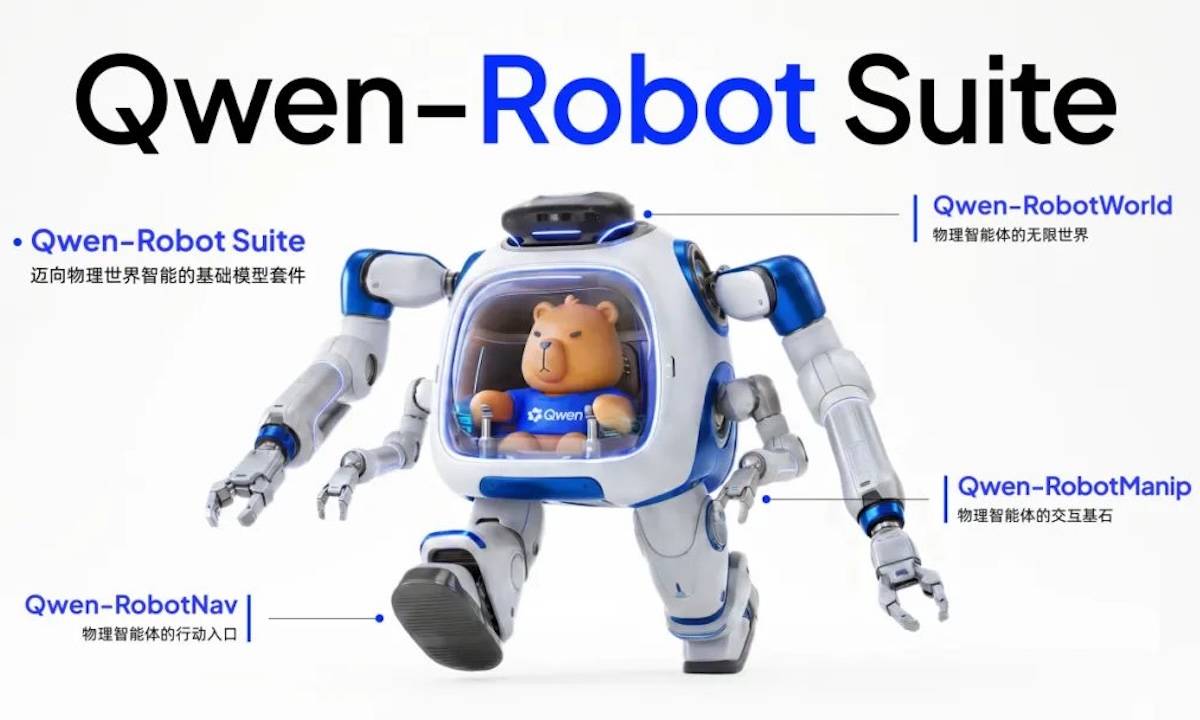
On June 16, 2026, Alibaba officially launched the Qwen-Robot Suite, its first set of foundational robotics models built on the Qwen architecture — marking a watershed moment in physical AI. The suite comprises three purpose-built models:
- Qwen-RobotManip (Vision-Language-Action) — Built on Qwen3.5-4B, generalises across diverse robot hardware; trained on 38,000+ hours of open-source data and topped the RoboChallenge leaderboard.
- Qwen-RobotNav (Vision-Language-Navigation) — Enables robots to navigate complex, unfamiliar environments using natural language instructions.
- Qwen-RobotWorld — A video world model giving robots predictive understanding of physical dynamics for safer, adaptive action planning.
"This debut represents a pivotal milestone as Alibaba extends its Qwen architecture from the digital realm into physical AI. As a frontrunner in the agentic AI era, the tech giant is actively shifting its focus from simple chatbots to autonomous agents built to manage real-life complex tasks in both the digital world and, increasingly, the physical space."
— Alibaba, Alizila (June 16, 2026)
Q: How is the Qwen-Robot Suite different from general-purpose LLMs applied to robotics?
A: Traditional LLMs process language and images but struggle to map commands to precise physical movements. The Qwen-Robot Suite was designed end-to-end for physical action — integrating perception, navigation, manipulation, and world-model reasoning in real time, while respecting the laws of physics.
Q: When will the Qwen-Robot Suite be commercially available?
A: Currently in pilot testing with enterprise clients via Alibaba Cloud. A broader commercial rollout timeline has not yet been announced.
A Robot That Returns Your Serve — and Korea's Data Factory for Humanoids
In one of the most visually striking robotics milestones of 2026, Beijing-based Zhiyuan Robotics revealed on June 15 that its Expedition A3 had become the world's first full-size bipedal humanoid robot to play autonomous table tennis — with no remote control, no pre-scripted routines, and zero human intervention. Ball speeds exceed 5 m/s, trajectories shift constantly, and the robot must execute perception, prediction, planning, and precision striking in a closed loop — all under 10 milliseconds.
The secret weapon? The SpikePingpong algorithm, co-developed with Professor Zhang Shanghang's team at Peking University — running on a 20kHz high-frequency pulse camera capturing 20,000 frames per second, 10× faster than conventional vision, enabling millimeter-level contact-point prediction. Meanwhile in South Korea, LG Electronics announced it will convert its 33,000 sqm Yangjae R&D campus into South Korea's first "data factory" for humanoid robots — deploying hundreds of CLOiD robots around the clock to generate the real-world interaction data that next-generation AI needs to learn from.
Q: Why is real-world data so critical for robot AI training?
A: Simulation data is cheap but imperfect — it misses edge cases, physical noise, and real-environment complexity. LG's data factory produces high-quality, real-world training sets at scale, which dramatically improves model robustness.
Q: What's next for the Expedition A3 after its ping-pong milestone?
A: Zhiyuan plans to expand SpikePingpong to multi-robot applications and high-speed industrial manipulation tasks. The 20kHz pulse camera technology is expected to find applications in precision manufacturing as well.
Southeast Asia Enters the Game: Vietnam and Singapore Make Their Moves
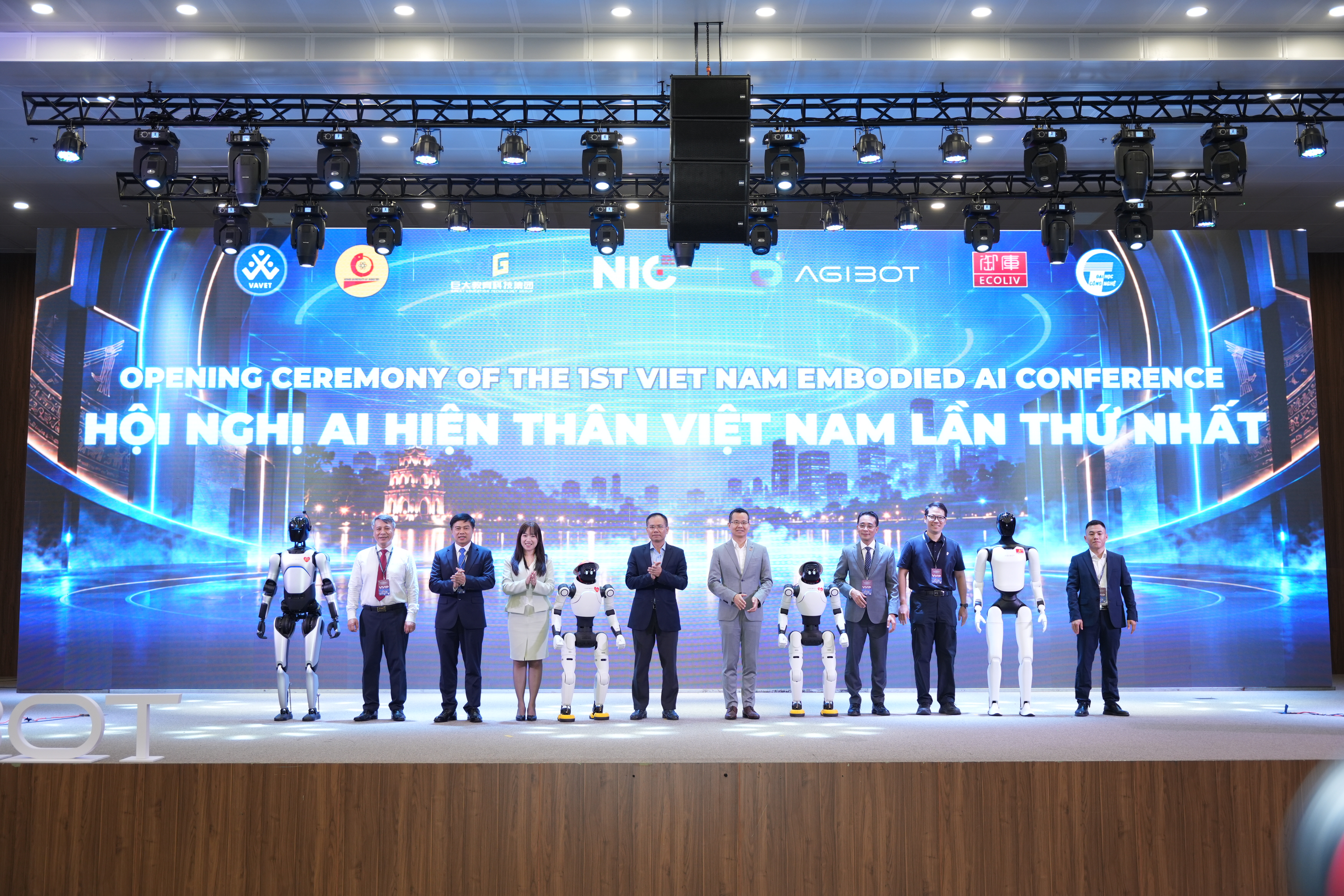
The momentum isn't confined to the giants. Vietnam's VinRobotics (Vingroup) signed a landmark MoU with Infineon Technologies in June 2026 to co-develop humanoid robots, opening a joint R&D competency centre in Hanoi leveraging Infineon's full semiconductor portfolio — Si, SiC, GaN — plus sensors, microcontrollers, and power management solutions. In Singapore, chipmaker GlobalFoundries is doubling down on "physical AI" chips — the sensing, processing, and real-time communication silicon that autonomous humanoids and drones will demand at scale. And in Hong Kong, a 24/7 capsule convenience store staffed entirely by a single humanoid robot named Xiao Gai (Galbot, Beijing) is already serving customers — stocking shelves, processing checkouts, and handling multilingual queries without a single human co-worker on site.
Asia's robotics story in June 2026 isn't a collection of isolated lab results. It is a coordinated, multi-nation surge — driven by national policy, corporate investment, and cutting-edge research — converging on a single shared conviction: the age of physical AI has arrived, and the region intends to define what it looks like.
News References:
- South China Morning Post — China fast tracks humanoid robots and embodied AI into industry under nationwide programme — June 10, 2026
- Caixin Global — China Targets 10,000 Humanoid Robots in Commercial Use by End-2026 — June 10, 2026
- Alizila (Alibaba) — Entering the Physical AI Era: Introducing the Qwen-Robot Suite — June 16, 2026
- Embodied Global — Zhiyuan Expedition A3 Becomes First Full-Size Humanoid Robot to Play Autonomous Ping-Pong — June 16, 2026
- Agenzia Nova — LG to build first 'data factory' for humanoid robots in South Korea — June 12, 2026
- Semiconductor for You — Infineon and Vingroup's VinRobotics form partnership to shape the future of humanoid robots — June 9, 2026
- Times Now — This Convenience Store Has No Human Workers, Just One Humanoid Robot Running The Show — June 22, 2026
- The Straits Times — Singapore key to GlobalFoundries' quest to equip humanoid robots with AI — June 22, 2026
Article highlights at a glance:
🇨🇳 China — 10,000 humanoid robots mandated for commercial deployment by end-2026 (MIIT + SASAC directive)
🤖 Alibaba — Qwen-Robot Suite launched — 3 foundational robotics models for manipulation, navigation & world modeling
🏓 Zhiyuan A3 — World's first bipedal humanoid to play fully autonomous table tennis using 20kHz pulse camera
🇰🇷 LG Korea — 33,000 sqm "data factory" campus deploying hundreds of CLOiD robots to generate real-world training data
🇻🇳 Vietnam — VinRobotics + Infineon MoU; joint R&D centre opening in Hanoi
🇸🇬 Singapore — GlobalFoundries expanding physical AI chip R&D for humanoid and drone applications
🇭🇰 Hong Kong — Galbot's Xiao Gai robot runs a 24/7 convenience store with zero human staff