AGIBOT's A3 and X2 Sweep IFA 2026 Innovation Awards
AGIBOT's A3 won IFA 2026's Innovation Award for Best in IFA Next and Emerging Technologies, with the X2 named an honoree, plus wins from TechRadar, Techlicious, Gadget Flow, and BGR, as the Shanghai humanoid maker builds consumer-facing trust ahead of hospitality and retail deployments.

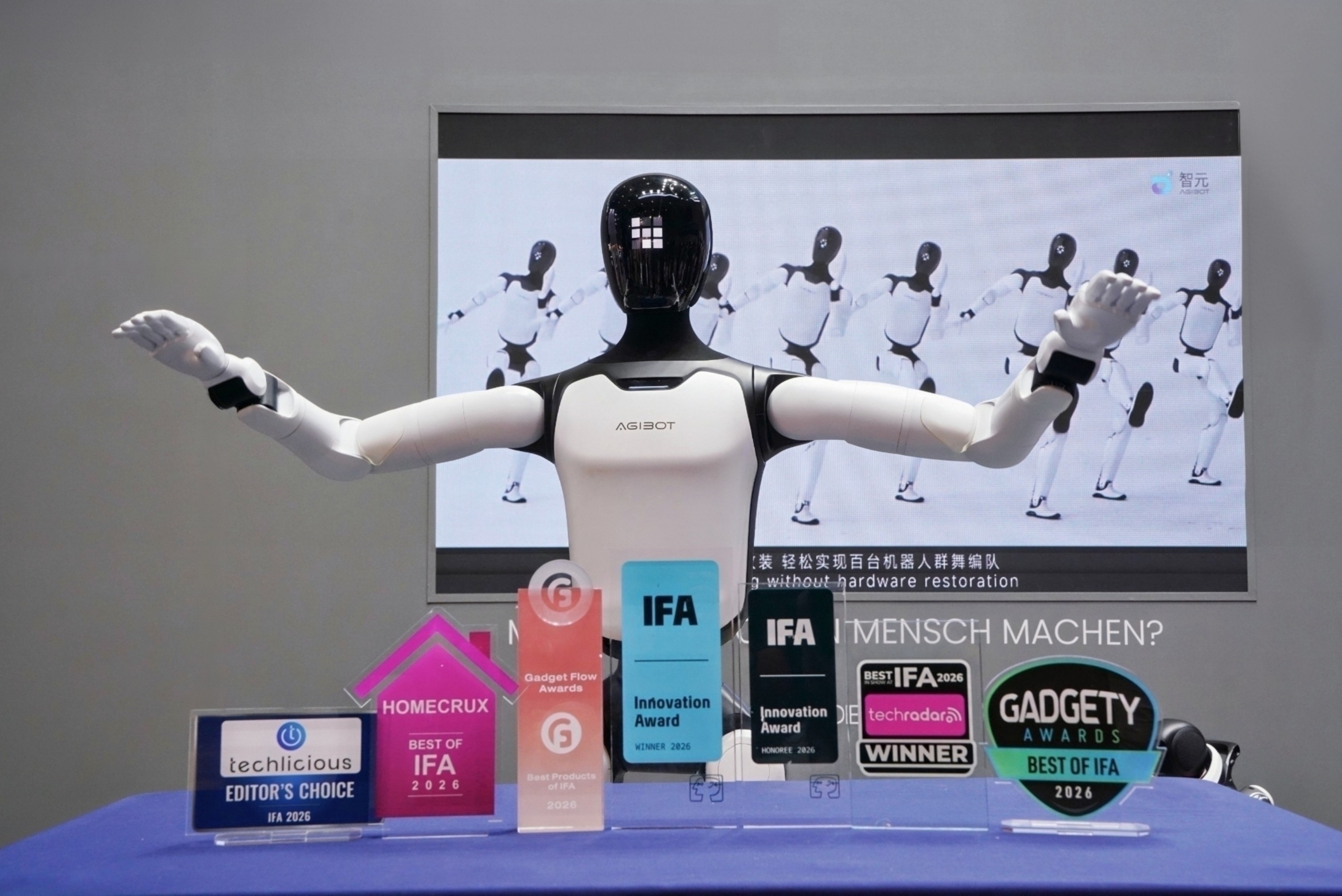
AGIBOT's A3 humanoid robot won the IFA Innovation Award for Best in IFA Next and Emerging Technologies at IFA 2026 in Berlin, the company announced Tuesday, with the compact X2 model receiving an honoree distinction in the same category. Shanghai-based AGIBOT Innovation (Shanghai) Technology Co., Ltd. also collected a TechRadar Best in Show award and a Techlicious IFA Editor's Choice award for the A3, while Gadget Flow named the X2 among its Best Products of IFA 2026 and BGR listed the A3 among the five best humanoid robots at the show. The sweep marks one of the broadest award hauls a Chinese humanoid maker has taken at a consumer electronics fair, rather than an industrial automation trade show, this year.
The distinction matters because IFA's award juries and its accompanying tech press corps are not the same audience that credentials a robot for a factory floor. IMTS, Automatica, and China's own World Robot Conference evaluate payload, cycle time, and integration cost for engineers who already assume a robot can be trusted around people under controlled conditions. IFA's judges, and the consumer-technology outlets covering it, are implicitly asking a different question: would a member of the public feel comfortable standing next to this machine in a hotel lobby or a retail floor. AGIBOT's award count is evidence that the company is deliberately building a case for that second audience, which is the one that actually signs off on humanoid robots for hospitality, retail, and education deployments rather than welding cells.
A Show Built for Households, Not Factories
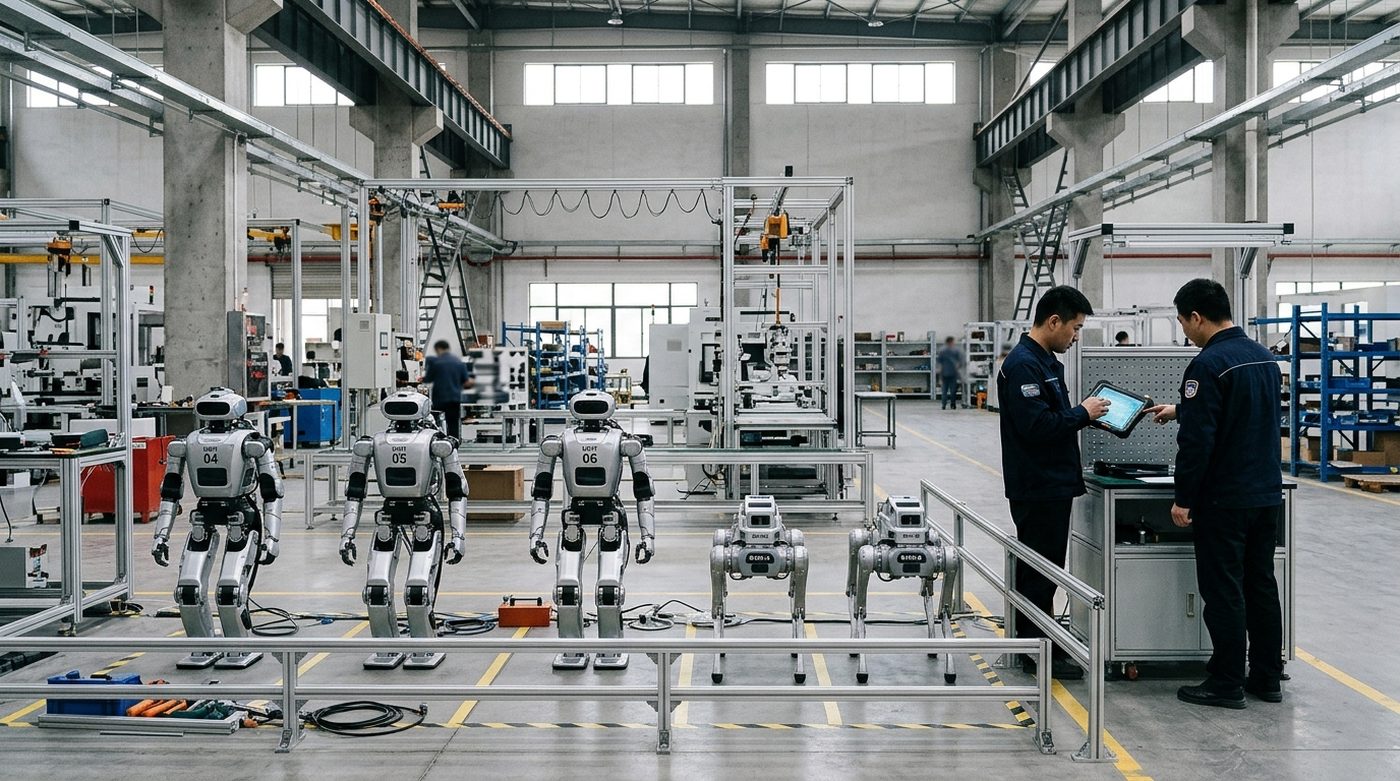
AGIBOT's A3 stands 173 centimeters tall and weighs 55 kilograms, dimensions chosen to read as approachably human-scaled rather than industrially imposing. Its OmniHand dexterous manipulator was shown performing calligraphy on the show floor, a demonstration chosen for legibility to a lay audience rather than for any factory task it maps onto. That choice separates AGIBOT's IFA presence from the humanoid demonstrations more common at industrial shows, where a robot is more likely to be shown palletizing boxes or torquing a bolt. A calligraphy demo does not prove manipulation precision in the way a bin-picking benchmark does, but it does something a bin-picking demo cannot: it gives a non-technical judge, and the millions of readers of the outlets that covered IFA, a visceral, photographable reason to believe the robot is dexterous.
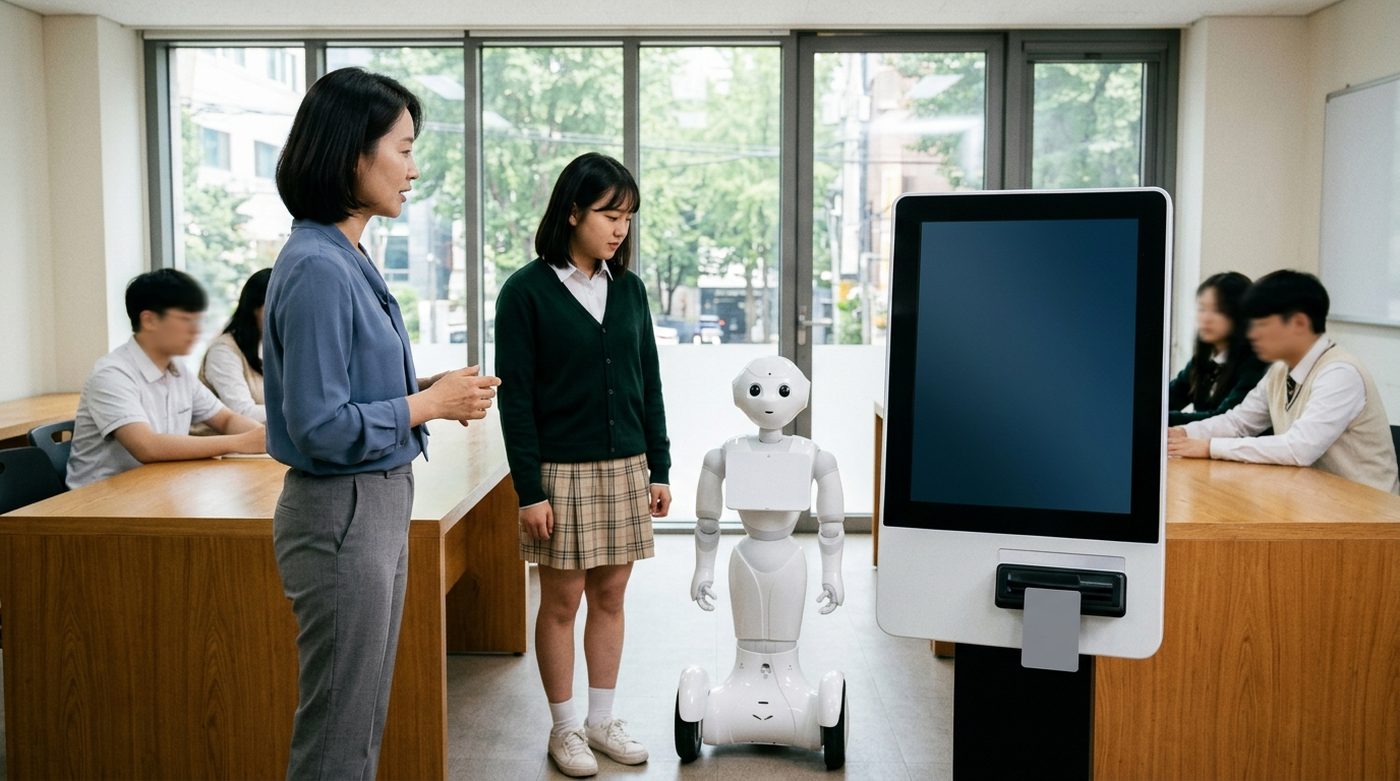
The X2, AGIBOT's more compact model, was positioned explicitly for "commercial, exhibition, and educational environments," according to the company, with a Greet-Narrate-Answer interaction routine and multilingual support built for reception-desk and docent-style roles rather than warehouse work. That is a narrower and, for many buyers, more immediately actionable use case than general-purpose humanoid labor: a museum, retail chain, or corporate lobby does not need a robot that can lift 20 kilograms, but it does need one that can hold a multilingual conversation reliably enough not to embarrass the brand that deployed it. AGIBOT's decision to enter both a flagship humanoid and a purpose-built commercial variant at the same show suggests the company is hedging between two different buyer conversations rather than betting everything on general-purpose embodied labor arriving on a near-term timeline.
What the Swarm Feature Signals About Fleet Ambitions
Both models share an ultra-wideband positioning system AGIBOT says can coordinate more than 100 robots simultaneously, enabling synchronized group choreography and, more practically, dense multi-unit navigation in shared spaces without collisions. A single robot answering questions at a reception desk does not need swarm coordination. A hotel chain, airport concourse, or large retail chain deploying dozens of units across one site does, and the fact that AGIBOT built and demonstrated that capability before most buyers have placed fleet-scale orders is a bet that the market is heading toward multi-unit deployments faster than current order volumes suggest. It also functions as a technical moat argument aimed at competitors still selling single-unit pilots: AGIBOT is implicitly telling procurement teams that when they are ready to scale past a handful of units, the coordination layer will already exist rather than needing to be built to order.
For a buyer evaluating that claim, the honest caveat is that IFA award judging and press coverage do not test fleet coordination under real operating conditions, with the network congestion, obstacle density, and edge cases a live site produces. A 100-unit synchronized dance routine on a controlled show floor is a capability demonstration, not a deployment reference. Procurement teams that take the swarm claim seriously should ask AGIBOT for a live multi-site reference, not a choreography video, before sizing an order around it.
Consumer Media as a Substitute Trust Signal
What AGIBOT has effectively purchased with this awards run, in the currency of engineering time rather than cash, is a trust signal aimed at buyers who are not robotics specialists. A hospitality group's facilities director or a school district's technology lead is unlikely to parse a servo torque specification sheet, but is very likely to have seen a BGR or TechRadar headline naming a specific robot as one of the best at a major show. That is a different sales funnel than the one industrial robot makers have relied on for decades, where reputation is built through system-integrator relationships and factory-floor references that never reach a general audience. AGIBOT's award strategy is a bet that humanoid robots destined for public-facing roles will be bought the way consumer electronics are bought, on the strength of visible, third-party-validated buzz, rather than the way industrial robots have historically been bought, through a slower chain of integrator trust.
That bet carries real commercial logic. Public-facing humanoid deployments are, almost by definition, brand decisions as much as operational ones: a retailer or hotel operator putting a robot in front of customers is making a statement about the brand's relationship to technology, and that decision sits with marketing and executive stakeholders who read consumer tech coverage, not purely with an operations team evaluating uptime statistics. A stack of IFA awards gives AGIBOT's sales team exactly the kind of external validation that shortens the internal approval conversation inside a prospective customer's organization, even before a single unit is piloted on-site.
A Crowded Berlin Floor
AGIBOT was not the only Chinese humanoid or service-robot maker chasing IFA's consumer audience this year. MagicLab showed its X1 and D1 units coordinating tasks live on the floor, AiMOGA brought its EU-certified Mornine model built with automaker Chery, D-Robotics powered three separate home-robot partners through its RDK compute platform, and Pudu Robotics used the show for its European debut of the D7 delivery unit. Against that backdrop, AGIBOT's award count functions as a tiebreaker in a field where several credible Chinese vendors were competing for the same limited pool of Western retail, hospitality, and consumer attention at the same event. A buyer scanning IFA coverage after the fact is more likely to remember the name attached to five separate award mentions than one attached to a single product demo, even if the underlying hardware capabilities across vendors are closer than the headline count suggests.
That crowding also raises the stakes on AGIBOT's next move. Consumer tech award cycles reset every year, and a company that wins big at IFA 2026 without converting the attention into named pilots by IFA 2027 risks having the narrative overtaken by whichever competitor closes the more publicized deployment in the interim. The Chinese humanoid sector's current strategy of using European consumer electronics shows as a credibility staging ground, rather than a sales channel in itself, only works if the winners use the resulting media cycle to book meetings with buyers who were not already in the market, not merely to reinforce standing with those who were.
The Reference-Deployment Gap Still Has to Close
Awards and press coverage are a marketing input, not a substitute for the operational references that actually determine whether a humanoid robot earns a second order from the same buyer. AGIBOT has spent 2026 building both tracks in parallel: a strong showing at the World Humanoid Robot Games in August demonstrated athletic and task performance under competition conditions, a Middle East rental program launched at LEAP in early September tested a lower-commitment deployment model for buyers unwilling to purchase outright, and now the IFA award run builds the brand-recognition layer that makes a cold outreach call land differently. None of those three tracks alone would carry a sales cycle from interest to signed contract, but together they describe a company treating humanoid robot adoption as a trust-building problem that has to be solved on multiple fronts simultaneously, not a single technology unveiling that will convert skeptics on its own.
Buyers evaluating AGIBOT, or comparing it against rivals also chasing consumer visibility this cycle, should treat the award count as a signal about where AGIBOT intends to sell next rather than as a proxy for reliability data. The company that converts IFA visibility into named commercial deployments over the next two quarters, with public reference customers willing to describe uptime and service response times, will have shown the harder half of this bet actually pays off. The award plaques prove AGIBOT can win a room. They do not yet prove it can staff a lobby for a year without a service call.
Hero image credit: AGIBOT Innovation (Shanghai) Technology Co., Ltd.
This analysis draws on AGIBOT's own public product and award disclosures alongside independent trade-press coverage of IFA 2026. It is for general information purposes only and does not constitute investment, financial, or legal advice.