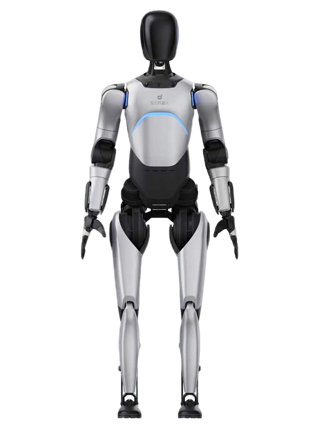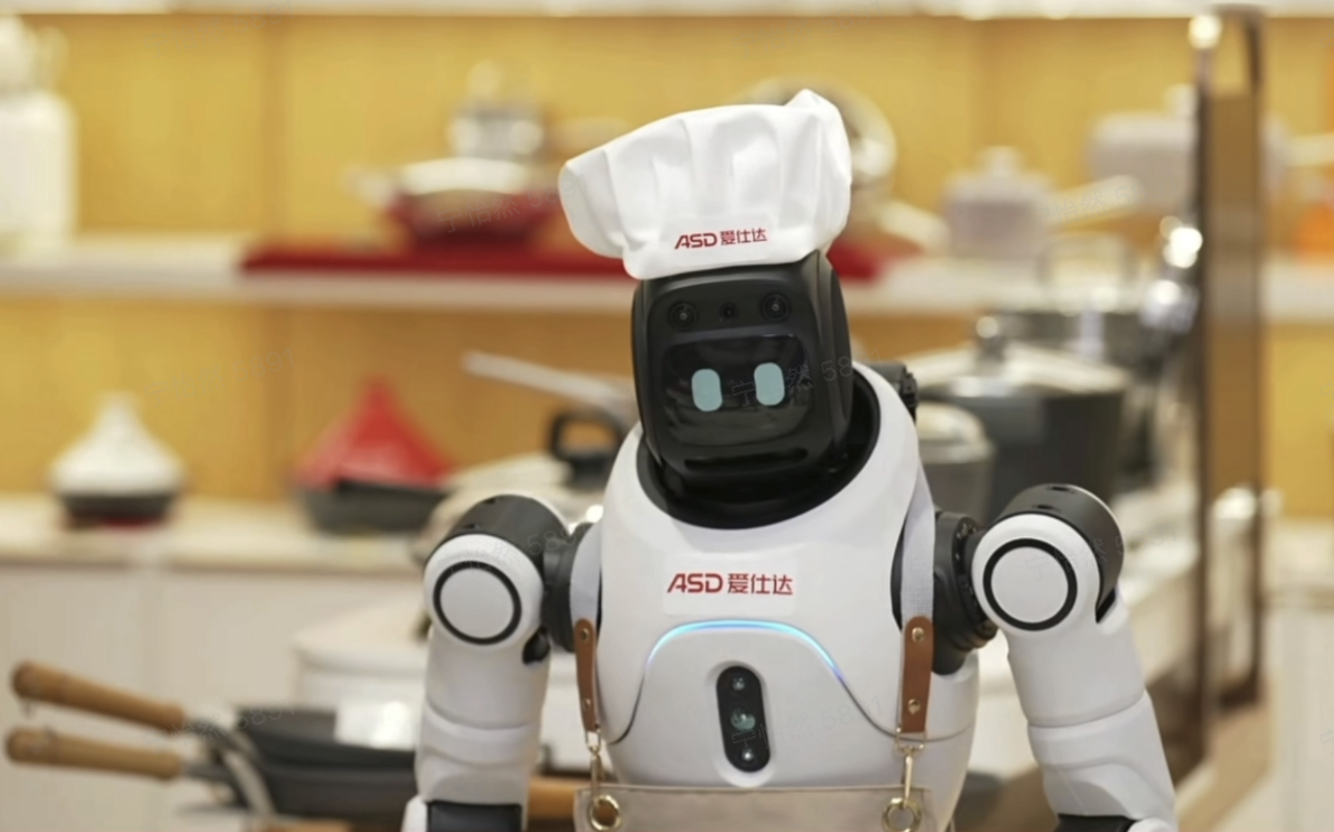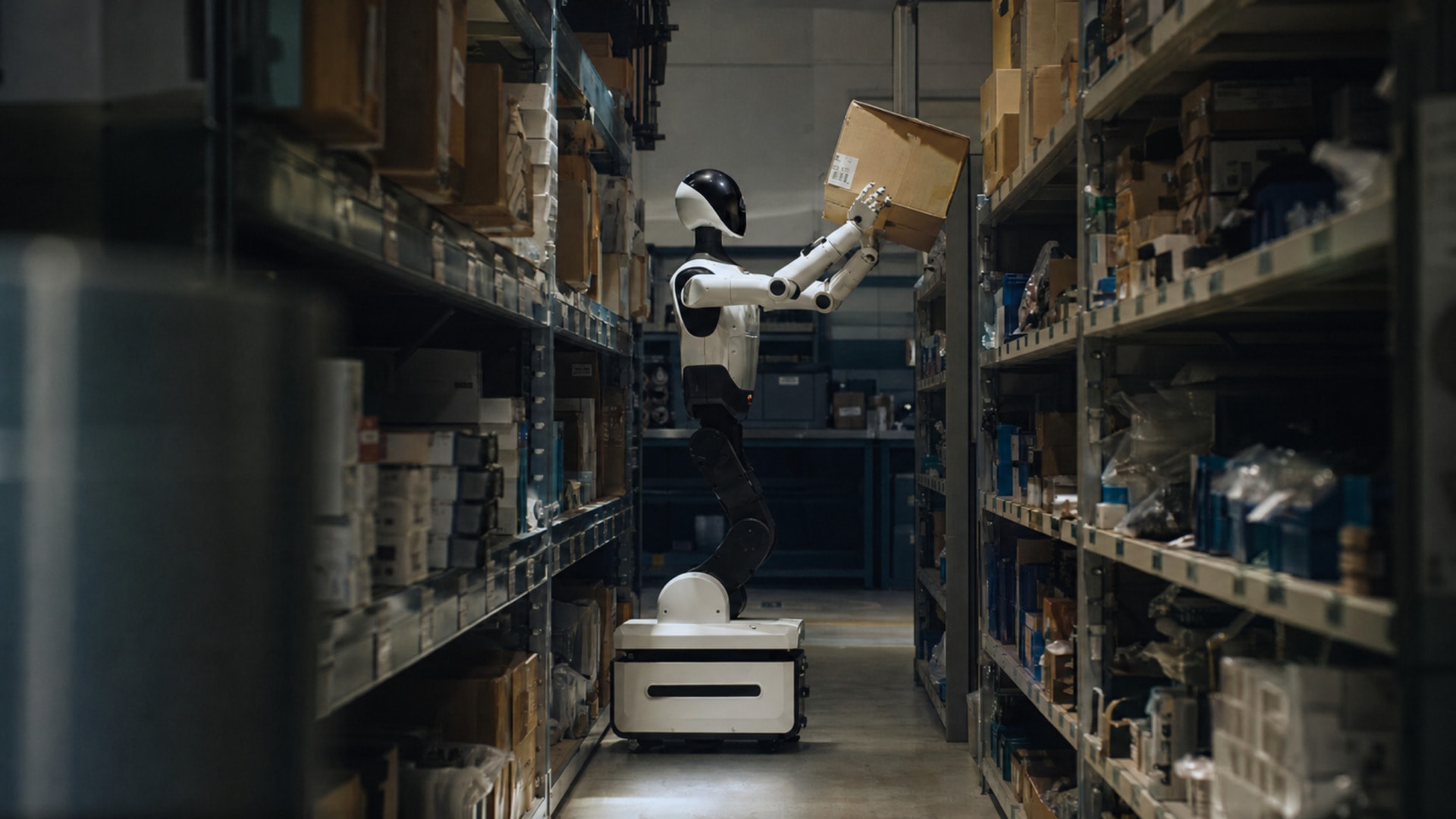
AgiBot G2 Humanoids Begin 6-Day Live Factory Quality Inspection
AgiBot deployed a cluster of its Ling G2 humanoid robots at Longqi Technology's Nanchang factory on June 23, 2026, for a six-day unedited production livestream covering the full tablet quality inspection workflow — the first time a humanoid robot system has been publicly verified running an entire 3C electronics quality-control line without cuts or pre-rehearsal.
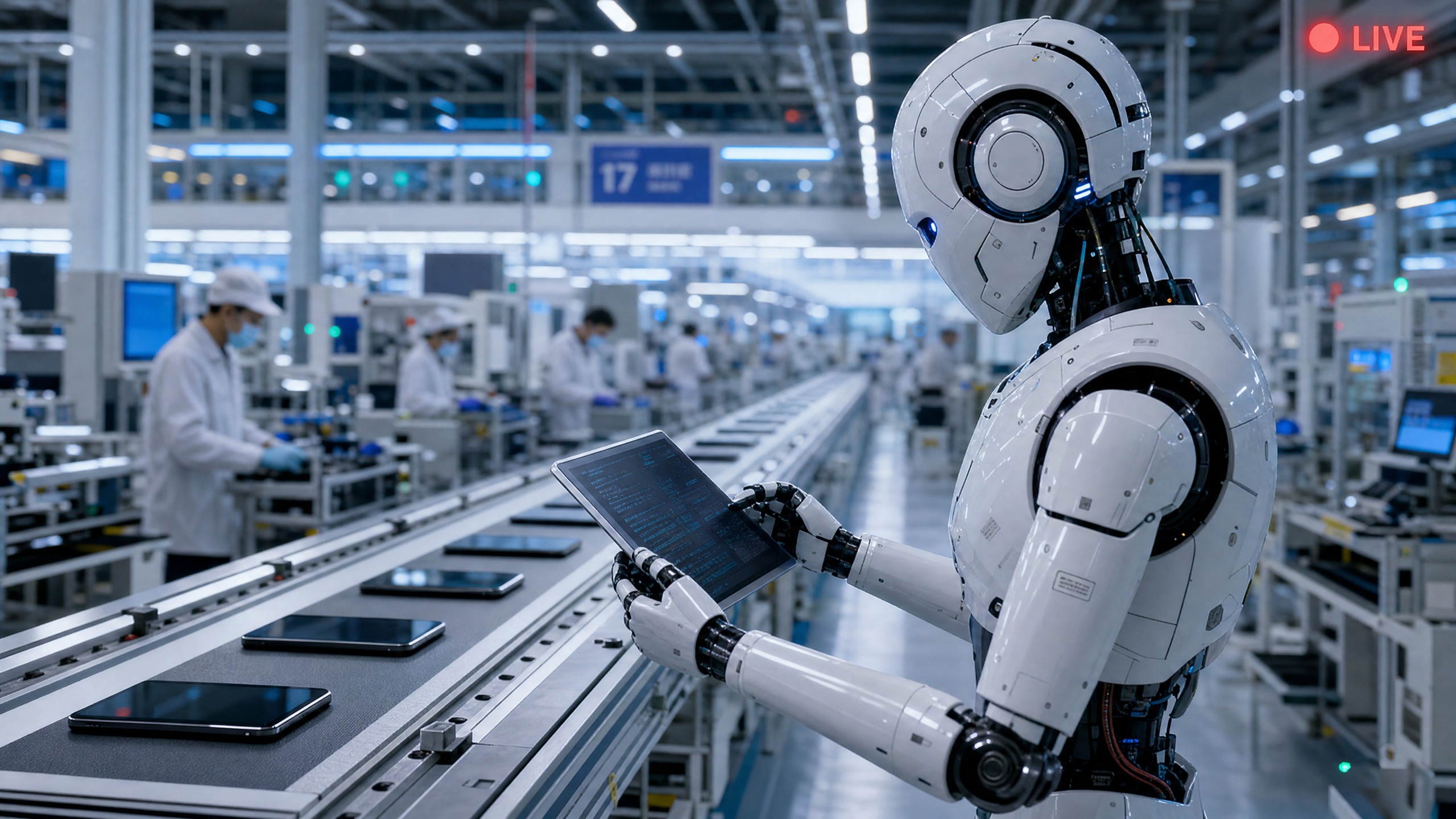
The robotics industry has spent years producing polished two-minute demonstration videos. On June 23, 2026, AgiBot decided to try something harder: it sent a cluster of its Ling G2 humanoid robots onto a real production floor and left the cameras running for six days straight, with no editing, no pre-rehearsal, and no safety net.
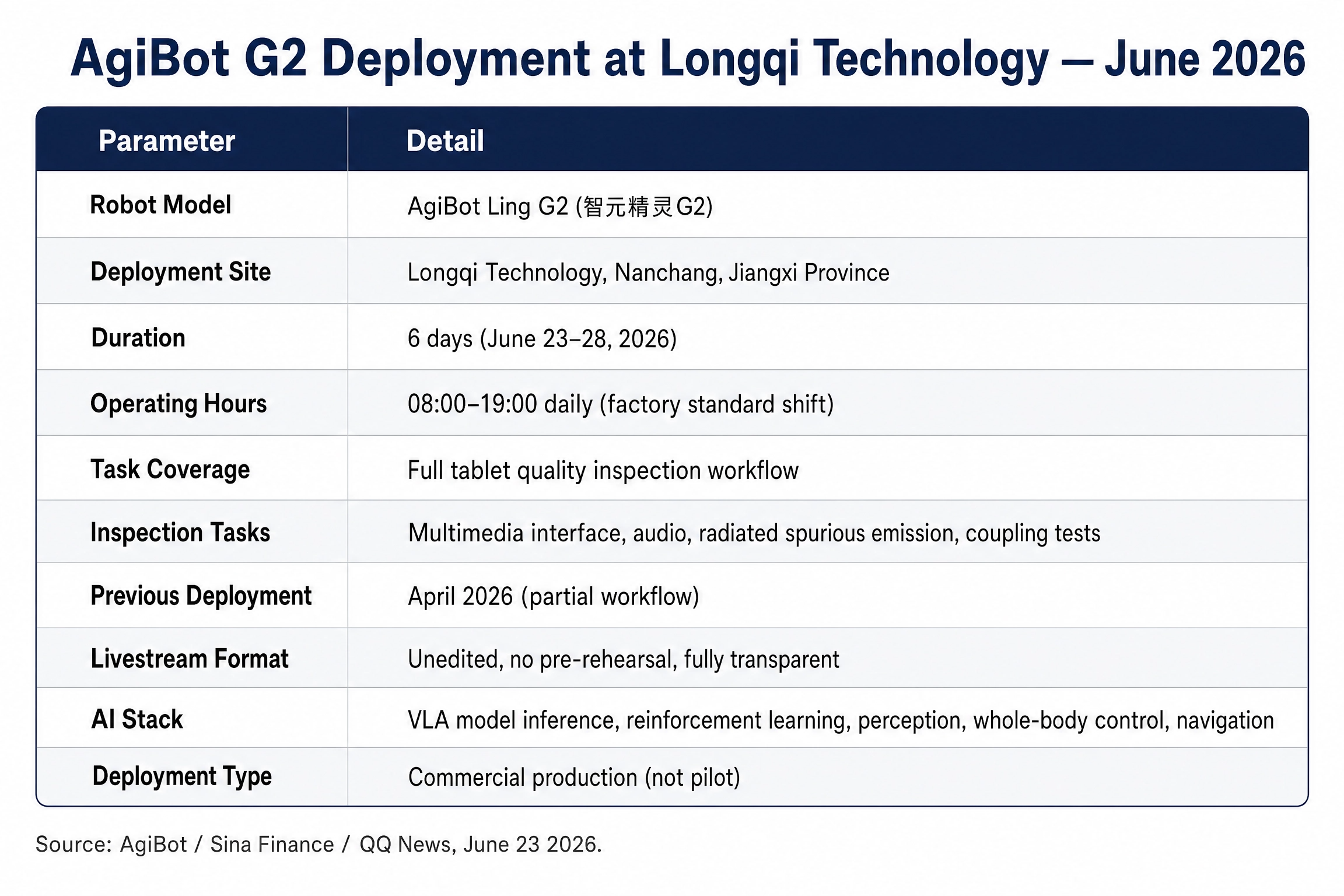
The deployment is taking place at Longqi Technology's mass-production facility in Nanchang, Jiangxi Province, where the G2 units are executing the complete quality inspection workflow for tablet computers. The livestream runs daily from 08:00 to 19:00, matching the factory's standard operating shift. It is scheduled to conclude on June 28, 2026.
What Is AgiBot Actually Doing at Longqi Technology?
Starting June 23, 2026, multiple AgiBot Ling G2 humanoid robots were deployed at Longqi Technology's Nanchang factory to perform the full tablet quality inspection workflow over six consecutive days. The robots operate during standard factory hours (08:00–19:00), executing multimedia interface testing, audio testing, radiated spurious emission testing, and coupling tests — all without pre-rehearsal or editorial cuts.
Why the 3C Electronics Line Is the Right Proving Ground
Quality inspection in 3C electronics — the shorthand for Computer, Communication, and Consumer Electronics manufacturing — is one of the most demanding environments a humanoid robot can enter. The tasks require high-precision manipulation, consistent force calibration, and the ability to handle dozens of slightly different product variants without a manual reconfiguration cycle. Traditional fixed automation handles this poorly: rigid equipment requires long changeover periods and cannot adapt when a new tablet model enters the mixed-line production schedule.
Li Long, General Manager of Longqi Technology's Robotics Business Department, put it plainly: the G2's high-flexibility manipulation allows it to handle multiple differentiated inspection procedures without line reconfiguration, filling a gap that conventional automation cannot close. That is not a marketing claim — it is a statement about the economics of mixed-line 3C production, where the cost of downtime during changeover is a real and measurable constraint.
The six-day livestream format is AgiBot's answer to a credibility problem that the entire humanoid sector faces. Buyers do not trust edited clips. They want to see what happens at hour nine of an eleven-hour shift, when fatigue, sensor drift, and production variation accumulate. By broadcasting the full shift in real time, AgiBot is staking its commercial reputation on the G2's ability to hold up under conditions that no demonstration environment can replicate.
The AI Stack Behind the Deployment
To meet the 3C line's requirements for precision, long-duration stability, and cross-station flexibility, AgiBot built a capability system that integrates VLA (Vision-Language-Action) model inference, reinforcement learning, perception, decision-making, whole-body control, and navigation into a single coherent architecture. These modules are packaged into what the company describes as a one-stop development platform — a deployment layer that simplifies integration logic to match real factory workflows and reduces the time needed to adapt the system to a new production line.
The platform is the real product. The humanoid robot is the physical interface through which that platform interacts with the factory floor. If the platform can be replicated across different lines and facilities without requiring a dedicated engineering team on-site for each deployment, AgiBot has solved the scaling problem that has kept humanoid robots confined to pilots.
Yao Maoqing, AgiBot's Partner, Senior Vice President, and President of the Embodied Business Division, described the current moment as an inflection point for the global embodied AI industry — a transition from technical demonstration to industrial deployment. The Longqi six-day livestream, he argued, is a benchmark verification of that transition for China's humanoid manufacturing sector.
The Bigger Signal
The decision to livestream rather than publish a highlight reel is a strategic signal that extends well beyond AgiBot. It sets a transparency benchmark that other Chinese humanoid manufacturers will now be measured against. Companies that continue releasing edited two-minute clips will face an increasingly skeptical audience of industrial buyers who have seen what an unedited six-day run looks like.
The deeper implication is structural. AgiBot is not just proving that the G2 can survive a factory shift; it is proving that humanoid robots can function as what Yao called 'normalized productive units' — assets that create consistent, measurable value for a manufacturer rather than requiring constant supervision and intervention. That framing matters because it shifts the conversation from 'can this robot do the task' to 'can this robot be managed like a piece of capital equipment.'
The gap between those two questions is where most humanoid deployments currently stall. Getting a robot to complete a task in a controlled demonstration is an engineering problem. Getting it to complete the same task reliably across 66 hours of factory operation, across dozens of product variants, alongside human workers operating on a standard production schedule — that is an organizational and systems problem. AgiBot's livestream is a public attempt to prove it has solved both.
The Hard Truth
The six-day livestream is an impressive endurance test, but it does not resolve the fundamental economics of humanoid deployment in China's 3C sector. A cluster of high-DOF humanoid robots remains significantly more expensive than the human labor it augments, particularly in Jiangxi Province, where manufacturing wages are lower than in coastal cities. The ROI case for humanoid quality inspection closes only when hardware costs fall substantially, task success rates approach near-100% reliability across the full product variant range, and the deployment platform genuinely eliminates the need for on-site engineering support.
None of those conditions are fully met yet. What the Longqi livestream does establish is that the technical floor is higher than critics assumed — and that AgiBot is willing to prove it in public, in real time, with no editing. That is a meaningful step. It is not yet a business case.
The ELI5 Bridge
A traditional factory inspection machine is like a vending machine: it does exactly one thing, and if you want it to do something slightly different, you have to rebuild it from scratch. A humanoid robot like the AgiBot G2 is more like a well-trained technician who can read the instructions for a new product and figure out how to test it without anyone rebuilding the workstation. The six-day livestream is AgiBot proving that their technician can work a full eleven-hour shift, every day for a week, without calling in sick or making mistakes — and doing it on camera, with no second takes.
References
[1] Sina Finance / Securities Times. 智元加速'部署态'规模化落地 开启全球首个3C产线质检工段全覆盖机器人作业直播. June 23, 2026. https://finance.sina.com.cn/roll/2026-06-23/doc-iniekzkr8721634.shtml
[2] QQ News / Caiwén. 全球首个3C产线质检工段全覆盖机器人作业直播,智元加速'部署态'规模化落地. June 23, 2026. https://news.qq.com/rain/a/20260623A03P6000
[3] Sohu. 智元精灵G2开启为期6天的真实产线作业直播. June 23, 2026. https://www.sohu.com/a/1040266631_120988533
[4] Forbes. Humanoid Livestream: Robot Makers Rushing To Show Machines On Real Production Lines. June 23, 2026. https://www.forbes.com/sites/johnkoetsier/2026/06/23/humanoid-livestream-robot-makers-rushing-to-show-machines-on-real-production-lines/