A German Gas-Spring Maker Just Claimed the Most Valuable Part of the Humanoid Robot
Germany's Stabilus and drive-technology specialist Synapticon announced a strategic partnership on July 29 to jointly mass-produce integrated actuators for humanoid robot joints. Small-series production begins at Stabilus plants in Europe in 2027. Large-scale output follows in North America from 2028, close to the leading humanoid makers. Actuators account for roughly half of a humanoid's material value, and Europe's automotive industrial base is now moving to claim that layer.
Most people know Stabilus without knowing it. The Koblenz company makes the gas springs that hold up your car's tailgate. It has been doing precision motion control since 1934. On Tuesday, July 29, it announced a move into a very different market. Stabilus and Synapticon will jointly mass-produce integrated actuators for humanoid robot joints.
The announcement came through an official corporate release from Koblenz. The two companies will develop and build complete joint actuators together and sell them under both brands. Small-series production starts in 2027 at Stabilus plants in Europe. Large-scale manufacturing begins in North America from 2028. The location choice is deliberate. The release says the plants will sit "in close proximity to many leading manufacturers of humanoid robots." Capacity will grow as demand does.
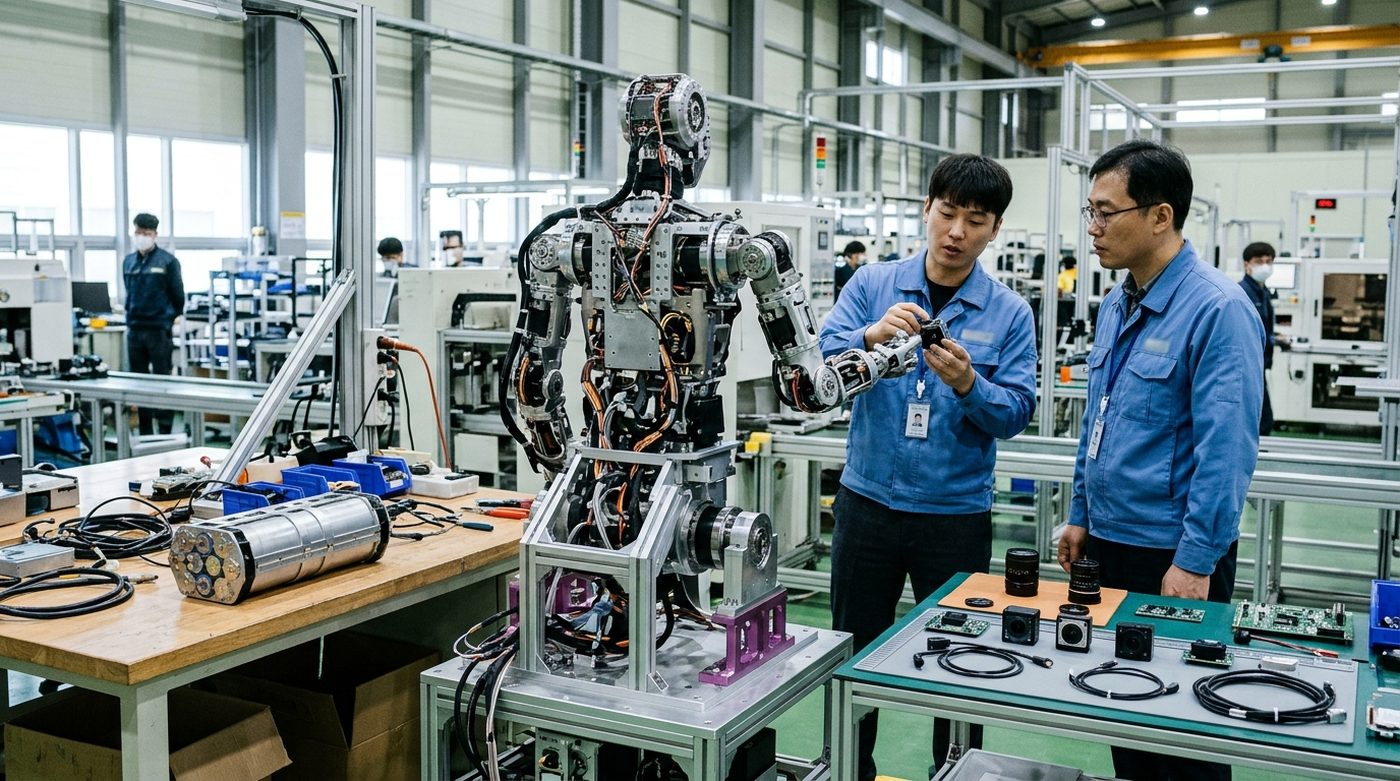
Why does a tailgate-spring maker want into robotics? Follow the money inside the machine. A humanoid robot carries up to 30 drive joints on average, by the figures cited in the release. Those actuators represent about half of the robot's total material value. No other component group comes close. Whoever supplies the joints captures the richest slice of every humanoid built. Batteries had their gold rush. Actuators are having theirs now.
Two Companies, One Complete Joint
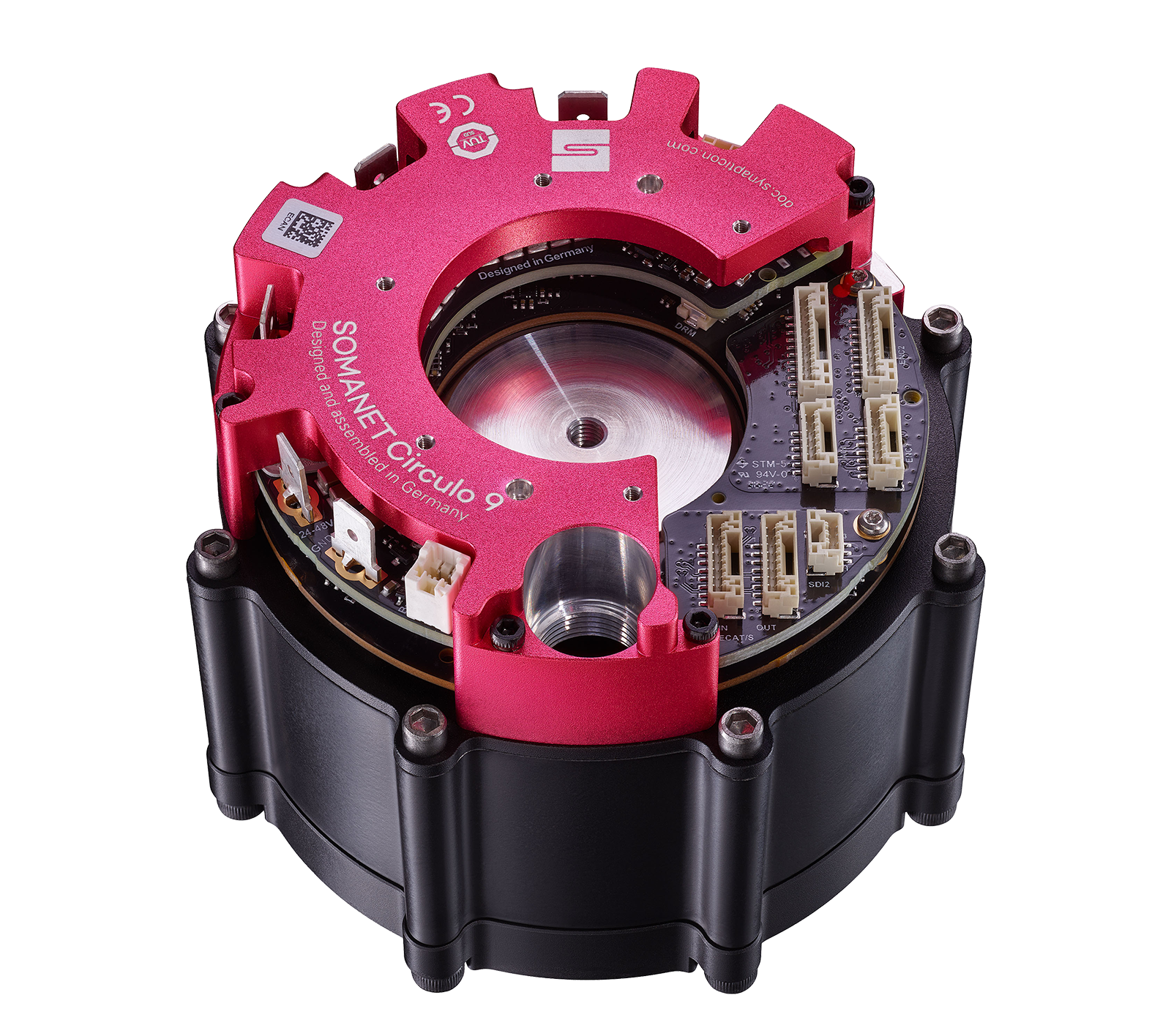
The division of labor is clean. Synapticon brings the intelligence. The Schönaich-based firm supplies the software, drive technology, electronics, and sensors that make a joint think. Its systems carry certified functional safety at the SIL3 and PLe levels, the ratings that let a machine work next to a human without a cage. Its POSITRON Safety AI architecture handles the safety logic. The company's integrated ACTILINK-JD actuator won an A3 Innovation Award in 2026.
Stabilus brings the muscle and the factory discipline. The company has produced millions of electromechanical actuators for the automotive industry. It contributes mechanical design, sourcing, industrialization, manufacturing, assembly, and logistics. The joint product line will cover the full body, from head and wrist joints to hips and knees. Everything is designed from the first sketch for high volumes, using quality standards proven in automotive production.
The two firms are not strangers. Stabilus has held a minority stake in Synapticon since 2021. Tuesday's agreement converts that quiet financial bet into an industrial alliance with dates and plants attached. Five years of due diligence preceded this handshake. That patience shows in how specific the production plan already is.
The safety credentials deserve a moment, because they are the real moat. Anyone can build an actuator that moves. Building one certified to work beside an unprotected human is a different discipline. SIL3 and PLe are the highest practical safety ratings in industrial automation, the same tier demanded of machines that could kill if they failed. Humanoids that share aisles with warehouse workers will need exactly this pedigree. Most Chinese joint-module suppliers compete on price and torque density. Very few can present a certified safety file. That is the gap the German pair intends to defend.
Stabilus CTO David Sabet framed the ambition plainly. "Humanoid robotics is one of the most exciting growth markets of the coming decade," he said in the release. He added that the company's aim is "to occupy a key position in the drive layer of humanoid robots" and called the partnership "an important building block of our growth strategy beyond established markets."
The Numbers Behind the Bet
The release lays out the market math the partners are working from. The humanoid robot market is projected to reach roughly US$38 billion dollars by 2035. Annual deliveries could pass 250,000 units as early as 2030. The first wave will be industrial. Robots will work in structured environments such as automotive manufacturing and logistics before they ever fold laundry at home.
Multiply those forecasts by 30 joints per robot and the addressable market becomes vivid. A quarter-million humanoids a year would need seven and a half million actuators. Nobody hand-builds seven and a half million of anything. That volume demands automotive-grade production lines, and automotive-grade production is precisely what Stabilus sells. The company employs more than 7,000 people and booked around 1.3 billion euros in revenue in fiscal 2025. It trades on Frankfurt's SDAX.
There is a quieter industrial logic underneath. Europe's car-parts sector is searching for its next act as combustion platforms fade. Motion control, precision gears, power electronics, and safety certification all transfer naturally from cars to robots. A humanoid joint is, in engineering terms, a cousin of an electric seat adjuster with a doctorate. Suppliers who spent decades meeting automotive quality standards suddenly find those standards are the entry ticket to robotics.
The precedent is the electric vehicle supply chain. When EVs arrived, the winners among suppliers were not always the flashiest battery startups. They were often the established firms that could bend metal, pass audits, and deliver a million identical parts on time. Bosch, Continental, and their peers rebuilt themselves around the new drivetrain. Stabilus is making the same play one product cycle early, before the humanoid volumes exist, so that it owns the tooling when they do.
Europe Picks Its Lane
For Synapticon, the deal solves the classic deep-tech problem. Brilliant drive technology means little if you cannot manufacture it at scale and defend the price. Partnering with an SDAX industrial gives the smaller firm production capacity it could never build alone. For Stabilus, the deal buys a decade of robotics credibility in a single signature.
The proof will arrive in stages. The humanoid story is usually told through the robots that walk on stage. The more durable fortunes may be made by the companies that build their knees. Stabilus spent ninety years making sure car doors close smoothly. It is now betting the next decade on making robots move the same way.
This article is for informational purposes only and does not constitute investment, legal, or professional advice. Figures are drawn from the cited sources and were accurate as of publication.