The Home Humanoid Reality Check: Cost Stacks, Early Adopters, and the True Price of a Robot Homemaker
While folding clothes makes for viral demonstrations, the actual economics of bringing a humanoid robot into the home remain prohibitive for the mass market. We break down the $50,000 bill of materials, map the current pricing landscape of purchasable home robots, and analyze the gap between what consumers want, which is heavy lifting work and elder care, and what the market can affordably deliver.
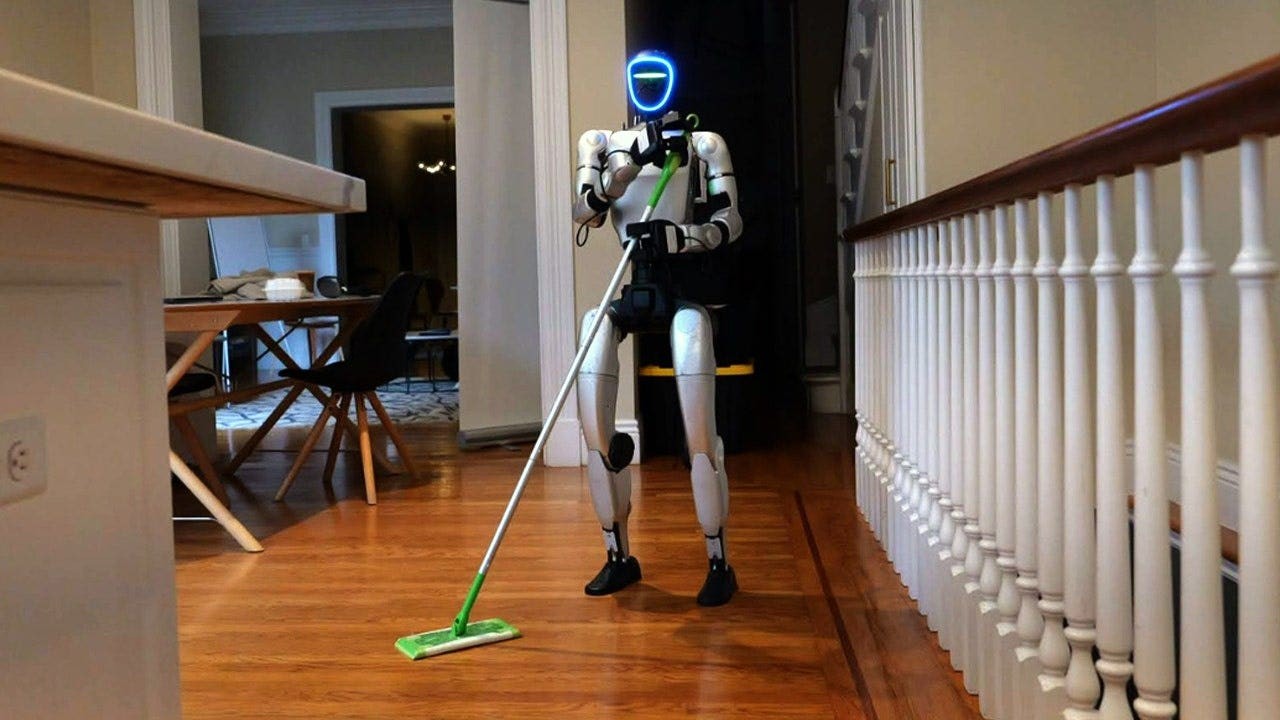
The internet is saturated with videos of humanoid robots folding laundry, making coffee, and performing delicate household chores. These demonstrations project an imminent future where every home has a robotic maid. However, the reality indicates a stark disconnect between these viral capabilities and the commercial viability of the consumer hardware market. Bringing a general-purpose humanoid into the living room is not just an intelligence problem; it is a profound bill of materials challenge.
The Humanoid Cost Stack: Why the Hardware Remains Expensive
At low production volumes, the current Bill of Materials (BOM) for a capable humanoid robot sits between $50,000 and $60,000. According to research from the Bank of America Institute and IDTechEx, the "brain" is no longer the bottleneck; the physical components are.
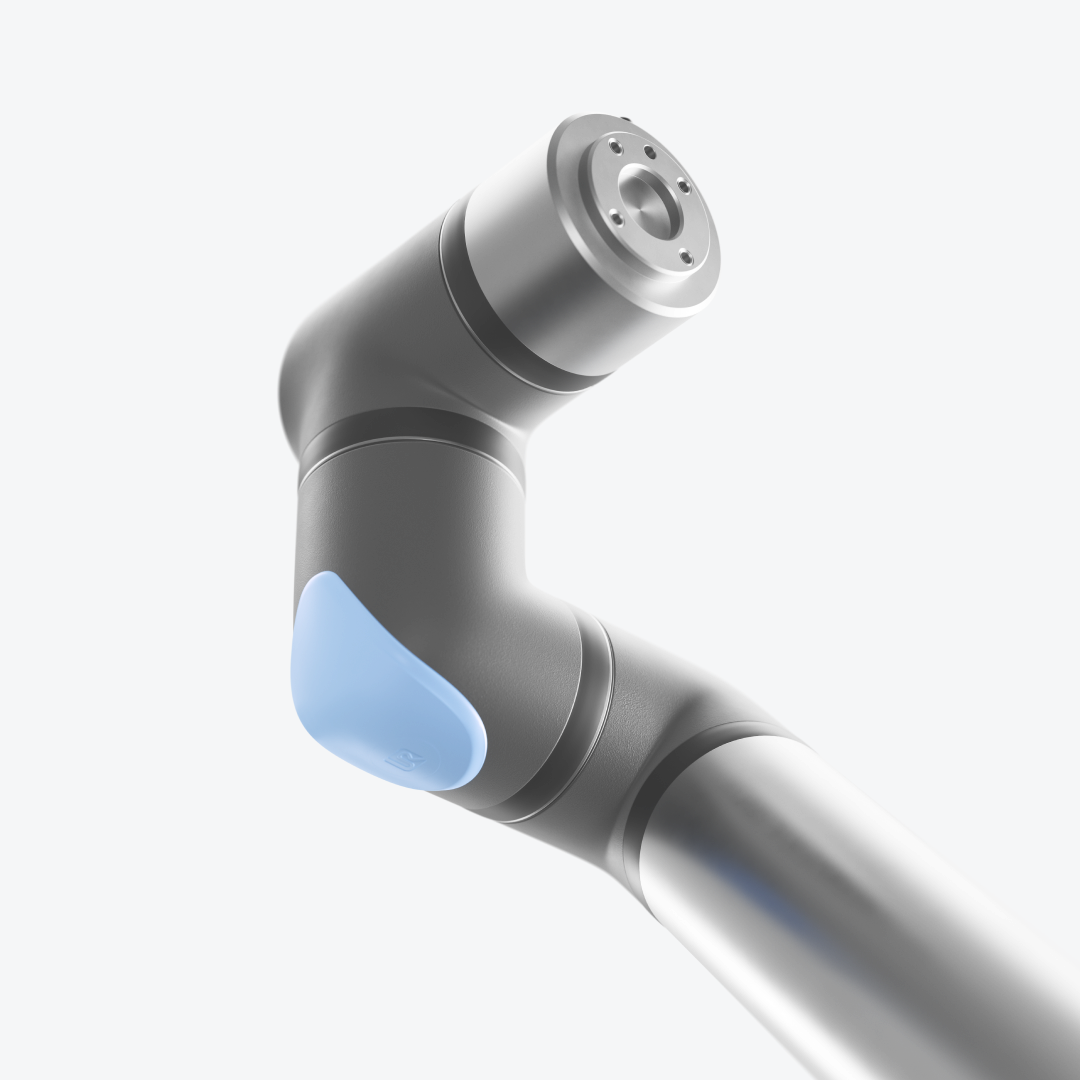
The single largest cost center is the actuation system. A humanoid requires 20 to 40 high-precision joints, each comprising a motor, a reducer, and an encoder. At current volumes, actuators alone account for more than 50 percent of the total BOM, costing between $15,000 and $45,000 per robot. The dexterous hands, required for the delicate manipulation shown in folding demonstrations, are the most expensive sub-components. A pair of highly capable robotic hands can cost between $9,000 and $90,000, requiring dozens of coreless motors and tactile sensors. (Note: All currency displayed in US$ unless otherwise stated in another currency.)
Furthermore, deploying a robot in an unstructured home environment, where it must navigate around children, pets, and fragile furniture, demands a level of safety engineering and reliability that far exceeds industrial requirements. While mass production could eventually reduce actuator costs by 50 to 70 percent, analysts project that the average humanoid BOM will not drop to the $13,000 to $17,000 range until the early 2030s.
The 2026 Home Robot Price List
Given these underlying costs, the current market for purchasable home robots is stratified. True general-purpose humanoids remain priced as luxury or developer items, while affordable options are restricted to single-function devices.
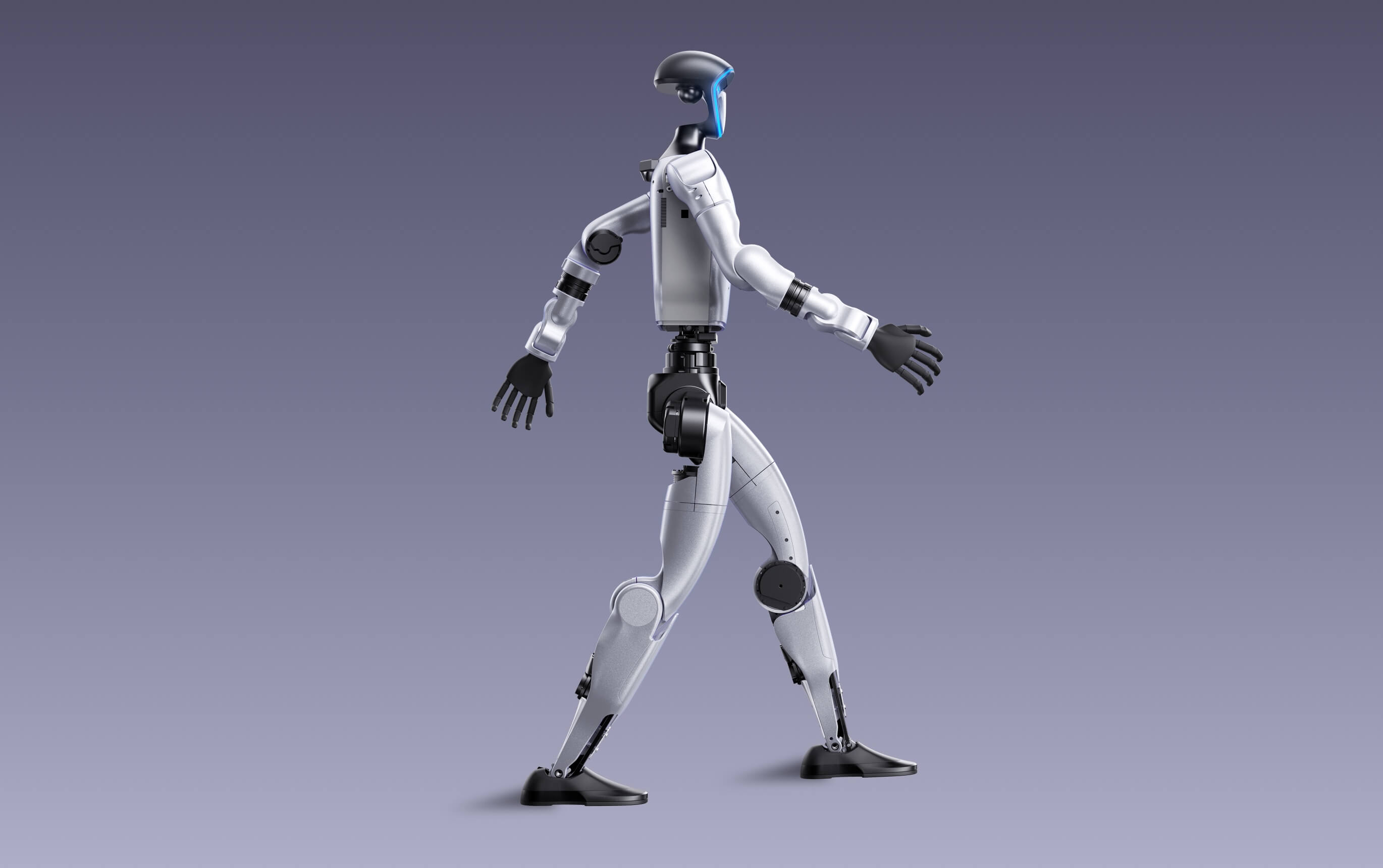
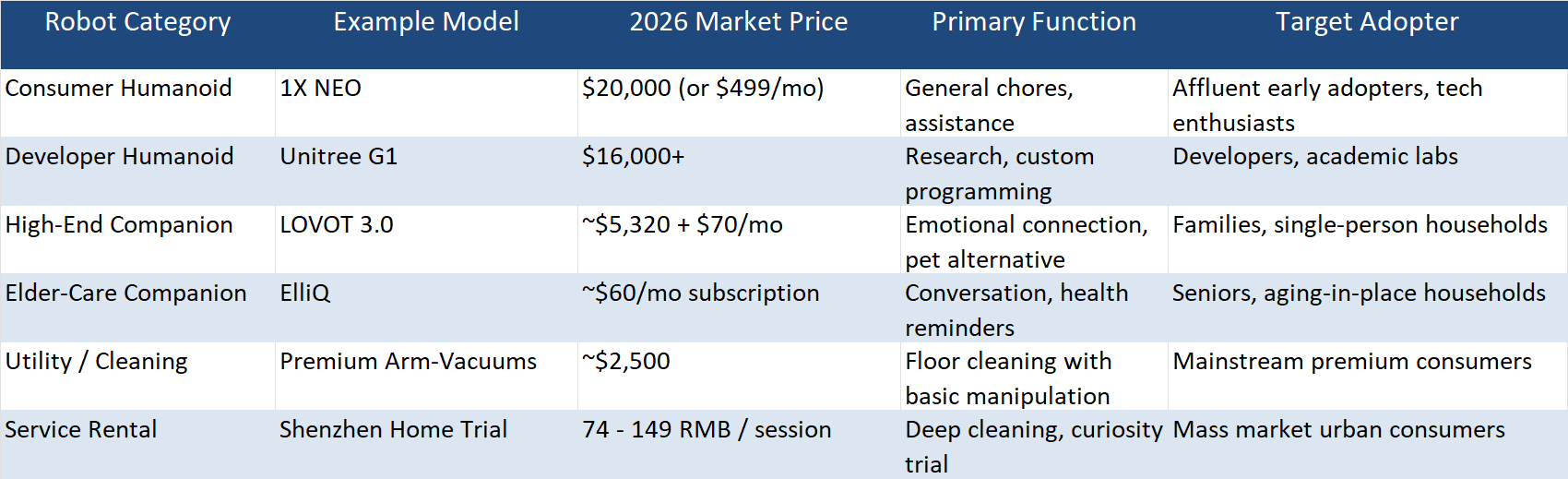
The Humanoid Tier The most visible entry in the consumer humanoid space is the 1X NEO, currently available for early access preorder at $20,000 outright, or through a $499 monthly subscription. It represents the vanguard of home deployment, though early adopters must accept data-sharing agreements to allow teleoperators to assist the robot when it encounters novel situations. In China, Unitree offers the R1 developer companion starting at $5,900, while their more capable G1 model starts at $16,000. LimX Dynamics offers the Luna home humanoid at 298,000 RMB (approximately $41,000).
The Companion Tier For users seeking interaction rather than physical labor, the companion robot market is maturing. Groove X's LOVOT 3.0 in Japan costs approximately $5,320 upfront plus a $70 monthly subscription. Intuition Robotics' ElliQ, designed specifically for senior care and loneliness reduction, operates on a subscription model of roughly $60 per month and has seen distribution support from US state aging agencies.
The Utility Tier Currently, the only mass-adopted home robots with manipulation capabilities are high-end robot vacuums equipped with basic robotic arms, such as the Roborock Saros series, which retail in the $2,500 range. For full humanoid services, the market is experimenting with rental models. In Shenzhen, consumers can rent a humanoid for household cleaning at 149 RMB per session, while BT Caijing recently analyzed a 74-yuan, three-hour deployment model. These rental services allow mass-market curiosity trials without the $20,000 capital expenditure.
The Gap: What Homes Actually Need
The pricing reality exposes a significant gap between what the robotics industry is demonstrating and what consumers actually want. Surveys consistently show that while folding laundry is a neat trick, it is not the primary household pain point. The most hated chores are deep cleaning tasks: scrubbing bathrooms, cleaning ovens, and heavy lifting.
More importantly, the demographic driving the greatest need for home assistance is the aging population. The acute global caregiver shortage has created a massive demand for robots that can assist with elder care. However, the economics of lifting a human being are brutal. A robot capable of safely transferring a 90-kilogram adult from a bed to a wheelchair requires industrial-grade actuators, heavy counterweights, and flawless safety certification. Currently, such transfer robots exist only in institutional nursing home settings and cost tens of thousands of dollars.
The real homemaker robot, one that combines the heavy lifting required for elder care with the delicate manipulation needed for daily chores at a sub-$20,000 price point, does not yet exist. Until the actuator cost curve collapses, the home robotics market will remain divided between affordable single-task appliances and luxury humanoid early access programs.
Sources:
1. Bank of America Institute, Physical AI Part 2: Humanoid Robots, March 12, 2026
2. IDTechEx, Humanoid Robots 2026-2036: Technologies, Markets, and Players
3. Recorded Future, The Future of Humanoid Robotics, November 20, 2025
4. 1X Technologies, NEO order page ($20,000 / $499 per month)
5. Unitree Robotics official store, G1 and R1 pricing
6. CNTechPost, LimX Dynamics launches LimX Luna humanoid robot at 298,000 yuan, May 25, 2026
7. The New York Times, To Stay in Her Home, She Let In an A.I. Robot, February 12, 2026
9. Lee, Y.S. et al., Robots and labor in nursing homes, Labour Economics, 2025
10. BT Caijing via Sina Finance, 74 yuan for 3 hours: embodied AI lands in home services, July 3, 2026
11. Xinhua, Shenzhen: cleaners welcome new robot colleagues in home services, April 21, 2026
Disclaimer: This article is for informational and market intelligence purposes only. Prices are based on public listings and reports as of July 2026 and are subject to change. RobotAIGeek has no commercial affiliation with the companies mentioned. Image credit: Gatsby humanoid home cleaning via Fox News