AI Robotics in Asia-Pacific: Where the Philippines Stands in 2026
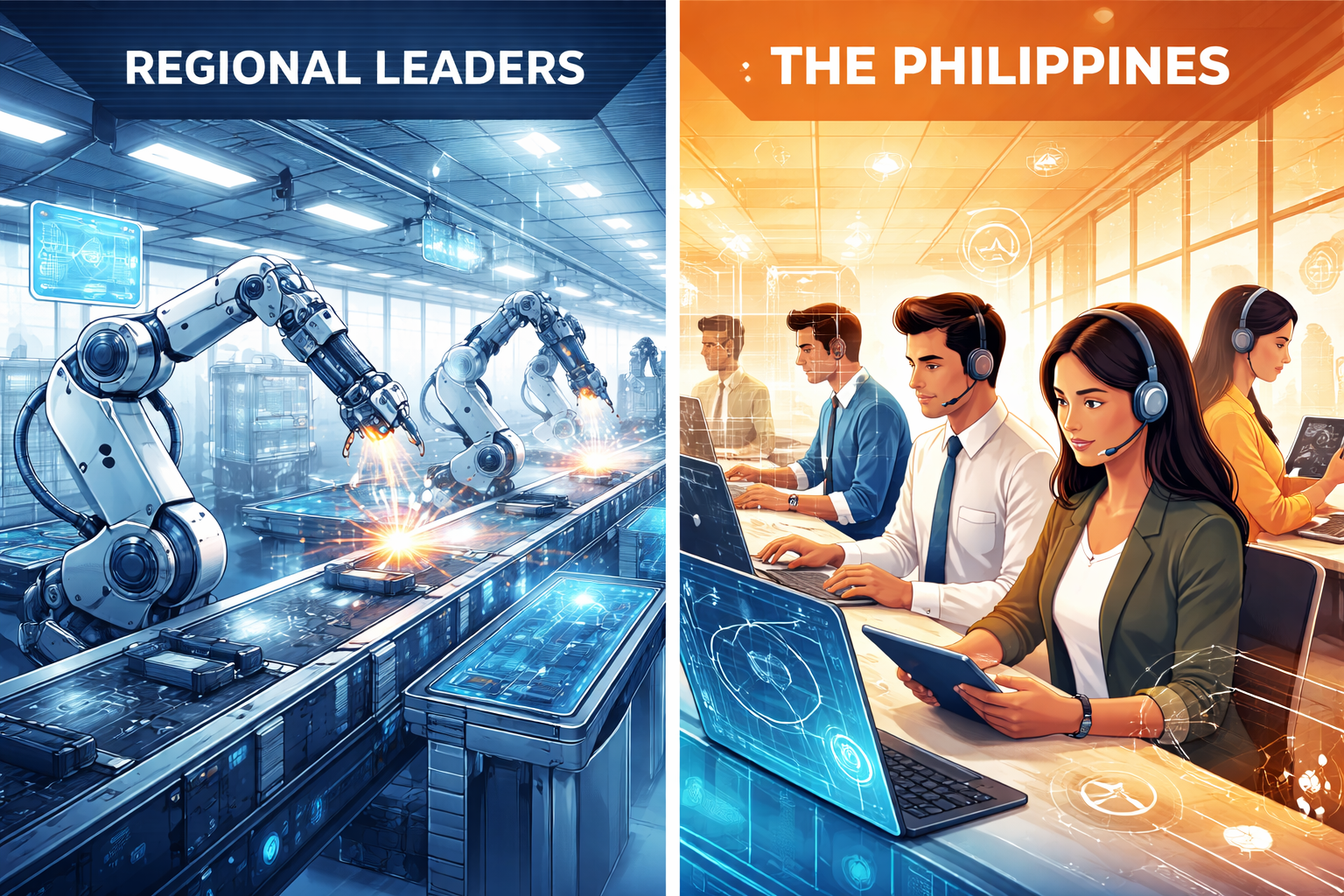
While Asia-Pacific leaders like Japan and China dominate industrial robotics hardware, the Philippines is taking a different path. Rather than competing in manufacturing, the country is leveraging its massive IT workforce to become the region's essential "human-in-the-loop" service layer, specializing in AI-enhanced outsourcing and software innovation.

The AI Robotics Race Is Accelerating
Artificial intelligence (AI) and robotics are no longer futuristic concepts—they are now core drivers of economic growth across Asia-Pacific. From fully automated factories to AI-powered logistics and healthcare systems, the region is leading global adoption.
But the big question is: Where does the Philippines stand in this AI robotics race?
While regional leaders surge ahead with heavy hardware, the Philippines is navigating a different path—one filled with both infrastructure constraints and highly lucrative, service-oriented opportunities.
Asia-Pacific AI Robotics Market: Fast Growth, Fierce Competition
The Asia-Pacific region is projected to grow its AI market at a massive ~30–35% CAGR through 2030, making it the fastest-growing globally.
Key leaders include:
- China – Massive state-backed AI and robotics ecosystems. Its Lingang Special Area showcases how entire industrial zones are being redesigned around AI-powered manufacturing.
- Japan – Global leader in industrial robotics and elder-care automation.
- South Korea – Maintains the highest industrial robot density worldwide.
- Singapore – A "Smart Nation" with robust AI governance and autonomous infrastructure.
Key Trends in AI Robotics Across Asia-Pacific
1. Smart Manufacturing and Industrial Automation
AI robotics is transforming manufacturing through predictive maintenance, AI-driven quality control, and autonomous production lines. Countries like Japan and South Korea dominate in robotics per worker.
Philippines vs Neighbors:
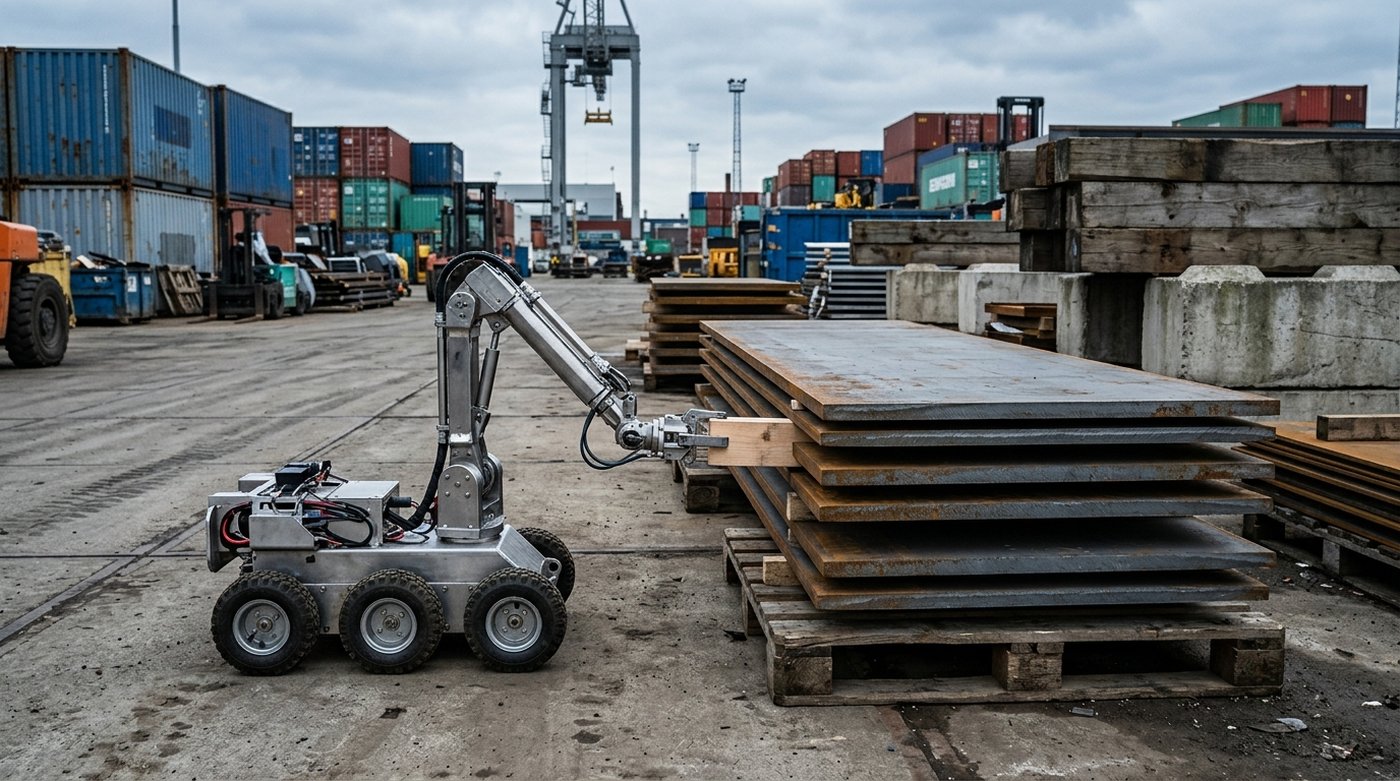
- The Reality: Slower heavy automation compared to Vietnam and Thailand, with a heavy reliance on manual processes.
- The Niche: Philippine robotics adoption is highly concentrated in electronics and semiconductor assembly, utilizing lightweight collaborative robots (cobots) rather than the massive automotive robotic arms seen in Japan.
2. AI in Logistics and Smart Supply Chains
Across Asia-Pacific, logistics is being redefined by warehouse robotics, AI route optimization, and autonomous delivery pilots. Singapore, for instance, is implementing smart ports and AI traffic systems.
Philippines Reality Check:
- The Reality: Persistent physical logistics inefficiencies due to complex inter-island transport and port congestion. Minimal use of physical robotics (like automated guided vehicles) in warehouses.
- The Niche: Early and aggressive adoption of AI in fleet management and delivery route optimization by local e-commerce giants to navigate Manila's notorious traffic.
3. AI Robotics in Healthcare
Healthcare robotics is expanding rapidly in robotic-assisted surgery and elder care (especially in aging societies like Japan).
In the Philippines:
- The Reality: Physical robotics adoption remains highly limited due to hardware costs and a gap in specialized engineering expertise.
- The Niche: AI software is leaping ahead of hardware. Startups like 1Life, Inc. recently hit 1 million patients across the country by utilizing tech-enabled primary care and their "DocMate AI" for early detection and preventive health—proving that AI accessibility is growing faster than physical hospital robots.
Where the Philippines Stands in 2026: The "AI Plus" Economy
The Philippines is highly AI-aware but currently robotics-light.
Strengths
- A massive IT-BPM workforce of over 1.8 million full-time employees.
- High emotional intelligence and English proficiency (ideal for human-in-the-loop AI systems).
- A rapidly maturing AI software and service startup ecosystem.
Weaknesses
- Low industrial robot density and limited hardware R&D.
- Infrastructure and internet connectivity challenges outside major metro areas.
- A talent gap in advanced robotics engineering and mechatronics.
(👉 The country’s adoption is firmly focused on RPA (Robotic Process Automation), Generative AI assistants, and data analytics—not physical robotics.)
The Opportunity: Why the Philippines Can Still Win
Despite lagging in hardware manufacturing, the Philippines has a massive strategic advantage in AI services. The Department of Information and Communications Technology (DICT) is actively pushing the transition of the BPO sector into the "AI Plus" industry.
Instead of competing with robotics manufacturers, the Philippines is leading in:
- AI-Enhanced BPO: Moving beyond basic call centers, Philippine workers are acting as "human-in-the-loop" supervisors for AI. They use Generative AI to handle routine queries while human agents manage complex problem-solving, legal support, and accounting.
- Service-Layer AI Innovation: Training the AI models of the future. (Even Chinese robotics companies are looking to the Philippines for "AI tutors" to help train robotic language and response models).
- Cost-Efficient AI Deployments: Building lightweight, software-based AI solutions for emerging markets.
Challenges the Philippines Must Solve
1. Skills Gap in AI and Robotics Upskilling is critical. The country must continuously transition its 1.8 million BPO workers into AI-assisted roles, expand STEM education, and invest in mechatronics training programs.
2. Policy and AI Governance Compared to leaders like Singapore, the Philippines is still maturing its frameworks regarding AI regulation, data privacy, and ethical AI deployment.
Final Thoughts: A Different Kind of AI Future
AI robotics in Asia-Pacific is not a level playing field—it’s a multi-speed race.
While countries like China, Japan, and South Korea will continue to dominate the manufacturing and hardware of robotics, the Philippines is carving out its own highly profitable niche. The real question isn’t, “Can the Philippines catch up in building robots?” It’s: “How quickly can the Philippines become the indispensable human brain behind the region's AI economy?”