Physical AI's Big Numbers Aren't About Robots
This week's NVIDIA-AWS 2-million-GPU deal, Japan's 27,500-GPU national AI factory, and NVIDIA's own vanishing robotics revenue disclosure all get filed under "physical AI." They're three unrelated businesses operating at wildly different scales, and none of them is what actually runs inside a deployed robot today: a 15-watt edge chip or a general-purpose server processor doing sensor fusion.

Three compute announcements landed within about forty-eight hours of each other this week, and their numbers do not belong in the same conversation, even though all three used the same two words to describe themselves. AWS and NVIDIA said they are adding 2 million more GPUs to their partnership, extending supply into 2027 and 2028. NVIDIA reported a quarter with US$96.2 billion in revenue and, for the second straight quarter, no separate line telling anyone how much of that came from automotive or robotics. And a Japanese government-backed consortium confirmed a 27,500-GPU national AI factory that its own backers describe as infrastructure for the next industrial revolution. Read together, not as three robotics stories but as one, they say something the coverage of each individually missed.
Physical AI is not one industry chasing one number. It is three separate businesses that recently discovered they can all use the same adjective.
The Hyperscale Tier Is an Agentic AI Story Wearing a Robotics Badge
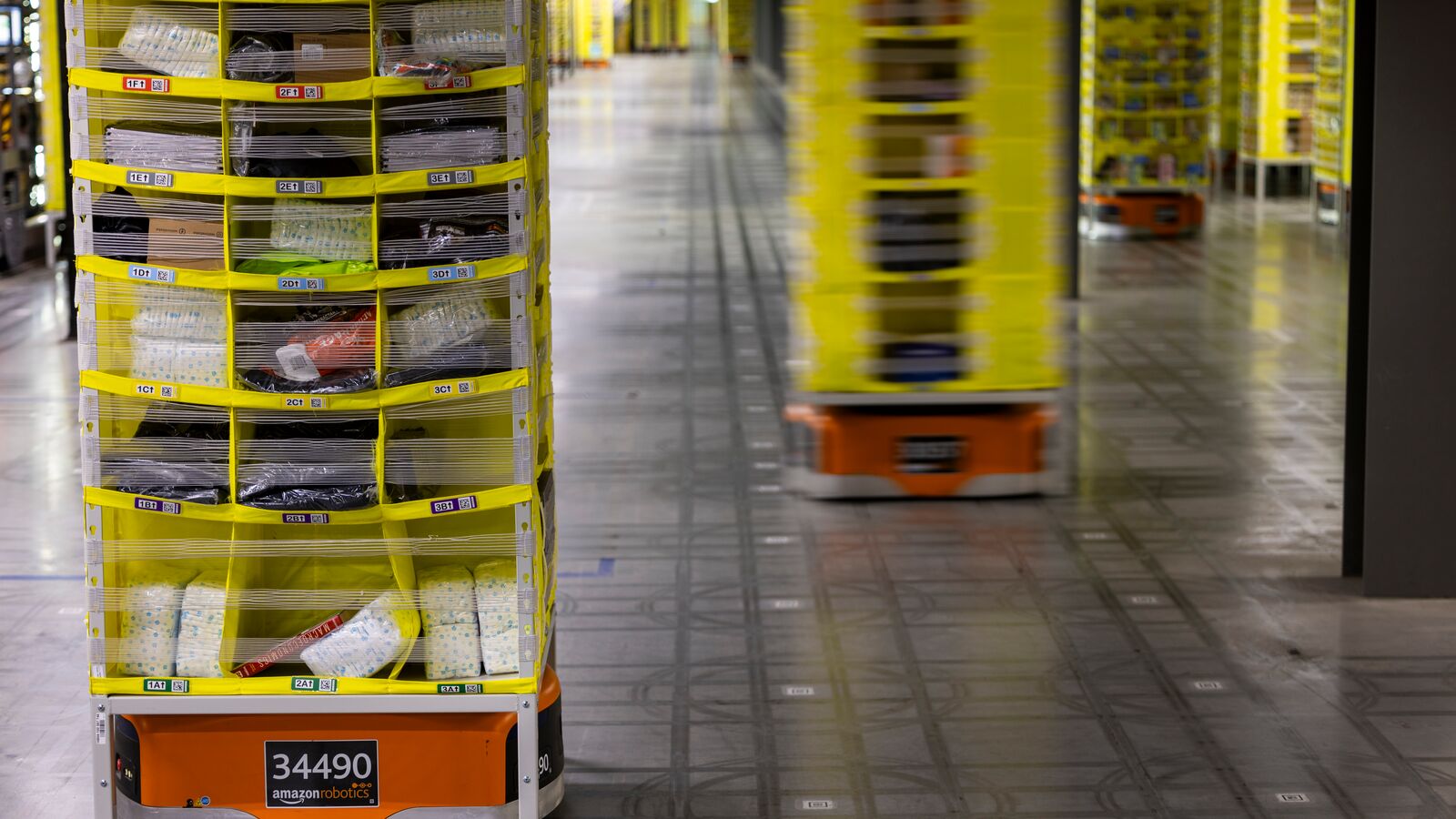
Start with the biggest number, because it is the one getting quoted as evidence of a robotics compute boom. NVIDIA and AWS said Wednesday they are expanding their partnership to deploy 2 million additional Blackwell Ultra, Rubin, and Rubin Ultra GPUs, on top of a prior commitment of more than 1 million GPUs announced earlier this year, and extending confirmed supply well into 2027 and 2028. Jensen Huang framed it as spanning "GPUs, CPUs, networking, open models and software" to "make agentic and physical AI real at an unprecedented pace." Buried in the same announcement, a single sentence: Amazon Robotics is collaborating with NVIDIA to accelerate next-generation robots built on NVIDIA's physical AI stack.
That sentence is doing a lot of work for a deal whose actual scale is set by something else entirely. A cloud provider does not commission 2 million top-tier GPUs to run warehouse robot perception models. It commissions them because agentic AI, the software agents drafting emails, writing code, and orchestrating other software, has an insatiable and growing appetite for training and inference capacity that dwarfs anything a fleet of physical robots currently needs. The same press release even carved out a separate 100,000-GPU allocation for U.S. federal and national-security AI factory workloads, a number that is itself forty times the size of an entire national robotics-compute initiative I will get to shortly. Robotics gets a credit line in the announcement. It is not what set the order size.
NVIDIA's own accounting makes the point sharper than any outside critic could. Data Center revenue was US$89.0 billion of that US$96.2 billion quarter, 92.5 percent of the total. Starting this fiscal year, NVIDIA stopped reporting Automotive as its own segment and folded it into a catch-all called Edge Computing, alongside Gaming and Professional Visualization, which came in at US$7.2 billion combined. There is no longer a public number for how much of NVIDIA's revenue is robotics specifically. The company that supplies the compute for most of the industry cannot, or will not, tell its own shareholders how much of its business is actually robots.
The National-Strategy Tier Is Real, and Three Orders of Magnitude Smaller
Compare that to the number that is actually purpose-built for physical AI. Japan's METI-backed Noetra initiative confirmed a national AI factory running on 27,500 NVIDIA Rubin GPUs and 13,750 Vera CPUs, drawing 140 megawatts, explicitly positioned to seed foundation models for robotics, manufacturing, logistics, and healthcare under the country's FRONTia program. Huang showed up for this one too: "Japan invented modern manufacturing. Now, it is building the AI factories that will power the next industrial revolution." Japan's trade minister, Ryosei Akazawa, described the goal as building reliable multimodal foundation models to address shared industrial and social problems, and the country's own strategy targets capturing more than 30 percent of the global AI robotics market by 2040.
Twenty-seven thousand five hundred GPUs is a serious industrial commitment. It is also roughly 1.4 percent the size of the AWS-NVIDIA hyperscale order. If physical AI compute were one market, these two numbers would not be seventy times apart within the same news cycle. They are two different markets that happen to share a chip supplier and a marketing term, one building general-purpose agentic AI cloud capacity at a scale robotics could never independently justify, the other building a dedicated, government-underwritten robotics research substrate at a scale that actually matches what a national robotics strategy would need.
What Actually Ships Inside a Robot Looks Nothing Like Either Number
Here is the tier the headlines skip. NVIDIA's other announcement this week was Jetson Orin Nano 2, a robotics compute module delivering 78 trillion operations per second while drawing 40 percent less power than its predecessor in its 15-watt mode. Named early partners span machine vision, construction equipment, home robotics, and drone delivery: Cognex, Doosan Bobcat, Matic, and Wing. NVIDIA's own robotics and edge AI lead, Deepu Talla, pitched it as putting real-time onboard reasoning "within reach of millions of developers," not as a flagship product for the biggest buyers.
Fifteen watts. That is the actual unit of physical AI compute for a battery-constrained mobile robot, and it sits roughly six orders of magnitude below the wattage a 2-million-GPU data center buildout represents.
The same gap shows up on the ground, not just on a spec sheet. Kodiak AI, which runs fully driverless Class 8 trucks with no human operator in the Permian Basin, said this week it is putting AMD EPYC server processors into its compute stack, not to run its perception models but to handle the unglamorous work of aggregating sensor data before the AI accelerators ever see it. AMD's Wayne Lyons described the deal by saying "physical AI is pushing computing into some of the most complex and data-intensive environments in the world." He is right, and the chip doing that pushing is a general-purpose server CPU handling data plumbing, not a slice of a 2-million-unit GPU order. A live, revenue-generating autonomous vehicle runs today on hardware several tiers below what the word "physical AI" now conjures in an investor briefing.
The Bottleneck Nobody's GPU Order Fixes
None of this means the hyperscale spending is wasted or that Japan's bet is misguided. It means buyers, policymakers, and anyone pricing a "physical AI" investment thesis need to ask which of the three tiers a given number actually belongs to before treating it as evidence of anything robotics-specific.
The honest constraint on robot capability right now is not compute scarcity at any tier. It is data diversity. Figure AI disclosed this month that its Helix models train on roughly 373 distinct tasks across 1,146 objects and 116 environments per thousand hours of operation, a figure the company published specifically because task and environment variety, not raw processing power, is what determines whether a humanoid generalizes past its training warehouse. A robot with a Jetson Orin Nano 2 onboard and a narrow task library will still fail outside that library no matter how many GPUs its manufacturer's cloud partner just ordered.
I run a platform that tracks robot and manufacturer data for a living, from a country nobody names first when they talk about AI infrastructure. What that work has taught me is to distrust any physical AI number until I know which tier produced it. A hyperscale GPU commitment tells you about cloud capacity planning for agentic software. A national AI factory tells you about industrial policy. A wattage figure on a compute module tells you about what a robot can actually carry. Only the third one tells you anything about robots.
The tell to watch for going forward is whether NVIDIA, or any of its hyperscale customers, ever restores a clean, separately disclosed robotics or automotive revenue line. Until one of them does, every "physical AI" number in a press release is a claim about capital, not capability, and the two are being sold as though they were the same thing.
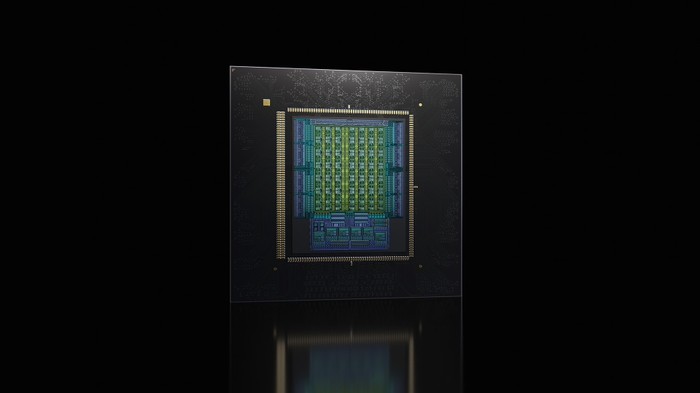
Hero image: NVIDIA Vera CPU, part of the Vera Rubin platform underpinning both the AWS-NVIDIA and Japan Noetra deals, official product image from NVIDIA.
Disclaimer: This article is for general information purposes only and does not constitute investment, legal, or procurement advice. Readers should verify details with primary sources before making business decisions.