Hong Kong's Robotics IPO Rush Is a Capital Controls Story, Not a Market One
Six Chinese robotics companies have gone public in Hong Kong this year, with more than fifty reportedly queued behind them. The pattern owes less to Hong Kong's appeal than to matching regulatory chokepoints Beijing and Washington built on opposite ends of the same capital flow.

This week, retail investors in Hong Kong tried to stuff HK$4.2 billion (US$540 million) into a single day's allotment of stock in a loss-making delivery-robot maker from Wuxi that almost nobody outside China had heard of a month ago. Excelland Robotics priced its initial public offering on Monday after its retail tranche closed 94.79 times oversubscribed, ahead of a Wednesday trading debut. That multiple made headlines this week, and on its own it measures almost nothing: a small public tranche chased by margin-financed retail cash tells you about a week's mood, not a company's five-year survival odds.
The more useful number sits one level up. Chinese industry trackers currently put the count of embodied-intelligence and robotics companies queued for a Hong Kong listing of their own at more than fifty, on an exchange that has already absorbed six of them this year. That queue is the real story, and it is barely about Hong Kong at all.
Hong Kong is not winning this business. It is the last door two governments still leave open.
Coverage of robotics decoupling keeps pointing at chips: Nvidia's export licenses, China's rare-earth leverage, whichever compute ceiling made news this month. Those fights are real, but they are also the loud ones, argued in press conferences and congressional hearings. The fight actually rerouting where Chinese robotics companies raise money happened through paperwork, on both sides of the Pacific, without a single dramatic announcement, and it is further along than the chip story most people are still watching.
The filing gate Beijing built first
In March 2023, China's securities regulator quietly closed the informal, case-by-case system that used to govern how mainland companies listed overseas. The CSRC's Trial Administrative Measures for Overseas Securities Offering and Listing by Domestic Companies, effective March 31 that year, require any PRC domestic company pursuing an overseas listing, in Hong Kong, New York, or anywhere else, direct or structured through an offshore shell, to file with the CSRC within three business days of submitting its listing application, including a filing report and a legal opinion disclosing its full shareholder register.
None of that bans a US listing outright. What it does is give Beijing a standing, real-time checkpoint on every single overseas listing attempt, replacing ad hoc political attention with a bureaucratic gate that did not exist five years ago. A regulator that can delay or question a filing has effective veto power over timing even without ever issuing a formal rejection, and for a founder choosing where to list, the exchange that does not require clearing that gate first looks a great deal more attractive than one that does.
Washington built the mirror image a year later
The other side closed just as quietly. Treasury's Outbound Investment Security Program, the final rule implementing Executive Order 14105, took effect on January 2, 2025, and restricts US persons from directing capital into Chinese companies working across three technology categories: semiconductors, quantum computing, and certain artificial intelligence systems. The AI category carries a specific carve-out that keeps coming up in law firms' client memos on the rule: ordinary internal-use customization of a third-party AI model is exempt from notification, unless that AI is meant for government intelligence, mass surveillance, military end use, or the control of robotic systems, in which case the exemption does not apply and the transaction must be reported to Treasury regardless of how small or internal it looks. Cross a defined computing-power threshold and the same transaction is not merely notifiable; it is prohibited outright.
Read the two rules side by side and the shape becomes obvious. Beijing built a checkpoint that watches every mainland company's exit toward foreign capital. Washington built one that watches every American dollar's entry into Chinese robotics AI. Neither government announced a ban on Chinese robotics companies raising money in the West. Both built a form that has to be filed, or a line that cannot be crossed, and left the market to work out where that still leaves room to operate.
A truce, not a peace, over the audits in between
There is a third piece keeping New York a harder sell than the filing rules alone would suggest. The Public Company Accounting Oversight Board restored its ability to inspect China-based and Hong Kong-based audit firms in December 2022, ending the near-term delisting threat that the Holding Foreign Companies Accountable Act had created for US-listed Chinese companies. That should have settled the audit question. It has not: the PCAOB's own enforcement actions this year, its first sanctions against China-based firms since access was restored, carried US$7.9 million in penalties against three firms and four individuals. The access exists. The friction that made it necessary in the first place clearly has not gone away, and every enforcement action is a fresh reminder to any founder weighing a US listing that the 2022 truce is a working arrangement, not a resolved relationship.
What the one surviving door looks like from the inside
Set against two regulatory chokepoints and an audit relationship still under active enforcement, Hong Kong's robotics IPO wave reads less like enthusiasm and more like capacity absorption. This year alone:
- Rokae, an industrial and collaborative-arm maker with a humanoid-arm program, listed July 9 at HK$38 a share, raising roughly US$112 million.
- Three more embodied-AI names, Seerbot, Evana Technology, and LD Robotics, listed on the same exchange before September.
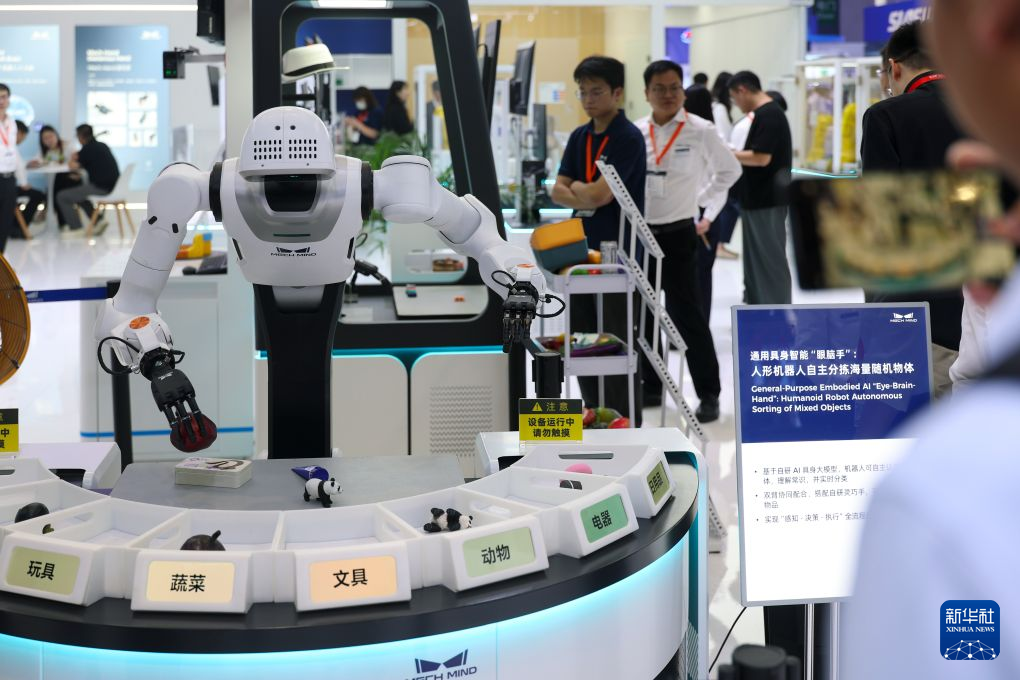
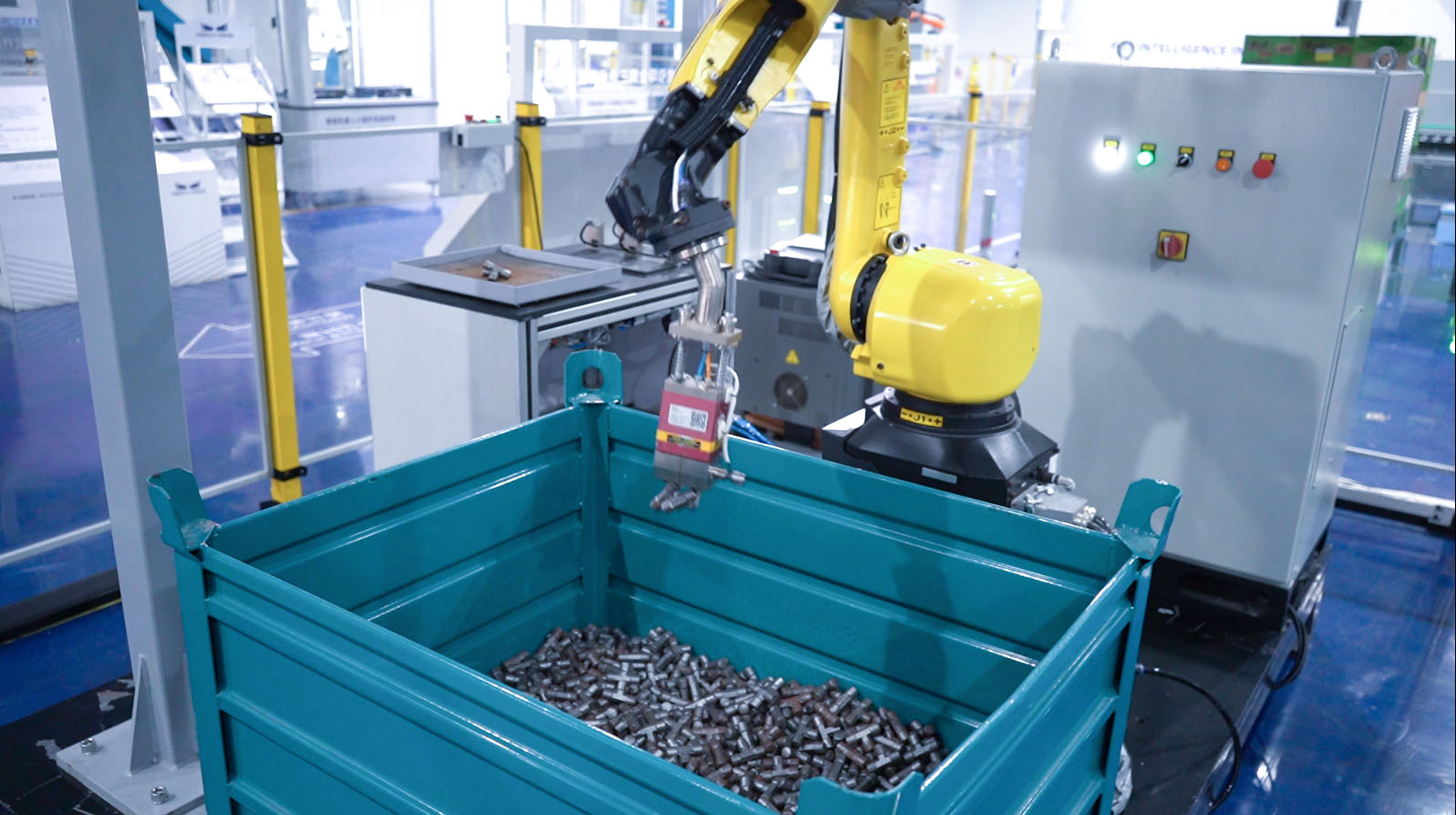
- Mech-Mind Robotics, marketing itself as the first listed "Eye-Brain-Hand" embodied-intelligence company, priced September 1 at HK$101.70 a share, raised roughly US$282 million in net proceeds, and drew more than 252,000 retail applications at a subscription multiple above 3,800 times.
- Excelland followed six days later, raising up to US$113 million.
The U.S.-China Economic and Security Review Commission's own count of mainland Chinese company listings in Hong Kong shows the broader pattern behind those six names: roughly 30 in 2024, more than 75 in 2025. That is not a market discovering Hong Kong. That is a market absorbing volume that used to spread across more exchanges.
It is not a free lunch for the companies going through that door, either. Unitree's own shares have fallen to roughly half their post-listing peak since its debut, and a Hong Kong bourse now digesting six similarly positioned robotics issuers in a single year has less room to reward all of them with durable valuations once the retail enthusiasm that drove this week's 94.79-times subscription number cools. Concentration cuts against the companies just as it cuts against anyone hoping the exchange proves the sector's health on its own. The honest upside is that going public still means quarterly disclosure these companies never had to produce as private firms, which is more real information for anyone doing diligence on a Chinese robotics vendor than a pitch deck ever offered, provided the buyer reads the filing instead of the subscription headline.
What a buyer four time zones away should actually track
From where I run a robotics data platform in the Philippines, watching this pattern from an ASEAN buyer's seat changes what a listing venue signals. A Chinese robotics vendor that cannot easily draw on US institutional capital is not a worse product for it, but it is more exposed to a single jurisdiction's regulatory mood holding steady, and a procurement team signing a multi-year robot-as-a-service contract should treat that concentration as a real input into vendor risk, not a footnote about where the stock happens to trade.
The chip embargo gets the press conference. The capital embargo got a filing deadline and a notification form, and it may end up doing more of the actual separating.
Expect the queue behind this year's six listings to keep growing, expect nearly none of the fifty-plus companies in it to attempt a US listing first, and expect the result to look, in three years, like the same bifurcation already underway in chips and components: two robotics industries raising money in two capital markets that increasingly do not touch, each one Beijing or Washington can watch closely, and neither one obligated to explain itself to the other's investors again.
Disclaimer: This column reflects the author's own analysis and is provided for general information purposes only. It does not constitute investment, financial, legal, or procurement advice. Readers should verify details with primary sources before making business decisions. Hero image: Mech-Mind Robotics, official company product photography.