National Composites Centre to Lead UK's New £9.8M Robotics Adoption Hub
The National Composites Centre will run business advisory services for the £9.8 million Greater South West Robotics Adoption Hub, one of eight UK regional hubs funded through a highly competitive Innovate UK programme after reviewing 76 applications.

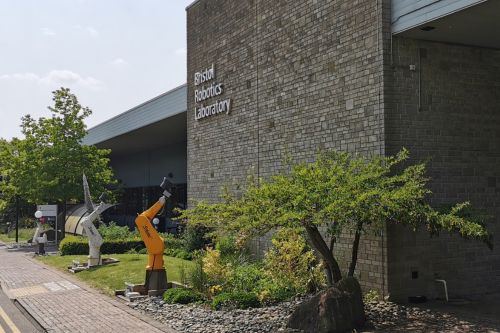
Eight. That is how many Robotics Adoption Hubs Innovate UK agreed to fund nationwide after reviewing 76 applications and inviting two dozen finalists to interview, and the Greater South West is one of them. On October 10, 2026, the University of Bristol confirmed that its Bristol Robotics Laboratory (BRL) will lead a £9.8 million (approximately US$12.5 million) regional hub built around a 23-member consortium, with the National Composites Centre (NCC) running the hub's business advisory service for manufacturers across the South West of England.
The NCC is an applied engineering facility based in Bristol, part of the UK's High Value Manufacturing Catapult network of research and technology centres, and its core work covers advanced composites manufacturing, automated fibre placement, and digital engineering for aerospace, automotive, and energy clients rather than consumer robotics or off-the-shelf automation products. Of the hub's £9.8 million (approximately US$12.5 million) total, £7.2 million (approximately US$9.2 million) comes from Innovate UK's Robotics Adoption programme, with the remaining £2.6 million (approximately US$3.3 million) contributed by the hub's own partners, a group that includes the University of Bath, the University of the West of England, Bristol (UWE Bristol), GKN Aerospace Services, Deloitte, NatWest Bank, and Somerset Council among 23 organizations in total.
The Greater South West Robotics Adoption Hub sits inside a larger UK government bet on industrial automation. The Robotics Adoption programme itself carries a budget of roughly £52 million (approximately US$66.6 million) running from April 2026 through March 2030, delivered through Innovate UK alongside the Department for Science, Innovation and Technology, and structured around three parallel tracks: the regional hubs, a national coordination body still being procured separately, and a dedicated skills-development strand aimed at the technicians and engineers who will actually install and maintain the equipment hubs recommend. That structure matters for how a buyer should read this announcement: the Greater South West hub is not a one-off regional grant but one franchise of a standardized national model, which means its advisory methodology, reporting requirements, and eventual performance metrics will likely be comparable across all eight funded regions rather than locally improvised.
A Funding Filter Built on Rejection, Not Generosity
Innovate UK's selection math is worth sitting with before any procurement team treats this as routine public-sector spending. Seventy-six organizations applied for Robotics Adoption Hub funding, 24 were invited to interview, and eight were funded, a roughly ten percent success rate that puts the Greater South West consortium in a smaller group than most national grant competitions produce. The filter matters commercially because it functions as third-party due diligence for a regional industrial-support programme: a hub that survived that process has already had its delivery plan, partner roster, and sector targets tested by assessors whose job is to reject proposals, not wave them through. For a manufacturer or integrator deciding whether to treat a hub's advisory service as credible, that selection record is a more useful signal than the funding total itself, and it is also the detail that will decide whether this funding round signals momentum or marks a top in the UK's public robotics-adoption push, rather than a reason to treat every regional hub's claims as automatically credible.
The NCC's presence in the consortium is not incidental. The centre opened in Bristol in 2011 with backing from the UK government and industrial partners including Airbus, Rolls-Royce, and GKN, and it has since built a reputation inside the Catapult network for moving composite and automated manufacturing processes out of the laboratory and onto production lines for aerospace and automotive customers who cannot afford a failed pilot. That history is why the consortium gave NCC the advisory seat rather than a pure research role: the centre's day job already involves telling manufacturers which automation investment will survive contact with a real factory floor and which will not, a skill set that transfers directly to businesses outside aerospace that are evaluating robotics for the first time.
Three Services, Five Sectors, One Point of Contact
The hub organizes its work into three strands. NCC runs the advisory service, a one-to-one function meant to help a business identify which automation opportunities are worth pursuing, build an investment case, and connect with financing and in-house expertise before committing capital. A showcase programme gives companies access to industrial site visits, demonstration facilities, and proof-of-concept work, the part of the hub most directly aimed at closing the distinction between a demo and a deployable system that derails so many automation pilots before they reach a production line. A third ecosystem strand runs events and networking meant to connect suppliers, integrators, and first-time adopters who would otherwise struggle to find each other across a region stretching from Gloucestershire to the Isles of Scilly. The named use cases are concrete rather than aspirational: maritime infrastructure maintenance in Devon, energy-asset upkeep around the Solent, food and drink production in Cornwall and Gloucestershire, precision aerospace component manufacture in Somerset, and healthcare providers in Bristol. The hub expects to be fully operational by January 2027, at which point any business in the region, not only the 23 founding partners, will be able to book advisory time, attend a showcase, or join the ecosystem programme.
The Investment Case Most Manufacturers Never Finish Writing
Katy Riddington, NCC's managing director of supporting growth, put the real barrier plainly: knowing where robotics delivers the greatest value, and building the case for investment, is what stops most smaller manufacturers from acting even when the underlying technology is already proven. That is a less glamorous obstacle than the one most coverage of robotics funding dwells on, which tends to frame adoption as a technology-readiness problem, waiting for cheaper sensors or better software, rather than an internal capital-allocation problem inside companies that have never had to write a business case for a six-figure automation purchase. A plant manager who can picture a robot arm doing a specific job does not automatically know how to translate that picture into a payback period a finance director will approve, how to sequence the safety and cybersecurity reviews that project lead Professor Arthur Richards flagged as part of the hub's "front door" service, or how to avoid buying equipment that solves one narrow demo task but cannot be reconfigured as the business's needs change. That gap, not a shortage of capable robots, is the one the advisory strand is actually built to close, and it is also why NCC's role matters more than the funding total does: the money pays for consultants and demonstration time, but the scarce resource it buys is judgment.
What International Buyers Should Read Into a Regional Grant
For a procurement team outside the UK weighing whether to source automation expertise from a British supplier, or whether to expand operations into the Greater South West specifically, the hub is a signal about regional capacity rather than a reason to change a sourcing decision on its own. It tells a buyer that the region now has a publicly underwritten, competitively vetted layer of integration expertise sitting between equipment vendors and end users, which should shorten the diligence a buyer would otherwise do alone when evaluating a UK-based systems integrator's claims about safety compliance, cybersecurity, or the data ownership question that every integrator will face once a deployed robot starts generating operational data a customer may want to keep. It also signals where UK industrial policy is actually spending money: not on subsidizing robot purchases directly, but on the advisory and workforce layer that determines whether a purchased robot gets deployed well or sits half-configured in a corner, a distinction that matters to any buyer who has watched a vendor's confident sales pitch fail to survive contact with a real production line. The eight-hub national programme, of which the Greater South West is one node, is still too new to have a deployment track record a buyer can diligence directly, so the honest reading is that this is an infrastructure bet on regional capability, not yet evidence that South West England has become measurably easier to automate in than it was last month.
A Narrower Mandate Than the Headline Figure Suggests
What the funding confirms is narrower than the £9.8 million (approximately US$12.5 million) headline suggests: a competitively vetted consortium, led by a university robotics laboratory and backed by one of Britain's most established composites engineering centres, now has a public mandate and budget running through January 2027 and beyond, and the National Composites Centre's job inside it is to turn robotics curiosity into bankable investment cases rather than to build or sell hardware itself. That is a modest but specific role, and it is one that most regional robotics-adoption programmes elsewhere still lack entirely.
This account synthesizes official statements from the project's partner organizations and the public record of the Innovate UK Robotics Adoption funding competition.
This article is provided for general information purposes only and does not constitute investment, procurement, legal, or engineering advice. Figures reflect the sources listed above as of the stated information cut-off and may change without notice.