KAIST-ETRI Robot Wins Global Navigation Contest by Double-Checking Itself
A KAIST-ETRI team won the ECCV 2026 VLNVerse navigation challenge by building a robot that re-verifies its destination before stopping, a self-checking approach aimed at letting service robots work in unmapped buildings.

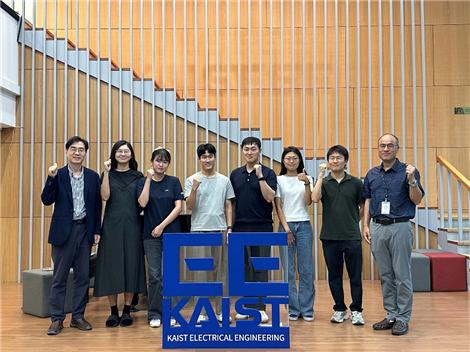
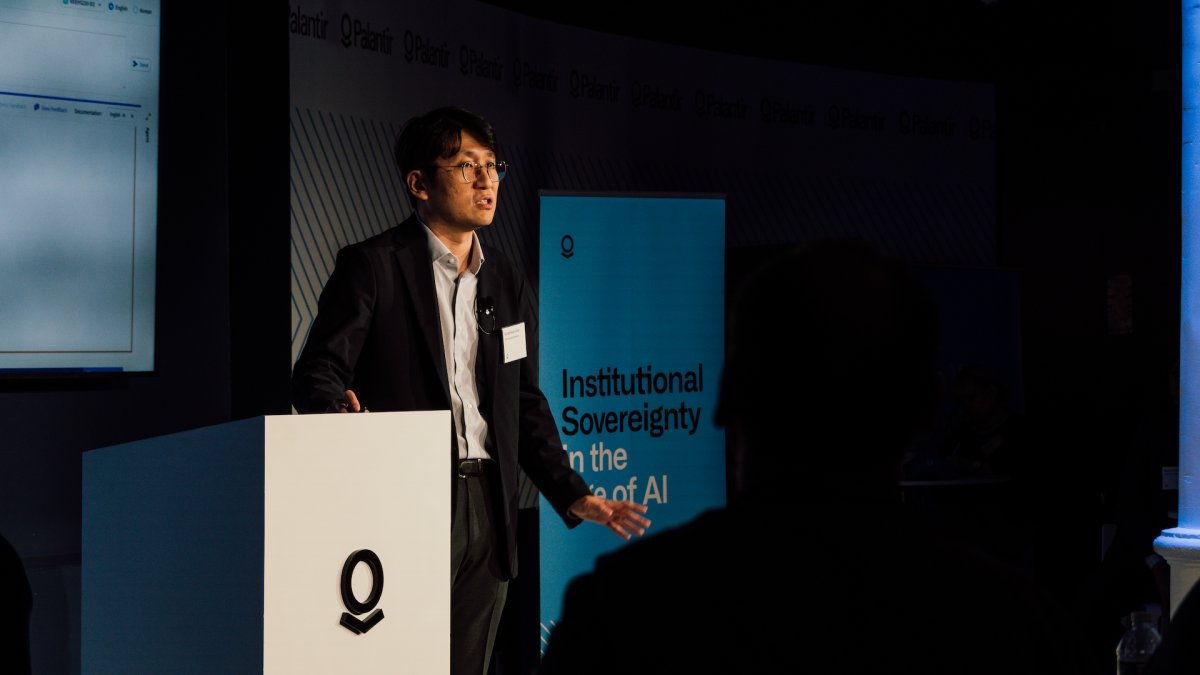
A robot that follows an instruction perfectly and still walks into the wrong room is the failure mode that has quietly limited how much autonomy companies are willing to hand a mobile robot indoors. A joint team from South Korea's KAIST and the Electronics and Telecommunications Research Institute (ETRI) said this week that it beat 111 other teams at the VLNVerse Challenge, part of the ECCV 2026 computer-vision conference held in Malmö, Sweden, by building a robot that checks its own work before declaring a task complete. The team, called URL-FRRS and drawn from KAIST's future-city robotics lab under professor Hyun Myung and ETRI's field robotics research group, posted a 90.7 percent average success rate across two navigation tasks, edging a second-place team that matched the same score but submitted its results later. The same underlying system also placed second at a separate navigation challenge held alongside the RSS 2026 robotics conference.
The task the robots were graded on is called vision-language navigation, a research area that asks a mobile robot to understand a spoken or written instruction, such as being told to find a specific blue sofa in an unfamiliar building, and then walk there using only a camera feed and no pre-built map of the space. Vision-language navigation matters commercially because it is the technology layer standing between a robot that can only operate in a facility mapped in advance and a robot that can be dropped into a new hospital, warehouse, or office building and immediately follow plain-language directions from staff who have no robotics training. ETRI is South Korea's principal state-funded electronics and telecommunications research institute, based in Daejeon, and its field robotics group has spent years developing navigation systems intended for eventual transfer into commercial service and inspection robots rather than staying confined to academic benchmarks.
The Self-Verification Step That Separated the Winning Team
The core innovation behind URL-FRRS's win is a technique the team calls CoRe-VLN, which stands for coverage-based recovery for vision-language navigation. Most vision-language navigation systems stop moving once their internal model estimates it has reached the described destination, a design that fails whenever the model's confidence is wrong, which happens often enough in real buildings full of visually similar rooms, hallways, and furniture that look alike from a camera's vantage point. CoRe-VLN instead has the robot pause at its estimated destination, look around using a multimodal AI model that jointly interprets images and text, and re-check three things before committing: whether the location matches what it was told, whether an object's color and shape match what it was asked to find, and whether the target is actually within reach rather than merely visible in the distance. If any of those checks fail, the robot does not simply stop and report an error. It resumes searching along a new path rather than treating its first best guess as final.
That recovery behavior is the specific mechanic that a one-line summary like "the robot double-checks itself" tends to flatten, and it is also the detail that matters most to anyone evaluating whether this kind of navigation system is close to commercial readiness. A robot that can recognize its own uncertainty and act on it, rather than confidently reporting the wrong room as correct, converts a category of silent failure into a category of slower but self-correcting success, which is a materially different risk profile for any operator considering deploying autonomous navigation in a building with real patients, inventory, or staff. Silent failures are the more expensive kind in commercial deployments because they surface as a mystified user rather than a flagged error, and they are considerably harder to debug after the fact than a robot that visibly backtracks and tries again.
A Second System Built Around Splitting the Job Into Specialists
The team's second-place result at the RSS 2026 conference's navigation challenge used a related but architecturally distinct system called PRISM-Nav, which distributes the navigation task across multiple smaller AI models rather than relying on one large model to handle every aspect of the problem at once. In PRISM-Nav's design, one model is responsible for identifying likely destinations that match a spoken instruction, a second model is tasked specifically with detecting hazards such as staircases that a wheeled or tracked robot cannot safely descend, and a third model recognizes spatial rules, such as which paths are pedestrian walkways rather than vehicle lanes or restricted zones. The team's own comparison found this specialized, multi-model approach outperformed larger, single-model systems attempting the same tasks, a result that runs counter to the assumption that navigation performance in robotics scales primarily with how large or general-purpose the underlying AI model is.
That result has a direct implication for companies building navigation stacks for commercial service robots rather than research demonstrations: a system architecture that assigns distinct, narrower responsibilities to smaller specialized models may be cheaper to run and easier to debug in the field than a single large model asked to reason about destinations, hazards, and traffic rules simultaneously, without sacrificing accuracy. Compute cost and inference latency are not academic concerns once a navigation system needs to run continuously on a robot's onboard hardware rather than a research lab's server cluster, and a specialized multi-model pipeline gives an operator more visibility into which specific component is responsible when a robot behaves unexpectedly, compared with a single monolithic model whose internal reasoning is far harder to inspect.
The Broader Race to Get Robots Off Pre-Mapped Rails
Most mobile robots currently deployed in hospitals, warehouses, and hotels still rely on a facility being mapped and marked out in advance, whether through fixed magnetic strips, pre-loaded floor plans, or a dedicated mapping run a technician performs before the robot is allowed to operate unsupervised. That dependency is a real deployment cost: every new floor, wing, or seasonal furniture rearrangement in a hospital or warehouse can require a re-mapping pass before a robot can be trusted to find its way through it again, and that maintenance burden scales with the number of sites an operator wants to automate. Vision-language navigation research, including the work KAIST and ETRI presented this week, is aimed squarely at removing that dependency by letting a robot interpret a new, unmapped environment the way a human employee would, by looking around and following spoken directions rather than consulting a pre-built digital floor plan.
Research groups at other universities and corporate labs, including teams affiliated with NAVER Labs Europe, have published competing approaches to the same underlying problem within the past several months, an indication that vision-language navigation has moved from a niche academic subfield into one of the more actively contested research fronts in mobile robotics. The specific technical approaches differ, some emphasizing retraining-free adaptation to new environments, others emphasizing the self-verification and multi-model specialization that defined the KAIST-ETRI entries, but the shared goal across these efforts is the same: a robot that can be shipped to a new building and put to work the same day rather than after a costly mapping and calibration process. Buyers should read the diversity of technical approaches as a sign the underlying capability is maturing quickly rather than converging on a single company's proprietary method, which increases the odds that some version of this capability reaches commercial products across multiple vendors within the next few years rather than remaining locked to whichever lab publishes first.
Why an Uncertified Research Result Still Moves a Procurement Timeline
Competition wins in academic robotics benchmarks do not by themselves put a product on a warehouse floor, and CoRe-VLN and PRISM-Nav remain research systems rather than commercial products with a defined release date or licensing path. What a result like this changes is the confidence level that service-robot and facility-automation buyers can place on vision-language navigation as a near-term capability rather than a longer-horizon research bet, because ECCV and RSS are among the most competitive and closely watched venues in computer vision and robotics respectively, and a 90.7 percent success rate against 111 competing teams is a meaningfully higher bar than a vendor's own internal demo footage, which is typically filmed under conditions chosen to flatter the system rather than stress-test it.
Facility operators and systems integrators evaluating indoor mobile robots for hospitals, hotels, or logistics sites should treat this result as a signal to ask vendor shortlists a more specific question than "does your robot understand voice commands": whether the underlying navigation system has any self-verification or recovery mechanism at all, or whether it simply reports success once its internal confidence score crosses a threshold with no mechanism for catching its own mistakes. That distinction, largely invisible in a sales demo, is exactly the gap CoRe-VLN was built to close, and it is likely to become a standard evaluation criterion as more vendors bring vision-language navigation out of academic benchmarks and into commercial pilot deployments over the next several product cycles.
The KAIST-ETRI team's own account of the win keeps circling back to the same operational detail: a robot told to find a blue sofa still checks, on arrival, that the sofa in front of it is actually blue before it stops moving.
This analysis draws on public statements and research descriptions released by KAIST and the Electronics and Telecommunications Research Institute regarding the VLNVerse and RSS 2026 navigation challenge results. It is for general information purposes only and does not constitute investment, financial, or legal advice.
Hero image credit: KAIST.