BRILS Prices US$17.2 Million KOSDAQ IPO
BRILS fixed its KOSDAQ offer at US$17.2 million, putting its modular industrial-robot strategy under a public-market test.

BRILS Prices US$17.2 Million KOSDAQ IPO
INCHEON, South Korea, September 17, 2026. BRILS has fixed the price of its KOSDAQ initial public offering at 19,500 won per share, about US$14.30, setting gross proceeds at 23.4 billion won, or approximately US$17.2 million. The September 16 regulatory filing covers 1.2 million newly issued common shares and moves the Korean industrial-robotics company from a proposed price range into a live subscription period running September 17 and 18. Payment is scheduled for September 22, although completion of the offering and exchange requirements still matters before investors should treat the listing as accomplished.
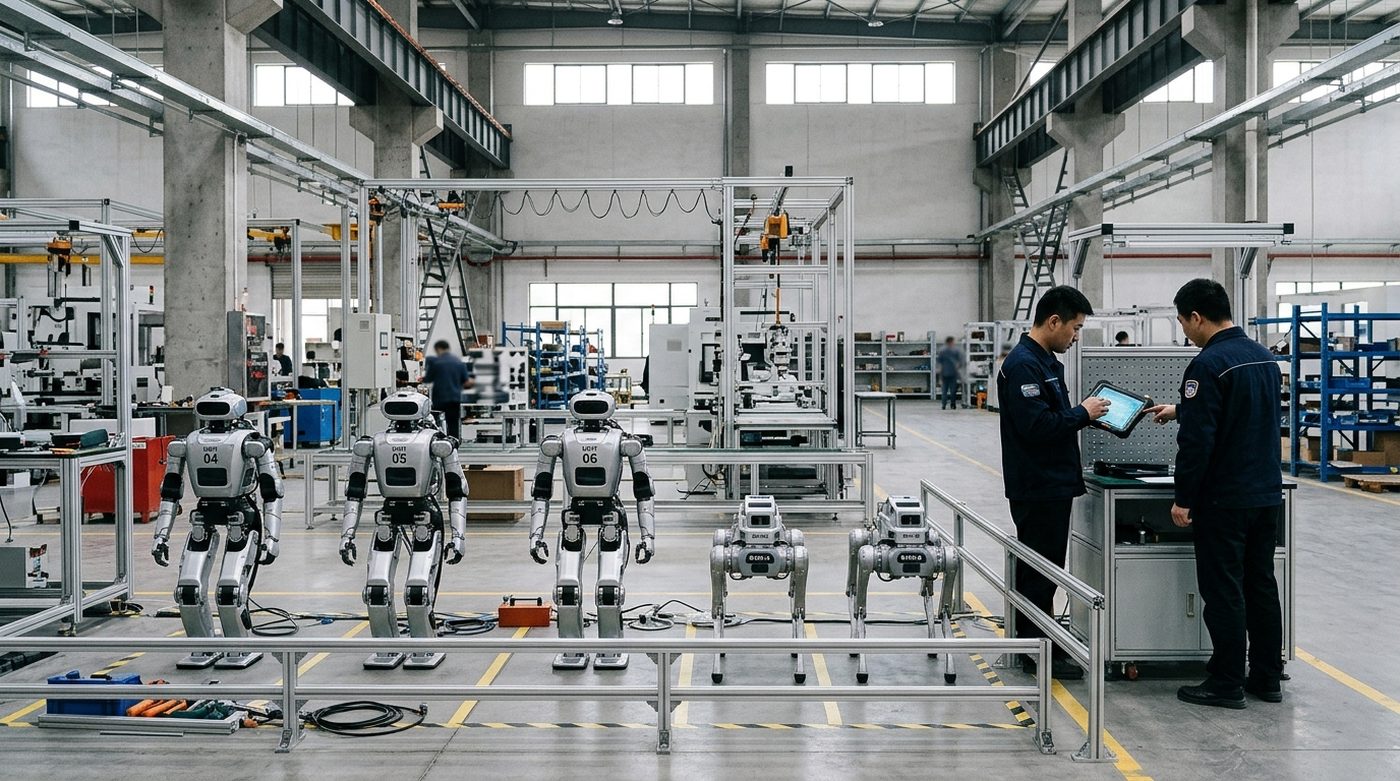
BRILS is an Incheon-headquartered robotics integrator that combines its own BRS industrial and collaborative robot lines with logistics automation, vision systems, software and application engineering. That description matters because the company is not selling one breakthrough humanoid or a single warehouse machine. Its commercial proposition is that factories can buy a more standardized set of robot modules while still receiving the engineering needed to make those machines work inside a specific production line. The IPO therefore asks a practical question: can BRILS convert a project-heavy integration business into a repeatable platform with better delivery economics?
The Final Price Turns a Story Into a Capital Test
The confirmed offer price is the event, not the earlier filing or a future first day of trading. BRILS had marketed a range of 16,500 won to 19,500 won per share. Fixing the price at the top of that range establishes the cash scale available for the next phase and gives customers, employees and competitors a clearer view of how much expansion the company can finance without another private round.
The final filing assigns 180,000 shares to the employee stock ownership association, 300,000 to general investors and 720,000 to institutions. It also lists underwriting consideration of 964.08 million won, roughly US$707,000 at the September 16 closing exchange rate of 1,363.5699 won per U.S. dollar. Gross proceeds are therefore not the same as deployable cash, and additional offering expenses will reduce what reaches the balance sheet. That distinction is important when a company’s growth plan includes facilities, overseas execution and continued product development.
The stronger signal is not that BRILS raised an eye-catching amount. In global robotics finance, US$17.2 million is modest. The useful signal is that public investors are being asked to fund the operational conversion from custom automation work toward a modular robot platform. That transition is difficult because standardization must lower engineering time without making the system too rigid for real factories.
Why Modularization Is the Core Economic Bet
Industrial robotics customers rarely buy an arm in isolation. They buy a working cell that may require fixtures, grippers, machine vision, safety systems, controls, software, installation and ongoing maintenance. Every extra customization step can make an integrator valuable, but it can also keep margins dependent on engineering hours and delay revenue until a site accepts the completed system.
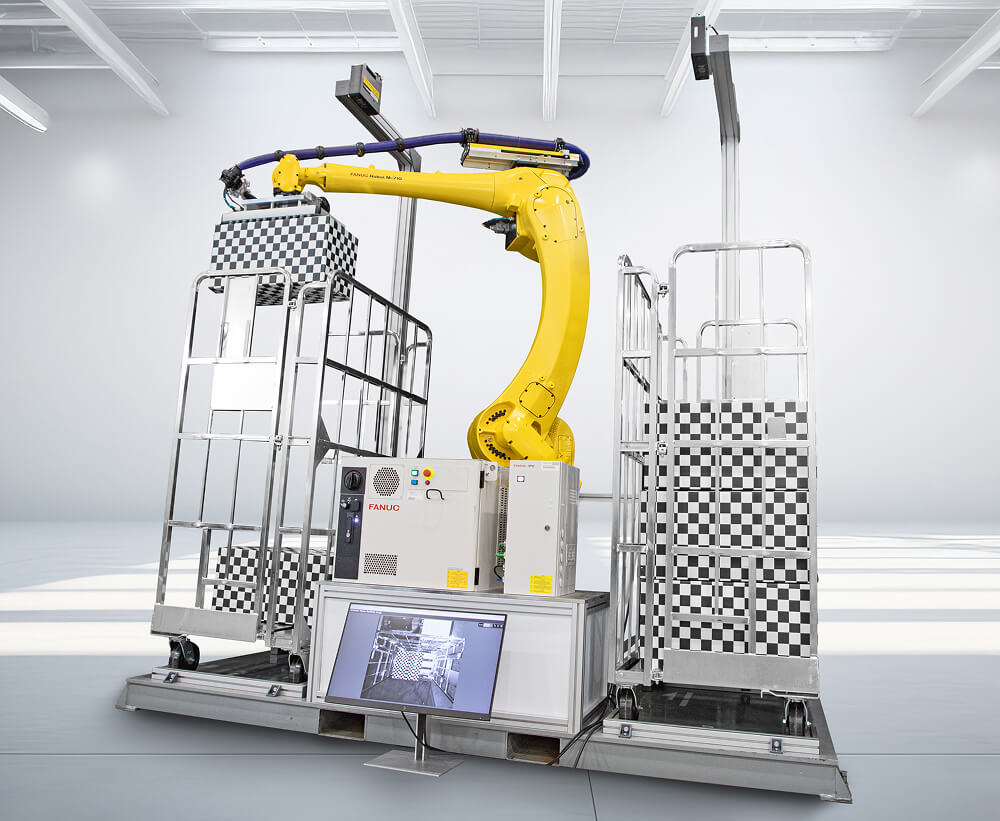
BRILS’ answer is a catalog that spans industrial robots, collaborative robots, hybrid autonomous mobile robots, palletizing systems, welding cells, inspection equipment and service applications. The company says its industrial BRS line emphasizes precision and repeatability, while some collaborative configurations support payloads up to 30 kilograms and a reach of up to 2,000 millimeters. Those specifications establish breadth, but breadth alone does not prove platform economics. The proof will come from whether BRILS can reuse hardware, controls and software across installations instead of redesigning each project from the floor up.
This is where the story differs from Bigwave Robotics’ recent IPO plan. Bigwave’s pitch centered on matching buyers with robot suppliers and using orchestration software to manage mixed fleets. BRILS is making a more vertically involved bet: own more of the robot stack, package it into repeatable modules and remain close enough to the factory floor to complete deployment. Both companies want recurring value beyond one-off hardware sales, but they start from different positions in the automation chain.
A U.S. Base Makes Execution Measurable
BRILS established BRILS USA LLC in Kentwood, Michigan, in April and said the site covers 6,434 square meters, or about 69,250 square feet. The location places the company near an automotive manufacturing cluster while giving it a base for medical devices, semiconductors and battery-related projects. BRILS also said exports accounted for 37% of its 2025 revenue and named Brose, Minth, Hyundai Motor, Hyundai Transys, Hanse Mobility and Nifco among companies in its project record.
Those disclosures are evidence of customer access, not proof that the U.S. unit has reached scale. A new subsidiary can improve response times and reassure manufacturers that service technicians, spare parts and project management will be available locally. It can also add fixed costs before orders arrive. The commercial test is whether Michigan becomes a repeatable delivery hub rather than an expensive sales office attached to Korean engineering resources.
BRILS said it has signed a contract with medical-device company AirLife, which is useful because medical manufacturing can diversify the company beyond automotive cycles. Yet diversification has to be judged by accepted systems, follow-on orders and revenue contribution, not by the number of industries listed in a presentation. Investors should look for evidence that the same core modules can move between automotive, medical devices, batteries and semiconductor-related work with limited redesign.
That is also the lesson from Maven Robotics’ industrial deployment strategy. Robotics companies increasingly win credibility by showing that machines can be installed, maintained and expanded across multiple sites. Capability demonstrations may open a customer conversation. Repeatable deployment determines whether that conversation becomes a scalable business.
The Factory Buyer Will Decide Whether the Platform Works
For procurement teams, BRILS’ public-market milestone does not change the buying criteria. A factory manager still needs to know cycle time, uptime, integration risk, safety certification, operator training requirements, spare-parts availability and the time needed to reconfigure a line. The company’s IPO proceeds can support those capabilities, but capital does not automatically create them.
A modular platform becomes valuable when it shortens the path from purchase order to accepted production. If BRILS can arrive with validated robot modules, common controls and reusable software, customers should see faster commissioning and fewer engineering surprises. If every project still requires extensive bespoke work, the platform label will do little to improve throughput or gross margin.
The same tension applies to the company’s broad product lineup. Offering industrial arms, collaborative robots, mobile platforms and service systems creates more ways to enter an account. It also creates support complexity. Each category carries different safety rules, payloads, duty cycles, integration partners and maintenance needs. BRILS will have to show that its common architecture reduces that complexity instead of simply placing many products under one brand.
Three Numbers Matter More Than the First Trading Day
The first metric to watch is commissioning time. BRILS should be able to show that a growing share of deployments reaches customer acceptance faster because engineers are reusing modules rather than rebuilding systems. A falling installation cycle would be direct evidence that modularization is improving productivity.
The second is repeat business. Named customers and export exposure provide a useful starting point, but recurring orders from the same manufacturer would show that the first installation created enough value to justify expansion. Repeat orders also tend to lower sales costs and give an integrator better visibility into future workload.
The third is the mix between proprietary products and third-party integration work. BRILS can generate revenue by combining outside equipment into a custom line, but the strategic case for the IPO is stronger if its own robot hardware, software and modules represent a rising share of completed systems. That mix would determine whether the company captures more value from each deployment or remains primarily a labor-intensive engineering contractor.
What the Offering Does and Does Not Prove
Pricing at the top of the proposed range shows that the company and its underwriter found support for the final terms during price discovery. It does not prove that BRILS has solved scale, that every planned expansion will earn an attractive return or that post-listing investors will value the company above the offer price. The filing itself makes clear that final exchange requirements still apply.
What the event does provide is a clean starting line. BRILS has set a final price, defined the share allocation and established the gross capital pool. It already has a Korean operating base, a Michigan subsidiary, an export record and a product catalog broad enough to test whether modular robotics can reduce project friction. The next evidence should come from deployment speed, repeat orders, proprietary-product mix and cash discipline.
For factory buyers, the practical conclusion is straightforward. The IPO may improve BRILS’ capacity to support larger and more geographically dispersed projects, but procurement teams should still demand proof at the cell level. Ask how much of a proposed system is standard, how long commissioning will take, which components are stocked locally, and what performance data BRILS will guarantee after acceptance. Those answers will reveal whether the new capital is building a platform or simply funding more custom projects.
This analysis draws on BRILS’ September 16 securities filing and the company’s public materials describing its robot portfolio and U.S. operations. Korean-won conversions use the September 16, 2026 USD/KRW closing rate reported by Yahoo Finance. It is for general information purposes only and does not constitute investment, financial, or legal advice.
Hero image credit: BRILS.