Boston Dynamics Names Rohit Prasad Chief Executive Officer
Boston Dynamics named Rohit Prasad, a 12-year Amazon AI veteran who led Alexa and the Nova foundation models, as CEO effective October 7, closing an eight-month search since Robert Playter's exit.
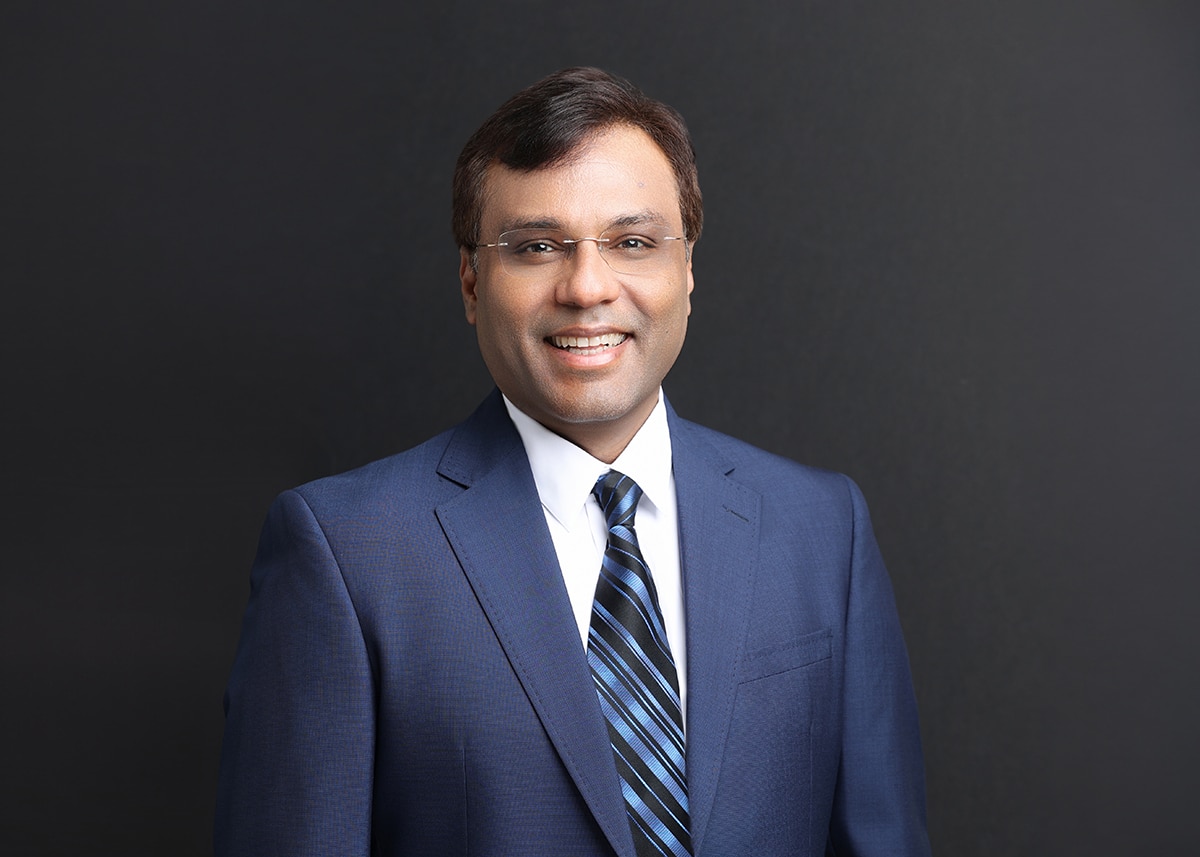
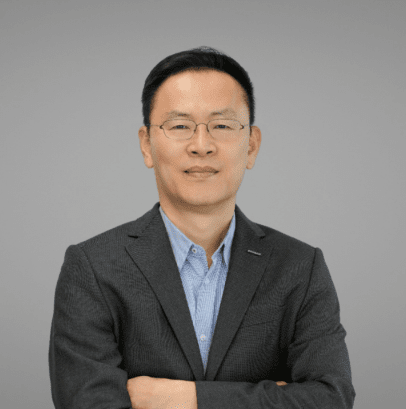
Boston Dynamics' new chief executive spent twelve years building an AI assistant used in hundreds of millions of households before he ever had a robot reporting to him. The company announced Tuesday that Rohit Prasad, who led Alexa and the company's artificial general intelligence research at Amazon, will become Chief Executive Officer effective October 7, 2026, filling a role that has sat with an interim chief since February. The appointment hands one of robotics' most recognized hardware brands to an executive whose entire track record is in software and large-scale AI products, a pairing Boston Dynamics and its parent, Hyundai Motor Group, are betting will convert decades of mechanical engineering into a commercial AI business.
Prasad's resume runs through two of the defining AI projects of the last fifteen years. At Amazon, where he spent twelve years as Senior Vice President and Head Scientist for Alexa and Artificial General Intelligence, he helped take Alexa from an early voice assistant into a consumer AI service installed in homes worldwide, then led development of the Nova foundation model family that Amazon now sells to enterprise customers. Before Amazon, he spent nearly fourteen years at Raytheon BBN Technologies directing machine-learning research for U.S. government and commercial clients. He has lived in the Boston area for more than 25 years, a detail the company's announcement frames as a practical advantage: deep, existing ties to the same regional talent pool, university labs and technical networks that Boston Dynamics itself draws on.
A Search That Outlasted the Interim Chief
The hire closes a leadership search that began in February, when Robert Playter stepped down after roughly three decades at the company, the kind of tenure that effectively made him synonymous with Boston Dynamics' engineering culture. Chief Financial Officer Amanda McMaster took over as interim CEO while the board looked outside the company for a permanent successor, an eight-month search that ended not with another robotics veteran but with an AI product executive who had never worked in hardware. That choice is itself a signal: Boston Dynamics did not promote from within an engineering bench stacked with some of the most capable roboticists in the industry, nor hire a rival hardware executive. It went to Seattle-adjacent AI leadership instead, prioritizing a track record of turning frontier AI research into a product hundreds of millions of people use daily over deep experience with actuators, gait control or payload engineering.
Jaehoon Chang, Vice Chair of Hyundai Motor Group and Chair of Boston Dynamics' Board of Directors, framed the hire as the second half of a two-part bet the automaker has been building since it took full ownership of the robotics company in August. Chang pointed to the combination of Boston Dynamics' robotics expertise, Prasad's record of scaling AI products globally and Hyundai's manufacturing and logistics reach as giving the company "a powerful foundation to build and scale Physical AI," adding that the board is "thrilled to welcome Rohit to lead the company into this exciting new era of real-world Physical AI." Subject to the standard approval process, Prasad is also expected to join Boston Dynamics' board, giving him a direct hand in governance as well as operations.
What "Physical AI" Means for a Three-Robot Product Line
Boston Dynamics today sells three machines: Spot, the quadruped used for industrial inspection and facility monitoring; Stretch, a box-handling robot built for logistics and retail backrooms; and Atlas, the electric humanoid platform still in development rather than general commercial release. None of them currently ship with the kind of large-language-model reasoning or generalized AI planning that has driven Amazon's Alexa and Nova products, or that rivals such as Figure AI and 1X Technologies have put at the center of their own sales pitches. Prasad's stated mandate is to close that gap: he said combining AI and robotics lets the company "build intelligent systems that create meaningful value in real-world environments" and "shape the next era of Physical AI."
For buyers evaluating Spot and Stretch deployments today, the near-term operational picture does not change on October 7. Existing contracts, support agreements and the current software roadmap continue under the same engineering organization Playter and McMaster oversaw. What does change is the executive incentive structure above that organization: a CEO whose entire professional identity rests on shipping AI products at consumer scale now owns the decision of which capabilities Boston Dynamics prioritizes next, and how aggressively the company pushes generalized reasoning into Spot's inspection routines, Stretch's warehouse handling or Atlas's eventual commercial release. Procurement teams with multi-year Boston Dynamics contracts should read this as a signal to watch the next two to three product cycles closely, rather than something that demands an immediate response.
The Hyundai Calculus Behind an Outside AI Hire
Hyundai's interest in this appointment extends well beyond Boston Dynamics' own balance sheet. The automaker has committed to manufacturing 30,000 robots a year by 2028 across its own facilities, using Boston Dynamics' Atlas humanoid as the centerpiece of that plan, and has already opened a dedicated Atlas training center at its Hyundai Motor Group Metaplant in Georgia to prepare the robot for factory work. A platform that can only walk, lift and inspect competently, without the kind of adaptive, language-driven reasoning that lets a machine handle tasks it was not explicitly programmed for, is a harder sell to the industrial customers Hyundai needs to hit that production target. Prasad's Nova and Alexa experience is directly aimed at that gap: building AI systems that scale across millions of interactions and a wide range of unscripted inputs, the same quality that separates a demonstration robot from one that is actually useful on a factory floor or in a warehouse aisle.
The move also puts Boston Dynamics in more direct competition with the newest wave of humanoid and AI-native robotics companies rather than its traditional industrial-automation peers. Figure AI and 1X Technologies were both founded with AI integration as a starting premise rather than something bolted on after a hardware platform matured, and both have leaned on partnerships with large AI labs to build conversational and task-planning capability into their machines from day one. Boston Dynamics, by contrast, built its reputation over more than three decades on best-in-class mechanical engineering, parkour-capable balance control and some of the most widely shared robot demonstration videos in the industry, but with AI layered on top rather than built in from the start. Hiring an executive whose entire career has been AI-first is Hyundai's clearest statement yet that it sees that sequencing as a competitive liability it needs to correct quickly, not a difference in style it can live with indefinitely.
A Quiet Departure From the Founder-Engineer Model
Boston Dynamics' leadership has historically run through people who came up inside robotics research: founder Marc Raibert, an MIT and Carnegie Mellon legged-locomotion researcher, and Playter, who joined the company in 1994 and rose through three decades of engineering roles before taking the CEO title. Raibert himself left to start a new robotics venture, Dynamic Creatures, in September, a reminder that the engineering talent that built Boston Dynamics' early reputation is increasingly dispersing into new companies even as the parent company recruits outside its own tradition for the top job. Prasad breaks that pattern entirely. He has no public record of robotics-specific research, mechanical design work or hardware product launches, and his appointment is a bet that AI product leadership, not robotics pedigree, is now the scarcer and more valuable skill at the top of a humanoid robotics company heading into a capital-intensive commercialization phase.
Whether that bet pays off will show up first in Boston Dynamics' product roadmap over the next twelve to eighteen months, specifically whether Spot and Stretch pick up generalized AI reasoning capabilities comparable to what Prasad built at Amazon, and whether Atlas moves from Hyundai's training center into paid industrial deployments on a timeline that matches the automaker's 2028 manufacturing target. An AI executive without robotics experience either accelerates Boston Dynamics past hardware-only competitors by forcing software discipline onto a company that has historically prioritized mechanical polish, or he discovers that physical robots carry constraints, safety certification requirements, actuator reliability limits, unpredictable real-world environments, that no amount of large-language-model expertise can shortcut. Boston Dynamics' three-decade engineering culture now answers to an executive who has never had to solve that problem before, and the industry will be watching which direction that tension resolves.
A Pattern Spreading Across the Humanoid Sector
Boston Dynamics is not the only robotics company recruiting its next chief executive from AI rather than hardware. South Korea's Doosan Robotics named a new CEO earlier this month, and across the humanoid sector more broadly, boards are increasingly weighing software and foundation-model credentials alongside, and in Prasad's case instead of, mechanical engineering pedigree when picking leadership. The logic is consistent across these moves: a robot that can walk and lift but cannot interpret an unscripted instruction or adapt to a task it was not explicitly trained for is a shrinking differentiator as more competitors clear the mechanical bar, and the remaining competitive edge increasingly sits in software. Boston Dynamics, with three decades of mechanical credibility and comparatively little large-scale consumer AI experience until now, is a clear test case for whether that calculus holds once a true AI-first executive is actually running the company rather than advising it from outside.
For competitors watching from Figure AI, 1X Technologies, Agility Robotics and China's fast-growing humanoid makers, Prasad's appointment raises the bar on what "AI integration" is expected to mean at the executive level, not just inside a product team. A company that can point to a chief executive who personally built and scaled a consumer AI service used by hundreds of millions of people has a credibility argument in enterprise sales conversations that a roboticist-led competitor cannot easily match, regardless of whose hardware performs better in a side-by-side demonstration.
This analysis synthesizes company statements and public market activity as of the publication date and should not be read as investment, financial, or professional advice; it is provided for general information purposes only.