Robots in Board Games: How AI Is Changing Tabletop Play
Board games were supposed to be the one place left where humans had no competition from machines. That turned out to be wrong twice — first when AI learned to outthink us, then when it learned to reach across the table and move the pieces itself. The people this affects most are not game designers or roboticists — they are anyone trying to understand how humans actually respond to intelligent machines in shared physical space. What board games are quietly revealing about robot acceptance is not something the industrial deployment reports are capturing.

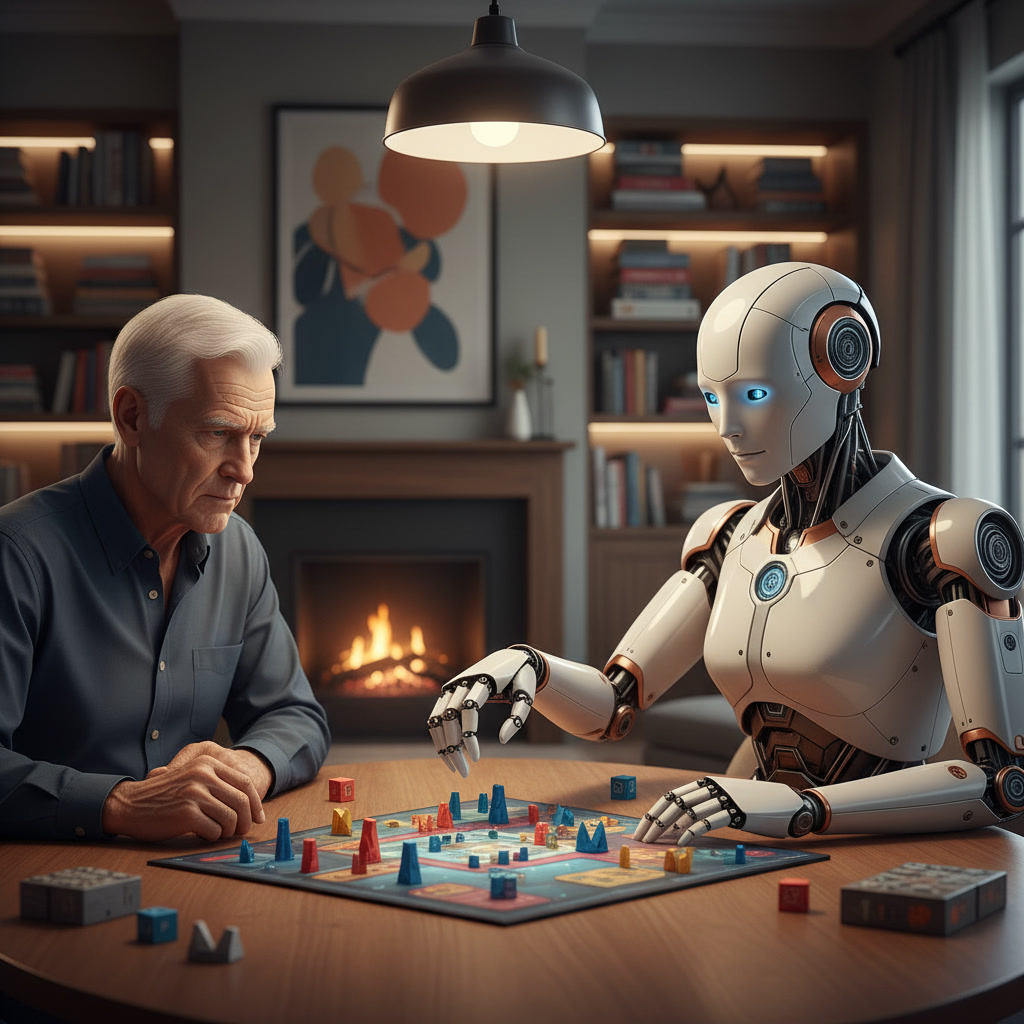
Luna set up the board the same way she always does — knights before bishops, queen on her colour — and then waited. Her usual opponent had cancelled. Rather than pack the game away, she left it out and sat across from the machine her son had bought her for Christmas. It had a robotic arm. It could see the board through a small camera and pick up pieces with a three-fingered grip. She made her first move and watched the arm extend, grasp her son's knight, and place it two squares forward and one to the left with a precision no human hand at this table had ever matched. She played for forty minutes and lost. What surprised her was not the losing — she had expected that. It was that she had talked to it. Not much. But she had said "nice move" once, and meant it.
That moment — a person in a living room, talking to a machine across a board as though it were a guest rather than a device — is what robots in board games are actually revealing. The novelty angle writes itself: AI plays chess, beats champions, moves pieces. The more consequential angle is quieter. Board games are one of the few environments where humans interact with intelligent machines voluntarily, without economic pressure, without workplace stakes, and without anyone telling them they have to accept the robot. What happens at that table is one of the clearest unmediated signals we have about how broadly physical AI will be accepted in shared human space — and the signal is more interesting than the product press releases suggest.
What Are Robots in Board Games?
Robots in board games are AI-powered physical systems that can perceive a game state, make decisions, and manipulate pieces on a real board alongside a human player. They exist because the combination of affordable robotic arms, computer vision, and strong game-playing AI has dissolved the technical barrier that previously kept intelligent board game opponents confined to screens. For players, game designers, and anyone studying how humans relate to intelligent machines in everyday environments, this means the question of robot acceptance is no longer theoretical — it is being answered, game by game, at kitchen tables around the world.
How Are Robots in Board Games Developing Across Asia, Europe, and the US?
The three regions approaching robots in board games are doing so from very different starting points — and the differences reveal as much about their broader relationship with physical AI as they do about the games themselves.
China is moving fastest at the commercial end. SenseRobot, a Chinese AI home robotics brand, became the world's first company to mass-produce intelligent robotic arms for domestic board game play, bringing its AI chess robot to CES 2025 where it demonstrated — with considerable publicity — defeating a four-time Women's World Chess Champion. The product targets home users, not research labs, which matters: it positions the tabletop AI opponent not as a curiosity for enthusiasts but as a domestic appliance for anyone who wants a chess partner at 11pm. Asia-Pacific is the fastest-growing board games region globally, expanding at over 6% annually through 2034 according to Grand View Research (2024), and China is at the centre of that growth both as manufacturer and increasingly as consumer market for game-playing robotic systems.
Europe is approaching the same space from the research direction. TU Delft in the Netherlands published an open-source reproducible chess-playing robot system in 2024, built around a Franka Emika Panda robotic arm and a ZED2 stereo camera, explicitly designed as a human-robot interaction research platform rather than a product. The distinction is deliberate: European robotics researchers are treating the board game environment as a controlled laboratory for studying how humans respond to embodied AI in shared physical space — perception, trust, comfort, social cues — before those systems move into hospitals, schools, or homes. Europe accounts for 34.4% of incremental global board games market growth through 2030, according to Technavio (2025), giving the region both a large enough player base and a research culture oriented toward cautious, evidence-based deployment.
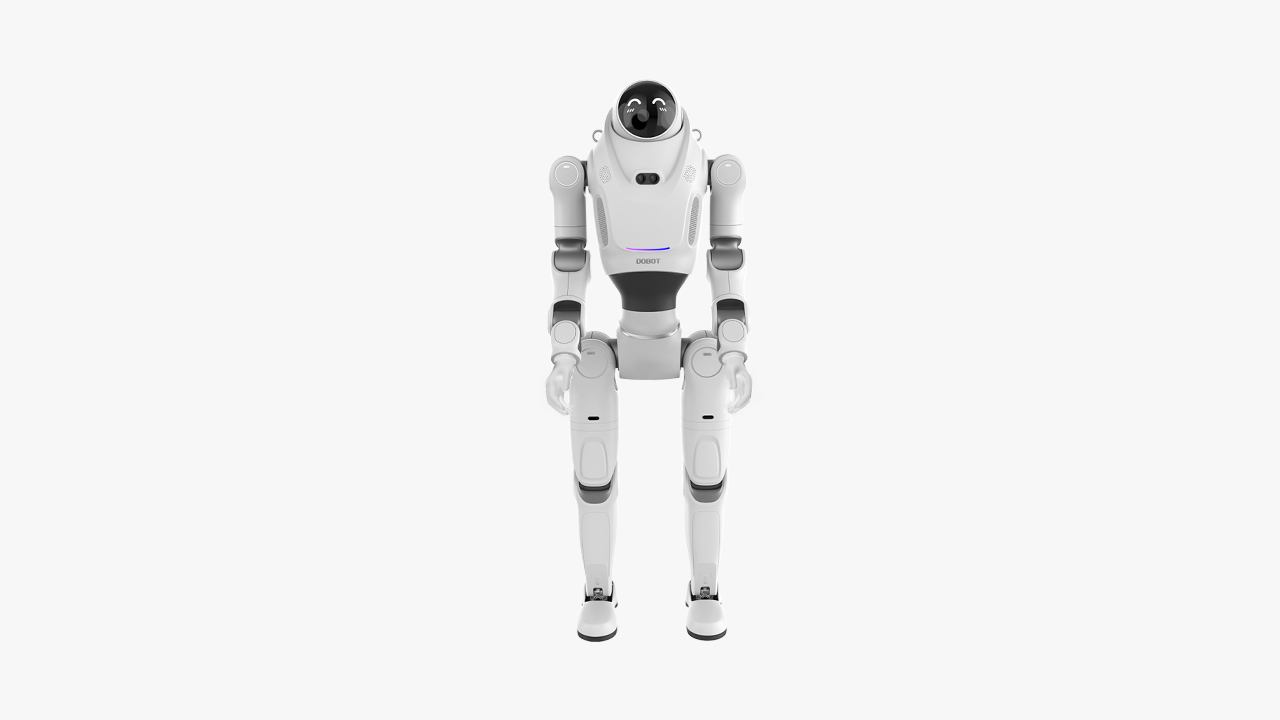
The United States has the largest base of active players. Just over one in five Americans — 21.4% — plays board games at least once a month, according to Quantumrun (2025), and the global board games market reached $17.22 billion in 2025, up from $14.36 billion the previous year, with the US holding 60.5% of North American revenue. At the commercial level, Dobot's demonstration at AWS re:Invent 2024 — two CR10A collaborative robotic arms playing chess against each other using Amazon Bedrock generative AI to drive decision-making — showed how the US is approaching human-robot tabletop interaction from an enterprise AI showcase angle rather than a consumer product or academic research angle. The emphasis is on demonstrating what embodied AI decision-making looks like to an audience of developers and business buyers, using the chess board as a legible, drama-generating context.
How Do Robots Actually Play Board Games With Humans?
A robot playing a board game has to solve three problems simultaneously: it must see what is on the board, decide what to do about it, and then physically execute that decision with enough precision and care to not disturb pieces it was not intending to move.
Think about how a new referee learns to manage a fast-moving game. Before they can make any call, they have to watch the whole field, track every player, and map what they are seeing onto the rules they have memorised — all at the same time, continuously, under pressure. The referee is not just thinking; they are reading a physical situation and translating it into action in real time. A chess-playing robot is doing exactly this: its camera reads the board as a visual field, its AI maps what it sees onto legal game states, its decision engine selects a move, and its robotic arm translates that decision into precise physical action. Every step in that chain has to work reliably, in a real room with variable lighting, pieces that may not be placed perfectly, and a human opponent who moves at unpredictable speeds. The reason this is harder than it looks is that tabletop AI opponents in physical form cannot tolerate the small errors that a screen-based opponent never encounters — knocking over a rook is not the same as a pixel misrendering.
"SenseRobot's AI chess robot, the world's first mass-produced intelligent robotic arm for domestic board game play, demonstrated defeating a four-time Women's World Chess Champion at its 2024 launch — making grandmaster-level tabletop AI opponents commercially available for the first time." (Source: RoboticsTomorrow, 2024)
AI Mastered Games Before Bodies Arrived
The intellectual conquest of board games happened decades before any robot could pick up a piece. IBM's Deep Blue defeated Garry Kasparov in 1997. DeepMind's AlphaGo beat Lee Sedol in 2016. These were genuine milestones in AI capability, but they existed entirely on screens — the human sat at a board, typed or clicked their moves into an interface, and received the AI's response digitally. The organisations that understood this limitation early began treating physical board game play not as a games problem but as a manipulation problem — a testbed for the perception, grasping, and motion-planning skills that the same robotic systems would need in warehouses, operating theatres, and factory floors. The board game was never just about the game. It was about learning to act in the world.
Physical Execution Proved Harder Than Strategic Thinking
When researchers and companies began trying to put robotic arms at chess boards, they ran into the gap that defines all physical AI deployment: everything that works cleanly in digital simulation becomes unreliable in a real room. Pieces are not perfectly placed. Boards shift slightly. Lighting changes. A three-fingered robotic gripper trying to lift a bishop without scattering the adjacent pawns requires millimetre-level precision sustained across hundreds of moves. The research response — exemplified by TU Delft's open-source chess robot system, which made its full hardware and software stack publicly available in 2024 — was to treat reproducibility and shared learning as survival tools, because no single team or company could solve the physical manipulation problem alone at sufficient speed. The hard part of robots in board games was never the chess engine. It was the hand.
Consumer Products Arrived Before the Research Was Complete
The result is a market that has moved faster than the science expected. SenseRobot's mass-produced home chess robot did not wait for every edge case in piece manipulation to be solved — it shipped a product with 25 difficulty levels, voice coaching, Lichess integration, and a three-fingered claw that handles standard 3D pieces reliably enough for home use. The strategic bet embedded in that product launch is that consumer acceptance in a low-stakes voluntary environment — a living room chess game — will accelerate the normalisation of physical AI in higher-stakes shared spaces, and that being first to that normalisation at scale is worth more than waiting for perfection. Asia-Pacific's 6% annual board game market growth provides the consumer base that makes that bet viable in ways it would not be in a smaller or slower-growing market.
Is a Robot Opponent Really Playing the Same Game — or Is Something Being Lost?
Two genuine concerns circulate among board game players and human-computer interaction researchers when the subject of robots at the table comes up, and both deserve a fair reading.
The first is that the robotic opponent removes something socially essential from the game. Board games are not primarily about optimal play — they are about the social experience of shared uncertainty, the pleasure of reading another person's hesitation, the satisfaction of a bluff that works because you know the person well enough to mislead them. A robot that plays at 25 calibrated difficulty levels and makes no mistakes in piece placement is, in this view, a fundamentally different kind of opponent — more like a training device than a participant. The people who hold this concern are not wrong about what they value. They are right that the human dimensions of board game play — imperfection, personality, history between players — are part of what makes the activity meaningful.
The second concern is almost the inverse: that the resistance to robot opponents in leisure contexts is a proxy for a deeper discomfort with physical AI in any shared space, and that working through that discomfort at a chess board — where the stakes are low and the exit is always available — is precisely what board games are good for. Someone who learns to say "nice move" to a robotic arm in their living room is running a different psychological programme than someone who has never interacted with a physical AI system and encounters one for the first time in a hospital or a workplace.
The hard structural truth specific to this topic is that the board game robot is not being sold primarily as a game product. It is being deployed as a normalisation mechanism — by companies that understand that the path to broad physical AI acceptance runs through voluntary, low-stakes, enjoyable encounters where humans choose to engage with the machine rather than being compelled to. The board game table is the cheapest focus group in the history of human-robot interaction, and the companies paying attention to what happens there are learning something that no industrial deployment survey can tell them: whether people, left to their own choices, will reach across the table toward a machine.
This question about how robots integrate into human leisure connects directly to broader questions about where robots will be accepted, trusted, and ultimately allowed to operate.
This development reinforces:
What is Physical AI: The chess robot is one of the clearest consumer-facing demonstrations of what physical AI actually involves — perception, decision-making, and physical action in a shared human space — stripped of industrial stakes and placed in a context anyone can observe directly.
Where Robots are Used: The board game environment is an early-adoption signal for where robots will next appear in daily life, because voluntary acceptance in leisure contexts historically precedes acceptance in professional and domestic ones.
Love in the Age of Robots: Both articles examine how humans form relationships — competitive, social, and emotional — with machines that share their physical space, and what those relationships reveal about the pace and terms of broader robot integration.
Luna packed the board away after losing and thought about whether she would set it up again tomorrow. She decided she would. Not because the machine was good company in any way she could fully articulate — it wasn't, not really. But because it was there, and it was consistent, and it had moved the knight correctly every single time. That is a smaller thing than connection. It is also, it turns out, enough to bring someone back to the table.
1. Can robots actually play board games with humans? Yes — modern robots can recognise board states through computer vision, select moves using AI decision engines, and manipulate pieces with robotic arms precise enough for standard gameplay. SenseRobot's AI chess robot, the world's first mass-produced home chess robot, launched in 2024 and demonstrated defeating a four-time Women's World Chess Champion, with 25 difficulty levels available for players at any skill level (RoboticsTomorrow, 2024). The main remaining challenge is social fluency — reading hesitation, bluffing, and emotional nuance — rather than strategic strength.
2. What is the best robot for playing chess against a human? SenseRobot Chess is currently the only mass-produced consumer AI chess robot with a physical robotic arm, available for home use and designed to play at levels from beginner to grandmaster strength. For research applications, TU Delft published an open-source chess-playing robot system in 2024 using a Franka Emika Panda arm and ZED2 camera, which is available for researchers studying human-robot tabletop interaction. The consumer and research markets are at very different maturity levels, with consumer products prioritising ease of use over technical transparency.
3. Why do researchers use board games to study human-robot interaction? Board games offer a controlled, structured, voluntary environment where the rules are fixed, the stakes are low, and the human-robot interaction can be observed and measured without the confounding pressures of a workplace or medical context. TU Delft's 2024 open-source chess robot was designed explicitly for this purpose — to give researchers a reproducible platform for studying how humans respond to robots that share their physical space and make decisions in real time (TU Delft / arXiv, 2024). The voluntary nature of the interaction matters: consent is built in, which removes a major variable in studying genuine human acceptance rather than forced compliance.
4. How big is the market for board games and tabletop gaming? The global board games market reached $17.22 billion in 2025, up from $14.36 billion in 2024, according to Quantumrun and Grand View Research (2025). Asia-Pacific is the fastest-growing region at over 6% annually, while Europe accounts for 34.4% of incremental global market growth through 2030 according to Technavio (2025). The US holds 60.5% of North American board game revenue, with 21.4% of Americans playing at least monthly.
5. Will AI robots replace human opponents in board games? Replacing human opponents is not the primary direction the technology is heading. Most robots in board games are designed to enable play — as solo opponents when no human partner is available, as teaching tools, or as accessibility aids for players with physical limitations. The more consequential question is not replacement but coexistence: whether humans who play with robotic opponents in leisure settings become more comfortable with physical AI in other shared environments, and whether that comfort translates into broader social acceptance of intelligent machines in daily life.