The Real Driverless Market Is a Fenced Yard, and It Is Reaching ASEAN Before Robotaxis Do
Level 4 autonomy is already commercial, just not for passengers. Zelos runs more than 25,000 driverless logistics vehicles on fixed routes inside fenced sites, postal operators are its anchor customers, and Singapore and Malaysia have licensed the category route by route rather than debating robotaxis. A column on why the fence is the product, why the licences are landing in ASEAN first, and what a procurement committee in the Philippines should take from it.

The driverless vehicles making money in 2026 do not carry passengers, and most of them never leave a fence.
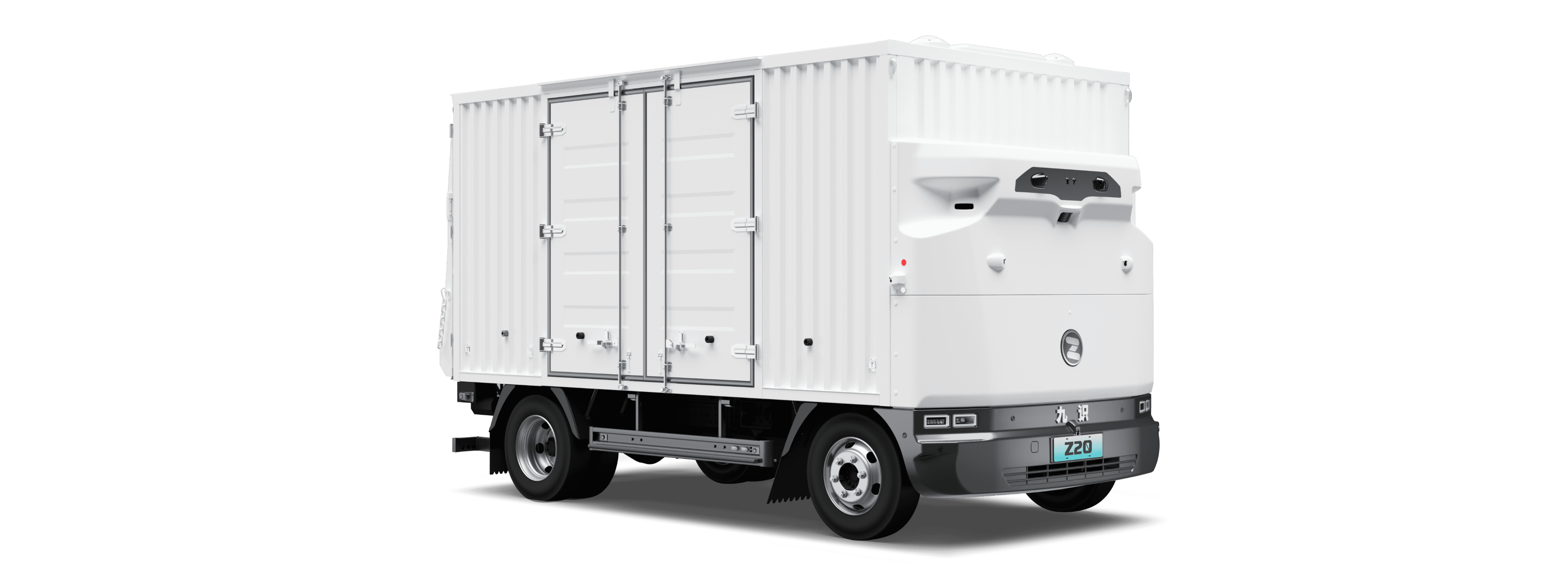
On August 21, Jiushi Intelligence, the Suzhou company that trades as Zelos, and the commercial-vehicle maker Yutong put a 4.2-tonne driverless box truck into production. The Z20 hauls 19.32 cubic metres of cargo, six to eight standard pallets, on the shuttle runs between a factory gate, a warehouse, and the loading dock next door. No cab. No driver's seat. No plan to ever carry a person.
That is the whole Level 4 business right now, and almost nobody outside logistics is paying attention to it.
The fence is the product
For a decade the autonomy story has been told through robotaxis: open city streets, unpredictable pedestrians, a regulator in every jurisdiction, and a safety case that has to be argued in public. That is the hardest possible version of the problem, which is why it has consumed the most capital and produced the fewest paying customers.
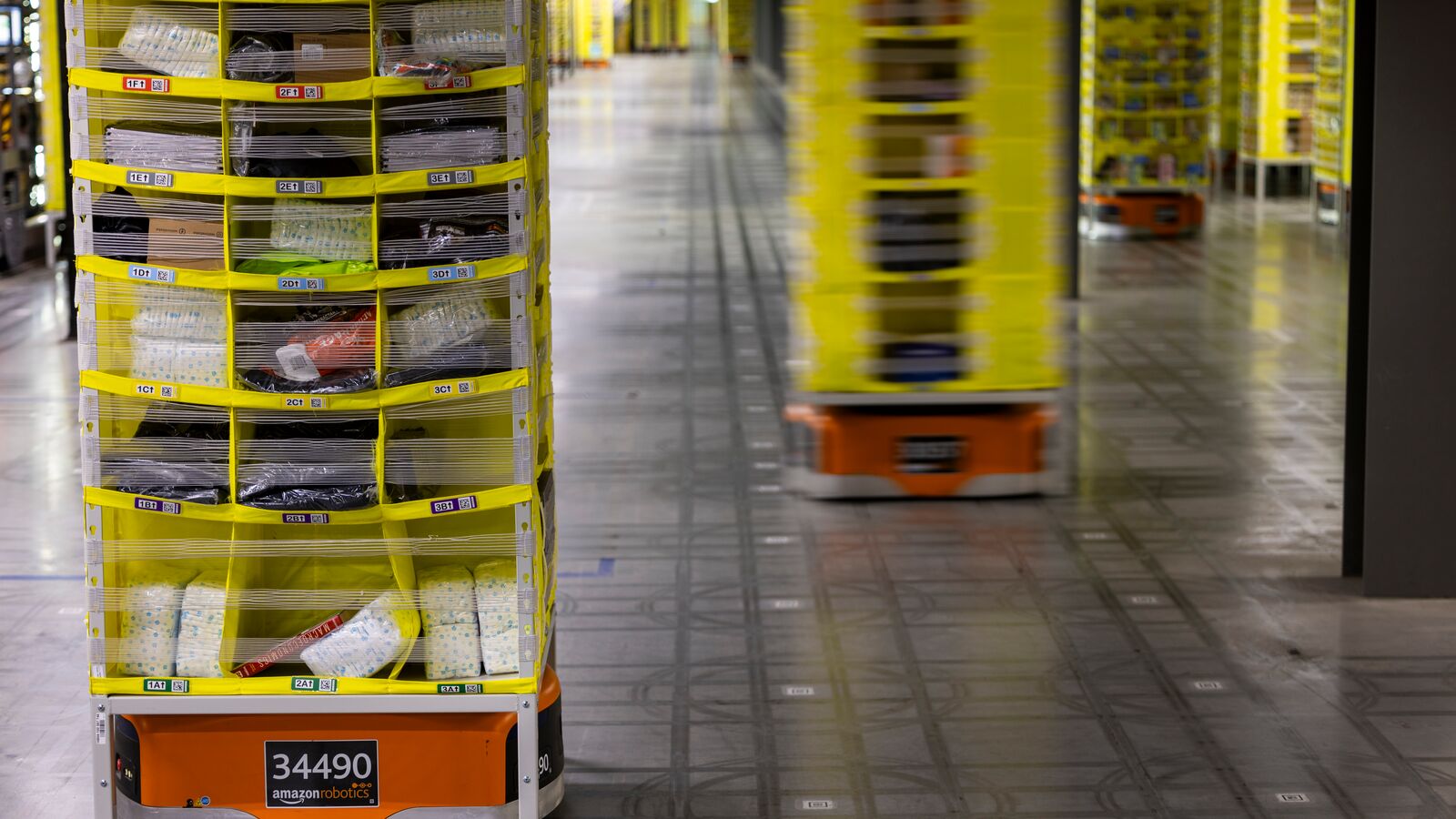
The easy version is a fixed route inside a controlled site. A postal sorting centre. A factory campus. An airport apron. A logistics park where the only traffic is other trucks doing the same loop. Speeds are low, the map barely changes, and the operator controls who is on the road. Zelos built its fleet on that distinction. Its own figures put more than 25,000 vehicles in operation across more than 300 Chinese cities and 20 countries, with over 130 million kilometres of Level 4 commercial operating data behind them.
Here is the contrarian claim: those numbers are larger than the entire global robotaxi industry has managed, and they were earned on routes that a robotaxi engineer would consider beneath the problem.
The fence is not a limitation the company is working around. The fence is the product. It is what turns a research problem into an operating procedure, and an operating procedure is the only thing a logistics buyer will pay for.
Watch the postal services, not the tech press
The clearest signal of where this market is going comes from the least fashionable customers on earth: national postal operators.
China Post put its unmanned vehicle programme out to tender in October 2025 and Zelos qualified for every lot. In January 2026, Cainiao, the logistics arm of Alibaba, became a shareholder, and the Cainiao GT driverless van now ships on Zelos's platform. In May 2025, Zelos signed a joint-venture agreement with Emirates Post Group in the United Arab Emirates. And in Malaysia, the company's first project was not a showcase at a tech park. It was a test programme with Autonomous Logistic Solutions and Pos Malaysia that began in January at the National Mail Centre, the building every parcel in the country passes through.
Postal operators are the ideal first customer for fenced autonomy for three reasons that have nothing to do with technology. They own large closed sites with repetitive internal transfers. They run on thin margins with a government mandate to keep service levels up, which makes a driver shortage an operational emergency rather than an HR inconvenience. And they are state-linked, which means a public-road licence for a postal fleet is a policy decision a ministry can make on its own timeline.
That last point matters more in Southeast Asia than anywhere else.
Why the licences are landing in ASEAN first
Singapore issued Zelos the country's first licence for a driverless logistics vehicle, and the company now operates at Changi Airport. Malaysia's Ministry of Transport approved the country's first Level 4 public-road test licence on June 30, with open-road trials in Cyberjaya scheduled over the following three to six months. Before that licence, the Malaysian proof of concept logged more than 1,000 autonomous kilometres over 36 days with zero safety incidents, a figure that comes from the company and its partner, and which I cite as reported rather than audited.
Notice the shape of the regulatory path in both countries. It is not a national framework for autonomous vehicles. It is a specific licence, for a specific vehicle class, operating on specific routes, granted to a specific operator. Singapore and Malaysia have not decided the robotaxi question. They have decided that a box on wheels doing a loop between a mail centre and an airport cargo terminal is a tractable regulatory object.
Small, single-route licences are how autonomy actually enters a country. The frameworks come later, written around what already works.
From where I sit in the Philippines, that sequence is the useful lesson. Nobody in Manila is going to approve robotaxis this decade. But PHLPost, the port operators, the Clark and Cebu airport cargo terminals, and the export-processing zones in Laguna and Cavite all own exactly the kind of fenced, repetitive, labour-short environments where this category is already commercial two borders north. The procurement question is not "is L4 ready." It is "which of our sites is a fence with a loop inside it."
What changed in the technology
Two things happened this year that moved fenced autonomy from pilots to fleets, and both are verifiable in company disclosures rather than demos.
The first is the removal of the high-definition map. On July 17, at the World Artificial Intelligence Conference, Zelos said it had begun mass production of a Level 4 system that runs on real-time perception and ordinary navigation maps instead of centimetre-grade survey data. The company reports that map-free operation already covers roughly 30 percent of newly opened routes and that deploying a vehicle to a new site now takes under a day. Whether or not every figure holds at scale, the direction is the one that matters for a buyer in a country with no HD-map industry: the vehicle no longer needs a surveyed city to drive in.
The second is the move from vehicle maker to platform vendor. In June, Zelos announced "Zelos Inside," a standardised Level 4 stack with more than 500 TOPS of compute and ASIL-D safety certification, integrated across Dongfeng's OpenVAN commercial-vehicle range. The Yutong Z20 follows the same division of labour on a heavier chassis: Yutong builds and warrants the truck, Zelos supplies the autonomy. When a truck maker builds the body and an autonomy company supplies the brain under its own badge, the category has reached the point where fleets can be ordered from a catalogue rather than commissioned from an engineering team.
That is also where a buyer should start worrying, and I covered why in my column on agent platforms: the value accrues to whoever holds the operating state, and a depot that has run 10,000 kilometres of routes on one vendor's stack has switching costs that are invisible on the purchase order.
The honest tradeoffs
Three things a procurement committee should hold against the enthusiasm.
First, the public-road numbers are still small. DHL's much-publicised Changzhou service in June is one vehicle on one 38-kilometre route, carrying a tonne per trip. The Malaysian licence is a test licence. Fenced autonomy is commercial at scale inside sites; on public roads it is still a pilot economy with a good press office.
Second, every safety figure in this column comes from the vendor or its partner. Zero incidents over 36 days is a sentence I can report, not one I can verify. A buyer should write incident disclosure, intervention rates, and independent audit rights into the contract, because the industry has not yet built the third-party safety record that aviation or lifts take for granted.
Third, the operating model is more demanding than the vehicle. A fenced fleet still needs a supervisor, an exception process, a maintenance regime, and a plan for the day the route changes. The hardware is catalogue-ready. Most buyers' operations teams are not, and that gap, not the autonomy stack, is what stalls the second deployment after a successful first one.
The fence comes down last
The robotaxi will arrive eventually, and when it does it will inherit a decade of operating discipline built on mail centres and factory yards. That order of events is backwards from how the story was sold, which is precisely why it is worth stating plainly.
Level 4 is not coming. It is already here, behind a gate, carrying pallets.
The companies that learn to run it inside the fence this year will be the ones ready when the fence comes down, and in Southeast Asia that learning has already begun in the two countries whose regulators were willing to licence a loop instead of debating a city.
Image: Jiushi Intelligence (Zelos). This column reflects the author's analysis of company disclosures, regulatory announcements, and product documentation available as of August 22, 2026.
Disclaimer: This article is for general information purposes only and does not constitute investment, legal, or procurement advice. Readers should verify details with primary sources before making business decisions.