Qualcomm Buys PickNik, Pledges to Keep MoveIt Open Source
Qualcomm Technologies has agreed to acquire PickNik Inc., steward of the open-source MoveIt manipulation framework for ROS, and plans to integrate it with its Dragonwing robotics platforms starting with the Arduino VENTUNO Q board.

Qualcomm Technologies said on September 23, 2026, at ROSCon Global 2026 in Toronto that it has agreed to acquire PickNik Inc., the Boulder, Colorado, company that built and maintains MoveIt, the open-source motion-planning framework used across most Robot Operating System (ROS) manipulation projects. The deal's price was not disclosed, and closing is subject to customary conditions.
PickNik is the less familiar name in this transaction, so it is worth establishing what a buyer is actually looking at. Founded in 2015, the company built its reputation writing planning and control software rather than hardware, cutting its teeth on the Amazon Picking Challenge before landing Google as its first paying customer. MoveIt, its flagship project, is the software layer that takes a robot arm's kinematic model and a target pose and works out a collision-free path to get there, along with the grasping and orchestration logic layered on top in MoveIt Pro, PickNik's commercial platform. It is not a household name outside robotics engineering circles, but inside them it is closer to plumbing than product: the default choice for arm manipulation on ROS-based platforms in research labs, systems integrators, and a growing number of production lines. Its technical credibility extends past factory floors: PickNik is also a partner on a National Aeronautics and Space Administration (NASA) mission called Fly Foundational Robotics, the kind of reference customer a small manipulation-software shop does not land by accident.
A Community Dependency Becomes a Qualcomm Product Line
The commercial logic is straightforward. Qualcomm has spent the past year assembling Dragonwing, its robotics compute and software stack that spans everything from small edge modules to full humanoid-class platforms, and it bought Arduino outright in October 2025 to control a developer-facing hardware brand as well. MoveIt fills the gap those two moves left open: a mature, widely deployed planning and manipulation layer that developers already trust, rather than one Qualcomm would have had to build or fund into relevance from a standing start. Nakul Duggal, the Qualcomm executive vice president and group general manager who oversees its automotive, industrial, embedded internet-of-things, and robotics businesses, framed the acquisition as a software problem more than a hardware one: "Robotics is one of the most exciting frontiers of physical AI, and software is the connective tissue that turns great hardware into great robots."
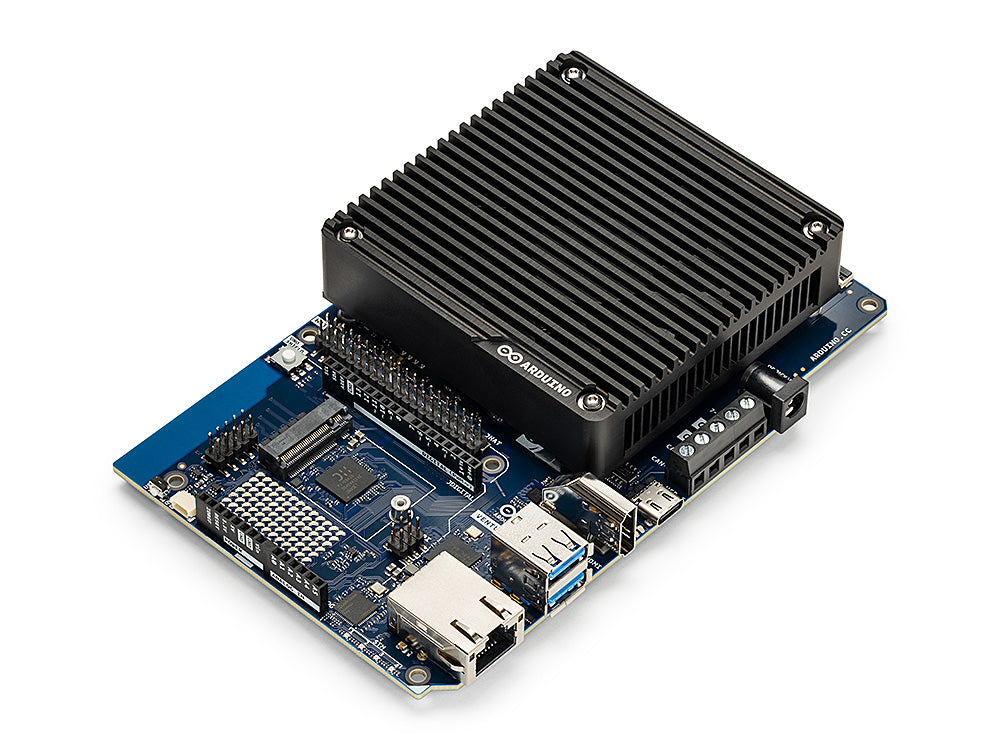
The first integration target is specific rather than aspirational. Qualcomm plans to streamline MoveIt's path onto Dragonwing robotics platforms starting with the Arduino VENTUNO Q board, a dual-processor module that pairs a Dragonwing application processor with a real-time microcontroller for the low-latency control loops that motion planning has to hand off to in the end. The pitch to a developer is a shorter chain of tools between an AI model, whether a local large language model (LLM) or a vision-language model (VLM) reasoning about what a robot should do, and the motion planning, manipulation, and real-time control layers that actually move the arm. At ROSCon Toronto this week, Qualcomm and PickNik are demonstrating MoveIt Pro running on VENTUNO Q and Dragonwing hardware side by side, which is as close as either company has come to showing rather than promising the integration.
Betting Against a GPU-Centric Default
The more interesting story is what this signals about how the robotics software stack gets built over the next several years, because Qualcomm is not the only chip company trying to own the layer above silicon. NVIDIA has spent that same period pulling developers toward Isaac Sim, Isaac ROS, and its Isaac Manipulator libraries, a stack that is excellent and increasingly the default reference point for simulation-to-reality workflows, but one whose center of gravity sits on NVIDIA's own graphics processing units and Jetson compute modules. Qualcomm's move is a bet that a developer building a manipulation pipeline should not have to choose a chip vendor before choosing a planning framework, and that owning stewardship of the framework everyone already uses is a more durable position than trying to out-build NVIDIA's simulation tooling from scratch.
That is the quotable version of the thesis: whoever controls the motion-planning layer that a robot's AI models call into gains leverage over hardware choice further down the stack, without ever having to win a benchmark contest. Qualcomm is not trying to make MoveIt exclusive to Dragonwing hardware, at least according to its own stated terms, and continued third-party hardware support was written into the announcement rather than left implied. That distinction matters commercially. A chip vendor that captures a standard while keeping it nominally open gets adoption from teams who would never accept vendor lock-in outright, while still enjoying a first-integrator advantage on its own silicon. It is a subtler play than NVIDIA's full-stack approach, and one that only works if the open commitment holds up under the pressure of actually running a public company's robotics division.
Qualcomm and PickNik are also founding members of the Open Source Robotics Alliance, a newer industry body meant to give ROS-adjacent projects governance that survives any single company's ownership changes. Positioning this acquisition inside that alliance, rather than as a straightforward tuck-in, is itself a signal: open robotics infrastructure is consolidating into a small number of well-funded stewards, the way open-source databases and container tooling did a decade earlier, and the chip vendors are the ones with the balance sheets to be those stewards now. For a field that has run for years on volunteer maintainers and university lab budgets, that consolidation is mostly good news for reliability and bad news for anyone hoping the next foundational robotics project stays independent of a semiconductor company's roadmap.
What a Buyer Standardizing on ROS Should Actually Watch
For a procurement team or systems integrator, the practical question is not whether MoveIt is good software. It already is, and that was true before Qualcomm showed up. The question is whether today's ownership change quietly narrows the choices available two or three product cycles from now. Think of it the way an automation buyer already thinks about a proprietary controller from a robot arm vendor: the software works fine right up until the day you want to swap in a competitor's part, at which point you discover how many small dependencies were never really optional. MoveIt has been genuinely hardware-agnostic for a decade because no single company had a commercial reason to make it otherwise. Qualcomm now has exactly that reason, even if its public commitments say the opposite.
Dave Coleman, PickNik's founder and chief product officer, framed the deal as continuity rather than a change in direction: "Joining Qualcomm Technologies will allow us to accelerate that mission, expand investment in MoveIt as a leading AI training platform for robotics." He added, separately, that the goal was to do so while keeping the community collaboration and cross-platform support that built MoveIt's user base in the first place. Dave Grant, PickNik's chief executive, was more succinct about what changes for the team itself: "MoveIt is entering an exciting new chapter with the resources and support to help expand its impact." Both statements are what any acquired founder says on announcement day, and neither is a substitute for watching what actually ships.
The honest counterpoint is that promises to keep an acquired open-source project open are cheap to make and have a mixed record of being kept once a deal closes and the original team's retention packages start expiring. Qualcomm's own test case is barely a year old: it bought Arduino in October 2025 and has, so far, kept that brand's hardware open and third-party friendly, but eleven months is not a track record, it is a grace period. The specific risk with MoveIt is less about the license text, which is easy to leave untouched, and more about where engineering attention and roadmap priority go once Dragonwing integration work competes for the same PickNik engineers who used to serve the whole ROS community equally. An acquihire that keeps a repository's license unchanged while quietly redirecting its best maintainers toward one customer's hardware roadmap still counts, in practice, as narrowing the ecosystem.
The Concrete Thing to Watch Next
None of that makes this a bad move for Qualcomm, and it does not make MoveIt a worse choice for a team already standardized on it today. It does mean the acquisition should be filed as a structural shift rather than a feature announcement. The next concrete checkpoint is not the deal's close, which is a formality at this point, but whether Qualcomm and PickNik publish an updated MoveIt roadmap and governance structure, ideally through the Open Source Robotics Alliance rather than a Qualcomm blog post, that names specific non-Dragonwing hardware partners and maintenance commitments rather than reiterating the same three sentences about staying open. If that document appears within the next two quarters and names real third-party silicon partners, the open commitment is holding. If it does not, buyers evaluating a ROS-based manipulation stack should start pricing in the possibility that the most widely used planning framework in the field is drifting toward a single chip vendor's roadmap, however gradually and however good the intentions were on announcement day.
This account synthesizes Qualcomm's and PickNik's public statements and industry reporting on the September 23, 2026 announcement. It is for general information purposes only and does not constitute investment, financial, or legal advice.
Hero image credit: Arduino.