America's AI Robotics Surge: Atlas, Faraday Future, and Figure AI Lead Mid-2026 Deployment Wave
US robotics is moving from demos to deployment, with Boston Dynamics, Faraday Future, and Figure AI leading a mid-2026 surge across industrial and commercial use cases.

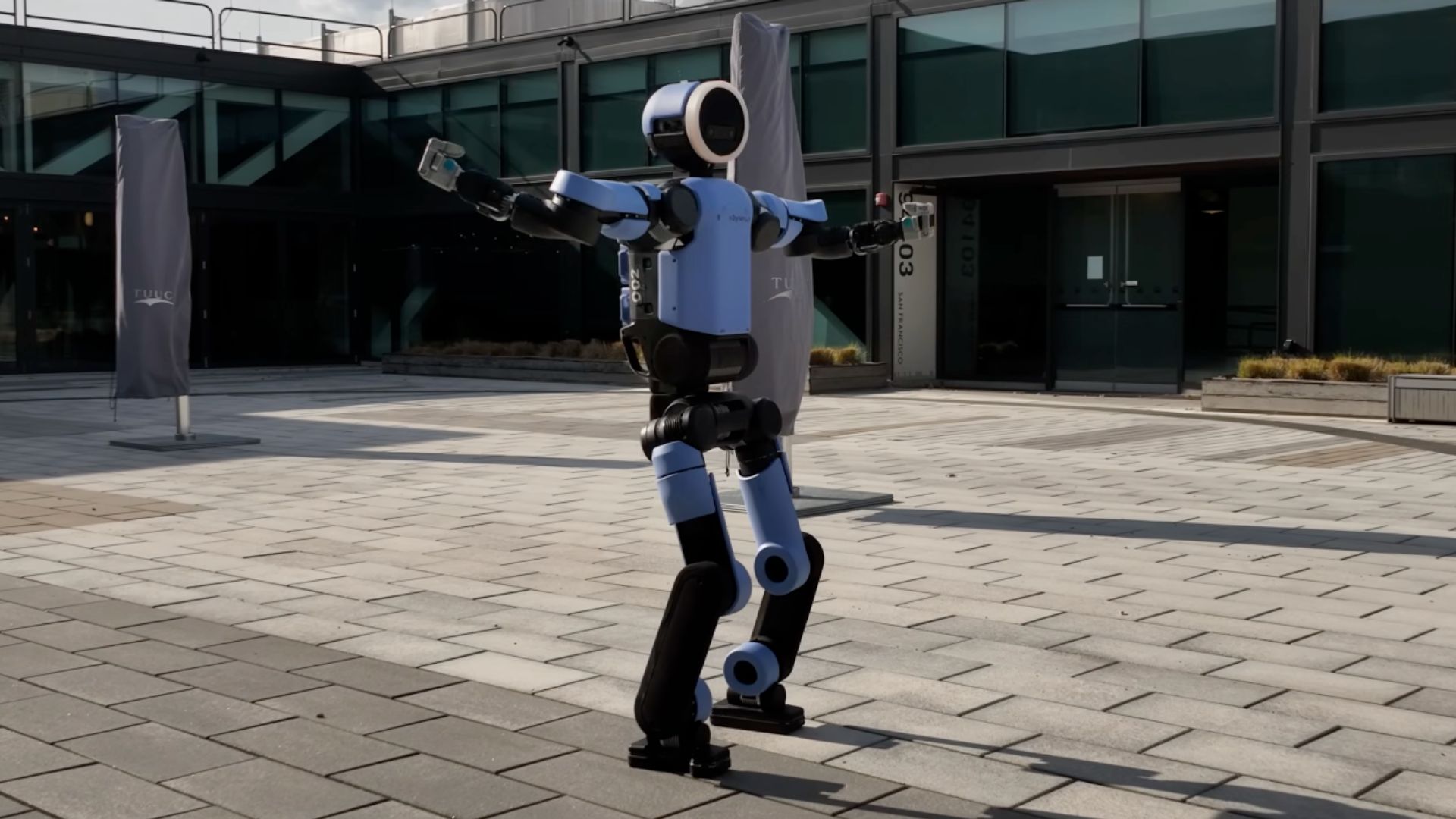
America's AI robotics industry is entering a decisive new chapter. From factory floors in California to warehouse logistics in Nevada, US-based companies are pushing humanoid robots closer to real-world deployment than ever before. The wave hitting in mid-2026 isn't just about flashy demos — it's about machines that think, adapt, and work alongside humans at scale.
Boston Dynamics' Atlas Edges Toward Industrial Reality
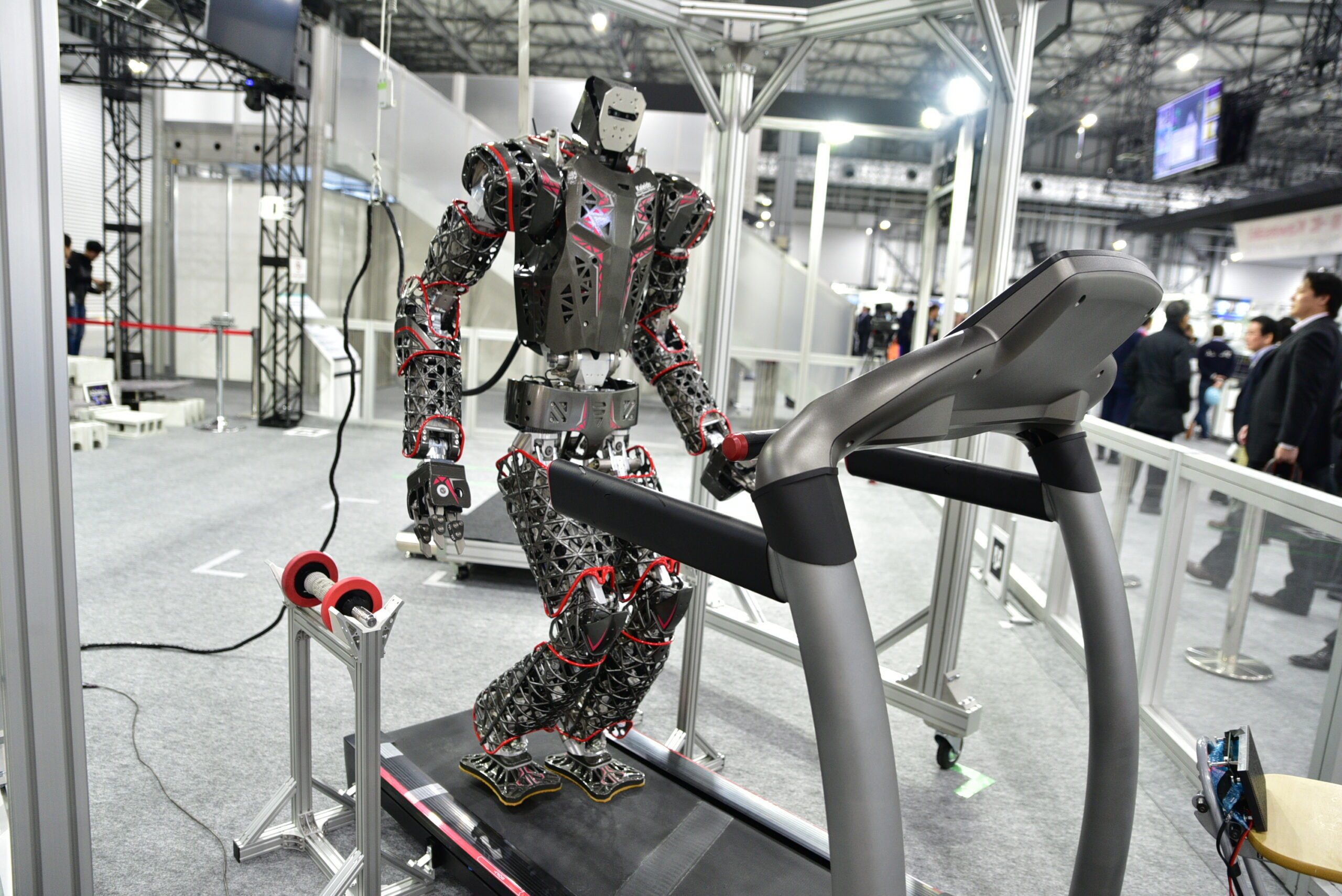
Boston Dynamics, the Hyundai Motor Group-owned robotics firm based in Waltham, Massachusetts, is making significant strides with its fully electric Atlas humanoid. According to a new analysis by KB Securities analyst Kang Sung-jin, Atlas is now approaching the autonomy required for sustained industrial deployment — not just controlled demos. The breakthrough centers on what researchers call "general intelligence" — the ability for a robot to adapt to unfamiliar environments and carry out varied tasks without rigid, preprogrammed instructions.
Central to this leap is Boston Dynamics' accelerated simulation training framework. The company can run the equivalent of
millions of hours of robot training in a single day
, with the resulting behaviors transferred to physical Atlas hardware in roughly one hour. Strategic partnerships withGoogle DeepMind
andNvidia
are powering the effort. Recent demonstrations showed Atlas moving a refrigerator using coordinated full-body movement — and performing dynamic kicks requiring precision balance. KB Securities projects Boston Dynamics could capture15% of the global humanoid robot market by 2035
and as much as60% of the premium industrial humanoid segment
.Faraday Future Launches a Full AI Robot Ecosystem in California
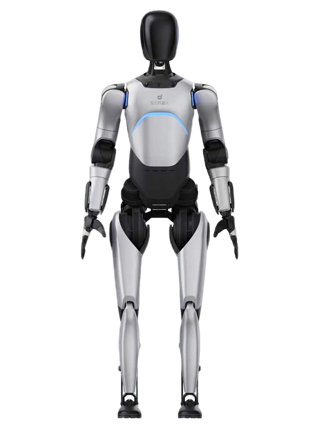
Not to be outdone, Faraday Future (FF) — the El Segundo, California firm better known for electric vehicles — made a dramatic pivot into AI robotics this June. At its California headquarters, the company unveiled its "All-New AI Robot World (EAI)" ecosystem, anchored by two flagship products: the
Futurist humanoid
and theFX Navi quadruped
.The Futurist stands 5'8" tall, weighs 121 lbs — 14% lighter than its predecessor — and packs
31 degrees of freedom
with knee-joint torque up to320 Nm
and sprint speeds approaching11 mph
. A dual-battery system delivers up to 6 hours of runtime. It runs on a Vision-Language-Action (VLA) architecture with a World Model for autonomous perception and reasoning. The consumer-friendly FX Navi quadruped is already on sale at$1,990
, featuring 12 motorized joints, a smartphone-based computing module, and STEM education tools with OTA updates."We are not just building robots — we are building an ecosystem that connects education, industry, and everyday life through embodied AI."
-- Faraday Future, Official Launch Statement, El Segundo, June 2026
Figure AI Brings Humanoids Into America's Retail Supply Chain
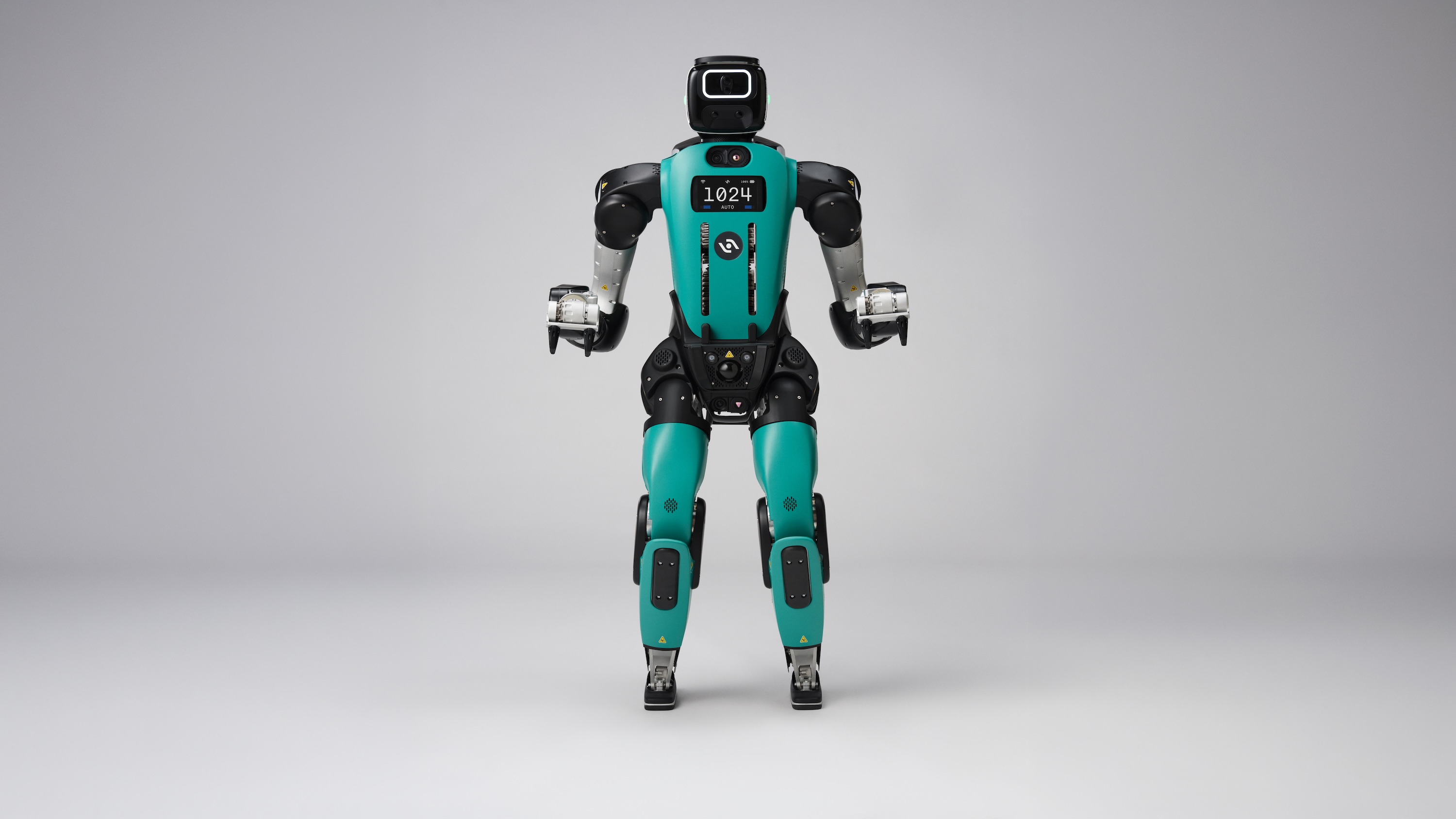
One of the most commercially significant US robotics moves this month came from Figure AI, which signed a deployment deal with
Catalyst Brands
— the retail group behind JCPenney, Brooks Brothers, and Aeropostale — to put humanoid robots to work at Catalyst's distribution center inReno, Nevada
. The robots will handle repetitive sorting and packing within Catalyst's Joey Pouch system. This isn't a pilot in a lab; the Reno facility received a$40 million infrastructure upgrade in 2024
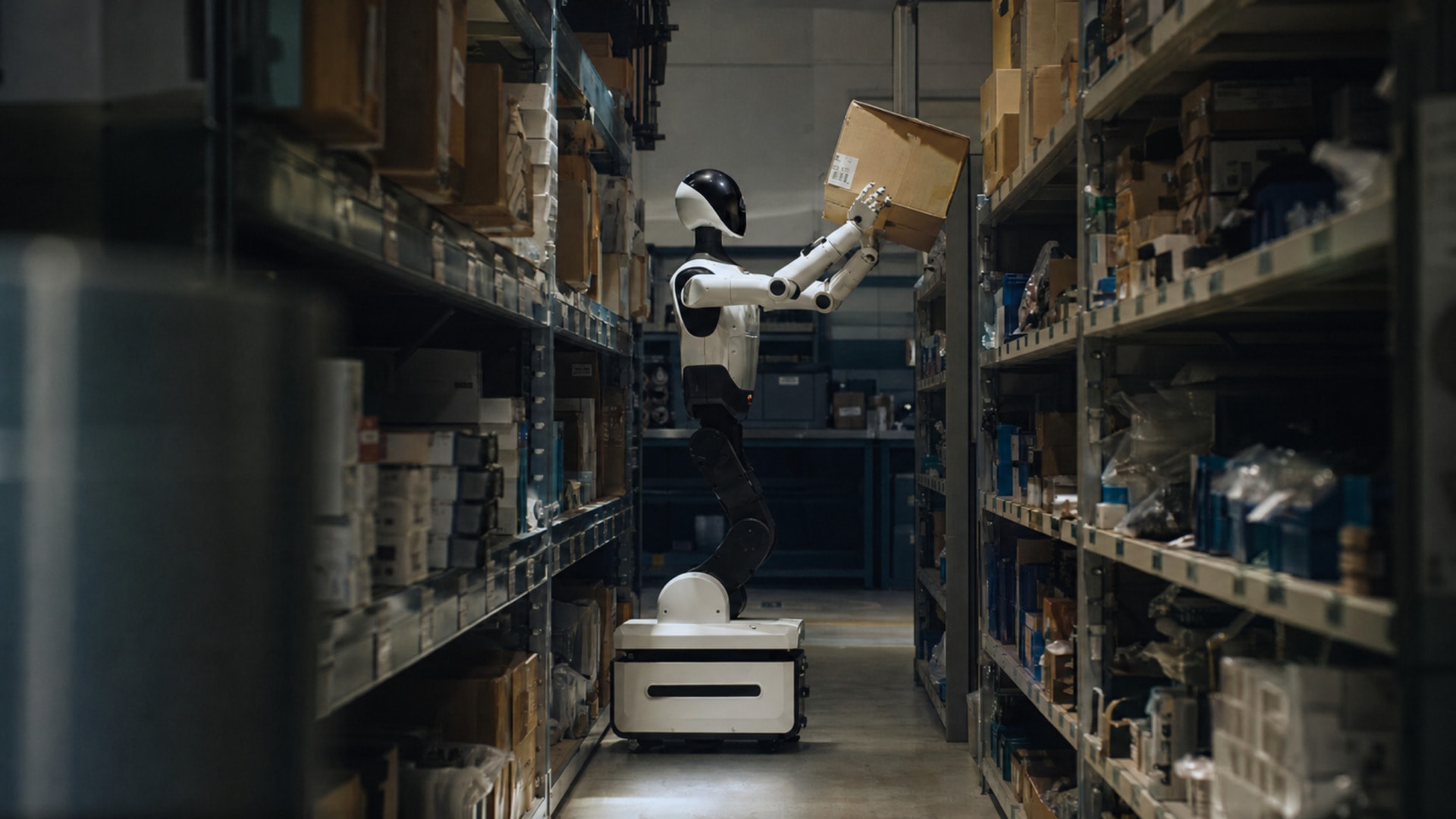
, signaling serious commercial intent.This deployment reflects a broader pattern: the first commercial wave of humanoid robots in America is landing in warehouses and logistics hubs, where environments are controlled and ROI is measurable. At the same time, Seattle-based
Mind Children
is preparing its childlike humanoidCodey
for healthcare and elder-care settings by end of 2026 — evidence that US robotics is branching in both industrial and deeply human directions simultaneously.Q: What makes Boston Dynamics' Atlas stand out in robot training?
A: Atlas uses just two actuator types with symmetric arm and leg designs, making high-accuracy simulation easier. Boston Dynamics compresses millions of training hours into one day, then transfers learned skills to the physical robot in about an hour — dramatically shrinking the "sim-to-real gap."
Q: Is Faraday Future's FX Navi robot available for purchase right now?
A: Yes. The FX Navi quadruped is priced at $1,990 and went on sale immediately following the June 2026 California launch. New capabilities — including autonomous following and multimodal perception — will roll out via over-the-air updates.
Q: Where are humanoid robots actually deployed commercially in the US today?
A: The most concrete deployments are in warehouse logistics. Figure AI's robots are heading to Catalyst Brands' Reno distribution center, Agility Robotics' Digit is deployed with GXO Logistics, and Tesla's Optimus is running internal factory pilots at Fremont — though broad third-party production deployments are still in early stages.
America's AI robotics surge in mid-2026 tells a clear story: the technology is rapidly maturing, commercial use cases are crystallizing, and the race to dominate both industrial and consumer segments is intensifying. Whether it's Boston Dynamics compressing years of training into a single day, Faraday Future building an open EAI ecosystem from California, or Figure AI deploying humanoids in retail distribution centers — the robots aren't coming. They're already here.
References & Sources:
- "Atlas demonstrates general intelligence needed for industrial tasks" — Interesting Engineering, June 15, 2026
- "US firm unveils Futurist humanoid, FX Navi robot dog in California" — Interesting Engineering, June 18, 2026
- "Are humanoid robots now coming for retail jobs?" — News That Matters Most / Consultentency, June 4, 2026
- "Who are the leading humanoid robot makers?" — Deploy Report, June 19, 2026
Article specs: ~896 words · 4 paragraphs of prose · 3 <h3> subtitles · <hr> after each heading · 1 <quote> block · 3 Q&A pairs · 1 embedded image from source · references with published dates at close.