Agility Robotics CEO Joins Pentagon's Project Meridian
Agility Robotics CEO Peggy Johnson was selected October 5 to join Project Meridian, a MITRE-led, Department of War-commissioned initiative studying the future of warfare over a 10- to 20-year horizon.


Agility Robotics said Monday that its chief executive, Peggy Johnson, has been selected to join Project Meridian, a Department of War-commissioned initiative led by The MITRE Corporation that is drawing up strategic recommendations on the future of warfare over a 10- to 20-year horizon. Johnson, who has led the Salem, Oregon-based humanoid robot maker since 2024, will serve as an individual consultant to MITRE rather than as a representative of Agility itself, contributing a technology executive's view of how commercially deployed robots might fit into military logistics as the initiative examines emerging technologies and operational concepts over the coming two decades.
The announcement, made from Agility's Salem headquarters, adds a defense-policy credential to a company that has spent the past week building out its commercial one: Agility named new board directors ahead of a planned Nasdaq listing on September 30 and extended a safety-architecture partnership with FORT Robotics on October 1. Project Meridian is a different kind of signal entirely, a seat at the table where the Pentagon's civilian leadership is thinking two decades out about where robotics fits into national security, rather than a contract, a pilot program or a revenue line Agility can report to investors.
A Twenty-Year Planning Exercise, Not a Procurement Program
Project Meridian brings together industry executives and former government officials under MITRE, the federally funded research organization that has long served as a technical advisor to the Department of War on systems the Pentagon's own staff lack the bandwidth or independence to evaluate in-house. The initiative's stated horizon, 10 to 20 years, places it well outside the normal defense-acquisition cycle, which typically plans in increments of five years or less tied to specific budget authorizations. That distinction matters for how seriously a procurement-minded reader should weigh this news: Project Meridian is explicitly a forecasting and strategy exercise, not a vehicle that issues contracts, and Johnson's role on it carries no funding commitment to Agility, no guaranteed future order and no formal defense customer relationship beyond the advisory seat itself.
MITRE has run this kind of long-horizon advisory exercise before, typically convening a mix of sitting and former defense officials with technology executives whose companies sit outside the traditional prime-contractor base, precisely because the Pentagon's internal planning staff tend to default to incremental extensions of programs already underway rather than genuinely novel operating concepts. Bringing in a chief executive whose entire professional focus is a commercial product built to operate without a human at the controls is a deliberate attempt to pull outside thinking into a planning process that could otherwise simply extrapolate from today's force structure. Whether that outside thinking survives contact with the Pentagon's budget process intact is a separate question entirely, and one Project Meridian's eventual output will not resolve on its own.
What the initiative does offer is influence over how the Department of War's leadership frames the problem it will eventually fund solutions for. A strategic study that concludes humanoid robots belong in contested logistics environments shapes the budget justifications, doctrine documents and eventual request-for-proposal language that eventually turn into real defense contracts, even if that process takes years. Industry participants who get a voice early in that framing stage are better positioned when the acquisition programs that follow finally open for bids, which is the commercial logic behind a humanoid robot maker's chief executive accepting an unpaid advisory role instead of simply waiting for a formal solicitation to appear.
Why a Humanoid Robot Executive, Specifically
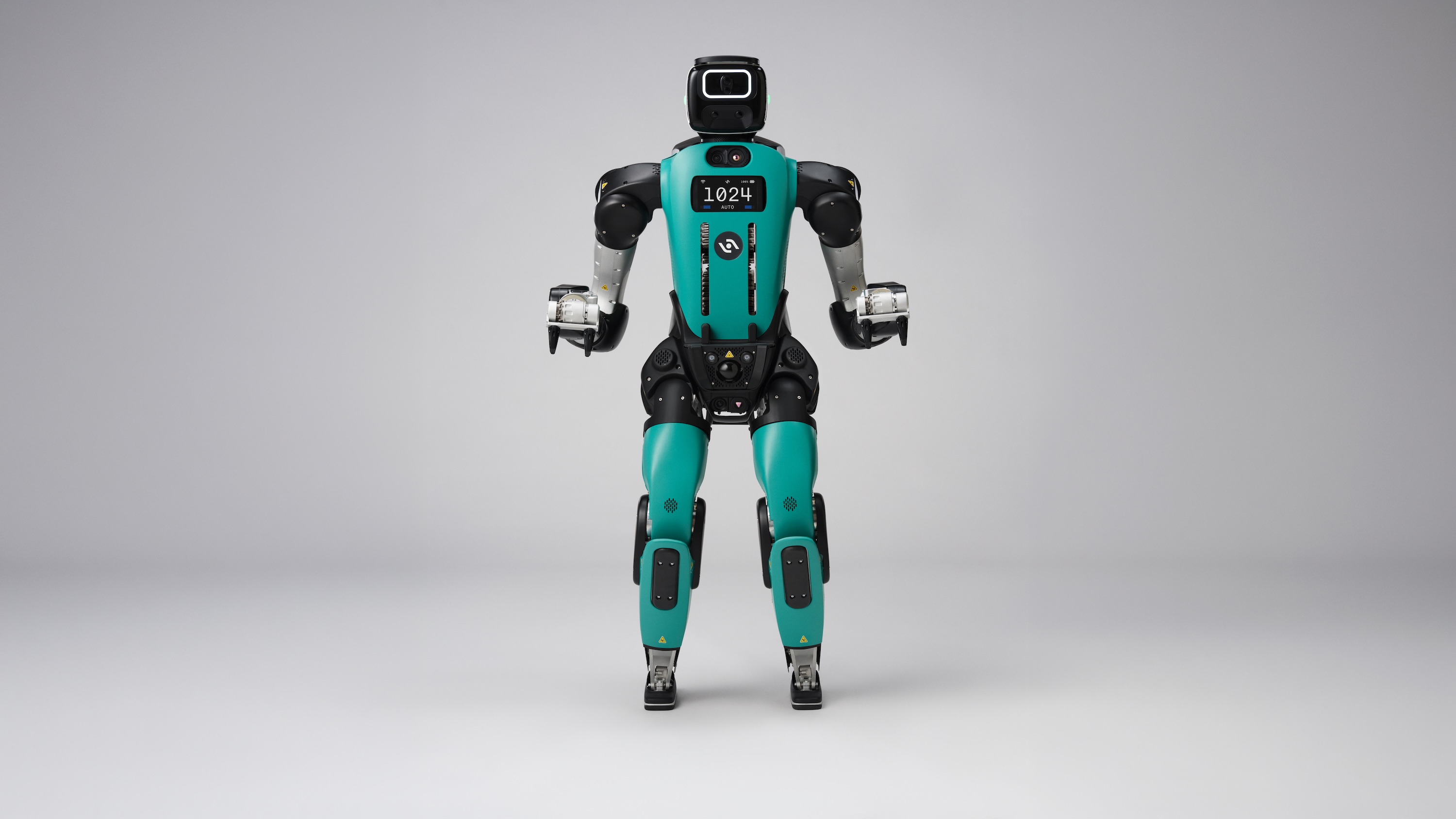
Johnson's own framing of her selection centered on logistics rather than combat applications. "The future of robotics isn't just about developing new capabilities," she said. "It's about putting those capabilities to work where they can make a meaningful difference." She pointed specifically to humanoid robots' potential to take on physically demanding, repetitive logistics tasks that currently consume military personnel's time, freeing service members for work that requires judgment a machine cannot yet replicate. That framing lines up with where Agility's commercial business already sits: Digit, the company's general-purpose humanoid, has logged more than 65,000 hours of real-world operation almost entirely in warehouse and logistics settings for customers including Schaeffler and GXO, not in any environment resembling a battlefield.
That distinction is a useful signal for how to read this appointment. Johnson was not brought onto Project Meridian as a weapons specialist or a defense-systems veteran; her background runs through Qualcomm, Microsoft and Magic Leap before Agility, and her value to MITRE's planners is explicitly the commercial deployment experience of getting a general-purpose robot to work reliably, day after day, in a real operational environment outside a laboratory. Military logistics, moving supplies, loading and unloading materiel, handling repetitive physical tasks in warehouses and depots, is functionally closer to what Digit already does commercially than it is to any front-line combat role, which is precisely the gap Project Meridian appears to be trying to close by including her.
What This Signals for the Defense Robotics Pipeline
For buyers and competitors watching the humanoid robotics sector, Johnson's selection is a data point in a broader pattern: commercial robot makers are increasingly being pulled into defense-adjacent policy conversations before they have signed defense contracts, on the strength of operational data from civilian deployments rather than military-specific hardware. That is a different pipeline than the traditional defense-contractor model, where a company builds military-specific systems from the outset and sells almost exclusively to government customers. A humanoid maker that proves reliability in a GXO warehouse is building a credibility case that a defense planner can point to directly, since 65,000 operational hours in a civilian facility is evidence a military logistics planner can actually evaluate, unlike a vendor's unverified claims about a purpose-built but never-deployed defense variant.
Competitors with their own commercial deployment records, Figure AI, Apptronik and Boston Dynamics among them, face the same calculus: a strategic advisory seat does not pay the bills, but it can shape which companies are already inside the room when the Department of War eventually translates a 20-year strategy document into a funded acquisition program. Procurement teams at logistics operators evaluating humanoid vendors should treat this kind of appointment as a secondary signal worth tracking, not because it changes Digit's near-term commercial roadmap, but because a vendor with credibility inside long-horizon defense planning is more likely to sustain the kind of R&D investment and regulatory relationships that keep a robotics company funded through the slow, capital-intensive years before mass deployment becomes profitable.
The timing also lands at a specific moment in Agility's own corporate calendar. The company is moving toward a Nasdaq listing, having just named new board directors to prepare for public-market scrutiny, and a defense-policy credential of this kind is the sort of qualitative signal that tends to show up in an investor roadshow slide well before it shows up in a revenue line. Public-market investors evaluating a humanoid robotics listing are typically asking not just what a company has sold this quarter, but what optionality it holds for the next decade, and a seat inside the Department of War's own long-range planning process is exactly the kind of optionality that is easy to describe in a prospectus and difficult to value with any precision. That mismatch, real strategic access paired with no disclosable revenue impact, is one prospective shareholders should understand clearly rather than mistake for a defense contract already in hand.
The Advisory Seat Is Not the Contract
The honest caveat is that advisory participation and government revenue are not the same thing, and the distance between them has swallowed plenty of defense-technology optimism before. Industry advisory boards and strategic studies routinely produce recommendations that never convert into funded programs, get overtaken by changed political priorities, or sit on a shelf for years before anyone acts on them. Agility has disclosed no defense revenue, no pilot program and no contract vehicle tied to Project Meridian, and nothing in Monday's announcement changes that. What has changed is that Agility's chief executive now has a standing, credentialed voice in a planning process that will influence Department of War budget priorities over the next two decades, which is worth more than nothing to a company competing for long-term capital and regulatory goodwill, but considerably less than a signed contract.
The number worth watching next is not Johnson's appointment itself but whatever Project Meridian publishes as its interim or final recommendations, and whether humanoid logistics robots appear in that document with enough specificity to justify a formal acquisition program rather than a passing mention among dozens of future-warfare concepts. That publication, whenever MITRE and the Department of War release it, will be the first real test of whether this week's advisory appointment turns into anything a defense budget analyst can actually track.
This analysis synthesizes company statements and public market activity as of the publication date and should not be read as investment, financial, or professional advice; it is provided for general information purposes only.