Tesla Skipped NHTSA's Permission Slip for a Wheelless Robotaxi. Zoox Spent Two Years Getting One.
Tesla says its wheelless Cybercab already meets every federal safety standard, no exemption needed. Zoox spent two years and accepted a 2,500-vehicle cap to win permission for the identical design. What that gap in approach actually signals about risk, not price.
On September 3 in Austin, Tesla stood a production Cybercab on a stage, no steering wheel, no pedals, and told the room it needed nobody's permission to build a car that way. Two months earlier, Zoox had finished asking permission for the identical design choice. That request took federal regulators most of two years to grant, arrived capped at 2,500 vehicles a year, and expires in 2028.
Both companies removed the same two components from the same class of vehicle. One filed a public petition, sat through a comment period, and accepted a volume ceiling. The other put a compliance sticker on the windshield and moved on. That gap, not the price tag or the gullwing doors, is the actual story to come out of this week's reveal.
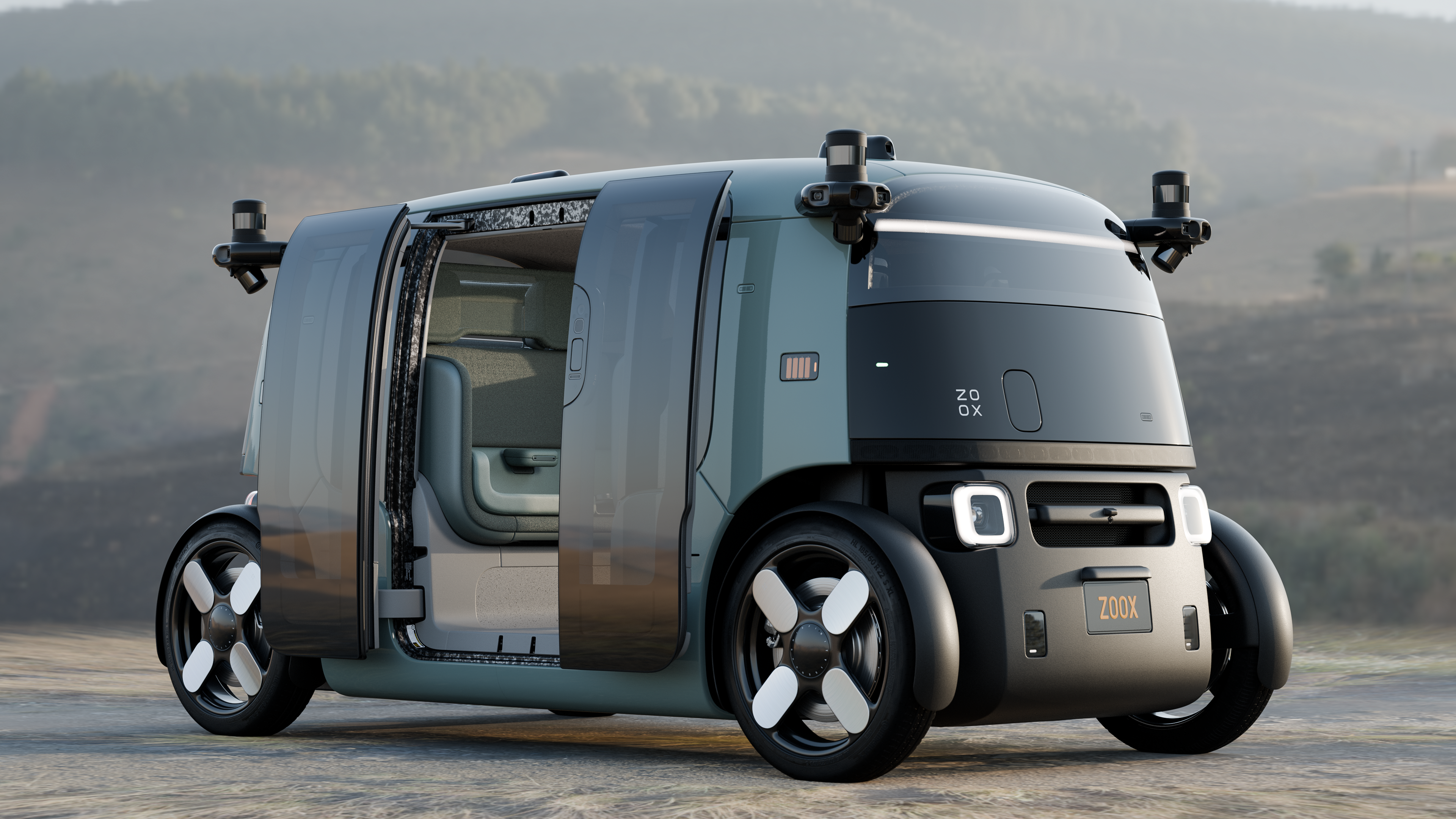
Start with what Zoox actually won. In July, the National Highway Traffic Safety Administration granted Zoox a temporary exemption under Part 555 of federal vehicle regulation, the pathway that lets a manufacturer sell a limited run of vehicles that do not meet every existing safety standard while it works toward full compliance. The grant covers eight separate standards written, in NHTSA's own description, for vehicles designed around a human driver: things like windshield defrosting requirements and braking-control rules that assume a foot on a pedal. It runs two years, caps Zoox at 2,500 commercial vehicles annually, and was, at the time, the first exemption of its kind for a purpose-built robotaxi with a paying passenger inside. Two years of process, a hard number on the fleet, an expiration date already on the calendar.
Tesla is telling a different story about the same problem. Lars Moravy, the company's vice president of vehicle engineering, has said publicly that the Cybercab is not subject to that 2,500-unit cap at all, because Tesla is self-certifying that the vehicle already meets existing federal safety standards without needing an exemption. Self-certification is not exotic. It is how every new Camry and F-150 gets onto American roads: the manufacturer attests compliance, attaches the sticker, and NHTSA polices the claim afterward through investigation and recall power rather than pre-approving it. What is unusual is applying that everyday process to a car with no wheel and no pedals at all, then asserting it clears standards that, as written, describe hand- and foot-operated controls.
Here is the part that should give anyone tracking this pause. NHTSA is not finished rewriting those standards. In June, the agency proposed amending Federal Motor Vehicle Safety Standard 135 to remove the requirement that light vehicles carry a foot-operated brake pedal and a hand-or-foot parking brake, specifically to accommodate vehicles never meant to be driven by a person. Public comment on that proposal closed on July 27. A proposed rule is not a final one. By its own account, in the words of a legal brief tracking the docket, NHTSA is still "currently revising" seven of the eight standards Zoox needed an exemption from, through rulemakings aimed squarely at automated vehicles. The rules Tesla says it already satisfies are, by the regulator's own telling, rules still being written.
That is not proof Tesla's compliance claim is wrong. Self-certification has always rested on a manufacturer's own legal reading of standards that predate the product, and a text written around "a foot-operated service brake pedal" can plausibly be read as satisfied by a brake-by-wire system that stops the car just as fast without a pedal to press. But it is a legal reading nobody outside Tesla has tested yet, applied to a design category the agency itself is still in the middle of formally accommodating. Zoox, facing the identical gap between old rule text and new vehicle design, chose not to make that bet. It asked first.
I read regulatory filings for a living now, in the sense that maintaining a company and robot taxonomy by hand means logging what a firm actually filed against what its press release claimed, for hundreds of companies. The pattern I watch for is exactly this one: a compliance status that sounds identical in a headline, self-certified full compliance versus a granted exemption, but sits on opposite ends of a real risk spectrum once you read past the headline. One is a private legal judgment with no external checkpoint before the product reaches customers. The other is a negotiated, publicly documented ceiling that trades speed for certainty.
Ask forgiveness or ask permission. Tesla picked the first. Zoox picked the second, and got a number attached to it: 2,500 vehicles, no more, until July 2028.
The tradeoffs run in both directions, and neither company's choice is obviously wrong. Tesla gets no production ceiling and a head start on manufacturing scale, worth a great deal if the courts or a future NHTSA administration later side with its reading of FMVSS 135's current text. It also carries the downside risk entirely alone: an adverse enforcement finding after thousands of Cybercabs are already on the road would be a recall, not a redesign memo. Zoox gets legal certainty and a defined runway, but that runway caps out at a fleet size too small to matter commercially in most major cities, and the clock on its exemption is already running. Musk has talked about pricing the Cybercab under US$30,000 for private buyers before 2027; that number only means anything at a production volume Zoox's own regulatory pathway cannot legally reach.
None of this is happening in a vacuum other regulators can ignore. From where I sit, running a robotics data platform out of the Philippines and watching vehicle rules get written across a region that has none of its own for this category yet, the interesting question is not which company is right about FMVSS 135. It is which of these two templates other jurisdictions copy when they eventually have to write a rule for a car with no human-operable driving position at all. China's robotaxi fleets, including the vehicle DiDi put on Beijing and Guangzhou streets this month without a safety driver, are still built on modified passenger cars that keep the steering wheel in the cabin even when no one is meant to touch it: a third path, cautious rather than either self-certified or formally exempted. No ASEAN vehicle code I have reviewed contemplates a car without a driving position at all, which means the region's regulators are years away from having to choose, and will likely reach for whichever precedent looks most tested by the time they do.
That is the actual value of watching this fight closely instead of scoring it on stage presence. A demo tells you what a company can build. A compliance filing tells you what it is willing to bet, and against whom, if it turns out to be wrong. Tesla just placed a much larger bet than Zoox did, on a rulebook its own regulator says is still being rewritten, and the industry will not know who read it correctly until either a court, a recall, or the finished version of FMVSS 135 settles the argument. Watch that docket, not the next stage reveal, for the answer.
Disclaimer: This column reflects the author's own analysis and is provided for general information purposes only. It does not constitute investment, financial, or professional advice. Readers should verify details with primary sources before making business decisions. Hero image: Zoox robotaxi, no steering wheel, official Zoox press room imagery.