RoboGesture Teaches Humanoid Robots to Gesture While Speaking
Researchers from Peking University and Tsinghua University built RoboGesture, a framework that generates real-time, speech-synchronized gestures for humanoid robots, tested on a Unitree G1 ahead of ECCV 2026.

The Gesture Problem Nobody Priced Into a Humanoid Purchase
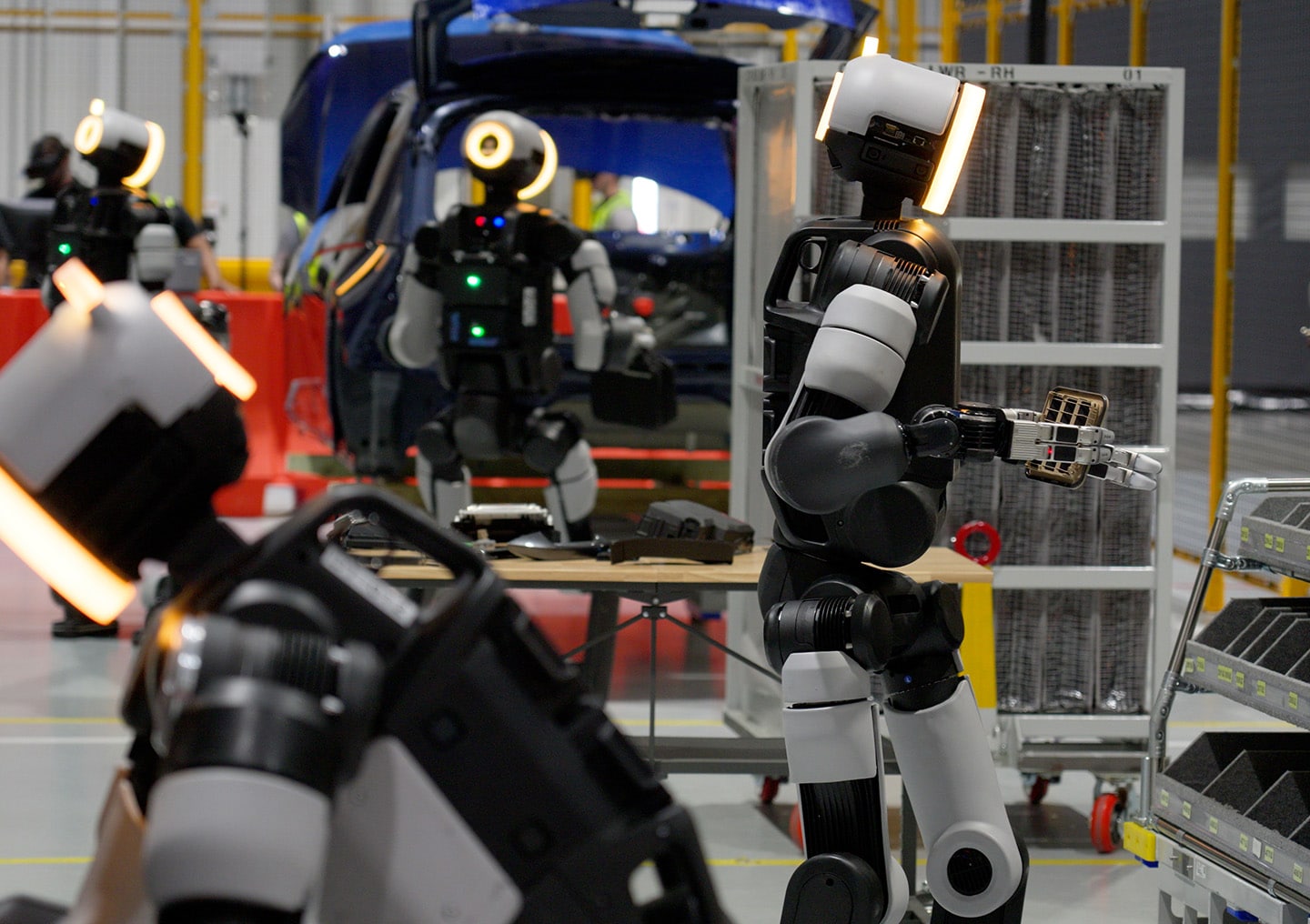
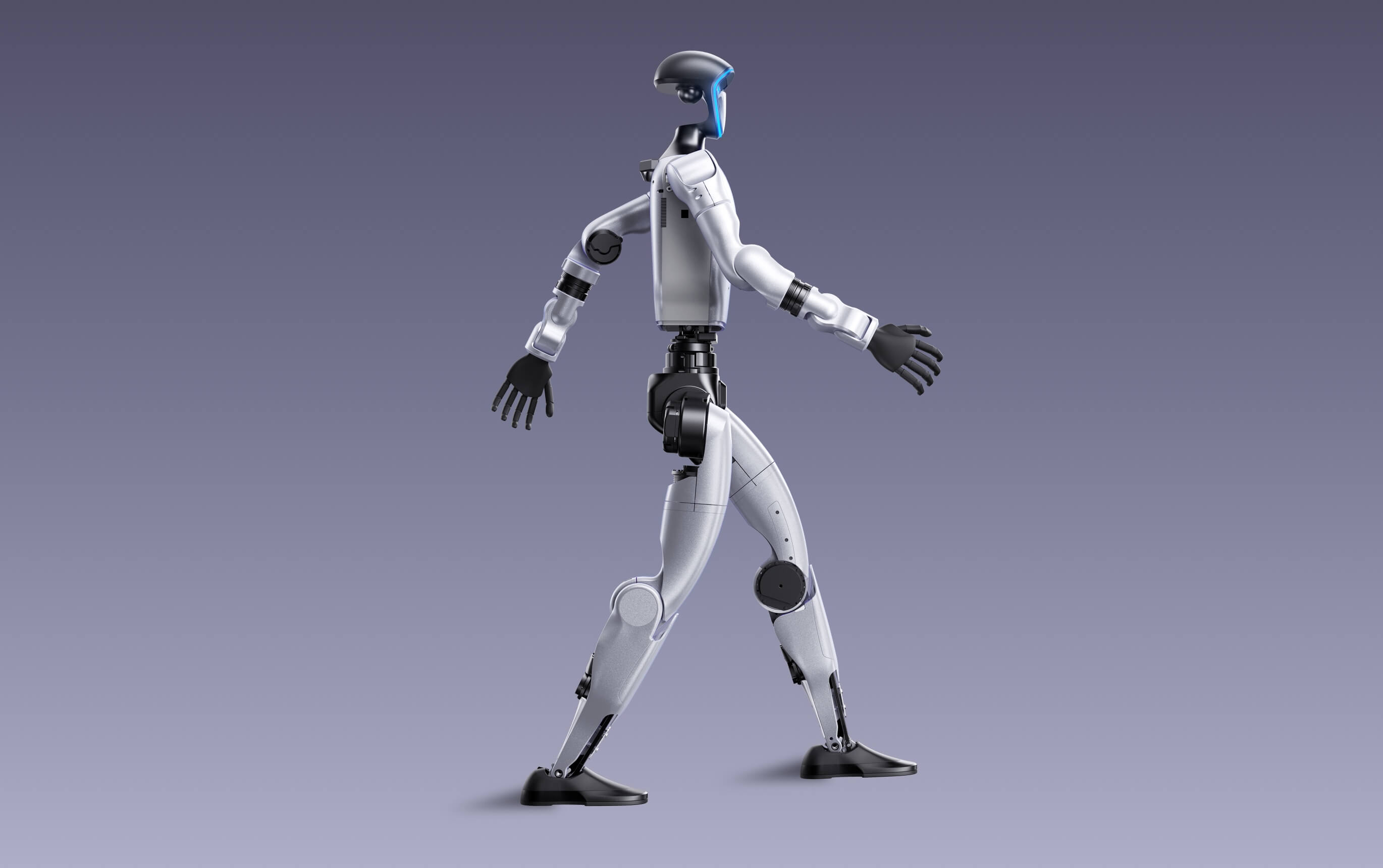
A humanoid robot that can walk, balance, and hand off a tote is not automatically a robot anyone wants to talk to. Researchers at Peking University's Embodied Perception and InteraCtion Lab, working with Tsinghua University and a multi-institution team of ten authors, published a framework this week called RoboGesture that tackles a narrower and commercially underrated problem: getting a humanoid to move its arms and body in time with its own speech, the way a human host, receptionist, or floor associate does without thinking about it. The paper, accepted at the European Conference on Computer Vision (ECCV) 2026 and posted to the arXiv preprint server on September 1, was tested on a Unitree G1, the Hangzhou-made humanoid platform that has become the default hardware for exactly this kind of academic demonstration.
The gap the researchers are closing is easy to miss until a robot fails at it in front of a customer. A voice assistant with a static torso and drifting arms reads as broken even when its speech recognition and language model are working perfectly, because a stationary body while talking violates every social expectation a human listener carries into the interaction. For any buyer evaluating a humanoid or a service robot for a reception desk, a trade-show booth, or a retail floor, gesture is not decoration. It is the visible signal that determines whether a customer trusts the machine enough to keep talking to it.
Why Robots Freeze or Flail When They Talk
The RoboGesture team frames the failure mode as three compounding barriers. The first is data: there is no large public library of gesture motion tied to natural speech that a robot's specific joint geometry can actually execute, so most systems either borrow human motion-capture data that does not map cleanly onto a robot's more limited degrees of freedom, or hand-script a small set of canned gestures that repeat noticeably within minutes. The second, which the authors term "modality eclipse," is a training failure where a model learns to keep moving from its own recent motion history rather than actually listening to the audio, producing gestures that look plausible in isolation but are not synchronized to what the robot is saying. The third is the sim-to-real gap: a gesture generator trained in simulation has no guarantee it will not clip the robot's own frame, strike a nearby object, or destabilize its balance the moment it runs on physical hardware.
Any one of those three problems is enough to explain why most humanoid demonstrations still favor a small set of rehearsed, hand-tuned motions over genuinely responsive gesture. RoboGesture's contribution is treating all three as one connected engineering problem rather than three separate research papers, which is the more commercially relevant framing: a robot vendor cannot ship a "mostly working" gesture system, because a stiff or unsafe arm swing in front of a customer is worse than no gesture at all.
Building a Dataset the Robot Can Actually Perform
Rather than adapting human motion-capture footage after the fact, the team built what they call the RoboGesture dataset from the ground up, covering more than 300 gesture categories and using an automated pipeline that generates large-scale, collision-free, robot-specific audio-motion pairs. That distinction matters more than the headline number. A dataset built for a generic human skeleton has to be retargeted to a specific robot's joint limits after collection, a process that routinely introduces the self-collisions and balance violations the researchers were trying to avoid in the first place. Generating the pairs directly against the target robot's kinematics front-loads that constraint into the data itself, so the downstream model never has to learn what a collision-free motion looks like as a separate, brittle correction step.
On top of that dataset sits what the paper calls a Hierarchical Semantic-Acoustic Aligner, a component that pulls both prosodic cues, the rhythm and emphasis in how something is said, and semantic cues, what the words actually mean, directly from raw audio rather than from a separately transcribed text stream. That combination lets a gesture track both how forcefully a robot is speaking and what concept it is emphasizing at that instant, which is closer to how a human speaker's hands and posture actually respond to their own voice.
Solving the "Modality Eclipse" With a Deliberate Penalty
The paper's most specific technical claim addresses the modality-eclipse failure directly. The generation engine, a diffusion transformer using a technique called conditional flow matching, is paired with what the authors call Anti-Inertia CFG Masking, a training mechanism that penalizes the model whenever it falls back on repeating its own recent motion instead of actively pulling new information from the audio input. In plain terms, the system is deliberately trained to distrust its own momentum and keep checking the sound of its own voice for cues, which is the opposite of how most motion-generation models are built to behave, since smoothing toward recent motion is normally a feature, not a bug, in animation systems.
That inversion is defensible specifically because the application is co-speech gesture rather than locomotion. A walking robot should smooth toward its recent gait for stability, but a talking robot that smooths toward its recent arm position will eventually drift into the exact repetitive, disconnected-from-speech motion that makes robot demonstrations look scripted. Solving for the failure mode that is unique to this task, rather than importing a general-purpose motion-smoothing default, is the kind of detail that separates a paper aimed at a real deployment problem from one aimed at a benchmark leaderboard.
The Safety Filter That Actually Matters to a Buyer
The component most relevant to anyone weighing a humanoid purchase sits at the very end of the pipeline: a model predictive control, or MPC, safety filter that checks every generated motion for collisions and balance stability in real time before the robot's joints execute it. This is the layer that converts a research result into something that could plausibly run unsupervised near a customer. A gesture model that only performs well in a lab, with an engineer standing by to hit an emergency stop, is not the same product as one certified to run in a hotel lobby or an airport terminal for eight hours without incident. The paper reports that RoboGesture produced safer, more rhythmic, and more semantically appropriate gestures than prior state-of-the-art baselines when tested on the physical Unitree G1, though the authors' own comparisons should be read as a research benchmark rather than an independent, third-party safety certification.
That caveat is not a knock on the work. It is the standard, appropriate distance between an ECCV-accepted paper and a commercial safety claim, and the gap procurement teams should expect any vendor pitching gesture-capable humanoids to close before treating "generates gestures" as equivalent to "safe to deploy unsupervised."
Why the Method Travels Further Than the Robot It Was Tested On
The choice of a Unitree G1 as the test platform is itself a signal worth reading correctly. The G1 is a widely available, comparatively affordable research and developer humanoid, not the specialized hardware a single company controls end to end, which means the RoboGesture method was not built around one vendor's proprietary joint configuration. A framework validated on commodity research hardware is, in principle, portable to any humanoid platform with a broadly similar upper-body degree-of-freedom count, which is most of the humanoid platforms currently being sold into service and hospitality pilots, whether built in China, the United States, or elsewhere. That portability is the actual commercial relevance here, since the paper is not an advertisement for Unitree specifically; it is a demonstration that the gesture problem is solvable on hardware buyers can already purchase, not on some future generation of actuators or sensors that does not exist yet.
That distinction should temper how quickly a procurement team assumes any given vendor's current product already includes this capability. Humanoid suppliers marketing robots for reception, guided tours, or retail floor engagement have, until now, mostly relied on pre-scripted gesture libraries triggered by keywords, which is a materially different and more brittle approach than a model generating gesture from the acoustic and semantic content of speech in real time. A vendor demo that looks fluid on a trade-show floor may still be running the older, scripted approach; the question worth asking a sales representative is not whether the robot gestures while it talks, but whether those gestures are generated live from what it is currently saying or replayed from a fixed library keyed to a handful of trigger phrases.
What This Signals About the Humanoid Interaction Stack
RoboGesture is a research contribution, not a shipping product, and none of its authors claim otherwise. But it lands at a moment when humanoid procurement conversations have started asking harder questions than payload capacity and battery life, because the robots capable of picking a tote were never going to be the bottleneck for customer-facing deployment. The bottleneck was always going to be whether a machine that looks roughly human can behave in ways that do not unsettle the humans around it, and gesture synchronized to speech is one of the clearest, most legible signals a person uses to make that judgment in the first three seconds of an interaction.
The commercially useful reading of this paper is narrower than "humanoids can now gesture." It is that the specific failure modes blocking natural gesture, thin datasets, models that ignore audio, and unsafe sim-to-real transfer, are now individually named, individually measured, and individually being solved by named research groups on hardware buyers can actually purchase today. A Unitree G1 running a research build of RoboGesture is not a product a buyer can order, and the paper does not claim to have solved unscripted, open-ended conversation. What it demonstrates is that the specific, previously unsolved technical obstacle between a humanoid's speech output and its physical gesture output has a documented, tested, safety-filtered path to a solution, on commodity research hardware, months rather than years before the customer-facing humanoids sold today are likely to ship it as a standard feature.
This analysis synthesizes the published research paper and public academic records as of September 2, 2026.
Disclaimer: This article is for general information purposes only and does not constitute investment, legal, or procurement advice. Readers should verify details with primary sources before making business decisions.