Figure's $3.5 Billion Compute Deal Exposes Humanoid Robotics' Real Cost Center
Figure committed US$3.5 billion in compute spending to Nscale, a two-year-old cloud provider, more than its entire funding history to date. The deal shows compute economics, not mechanical design, is becoming humanoid robotics' real competitive battleground.

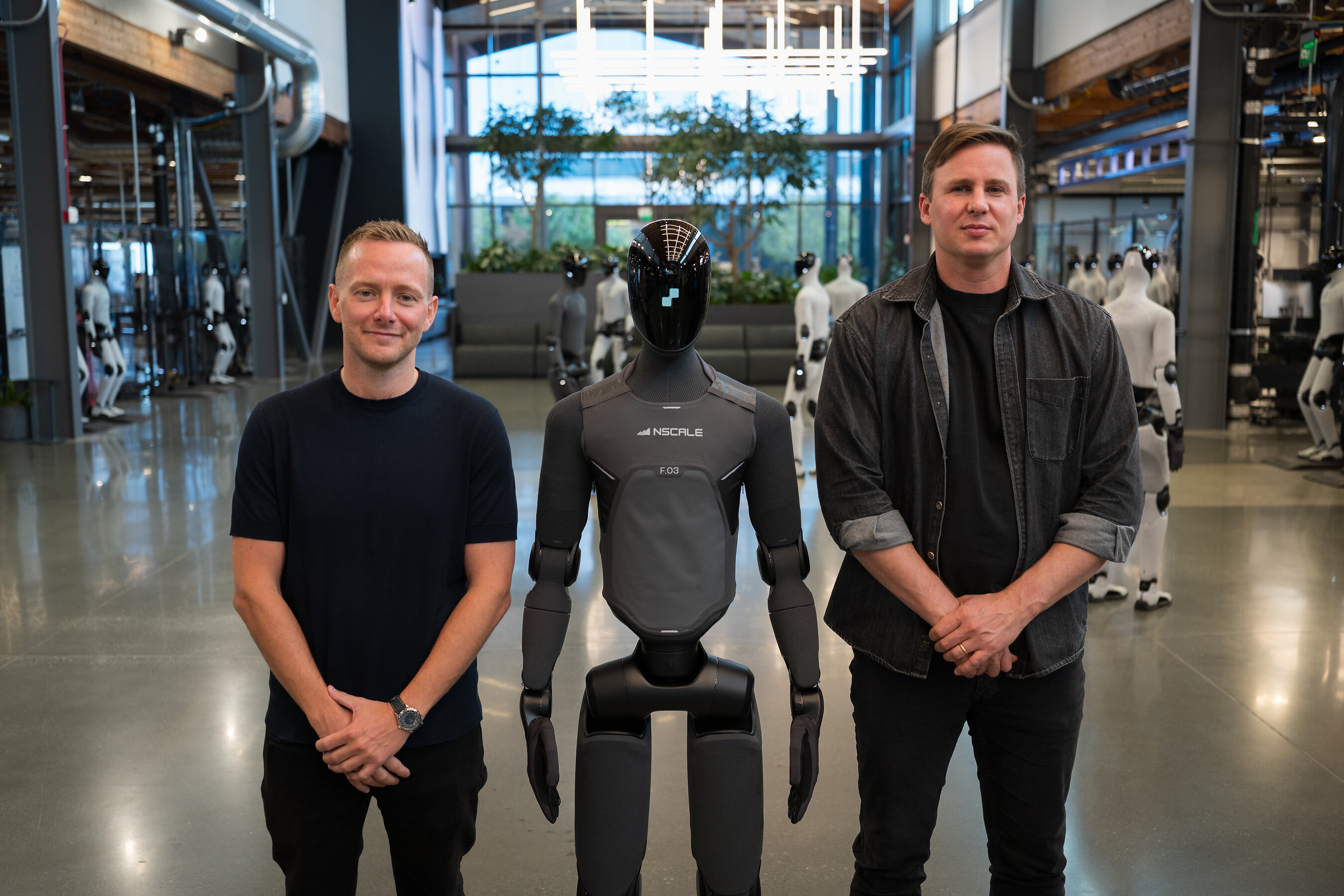
Figure has raised roughly US$1.9 billion across its entire funding history. It just committed more than that, US$3.5 billion with room to scale past US$6 billion, to a single multi-year compute agreement with a two-year-old cloud provider most automation buyers have never heard of. The gap between those two numbers is the real story inside the humanoid-robotics industry's most closely watched company this month, and it says more about what building a general-purpose robot actually costs than any specification sheet Figure has published to date.
The deal, announced September 3, pairs Figure with Nscale, a London-based AI cloud infrastructure company founded in 2024 by chief executive Josh Payne after he spun the business out of Arkon Energy, the Bitcoin-mining operation he had built to exploit cheap power. Nscale will supply up to 100,000 Nvidia GPUs running on Nvidia's upcoming Vera Rubin platform, with initial deployment targeted for the second half of 2027 at a facility in Barstow, California. In exchange, Nscale becomes both Figure's preferred compute provider and a Figure shareholder, taking an equity stake as part of the agreement rather than structuring it as a pure vendor contract.
Why a Robotics Company Needs a Hyperscaler's Worth of Chips
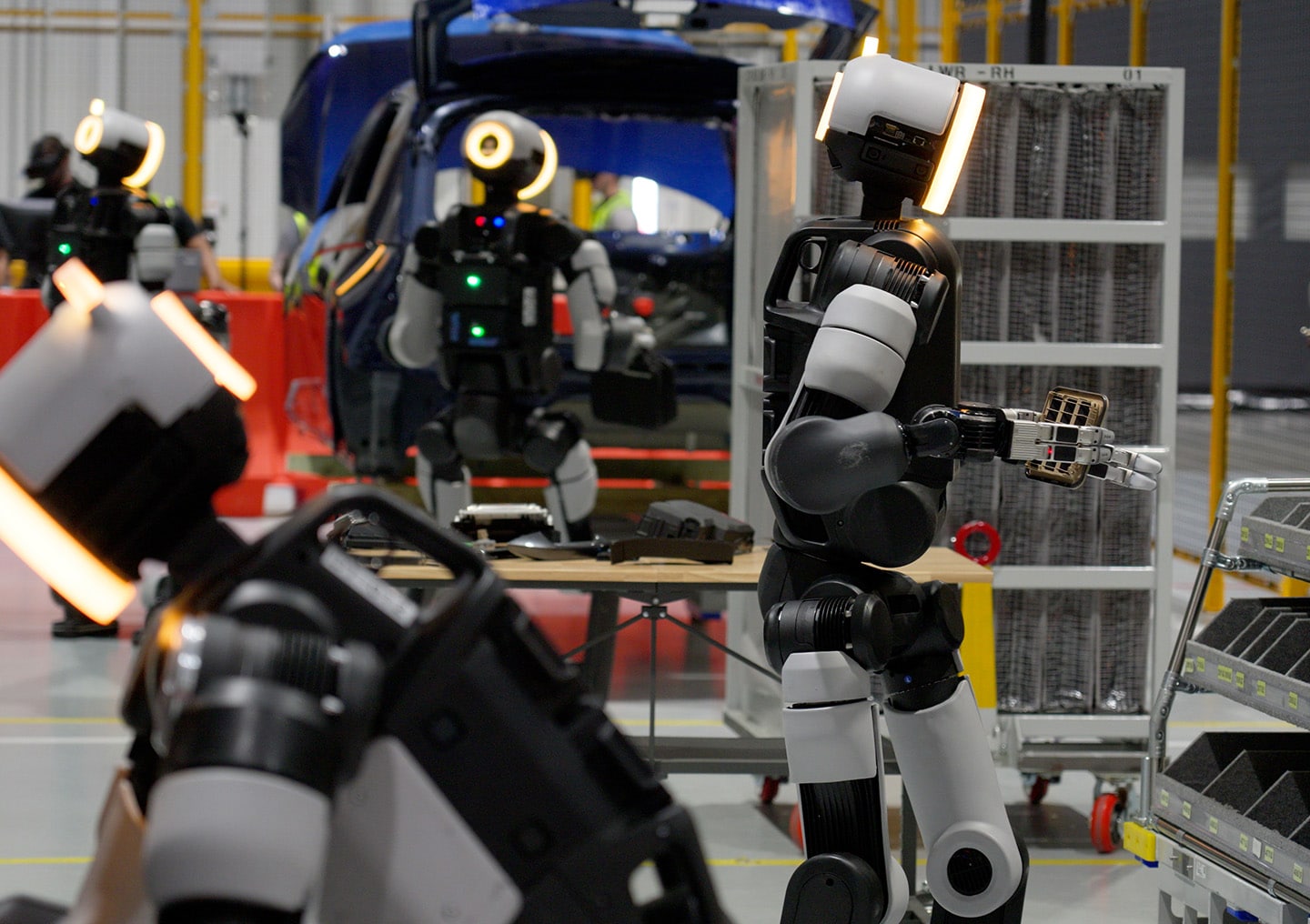
Figure's public rationale is unambiguous about where the constraint actually sits. Founder and chief executive Brett Adcock has said the company's ambition to put humanoid robots into homes and workplaces at scale is limited not by mechanical design or manufacturing capacity but by data and compute, the raw material needed to train Helix, Figure's foundation model for humanoid control. Helix improves the way every large learned system improves, by consuming more real-world interaction data and more processing power to turn that data into better policy, and a robot that has to generalize across kitchens, warehouses, and factory floors needs an order of magnitude more of both than a model trained for a single narrow task.
That is a fundamentally different cost structure than the one most industrial-automation buyers are used to pricing. A traditional six-axis arm or an AMR fleet is priced against hardware, integration labor, and a service contract; the compute cost is baked into the unit price and largely fixed once the system ships. A general-purpose humanoid platform built around a continuously improving foundation model carries an open-ended training bill that scales with ambition rather than with unit count, and Figure's new agreement is the first time that bill has been disclosed at a scale large enough to compare directly against the company's own equity history. Committing nearly double its lifetime funding to a compute contract is either supreme confidence that scaled compute is the decisive lever in the humanoid race, or a bet the company is making because rivals are making the same calculation and standing still is not a viable option.
Nscale's Bet Runs in the Other Direction
The arrangement is not one-directional financing. Nscale's own history explains why a company most industrial buyers have never encountered is suddenly positioned as a strategic partner to one of the best-funded robotics startups in the world. Payne built Arkon Energy around a straightforward insight, that cheap, abundant power was the scarce resource behind Bitcoin mining profitability, and when AI training demand made GPU-hours a more valuable use of that same power infrastructure than mining ever was, he redirected the business toward AI-ready data centers rather than compete in a commodity crypto market with thinning margins. Nscale's pitch to the market has been that it can stand up GPU capacity faster and cheaper than the hyperscalers by inheriting Arkon's existing power contracts and site-selection expertise, and Figure's deal, alongside Nscale's other AI-infrastructure commitments, is the clearest evidence yet that the pitch is landing with a customer willing to bet its own equity structure on the relationship.
Nvidia's role sits underneath both companies' bets. Chief executive Jensen Huang has described the arrangement as activating a "robotics flywheel," in which training, simulation, and real-world deployment feed back into each other continuously, a framing that positions Nvidia's chips and simulation software as the common infrastructure layer underneath every major humanoid program rather than a vendor relationship specific to any one robotics company. Figure, Boston Dynamics, Agility, and a growing list of Chinese humanoid makers all now run some portion of their training or inference stack on Nvidia silicon, which makes Nvidia one of the few entities positioned to benefit regardless of which individual humanoid company wins the commercial race.
What This Means for Buyers Evaluating Humanoid Vendors on Cost
For a procurement team building a business case around humanoid deployment, the Nscale deal changes the questions worth asking a vendor during due diligence. A specification sheet showing payload, battery life, and degrees of freedom describes what a robot can physically do today; it says nothing about whether the company behind it can afford to keep training that robot to do more tomorrow. Figure's willingness to commit compute spending on this scale, and to give up equity to secure it, is a signal that the company views continuous model improvement as core to its commercial pitch rather than a research nice-to-have, which in turn suggests that a robot purchased or leased from Figure today should be expected to meaningfully improve in capability over its service life rather than ship with a fixed, static skill set.
That expectation cuts both ways for a buyer's risk assessment. A vendor whose product improves post-purchase through cloud-delivered model updates offers a form of built-in upside that a traditional fixed-function robot cannot match, but it also creates a dependency on that vendor's continued access to compute, capital, and a functioning cloud partnership. If Nscale's infrastructure buildout slips past its 2027 timeline, or if the compute markets that make a 100,000-GPU commitment financeable today tighten meaningfully before deployment, Figure's roadmap for Helix improvements could slow in ways that would not show up in any single robot's spec sheet until deployments already underway start missing the capability gains customers were promised. Buyers signing multi-year deployment contracts with any foundation-model-dependent humanoid vendor, not just Figure, should be asking for specifics on committed compute capacity and delivery timelines with the same seriousness they would apply to a hardware supply-chain audit.
Figure Is Not the Only One Making This Trade
The pattern of a robotics company converting equity into guaranteed compute access is becoming a template rather than a one-off. Automakers building their own humanoid programs internally, and well-capitalized rivals racing to match Figure's training pace, are working through versions of the same math: whether it is cheaper to build proprietary data-center capacity from scratch, rent it at spot-market GPU prices with no supply guarantee, or trade equity for a locked-in, multi-year commitment the way Figure just did. Each path carries a different risk profile. Owning infrastructure outright preserves control but ties up capital that could otherwise fund headcount or hardware iteration. Renting at market rates keeps the balance sheet clean but leaves a company exposed to price spikes exactly when GPU demand is highest, which tends to be exactly when a company most urgently needs to train a model update. Figure's equity-for-compute structure splits the difference, guaranteeing supply and price stability in exchange for diluting existing shareholders and, less visibly, tying a chunk of Figure's future upside to Nscale's ability to execute a data-center buildout on schedule.
That dependency is worth sitting with, because it inverts the usual assumption that a startup's core technology risk lives inside its own walls. Figure's humanoid hardware and its Helix software stack are risks Figure's own engineering team controls directly. Whether Nscale can actually stand up a 100,000-GPU facility in Barstow on a second-half-2027 timeline, secure enough grid capacity to power it, and do so without the kind of construction delays that have slowed data-center buildouts across the industry this year, is a risk Figure does not control at all, yet one its entire product roadmap now depends on meeting.
The Real Competitive Line Is Being Drawn in Data Centers, Not Factories
The humanoid-robotics industry has spent the past two years competing publicly on video demonstrations, walking gaits, dexterous hands folding laundry, robots sorting warehouse totes alongside human workers. Those demonstrations remain useful signals of engineering progress, but Figure's compute commitment makes clear that the decisive competitive battle for general-purpose robotics is increasingly being fought in data-center procurement rather than on a factory floor or a trade-show stage. A company that cannot secure GPU capacity at sufficient scale, on a financeable timeline, will eventually fall behind rivals that can, regardless of how impressive its current robot looks in a demo reel. Figure has just placed a very large, very public bet that it can secure that capacity before its competitors do, and the market will spend the next two years finding out whether that bet, and the equity Figure gave up to make it, was priced correctly.
Hero image credit: Nscale/Figure.
This analysis draws on Nscale and Figure's joint press materials, Nvidia's public statements on the partnership, and independent reporting on Figure's funding history and Nscale's corporate origins. It is for general information purposes only and does not constitute investment, financial, or legal advice.