Europe Delayed the Wrong Robot Deadline
Humanoid makers are racing to collect European CE certificates, but the machinery regulation that replaces the current framework applies from 20 January 2027 and pushes any robot whose safety functions rely on machine learning into mandatory notified-body assessment. The AI Act's product deadline just slipped to August 2028; the machinery deadline did not move, and the safety standard written for legged robots is still a working draft.


A Beijing startup called Anyverse Dynamics spent last week's World Robot Conference, which ran August 19 to 23, showing a wheeled humanoid pulling espresso shots. The robot was not the announcement. The announcement was a stack of European conformity certificates: machinery safety, radio equipment, electromagnetic compatibility, functional safety under EN ISO 13849, and the EN 18031 cybersecurity standard. By the company's account, no other embodied-AI robot has cleared that combined set.
It is a real achievement, and I think the industry is about to learn that it bought a passport with an expiry date printed on it.
Here is the thesis.
The regulation that decides whether a humanoid can be sold in Europe is not the AI Act. It is Regulation (EU) 2023/1230, the machinery regulation, it applies from 20 January 2027, and I see very little sign that this industry is reading it.
Five months, not two years
Regulation (EU) 2023/1230 was adopted on 14 June 2023. It applies on a mandatory basis as of 20 January 2027. Machinery placed on the EU market before that date is governed by the old Machinery Directive, 2006/42/EC. Machinery placed on the market after it is not.
That distinction is the whole story for anyone shipping robots into Europe next year. A CE file assembled in 2026 against 2006/42/EC covers the units you sell in 2026. It does not automatically carry the units you sell in February 2027. The technical documentation has to be rebuilt against a different instrument with different essential requirements, and for a meaningful share of robots, a different conformity assessment route.
Count the months from today. Five.
The machine-learning trapdoor in Annex I
The machinery regulation keeps the structure European product law has always used: most machinery self-certifies against harmonised standards, and a listed set of higher-risk categories cannot. Annex I Part A is that listed set, and involvement of a notified body is mandatory for everything on it.
Two items on that list should stop every embodied-AI team cold. One covers safety components with fully or partially self-evolving behaviour using machine-learning approaches that ensure safety functions. The next covers machinery that embeds such components.
Read that against how a modern humanoid actually works. If the learned policy is doing any part of the job that keeps a person from being hit, crushed, or knocked over, and on a legged or dynamically stabilised machine it usually is, the manufacturer's declaration of conformity is no longer a document the manufacturer can sign alone. A third party has to sign off first.
Self-certification is where the robotics industry has lived for twenty years. For a large class of these machines, it ends.
The omnibus delayed the clock nobody needed delayed
Now the part that inverts the story most people have in their heads.
The Digital Omnibus on AI, proposed on 19 November 2025, politically agreed on 7 May 2026, and in force since 27 July 2026, moved the AI Act's high-risk obligations back. Standalone high-risk systems under Annex III go to 2 December 2027. AI embedded in products already covered by EU product-safety legislation, which is where a humanoid lands, goes to 2 August 2028. The Commission's own framing is that the rules should apply when companies have the right support tools to implement them, such as standards.
That was widely read as Europe softening on AI. For embodied robotics it did something narrower and stranger: it delayed the regime everyone was watching and left untouched the regime that actually stops a machine at the border.
So the operative sequence is now this. On 20 January 2027, machinery law starts requiring notified-body assessment of robots whose safety functions learn. Nineteen months later, on 2 August 2028, AI law starts asking its own questions of the same machines. The harder gate arrives first, and it arrived without the headline.
If you delayed the AI Act because the standards were not ready, the standards are not ready for the machinery regulation either. That argument was not applied to both.
The standard that does not exist yet
This is where the timetable gets genuinely uncomfortable, and it is the part I would want on the first slide of any European market-entry deck.
Notified-body assessment is only tractable when there is something to assess against. On 20 January 2025 the Commission issued a standardisation request, Implementing Decision C(2025) 129, asking CEN and CENELEC to revise the existing machinery standards, finish the work already in flight, and draft new ones for the regulation, with a work programme due that July and new standards targeted for publication by 20 January 2026.
Some of that base is in good shape. ISO 10218-1 and ISO 10218-2 were republished in February 2025, the first substantial revision of the industrial robot safety standard since 2011, and they are the reference point most integrators will reach for.
They were not written for a robot that walks.
The standard that is being written for that case, ISO 25785-1, covering industrial mobile robots with actively controlled stability, is the ISO/TC 299 work item that would tell a notified body how to evaluate a biped. It is still at working-draft stage with no published completion date. A working draft is early. It is not a document anyone can certify against.
So the position a humanoid vendor will occupy in January 2027 is: mandatory third-party assessment, against a standards set whose robot-specific parts were written for a caged industrial arm, with the standard for your actual machine sitting unfinished in a committee. That does not mean nothing can be certified. It means certification becomes a bespoke, slow, expensive negotiation with a notified body rather than a checklist, at exactly the moment volume shipments were supposed to start.
What I would ask a vendor from this seat
I run a robotics data platform from the Philippines, which means most of what crosses my desk is procurement reality rather than launch theatre: buyers in ASEAN reading the same vendor claims European buyers read, usually a quarter later, usually with less leverage.
From that seat, the certification announcements coming out of China's humanoid sector are the most useful signal in the category, because they are the only claims that a third party has already checked. A dexterity benchmark is a self-report. A test-house certificate is not. Anyverse Dynamics is right that regulatory readiness is a competitive axis, and I expect more of its competitors to discover this in the next two quarters.
But there are three questions I would now put to any vendor selling a European story, and I would want them answered in writing.
Which instrument is your CE file written against, the directive or the regulation? If the answer is the directive, what is your plan for units placed on the market after 20 January 2027?
Does any machine-learned component of your system contribute to a safety function? If yes, which notified body has your file, and when did they receive it?
What is your assumed queue time? Notified-body capacity for a brand new high-risk category is not elastic, and the first vendors in line will be assessed under a process the assessors are also learning.
The vendors who can answer those three today are perhaps a handful. The ones who cannot are not lying to you; they mostly have not been asked.
The forward view
I do not think this stops the humanoid business in Europe. I think it re-sorts it.
The winners of 2027 will not be the companies with the best manipulation video. They will be the companies that got a conformity file in front of a notified body in 2026, absorbed the cost of being early when the assessment procedure was still being invented, and can therefore quote a delivery date in the first quarter of 2027 that a European legal department will actually sign.
That is an unglamorous moat, and it is a real one. Regulatory lead time is the only advantage in this industry that a competitor cannot close by raising another round.
The one thing I would not do is read the AI Act's delay as breathing room. Europe moved the deadline that had the press conference. The deadline that has legal force for machines with legs did not move at all, and it is five months out.
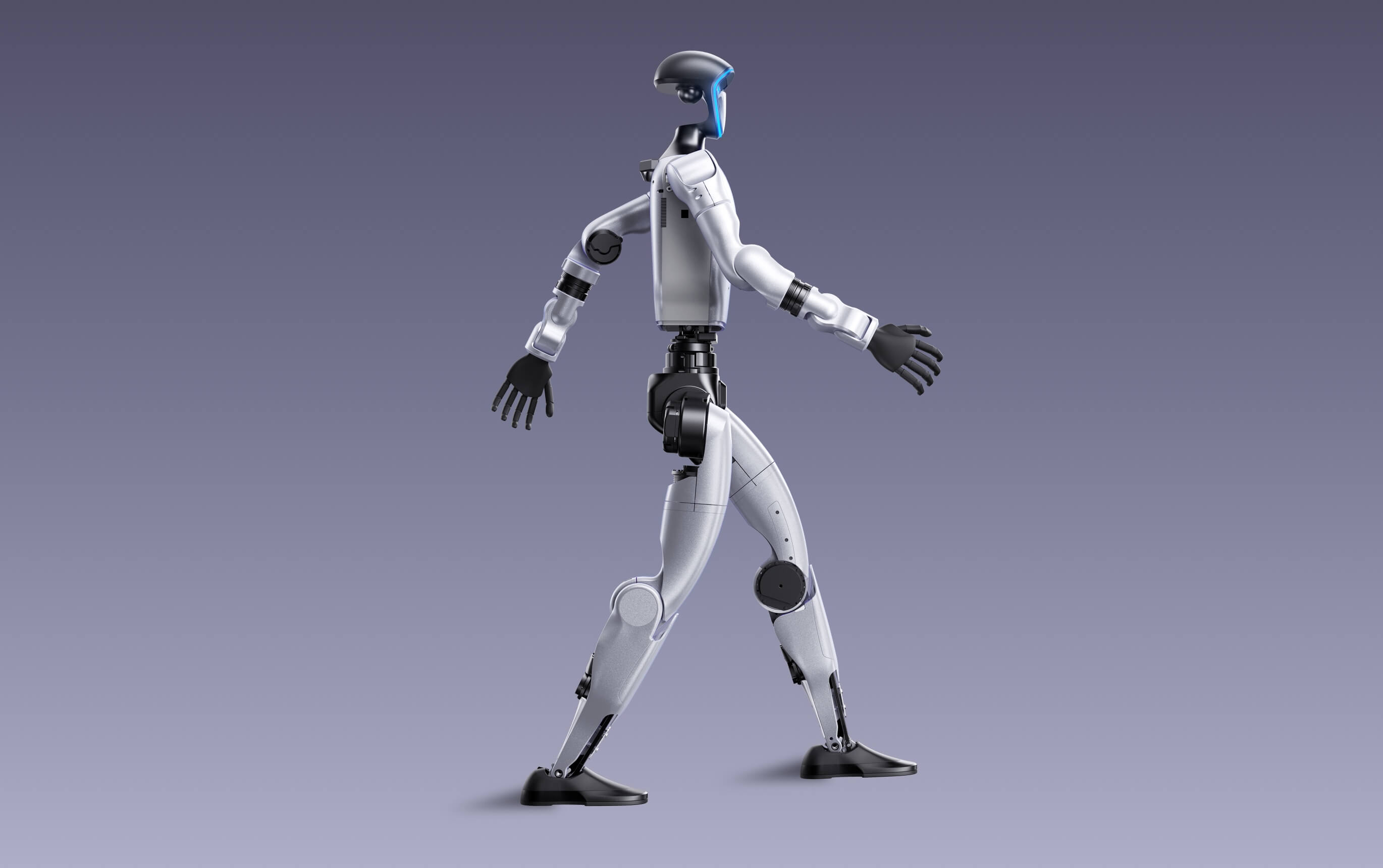
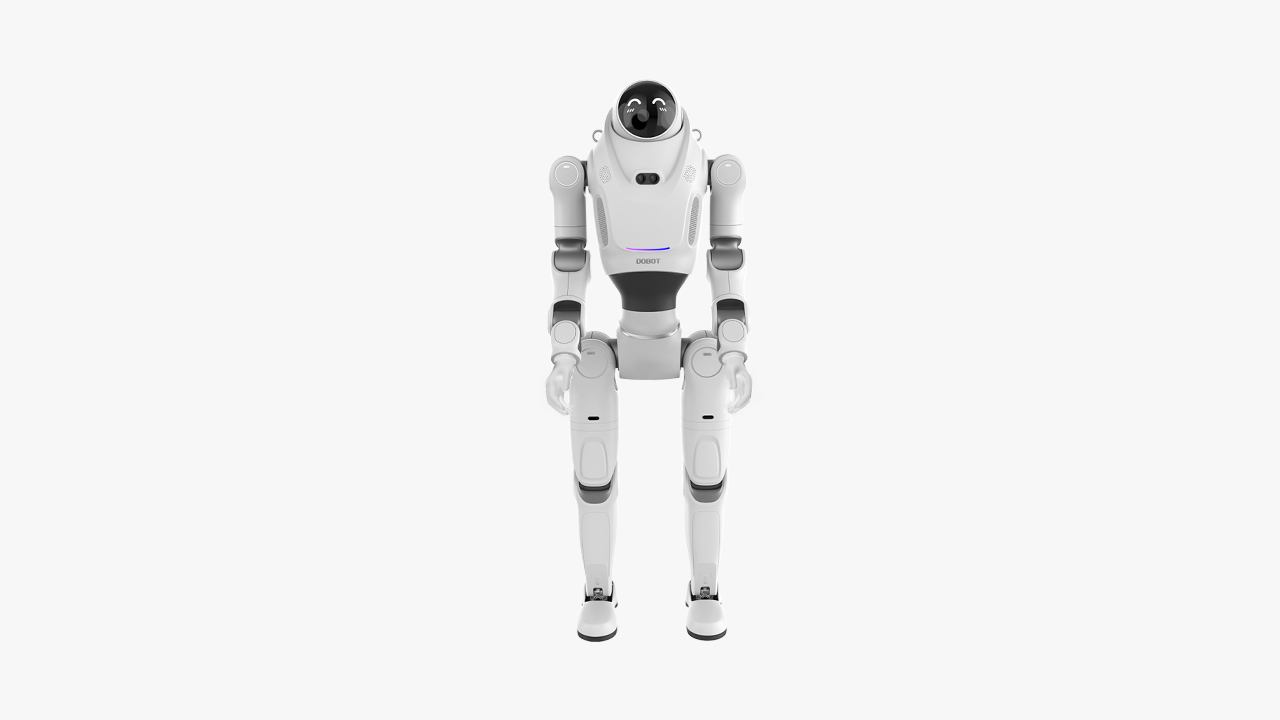
Hero image: NEURA Robotics 4NE-1 Gen 3, official product image from NEURA Robotics.
Disclaimer: This article is for general information purposes only and does not constitute investment, legal, or procurement advice. Readers should verify details with primary sources before making business decisions.