Enovis and Jungheinrich Show Where European Robotics Capital Is Really Going
A €155 million surgical-robotics acquisition by Enovis and a €100 million VC fund from Jungheinrich, announced a day apart, show European industrials choosing to control robotics capability directly rather than wait on outside capital.


Two unrelated European transactions closed within 24 hours of each other in early September, one an orthopedic device maker buying a French surgical-robotics startup for €155 million (approximately US$180 million), the other a German forklift manufacturer launching a €100 million (approximately US$117 million) venture fund, and neither made much noise outside trade press. Read together, though, they describe the same underlying shift: European industrial incumbents are no longer waiting for robotics startups to mature into acquisition targets or investment-grade partners on someone else's timeline. They are buying and funding the category directly, on their own balance sheets, before the Chinese and American capital already flooding humanoid and warehouse robotics closes the window.
Enovis, the US-listed orthopedic device maker, announced a binding offer on September 1 to acquire eCential Robotics, a Grenoble-based surgical robotics company, for an upfront enterprise value of €155 million (approximately US$180 million), with cash consideration of approximately €176 million (approximately US$205 million) due to shareholders at closing and up to €35 million (approximately US$41 million) more tied to future milestones. A day later, Jungheinrich, the German warehouse-equipment and forklift manufacturer, launched Uplift Ventures, a €100 million (approximately US$117 million) fund aimed at European and American startups working in robotics, artificial intelligence, energy, and logistics, run through a newly created investment arm rather than folded into existing corporate development functions.
A Spine-Surgery Specialist Becomes an Orthopedic Robotics Platform
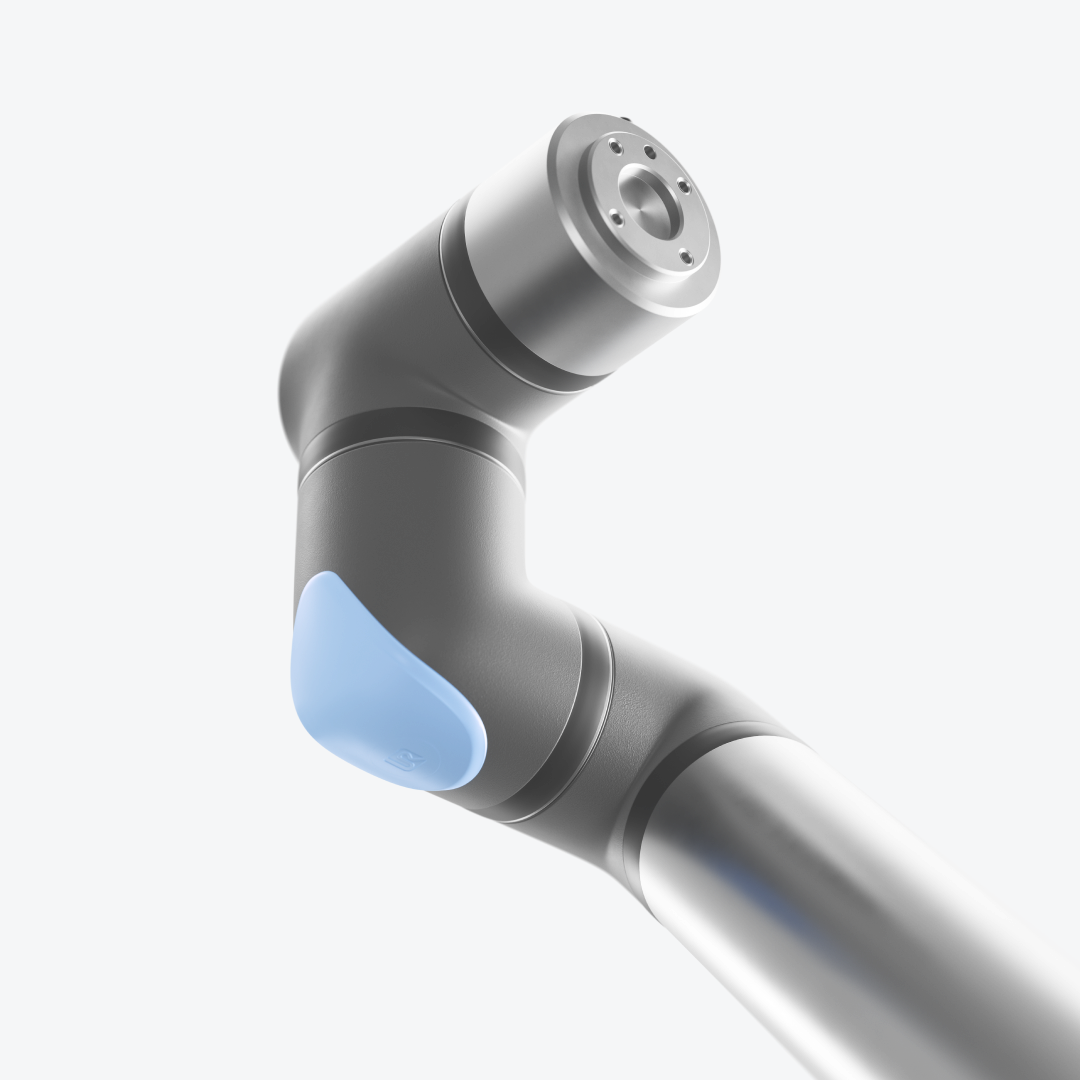
eCential Robotics is not a household name even within medtech circles, which is exactly the kind of company a nut-graf exists to explain. Founded in Grenoble, France, the company built its reputation on an open surgical platform combining real-time navigation with robotic guidance, cleared by the US Food and Drug Administration for spine surgery, and centered on a robotic arm with seven degrees of freedom, more articulation than most competing surgical-robotics arms on the market offer. That extra flexibility is the specific capability Enovis executives cited as the reason to buy rather than partner: a leadership statement accompanying the deal described the seven-degree-of-freedom arm as a genuine market differentiator rather than an incremental upgrade to Enovis's existing orthopedic tools.
The deal structure is notable for what Enovis says it will not do with its new asset. Rather than pushing further into the spine-surgery market where eCential already competes, Enovis has said it intends to preserve eCential's existing spine-surgery relationships and agreements largely as-is, while redirecting its own development effort toward knee and shoulder applications, procedures central to Enovis's existing orthopedic device business. That is a materially different acquisition logic than a company buying a competitor to consolidate market share; it is closer to a device manufacturer buying a robotics engineering team and licensing its own product roadmap onto that team's hardware platform. Enovis is targeting a 2028 launch for the resulting knee and shoulder robotic systems, a multi-year runway that suggests the company views this as platform-building rather than a quick product bolt-on.
A Forklift Maker Bets That Deep Tech Needs a Different Kind of Capital
Jungheinrich's move looks, on its face, less directly connected to robotics than Enovis's acquisition, but the fund's stated mandate says otherwise. Uplift Ventures is explicitly targeting the financing gap that European deep-tech startups, robotics and automation companies prominently among them, say has pushed promising engineering teams toward American or Asian investors simply because European venture capital has historically been thinner at the Series A stage than in Silicon Valley or Shenzhen. A logistics-equipment incumbent underwriting that gap directly, rather than waiting for third-party venture funds to fill it, gives Jungheinrich early visibility into automation and AI technologies that could eventually compete with or supplement its own warehouse-equipment business, along with a formal mechanism for advancing that pipeline before a competitor's corporate venture arm gets there first.
The strategic logic mirrors what several other European industrial names have done over the past two years, treating corporate venture investment as a hedge against being disintermediated by smaller, faster-moving robotics and automation startups rather than as a purely financial play. A forklift manufacturer has an obvious interest in autonomous mobile robots, warehouse automation, and logistics AI outcompeting its own product line eventually; funding the startups most likely to do that is one way to make sure the disruption, when it arrives, arrives through a company Jungheinrich already has a financial and information relationship with rather than through a stranger.
Why the Timing Is Not a Coincidence
Both moves land against a backdrop in which the loudest capital story in robotics all year has been Chinese state and private investment pouring into humanoid manufacturing at a pace that has already produced volatile public-market outcomes, including the sharp post-listing swings in Chinese humanoid-robot valuations that rattled investors earlier this month. European industrial companies watching that capital cycle from the outside face a genuine strategic choice: compete for the same humanoid-manufacturing scale China is already pursuing, a race most European balance sheets are not sized to win, or build a different kind of advantage in the categories where Europe already has engineering depth, surgical robotics, precision manufacturing equipment, and industrial logistics automation, before that capital and talent gets absorbed elsewhere.
Enovis and Jungheinrich have each picked a version of the second path, and the mechanism each chose reveals something about how mature its target category already is. Surgical robotics is specialized and heavily regulated enough that acquiring a finished, FDA-cleared platform made more sense for Enovis than trying to build one internally or fund an early-stage competitor and wait years for a product to clear regulatory review. Warehouse and logistics automation, by contrast, is a more fragmented, faster-moving category where the winning technical approach is still unsettled, which is exactly the kind of environment where a fund structure, spreading bets across multiple startups rather than committing to one, makes more strategic sense than a single acquisition.
The Pattern Extends Beyond These Two Deals
Neither Enovis nor Jungheinrich is acting in isolation. SoftBank's roughly US$5.375 billion agreement to acquire ABB's robotics division, first announced in October 2025 and expected to close in mid-to-late 2026, put a Japanese conglomerate in control of one of Europe's most established industrial-robot manufacturers, a reminder that European robotics assets are just as available to non-European acquirers as they are to homegrown ones. Kraken Robotics' roughly US$615 million move to acquire Covelya Group earlier in 2026 extended the same consolidation logic into maritime and defense robotics, a category adjacent to but distinct from either surgical robotics or warehouse automation. Set against that backdrop, Enovis and Jungheinrich look less like isolated corporate decisions and more like two more entries in a broader ledger of established industrial companies, European and otherwise, concluding that owning a robotics capability outright is now cheaper, in strategic terms, than watching a well-funded outsider buy it first.
The honest counterargument is that neither deal, on its own, proves Europe is closing the funding gap that has pushed its most ambitious robotics founders toward Silicon Valley or Shenzhen capital in the past. A single €155 million (US$180 million) acquisition and a single €100 million (US$117 million) fund are modest next to the tens of billions of dollars China's state-backed venture apparatus has committed to humanoid robotics this year, or the multibillion-dollar compute and infrastructure deals now common among American humanoid startups. What these two transactions demonstrate is not parity with that capital scale but a change in posture, European industrials choosing to write checks and sign acquisition agreements rather than issue statements about strategic importance and wait for the market to sort itself out. Posture shifts precede capital-scale shifts more often than they follow them, which is the reason two moderately sized deals in the same week are worth more analytical attention than their dollar totals alone would suggest.
What This Means for Buyers and Competitors Sourcing From Europe
For hospital procurement teams and surgical departments evaluating robotics platforms, the Enovis-eCential deal is a signal to watch Enovis's 2028 knee and shoulder product timeline closely rather than assume the current eCential spine platform's roadmap will continue unchanged; an acquired engineering team's priorities shift toward its new owner's core markets over time even when the acquirer says otherwise at signing. For logistics and warehouse operators building multi-year automation sourcing strategies, Jungheinrich's fund is worth monitoring less for the fund itself than for which startups it backs first, since those early bets will likely surface in Jungheinrich's own product roadmap, either as acquisition targets or as integrated technology partners, well before any formal product announcement.
The broader lesson for anyone sourcing robotics technology from European suppliers is that the region's industrial incumbents are no longer content to license, partner, or watch from the sidelines while venture-backed startups, increasingly funded by Chinese or American capital, build the category's next generation of products. Enovis and Jungheinrich are two different companies solving two different problems with two different financial instruments, but they are answering the same underlying question the same way: better to control the robotics capability directly, on a European balance sheet, than to depend on an outside investor's timeline and an outside country's supply chain for a technology this strategically important.
Hero image credit: eCential Robotics.
This analysis draws on Enovis and eCential Robotics' joint transaction announcement, Jungheinrich's public statements on the Uplift Ventures fund launch, and independent trade and financial press coverage of both transactions. It is for general information purposes only and does not constitute investment, financial, or legal advice.