SpaceX's US$60 Billion Cursor Deal Completes the Robotics Software Stack
SpaceX's US$60 billion all-stock purchase of Anysphere, maker of the AI coding agent Cursor, gives one corporate family the rockets, the compute, the frontier models, and the tools engineers use to write robot software. This analysis examines what the June 16 deal means for embodied AI development, the dependency risks it creates for robotics startups, and the two-stack world now forming between the United States and China.

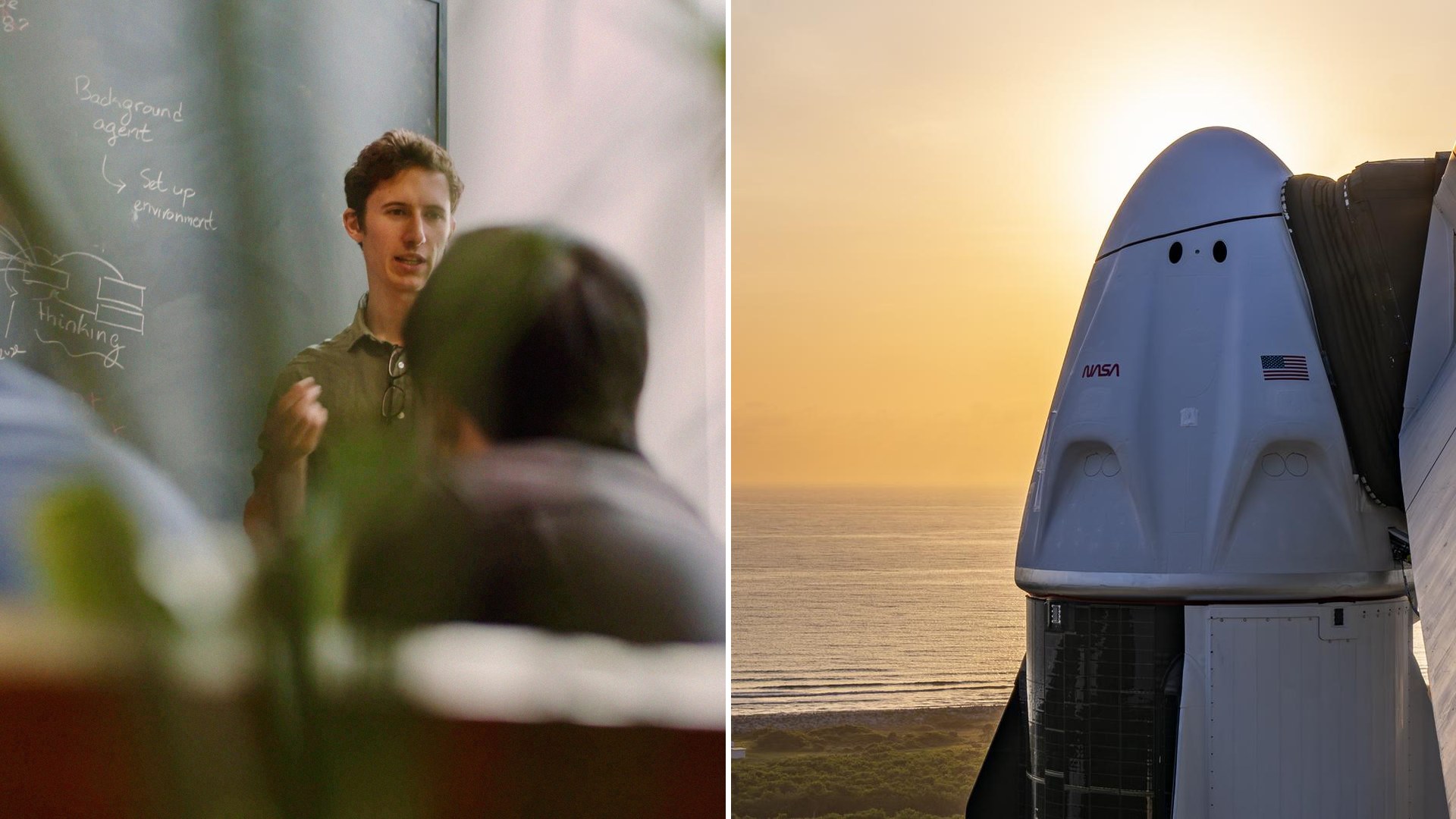
SpaceX's agreement to acquire Anysphere, the company behind the AI coding agent Cursor, for US$60 billion in stock is the largest acquisition of a venture-backed startup on record. Announced on June 16, 2026, four days after Anysphere's Nasdaq debut, the deal is expected to close in the third quarter pending regulatory approval. For robotics buyers and builders, the headline number is the least interesting part. The purchase completes a vertical stack that no other company in physical AI can match: launch capacity, orbital compute, frontier models, and now the tools that write the software itself.
Anysphere, headquartered in San Francisco, built Cursor into the default AI coding environment for professional developers in under four years. The product reads, writes, and refactors code through large language models, and by the time of the acquisition it served more than 50,000 enterprise customers and generated roughly US$2 billion in annual recurring revenue. That customer base, not the technology alone, is what SpaceX paid for. Since its February merger with Elon Musk's xAI venture, SpaceX has owned frontier models that struggled to find enterprise distribution. Cursor is that distribution, installed on the machines of the engineers who will build the next decade of software, including the software that runs robots.
The Largest Startup Acquisition on Record Was Also a Discount
The structure of the deal rewards attention. Anysphere listed on Nasdaq in mid-June and was acquired in an all-stock transaction almost immediately afterward, which means its shareholders traded a newly liquid position for equity in a private company with a famously unconventional governance culture. Market commentary at the time framed the price as a bargain for the buyer relative to Anysphere's growth rate, and the speed of the agreement suggests the two companies had been aligned well before the listing. They had already been jointly training a model intended to ship inside both Cursor and Grok Build, SpaceX's developer platform, before the acquisition was announced.
The regulatory question is live but narrow. The transaction combines a launch and satellite operator with a developer-tools company, so there is no horizontal overlap for a competition authority to object to in the classic sense. The more durable scrutiny will come from Cursor's own customers, many of whom compete with Musk companies in automotive, robotics, and AI, and who must now decide how much of their engineering workflow they are comfortable running on a rival's infrastructure.
One Company Now Owns the Full Stack
Read the acquisition alongside the rest of the 2026 sequence and the shape is unmistakable. February brought the xAI merger, folding frontier model development into SpaceX. August brought the Starmind AI1 partnership with NVIDIA to build orbital data centers, a project we examined when it was announced. June brought Cursor. The result is a single corporate structure that controls the rockets, a growing share of the compute, the models, and the environment in which developers write code.
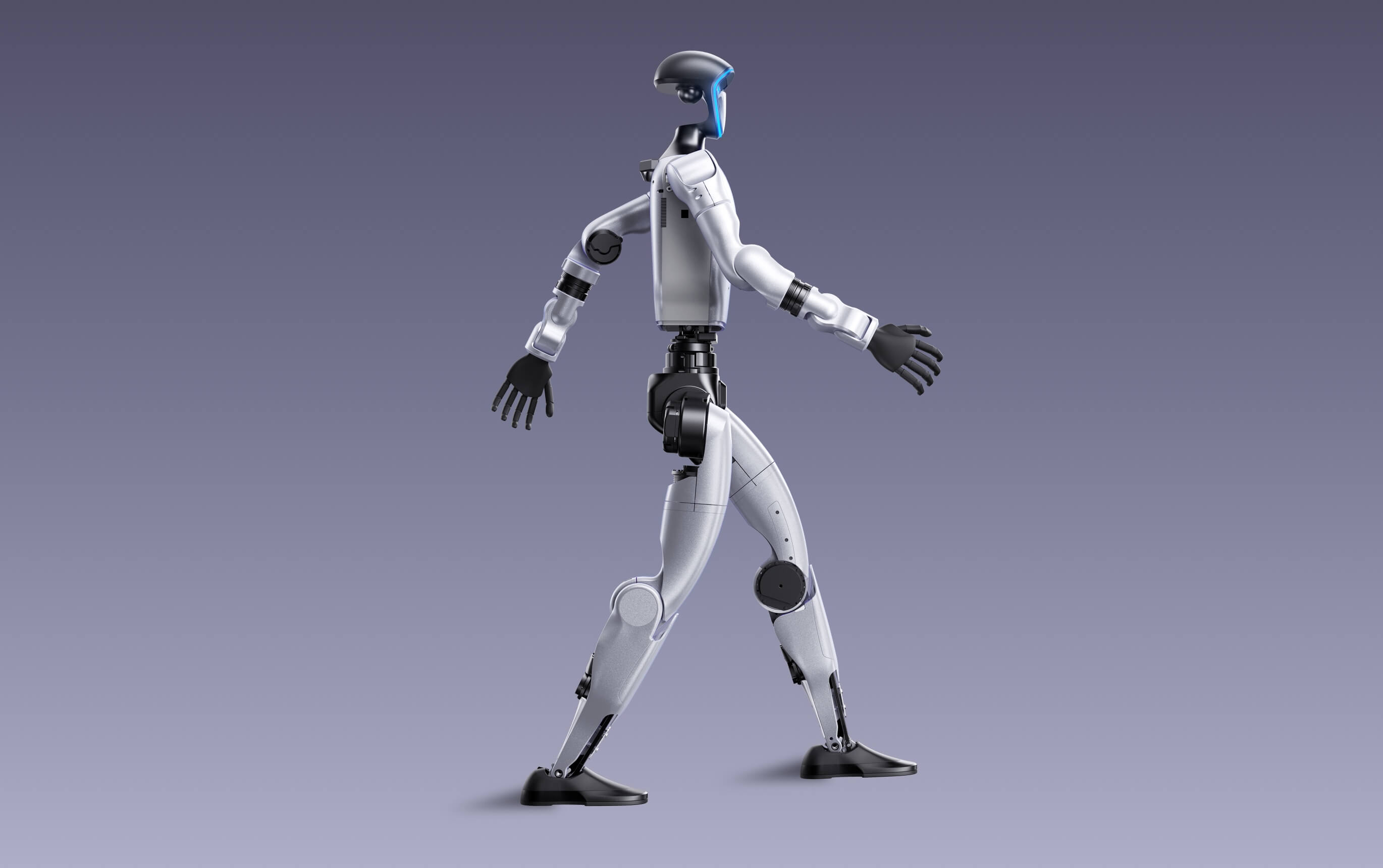
For the robotics industry, the relevant precedent is not software history but industrial history. Vertical integration of this depth resembles the position carmakers held a century ago when they owned the steel, the foundry, and the assembly line. It produces speed. Tesla's Optimus program, whatever its delivery schedule proves to be, now sits adjacent to a toolchain in which the models that generate robot control code, the editor the engineers use, and the compute that trains everything belong to the same corporate family. No other humanoid program, in the United States or China, has that arrangement.
The catch, as with every vertically integrated giant before it, is that the stack is only an advantage while each layer stays best in class. Cursor won its market as a neutral tool that worked with every model provider. Its acquirer now has a strong incentive to privilege its own models, and every incentive change of that kind has historically opened a door for a neutral competitor.
Why a Code Editor Matters to Robot Builders
The connection between a coding assistant and a warehouse robot is shorter than it looks. Embodied AI programs are constrained less by hardware than by software throughput: perception stacks, motion planning, fleet orchestration, integration glue, and the endless simulation and test harnesses around them. Industry surveys of automation deployments consistently attribute the majority of integration cost to software engineering rather than mechanical work. A tool that raises the output of a robotics software team by even a modest percentage moves deployment economics more than most actuator improvements.
That is why agentic coding tools have quietly become part of the robotics supply chain. Cursor is used inside robotics startups for the same reason it is used everywhere else, and the joint SpaceX and Anysphere model now being trained is explicitly aimed at agentic engineering work of the kind robotics teams do all day. When that model ships inside Grok Build and Cursor, the practical question for a robotics chief technology officer becomes uncomfortable and immediate: the most productive way to build robot software may soon run on infrastructure owned by a company whose subsidiary is trying to put a humanoid into the same factories you are bidding for.
The Dependency Bill Arrives for Robotics Startups
Procurement teams have spent two years learning to ask where their robot vendor's cloud dependency sits. The Cursor acquisition extends that question one layer down, to where the vendor's engineers write their code. Three practical exposures are worth pricing.
The first is confidentiality. An AI coding environment sees the repository, the architecture, and the daily engineering conversation of its customers. Enterprise contracts govern that data, and there is no public reason to believe those terms change under new ownership. Governance is not the same as optics, and a robotics company competing with Tesla in humanoids or with xAI in models must now weigh whether its codebase belongs in a tool owned by their parent.
The second is roadmap capture. Cursor's value came from being model-agnostic, routing work to whichever frontier model performed best. Its owner now trains one of those models. If the default routing drifts toward the house model, customers inherit a quality ceiling they did not choose. The competitive response is already visible in the market: rival editors and open-source agents are positioning themselves as the neutral alternative, and enterprise buyers who dislike dependency have somewhere to go.
The third is pricing power. A tool with 50,000 enterprise customers and a US$2 billion run rate that becomes the front door to the most capable engineering models can reprice with the confidence of a utility. Robotics startups already operating on thin capital should model their developer tooling line item the way they model cloud spend, because it is now owned by the same category of counterparty.
None of these risks is a reason to abandon the tool. They are reasons to negotiate like an enterprise rather than sign like a consumer: data processing terms, model routing transparency, and exit portability belong in the next renewal conversation.
The Consolidation Pattern Is Now Unmistakable
The Cursor deal is the largest data point in a pattern this publication has been tracking: AI companies with capital are buying the physical and tooling layers around them, from AI labs acquiring robot companies to Hyundai completing its full purchase of Boston Dynamics with a 30,000-robot annual production target. Capital is voting that the value in the next phase sits in owning the whole chain from model to machine, not in any single layer.
The geography of the pattern matters as much as the pattern itself. Chinese robotics developers, largely excluded from Western frontier coding tools by export controls and procurement politics, are assembling a parallel domestic toolchain, and the Cursor acquisition will accelerate that separation. A world with two vertically integrated robot software stacks, one anchored in California and one distributed across Hangzhou, Shenzhen, and Beijing, is now the base case rather than the tail risk, and component suppliers selling into both should plan for divergent tooling requirements rather than a single global standard.
For the industry that this publication serves, the strategic reading is straightforward. Robotics companies that assumed the tool layer would remain neutral commodity infrastructure were wrong twice in six months, first about models, now about editors. The survivors will treat every external dependency as a potential competitor's asset and design for portability from the start. Buyers evaluating robot vendors should add a question to their diligence lists: show me your software supply chain, and tell me who owns each link of it.
The deal closes, if regulators consent, in the third quarter. From that point, the fastest robotics software organization in the world will belong to the same family as a rocket company, a model lab, an orbital compute venture, and a humanoid program. Whether that concentration produces the first truly industrialized robot software pipeline or the industry's most consequential single point of failure will be the defining structural question for physical AI through 2027, and every procurement decision made this year should be written with that question in mind.
This analysis synthesizes company statements, exchange filings, and public market activity; figures reflect disclosures available as of the information cut-off of August 9, 2026.
Disclaimer: This article is for general information purposes only and does not constitute investment, legal, or procurement advice. Readers should verify details with primary sources before making business decisions.