


DESCRIPTION
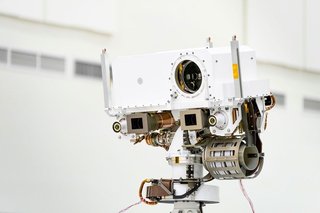
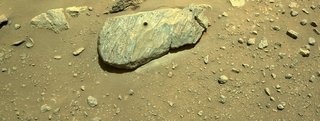
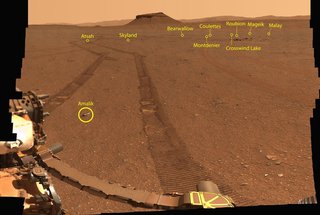
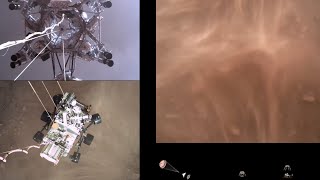
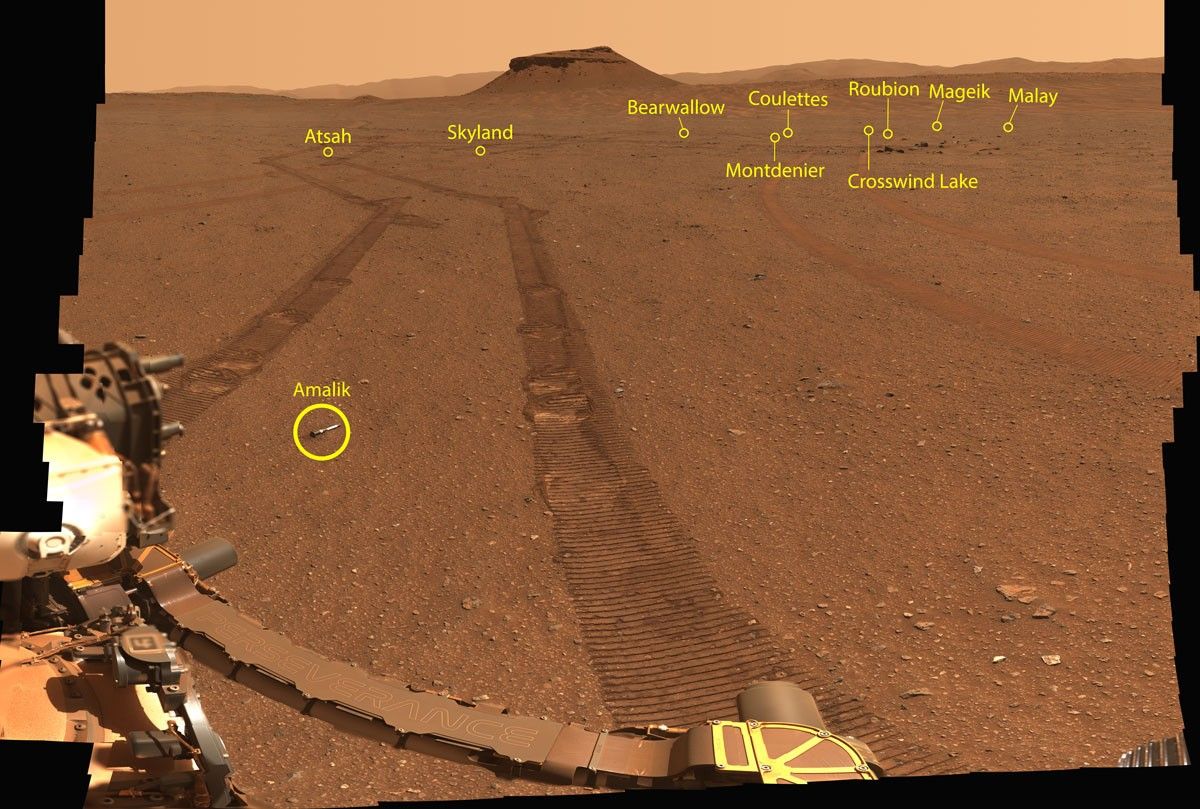
Perseverance is NASA's most advanced Mars rover, designed to search for signs of ancient microbial life and advance understanding of Mars' habitability. Launched on July 30, 2020 and landing in Jezero Crater on February 18, 2021, it collects rock and regolith core samples for potential future return to Earth. The rover carries seven scientific instruments including SuperCam, PIXL, SHERLOC, and MOXIE — which demonstrated oxygen production from the Martian atmosphere. It also deployed Ingenuity, the first powered aircraft to fly on another planet.
FEATURES
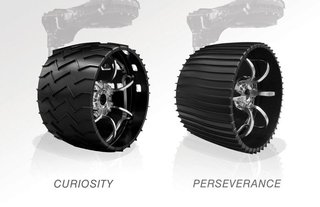
- Six-wheel drive with individual motors
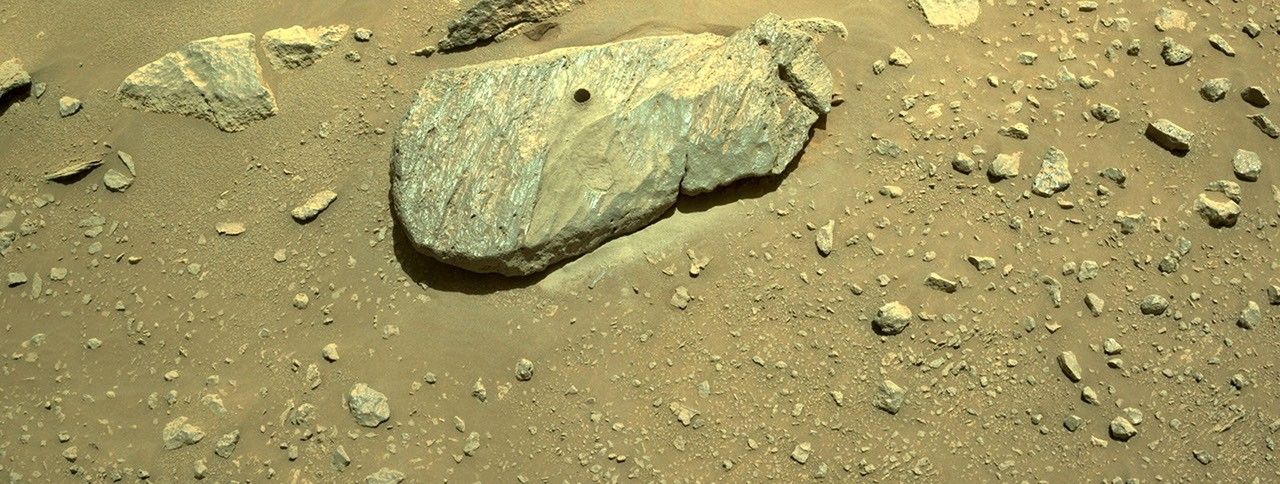
- 5-joint robotic arm (2.1 m reach) with rotary-percussive drill
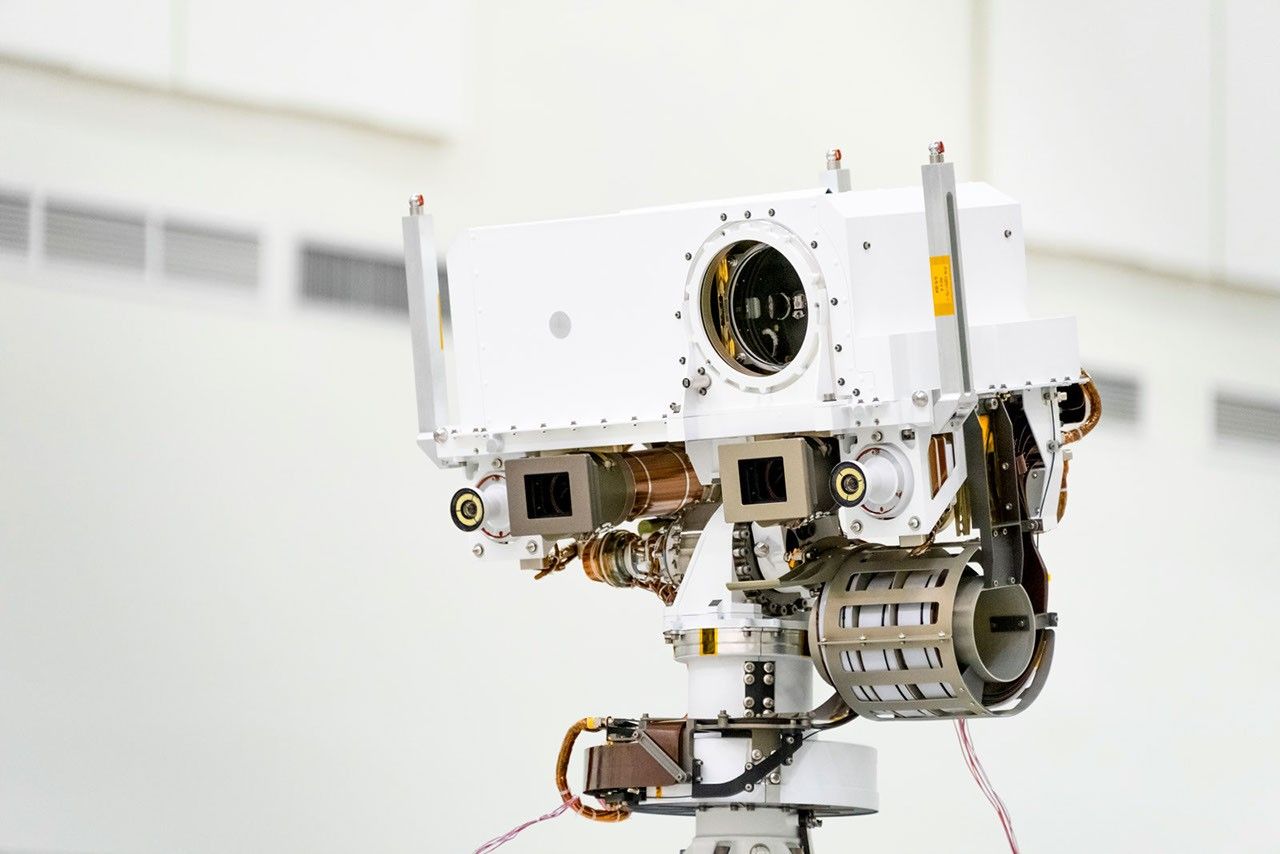
- SuperCam laser spectrometer and microphone
- MOXIE oxygen generation experiment
- 43-tube sample caching system
- autonomous hazard avoidance
- multi-mission radioisotope thermoelectric generator (MMRTG) power source
- UHF and X-band communications
- Ingenuity helicopter deployment capability
TECHNICAL SPECIFICATIONS
| Physical | |
| Weight | 1,025 kg |
|---|---|
| Dimensions | L 3 m × W 2.7 m × H 2.2 m |
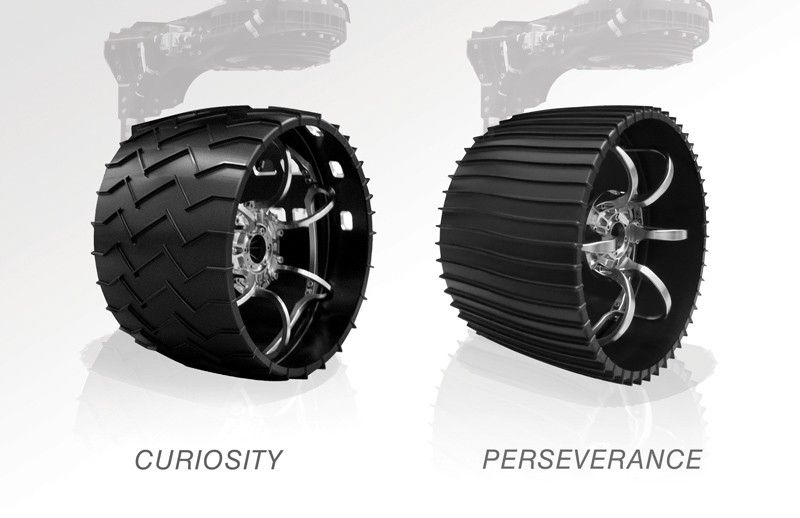
| Materials | Aluminum chassis, Titanium structural components, Aluminum wheels with titanium spokes, Aerogel insulation |
| Mobility | |
| Movement Type | Wheeled |
| Degrees of Freedom | 5 |
| Speed | 0.15 km/h |
| Manipulation | High |
| Environment | Mars surface; vacuum-capable; radiation-hardened; operational in Martian temperatures (-80°C to 0°C typical); 45-degree tilt tolerance; traverses rocks up to 40 cm |
| Actuators | Electric motors with titanium rocker-bogie suspension |
| Power | |
| Battery Life | Indefinite (nuclear-powered MMRTG, ~110W output) |
| Charging Type | Nuclear (MMRTG — Multi-Mission Radioisotope Thermoelectric Generator) |
| Sensing & Compute | |
| Sensors | SuperCam (laser, camera, spectrometers, microphone), Mastcam-Z (stereo zoom cameras), PIXL (X-ray fluorescence spectrometer), SHERLOC (UV Raman spectrometer) + WATSON camera, MEDA (weather station), RIMFAX (ground-penetrating radar), 6x Hazard Avoidance Cameras (HazCams), 2x Navigation Cameras (NavCams), CacheCam, Lander Vision System Camera |
| Connectivity | UHF (~400 MHz) relay via Mars orbiters; X-band direct-to-Earth high-gain antenna; X-band low-gain antenna |
| Software / AI | VxWorks RTOS; autonomous navigation (AutoNav); terrain-relative navigation (TRN) |
TECHNICAL SPECIFICATIONS
| Physical | |
| Weight | 1,025 kg |
|---|---|
| Dimensions | L 3 m × W 2.7 m × H 2.2 m |
| Materials | Aluminum chassis, Titanium structural components, Aluminum wheels with titanium spokes, Aerogel insulation |
| Mobility | |
| Movement Type | Wheeled |
| Degrees of Freedom | 5 |
| Speed | 0.15 km/h |
| Manipulation | High |
| Environment | Mars surface; vacuum-capable; radiation-hardened; operational in Martian temperatures (-80°C to 0°C typical); 45-degree tilt tolerance; traverses rocks up to 40 cm |
| Actuators | Electric motors with titanium rocker-bogie suspension |
| Power | |
| Battery Life | Indefinite (nuclear-powered MMRTG, ~110W output) |
| Charging Type | Nuclear (MMRTG — Multi-Mission Radioisotope Thermoelectric Generator) |
| Sensing & Compute | |
| Sensors | SuperCam (laser, camera, spectrometers, microphone), Mastcam-Z (stereo zoom cameras), PIXL (X-ray fluorescence spectrometer), SHERLOC (UV Raman spectrometer) + WATSON camera, MEDA (weather station), RIMFAX (ground-penetrating radar), 6x Hazard Avoidance Cameras (HazCams), 2x Navigation Cameras (NavCams), CacheCam, Lander Vision System Camera |
| Connectivity | UHF (~400 MHz) relay via Mars orbiters; X-band direct-to-Earth high-gain antenna; X-band low-gain antenna |
| Software / AI | VxWorks RTOS; autonomous navigation (AutoNav); terrain-relative navigation (TRN) |
Images
 martti
 martti
 martti
 martti
Image Contributions
ROBOT FORUMS
Loading forums...
RATINGS
FREQUENTLY ASKED QUESTIONS
What is the Perseverance Rover?
Perseverance is NASA's most advanced Mars rover, designed to search for signs of ancient microbial life and advance understanding of Mars' habitability. Launched on July 30, 2020 and landing in Jezero Crater on February 18, 2021, it collects rock and regolith core samples for potential future return to Earth.
Who makes the Perseverance Rover?
The Perseverance Rover is made by NASA, a robotics company based in United States.
How much does the Perseverance Rover cost?
NASA has not publicly announced pricing for the Perseverance Rover. You can enquire through RobotAIGeek for current pricing.
What is the Perseverance Rover used for?
The Perseverance Rover is designed for exploration, research, inspection, and mars surface exploration, sample collection. It is used in defence, research, and space settings.
How much does the Perseverance Rover weigh?
The Perseverance Rover weighs 1,025 kg.
How fast is the Perseverance Rover?
The Perseverance Rover can move at speeds of up to 0.15 km/h.
What is the battery life of the Perseverance Rover?
The Perseverance Rover runs for Indefinite (nuclear-powered MMRTG, ~110W output) on a charge.
How many degrees of freedom does the Perseverance Rover have?
The Perseverance Rover has 5 degrees of freedom.
COMPARE WITH SIMILAR ROBOTS
See how this robot stacks up against its closest alternatives
- Perseverance Rover vs Trident
- Perseverance Rover vs Nao
- Perseverance Rover vs Jackal
- Perseverance Rover vs PackBot
- Perseverance Rover vs Toro