


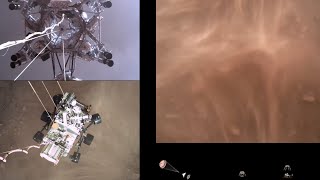
描述
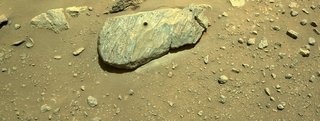
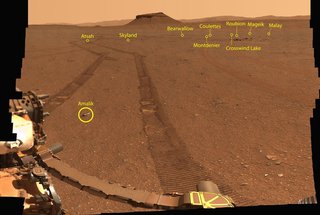
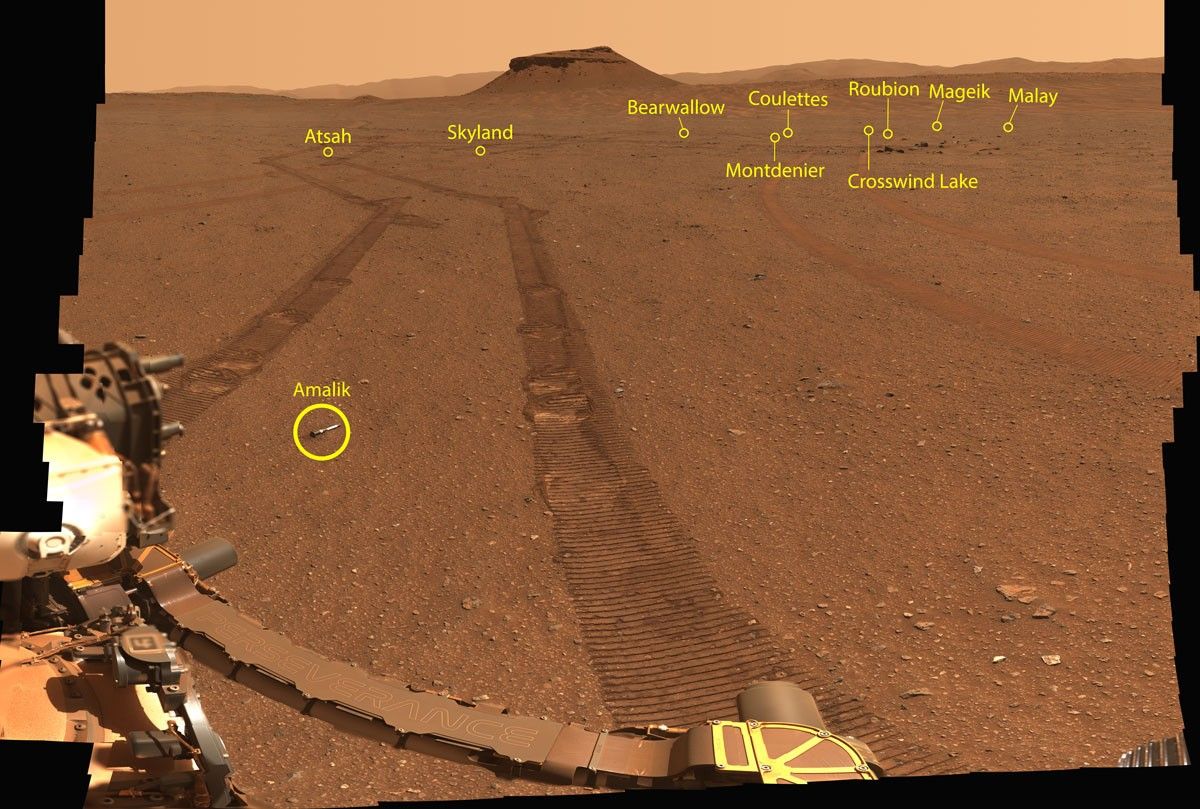
Perseverance is NASA's most advanced Mars rover, designed to search for signs of ancient microbial life and advance understanding of Mars' habitability. Launched on July 30, 2020 and landing in Jezero Crater on February 18, 2021, it collects rock and regolith core samples for potential future return to Earth. The rover carries seven scientific instruments including SuperCam, PIXL, SHERLOC, and MOXIE — which demonstrated oxygen production from the Martian atmosphere. It also deployed Ingenuity, the first powered aircraft to fly on another planet.
功能特点
- Six-wheel drive with individual motors
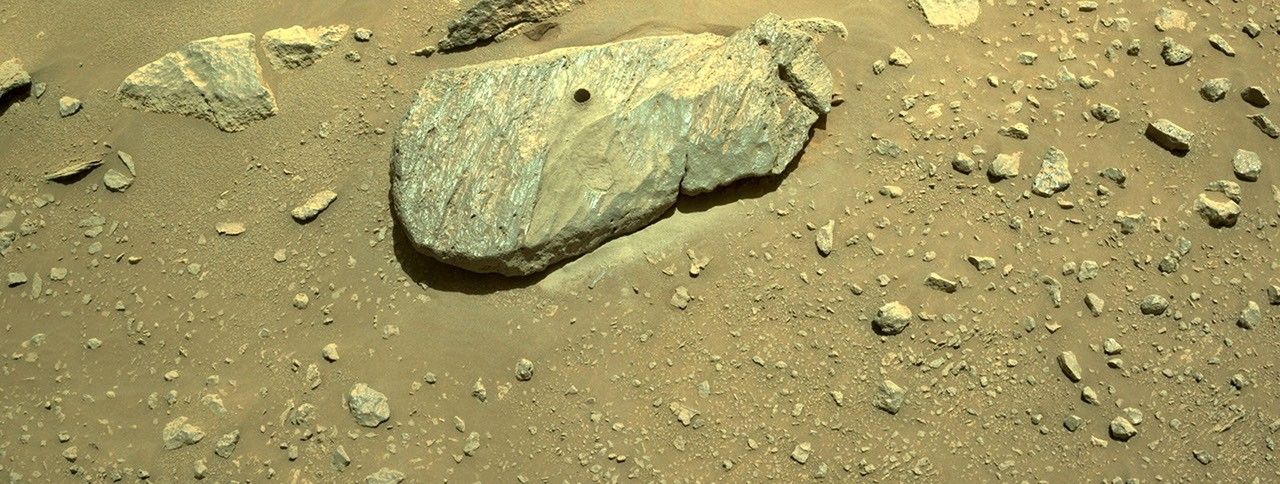
- 5-joint robotic arm (2.1 m reach) with rotary-percussive drill
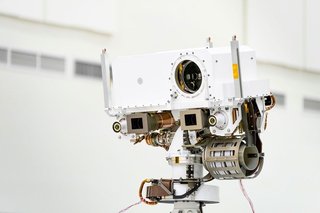
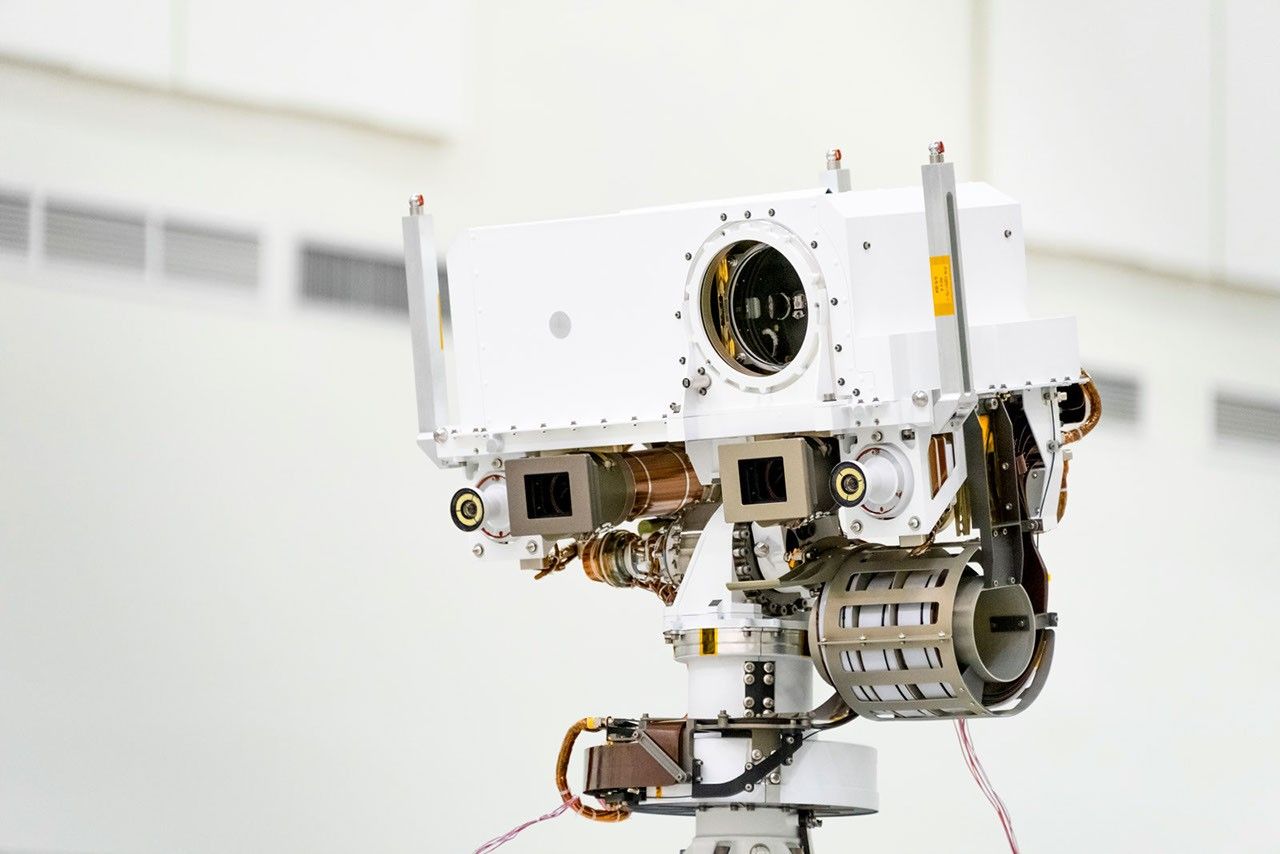
- SuperCam laser spectrometer and microphone
- MOXIE oxygen generation experiment
- 43-tube sample caching system
- autonomous hazard avoidance
- multi-mission radioisotope thermoelectric generator (MMRTG) power source
- UHF and X-band communications
- Ingenuity helicopter deployment capability
技术规格
| 物理参数 | |
| 重量 | 1,025 kg |
|---|---|
| 外形尺寸 | L 3 m × W 2.7 m × H 2.2 m |
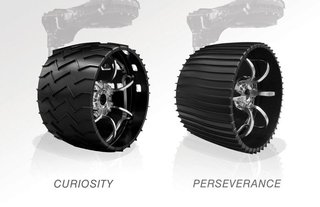
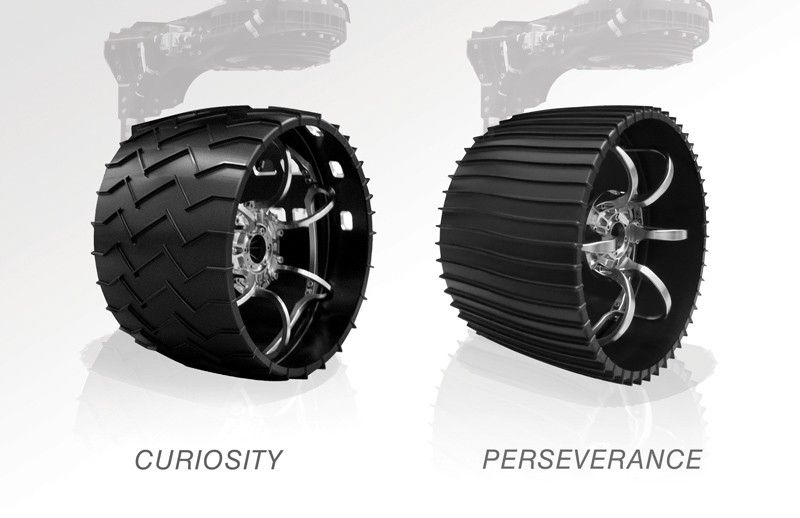
| 材料 | Aluminum chassis, Titanium structural components, Aluminum wheels with titanium spokes, Aerogel insulation |
| 移动能力 | |
| 运动类型 | 带轮的 |
| 自由度 | 5 |
| 速度 | 0.15 km/h |
| 操作能力 | 高 |
| 作业环境 | Mars surface; vacuum-capable; radiation-hardened; operational in Martian temperatures (-80°C to 0°C typical); 45-degree tilt tolerance; traverses rocks up to 40 cm |
| 执行器 | Electric motors with titanium rocker-bogie suspension |
| 电源与续航 | |
| 续航时间 | Indefinite (nuclear-powered MMRTG, ~110W output) |
| 充电类型 | Nuclear (MMRTG — Multi-Mission Radioisotope Thermoelectric Generator) |
| 感知与计算 | |
| 传感器 | SuperCam (laser, camera, spectrometers, microphone), Mastcam-Z (stereo zoom cameras), PIXL (X-ray fluorescence spectrometer), SHERLOC (UV Raman spectrometer) + WATSON camera, MEDA (weather station), RIMFAX (ground-penetrating radar), 6x Hazard Avoidance Cameras (HazCams), 2x Navigation Cameras (NavCams), CacheCam, Lander Vision System Camera |
| 连接方式 | UHF (~400 MHz) relay via Mars orbiters; X-band direct-to-Earth high-gain antenna; X-band low-gain antenna |
| 软件 / AI | VxWorks RTOS; autonomous navigation (AutoNav); terrain-relative navigation (TRN) |
技术规格
| 物理参数 | |
| 重量 | 1,025 kg |
|---|---|
| 外形尺寸 | L 3 m × W 2.7 m × H 2.2 m |
| 材料 | Aluminum chassis, Titanium structural components, Aluminum wheels with titanium spokes, Aerogel insulation |
| 移动能力 | |
| 运动类型 | 带轮的 |
| 自由度 | 5 |
| 速度 | 0.15 km/h |
| 操作能力 | 高 |
| 作业环境 | Mars surface; vacuum-capable; radiation-hardened; operational in Martian temperatures (-80°C to 0°C typical); 45-degree tilt tolerance; traverses rocks up to 40 cm |
| 执行器 | Electric motors with titanium rocker-bogie suspension |
| 电源与续航 | |
| 续航时间 | Indefinite (nuclear-powered MMRTG, ~110W output) |
| 充电类型 | Nuclear (MMRTG — Multi-Mission Radioisotope Thermoelectric Generator) |
| 感知与计算 | |
| 传感器 | SuperCam (laser, camera, spectrometers, microphone), Mastcam-Z (stereo zoom cameras), PIXL (X-ray fluorescence spectrometer), SHERLOC (UV Raman spectrometer) + WATSON camera, MEDA (weather station), RIMFAX (ground-penetrating radar), 6x Hazard Avoidance Cameras (HazCams), 2x Navigation Cameras (NavCams), CacheCam, Lander Vision System Camera |
| 连接方式 | UHF (~400 MHz) relay via Mars orbiters; X-band direct-to-Earth high-gain antenna; X-band low-gain antenna |
| 软件 / AI | VxWorks RTOS; autonomous navigation (AutoNav); terrain-relative navigation (TRN) |
图片
 martti
 martti
 martti
 martti
图片贡献
机器人论坛
正在加载论坛...
评分
常见问题
What is the Perseverance Rover?
Perseverance is NASA's most advanced Mars rover, designed to search for signs of ancient microbial life and advance understanding of Mars' habitability. Launched on July 30, 2020 and landing in Jezero Crater on February 18, 2021, it collects rock and regolith core samples for potential future return to Earth.
Who makes the Perseverance Rover?
The Perseverance Rover is made by NASA, a robotics company based in United States.
How much does the Perseverance Rover cost?
NASA has not publicly announced pricing for the Perseverance Rover. You can enquire through RobotAIGeek for current pricing.
What is the Perseverance Rover used for?
The Perseverance Rover is designed for 探索, 研究, 检查, and mars surface exploration, sample collection. It is used in 国防, 研究, and 空间 settings.
How much does the Perseverance Rover weigh?
The Perseverance Rover weighs 1,025 kg.
How fast is the Perseverance Rover?
The Perseverance Rover can move at speeds of up to 0.15 km/h.
What is the battery life of the Perseverance Rover?
The Perseverance Rover runs for Indefinite (nuclear-powered MMRTG, ~110W output) on a charge.
How many degrees of freedom does the Perseverance Rover have?
The Perseverance Rover has 5 degrees of freedom.
与同类机器人对比
看看这款机器人与最接近的同类产品相比表现如何
- Perseverance Rover vs Trident
- Perseverance Rover vs Nao
- Perseverance Rover vs Jackal
- Perseverance Rover vs PackBot
- Perseverance Rover vs Toro