DESCRIPTION
Perceptyne PR-DUO is a Collaborative-Robot from Perceptyne. It is built for Assembly, Machine-Tending, Pick-and-place. Key figures: 120 kg, 10 kg payload, 800 mm reach, 14 degrees of freedom.
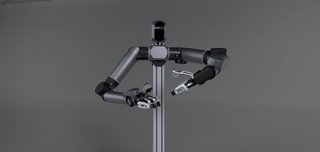
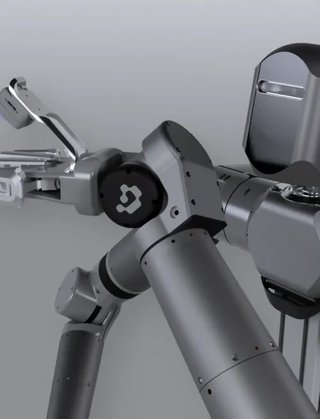
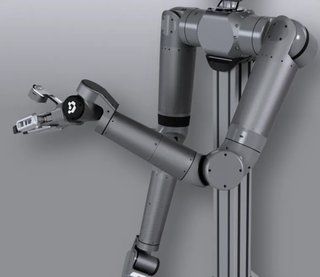
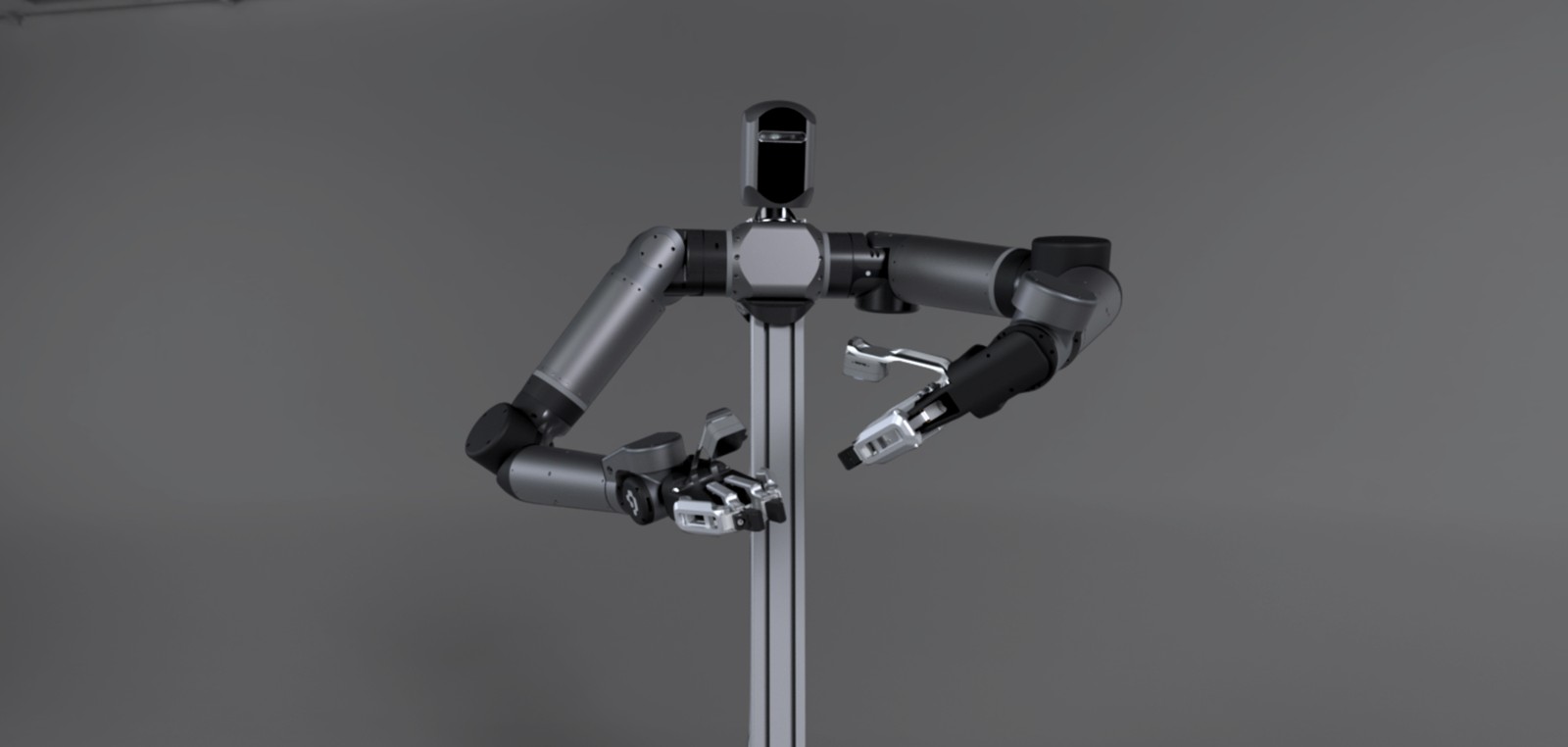
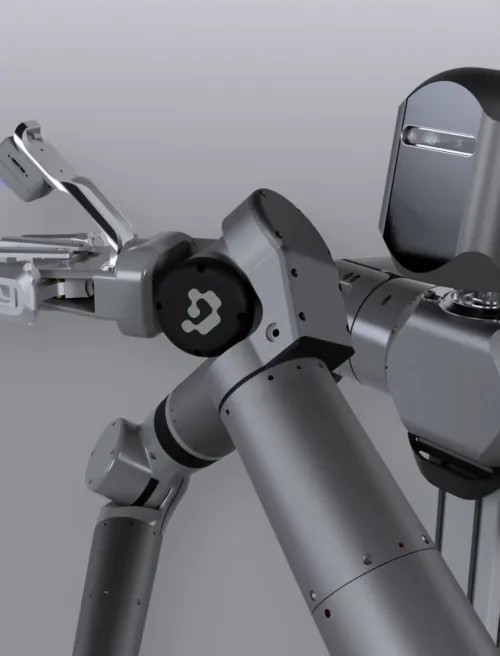
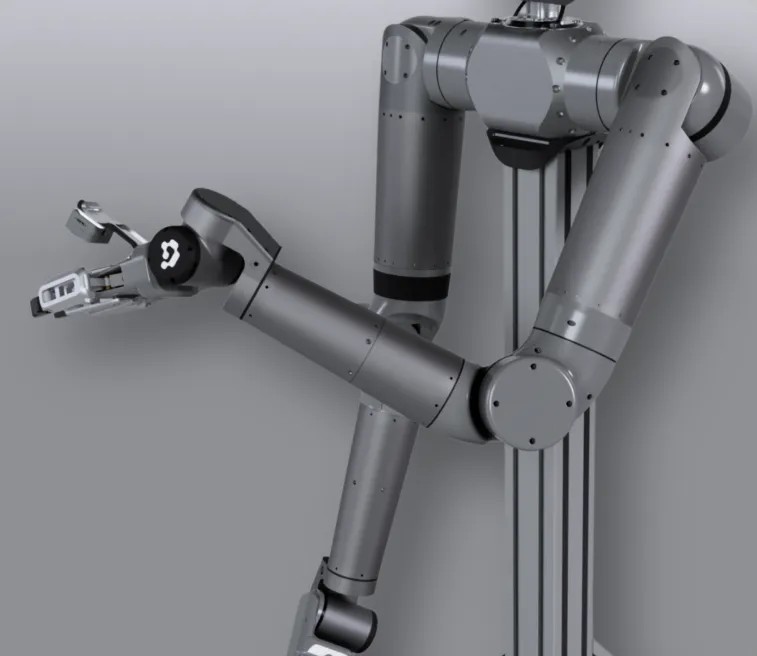
PR-DUO is the same dual-arm torso as the PR-OMNI without the mobile base — a workstation robot on a column, meant for jobs where two hands have to cooperate in a tight footprint. Perceptyne's own claim for it is range rather than force: it handles objects from 5 cm to 50 cm at a single station. It stands 5 ft 2 in (about 1,575 mm), weighs 120 kg in aluminium, and carries two 7-DOF arms of 800 mm each at 5 kg per arm, with an 800 mm vertical gantry that lifts the torso and a maximum vertical approach speed of 1 m/s. The sensing is Perceptyne's standard set: force-torque at every joint to plus or minus 10 g, tactile sensing at the fingertips, three RGBD cameras, visual servoing, and the Physical Intelligence layer on an Nvidia Jetson Orin with an Intel NUC. A Pico4 headset can teleoperate it.
FEATURES
- Stationary dual-arm workstation robot, column-mounted
- Handles objects from 5 cm to 50 cm at one workstation
- Height 5 ft 2 in (about 1,575 mm)
- 120 kg
- aluminium body, modular design
- Dual arms, 7 DOF each
- 800 mm arm reach
- Payload 5 kg per arm
- 800 mm vertical gantry range
- maximum vertical approach speed 1 m/s
- 3 RGBD cameras
- Force-torque sensing at every joint with a least count of plus or minus 10 g
- Tactile sensing at the end effectors
- Visual servoing enabled
- Native Physical Intelligence (PhI) layer
- runs open-source models natively
- Teleoperation through a VR headset (Pico4)
- Nvidia Jetson Orin plus Intel NUC onboard compute
TECHNICAL SPECIFICATIONS
Verified| Physical | |
| Weight | 120 kg |
|---|---|
| Dimensions | H 1.57 m |
| Payload | 10 kg |
| Reach | 800 mm |
| Mobility | |
| Movement Type | Stationary |
| Degrees of Freedom | 14 |
| Environment | Indoor industrial workstations; compact footprint for tight cells |
| Sensing & Compute | |
| Sensors | force-torque sensing at every joint (+/-10 g), tactile sensing at end effectors, 3 RGBD cameras |
| Software / AI | Native Physical Intelligence (PhI) layer; runs open-source models; VR teleoperation (Pico4) |
ROBOT FORUMS
Loading forums...
TECHNICAL SPECIFICATIONS
Verified| Physical | |
| Weight | 120 kg |
|---|---|
| Dimensions | H 1.57 m |
| Payload | 10 kg |
| Reach | 800 mm |
| Mobility | |
| Movement Type | Stationary |
| Degrees of Freedom | 14 |
| Environment | Indoor industrial workstations; compact footprint for tight cells |
| Sensing & Compute | |
| Sensors | force-torque sensing at every joint (+/-10 g), tactile sensing at end effectors, 3 RGBD cameras |
| Software / AI | Native Physical Intelligence (PhI) layer; runs open-source models; VR teleoperation (Pico4) |
Images
 martti

 martti
 martti
Image Contributions
Videos
ROBOT FORUMS
Loading forums...
RATINGS
FREQUENTLY ASKED QUESTIONS
What is the Perceptyne PR-DUO?
PR-DUO is the same dual-arm torso as the PR-OMNI without the mobile base — a workstation robot on a column, meant for jobs where two hands have to cooperate in a tight footprint. Perceptyne's own claim for it is range rather than force: it handles objects from 5 cm to 50 cm at a single station.
Who makes the Perceptyne PR-DUO?
The Perceptyne PR-DUO is made by Perceptyne, a robotics company based in India.
How much does the Perceptyne PR-DUO cost?
Perceptyne has not publicly announced pricing for the Perceptyne PR-DUO. You can enquire through RobotAIGeek for current pricing.
What is the Perceptyne PR-DUO used for?
The Perceptyne PR-DUO is designed for assembly, machine-tending, pick-and-place, and inspection. It is used in electronics, warehouse & logistics, and manufacturing settings.
What is the payload capacity of the Perceptyne PR-DUO?
The Perceptyne PR-DUO has a payload capacity of 10 kg and a reach of 800 mm.
How much does the Perceptyne PR-DUO weigh?
The Perceptyne PR-DUO weighs 120 kg.
How many degrees of freedom does the Perceptyne PR-DUO have?
The Perceptyne PR-DUO has 14 degrees of freedom.
COMPARE WITH SIMILAR ROBOTS
See how this robot stacks up against its closest alternatives
- Perceptyne PR-DUO vs ASYSTR 5C
- Perceptyne PR-DUO vs SZGH-I5
- Perceptyne PR-DUO vs SZGH-I7
- Perceptyne PR-DUO vs SZGH-I16
- Perceptyne PR-DUO vs Perceptyne PR-UNO