UWANT's Owner Commits US$715 Million to a Suzhou Robot Base
UWANT's parent company is investing US$715 million in a new manufacturing and R&D base in Suzhou, a major bet from a lesser-known Chinese robot vacuum brand.

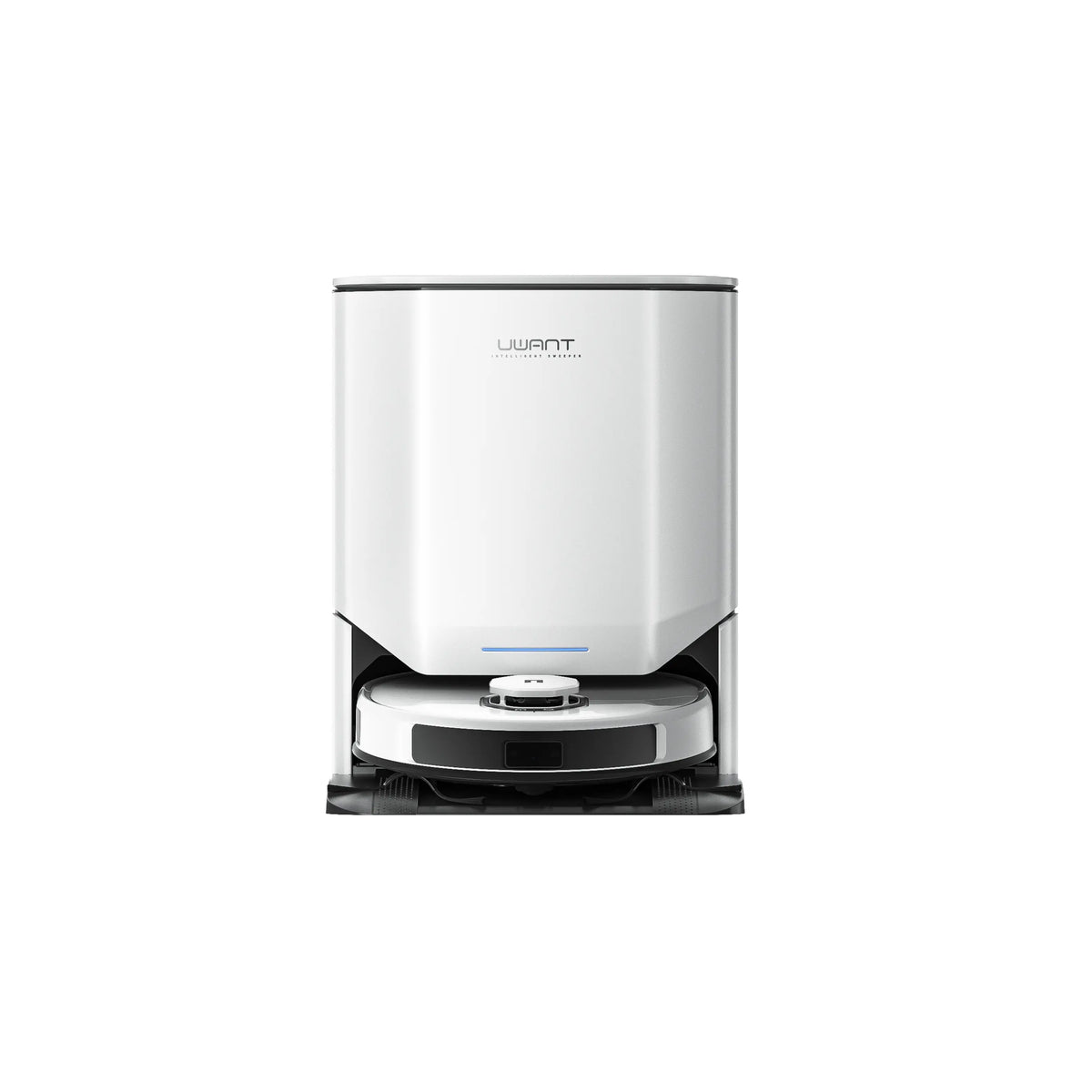
A robot vacuum brand most global buyers have never heard of just signed one of the largest single-company manufacturing commitments in China's home-robotics sector this week. Suzhou Jiandan Youwei Technology, which sells smart cleaning robots under the UWANT brand, said on September 17 that it has finalized a RMB 5.1 billion, approximately US$715 million, project to build an intelligent manufacturing base, a core research and development center, and a new corporate headquarters in Wujiang District, on the outskirts of Suzhou in Jiangsu province. The company projects the completed site will generate more than RMB 10 billion, approximately US$1.4 billion, in new annual output value once all four planned construction phases are finished, a figure that would represent a dramatic scale-up for a brand that remains a minor name outside China compared with category leaders Ecovacs, Roborock, and Dreame.
UWANT is the consumer-facing brand of Jiandan Youwei, a company founded in Suzhou in January 2021 that has been recognized as a national-level high-technology enterprise and a Suzhou-designated unicorn-cultivation company. Its product line centers on hot-water floor washers, mite-removal devices, fabric cleaning machines, and robot vacuums, including the U200 hot-water mop washer, which the company markets as an industry first, and the U300, a combined hot-water wash, roller-mop, sweep, and vacuum unit aimed at the mid-tier of China's intensely competitive smart-home cleaning market.
The Gap Between a Brand's Global Profile and Its Domestic Ambition
The tension worth naming directly is that a company with limited international brand recognition is making an investment commitment on a scale usually associated with the sector's most visible names. Ecovacs and Roborock, the two brands most global consumers would name first if asked to identify a Chinese robot vacuum maker, built that recognition through years of aggressive overseas retail expansion, extensive marketing spend in North America and Europe, and product lines that dominate online marketplace rankings outside China. UWANT has taken a narrower path, building out storefronts under regional domain names across Singapore, Malaysia, Australia, and other markets, but without the same overseas marketing footprint. A RMB 5.1 billion (US$715 million) domestic manufacturing and R&D commitment from a company still building that international profile signals one of two things: either UWANT sees an opening to compete on manufacturing scale and product engineering before it competes on brand recognition, or the project is being driven as much by regional industrial-policy incentives common to Chinese local government robotics investment as by a specific near-term export strategy. Both explanations are plausible, and the company's own public statements lean toward the first, describing the project as a strategic move to deepen its footprint in Suzhou and expand its manufacturing base rather than as an export-led expansion plan.
What Four Phases of Construction Signal About the Bet
The project's structure, an intelligent manufacturing base, a dedicated core R&D center, and a headquarters building, split across four construction phases, mirrors a pattern increasingly common among China's better-capitalized home-robotics brands: build owned manufacturing capacity rather than relying entirely on third-party contract manufacturers, and co-locate that capacity with in-house research and development so that new mechanical designs, like the bionic cleaning arm featured in UWANT's U260 model, move from prototype to production line without the delay and intellectual-property exposure of handing designs to an external factory partner. That vertical integration strategy costs significantly more upfront than a contract-manufacturing arrangement, which is part of why the RMB 5.1 billion (US$715 million) figure is notable relative to UWANT's current market profile, but it gives the company direct control over production quality, unit costs, and the pace at which new hardware features can reach retail shelves, three variables that matter enormously in a Chinese robot vacuum market where new models launch on a roughly annual cycle and price competition is unusually intense even by consumer electronics standards.
Wujiang District itself is not a neutral location choice. Suzhou's broader robotics and intelligent-manufacturing cluster, spanning Wujiang and neighboring Wuzhong districts, has attracted a growing concentration of robotics and embodied-AI companies over the past two years, supported by municipal government programs aimed at growing the city's robotics sector into one of China's largest regional industry clusters in the coming years. Locating a new manufacturing base inside that cluster gives UWANT proximity to component suppliers, a regional talent pool already trained in robotics manufacturing, and likely access to local government incentives that reduce the effective capital cost of a project this size, all factors that make the headline RMB 5.1 billion (US$715 million) figure somewhat less extraordinary than it first appears once the local industrial-policy context is accounted for.
Why China's Cleaning-Robot Market Rewards Owning the Factory
China's domestic robot vacuum and floor-washer market has become one of the most price-competitive consumer hardware categories anywhere, with new models from a dozen or more brands launching in overlapping price tiers roughly every year and gross margins compressed by that pace of iteration. In that environment, a brand that relies on third-party contract manufacturing carries a structural cost disadvantage against rivals who own their own production lines, because a contract manufacturer's margin sits on top of every unit shipped and because any design change, adding a new sensor, revising a mop-roller mechanism, upgrading a battery cell, has to pass through a negotiation and requalification cycle with an outside factory partner rather than an internal engineering handoff. Ecovacs and Roborock built much of their current cost advantage over smaller rivals precisely by investing early in owned or tightly controlled manufacturing capacity, letting them absorb price wars that squeezed contract-manufacturing-dependent competitors out of the mid-tier segment over the past several product cycles. UWANT's Wujiang investment reads as an attempt to close that same structural gap before the next round of category-wide price competition, rather than an isolated real-estate announcement disconnected from the company's competitive position.
The bionic cleaning arm featured in the company's U260 model, an edge-reaching mechanism designed to extend a mop or brush head into corners and along baseboards that a standard circular robot vacuum chassis cannot reach, is the kind of mechanical differentiation that becomes commercially viable only once a company controls its own tooling and assembly line closely enough to iterate on it quickly. A contract manufacturer producing a novel mechanical component for a single customer brand typically demands higher per-unit tooling costs and longer lead times than a standardized chassis design, which pushes cost-conscious brands toward conventional designs and leaves genuinely differentiated mechanical features, the kind that justify a price premium over the flood of similar-looking robot vacuums competing purely on suction wattage and app features, to companies willing to make the manufacturing investment UWANT is now making.
The Real Test Is Whether Manufacturing Scale Converts to Market Share
Manufacturing capacity and R&D infrastructure do not by themselves win market share in a category where Ecovacs, Roborock, Dreame, and Xiaomi's ecosystem brands already command the overwhelming majority of both domestic and export sales, backed by retail distribution networks, marketing budgets, and brand recognition that took years to build. UWANT's bet, implicit in a manufacturing investment of this scale, is that owning production and engineering capacity lets it compete on product differentiation, faster iteration cycles, and potentially lower per-unit costs once the new base reaches full output, rather than trying to out-market the category's established leaders directly. That is a defensible strategy in a market where consumer robot vacuum buyers increasingly compare specific feature sets, such as hot-water mop washing or obstacle-avoidance sensor arrays, rather than choosing purely on brand familiarity, but it is also a strategy that takes years to prove out, since the manufacturing base itself will not be fully operational across all four planned phases for some time.
The number worth tracking going forward is not the RMB 5.1 billion (US$715 million) construction commitment itself but the RMB 10 billion (US$1.4 billion) annual output value UWANT is projecting once the base is complete, a figure that, if achieved, would represent roughly a sevenfold increase over the scale of investment being committed today and would place UWANT's annual revenue in a range that begins to approach the smaller end of the established category leaders rather than the mid-tier position it currently occupies. Whether that projection reflects a realistic, incentive-adjusted business case or an ambitious target set to justify the scale of the announcement is a question that will only be answered by UWANT's actual production and sales figures over the next several years, not by the groundbreaking ceremony marking the project's start.
For international buyers and distributors evaluating Chinese cleaning-robot suppliers beyond the two or three brands already familiar from overseas retail shelves, UWANT's investment is a reminder that the tier of manufacturers just below the category leaders is still capital-rich enough to fund a nine-figure production buildout, a sign that the competitive shakeout many analysts expected across China's crowded home-robotics supply base has not yet forced smaller brands into consolidation or retreat. Whether that capital availability reflects genuine confidence in UWANT's product roadmap or simply the depth of regional investment incentives available to any qualifying robotics manufacturer in Jiangsu province, the practical effect is the same: buyers sourcing private-label or white-label cleaning robots from China should expect the current field of viable, well-capitalized suppliers to remain wide for at least the next several years, rather than narrowing quickly to the handful of brands that already dominate Western retail search results.
This analysis draws on public statements and project disclosures from Suzhou Jiandan Youwei Technology regarding its Wujiang District investment. It is for general information purposes only and does not constitute investment, financial, or legal advice.
Hero image credit: UWANT.