UNIT AI Secures US$12 Million to Scale Modular E-Commerce Automation Platform
UNIT AI has secured US$12 million in a funding round co-led by Prologis Ventures, Dynamo Ventures, and Ground Up Ventures to scale its modular e-commerce automation platform. Founded by industry veterans Guy Glass (formerly Caja Robotics, acquired by Fives) and Avihou Barkay (formerly Plus One Robotics), the company provides rapidly deployable robotic sorting systems for fulfillment and returns processing that can be installed in weeks without requiring full facility redesigns.
Funding for Modular Automation
The demand for flexible, rapidly deployable warehouse automation continues to attract significant venture capital as e-commerce volumes grow and labor markets remain tight. On July 31, 2026, UNIT AI announced it has secured US$12 million in a funding round co-led by Prologis Ventures, Dynamo Ventures, and Ground Up Ventures.
The round also saw participation from eGateway Capital, Recursive Ventures, Think + Ventures, ZEP Fund, and Crosscourt. The capital injection will be used to scale the deployment of UNIT AI's modular automation platform, which targets the specific pain points of e-commerce fulfillment and the notoriously labor-intensive, margin-destroying returns process.
The involvement of Prologis Ventures is particularly significant. Prologis is the world's largest industrial real estate company, owning and operating approximately 1.2 billion square feet of logistics facilities globally. Its venture arm invests strategically in technologies that enhance the value and productivity of its warehouse portfolio, making its backing a strong signal that UNIT AI's technology is viewed as commercially viable by the most sophisticated logistics real estate operator in the world.
Founding Pedigree and Platform Approach
UNIT AI brings significant industry pedigree to the market, founded by executives with deep operational experience in warehouse robotics. Guy Glass previously led Caja Robotics, an autonomous mobile robot company that was acquired by French industrial group Fives. Avihou Barkay was formerly with Plus One Robotics, a company specializing in AI-powered robotic picking and sorting. Their combined experience in both autonomous mobile robots and robotic manipulation informs UNIT AI's integrated approach to the fulfillment challenge.
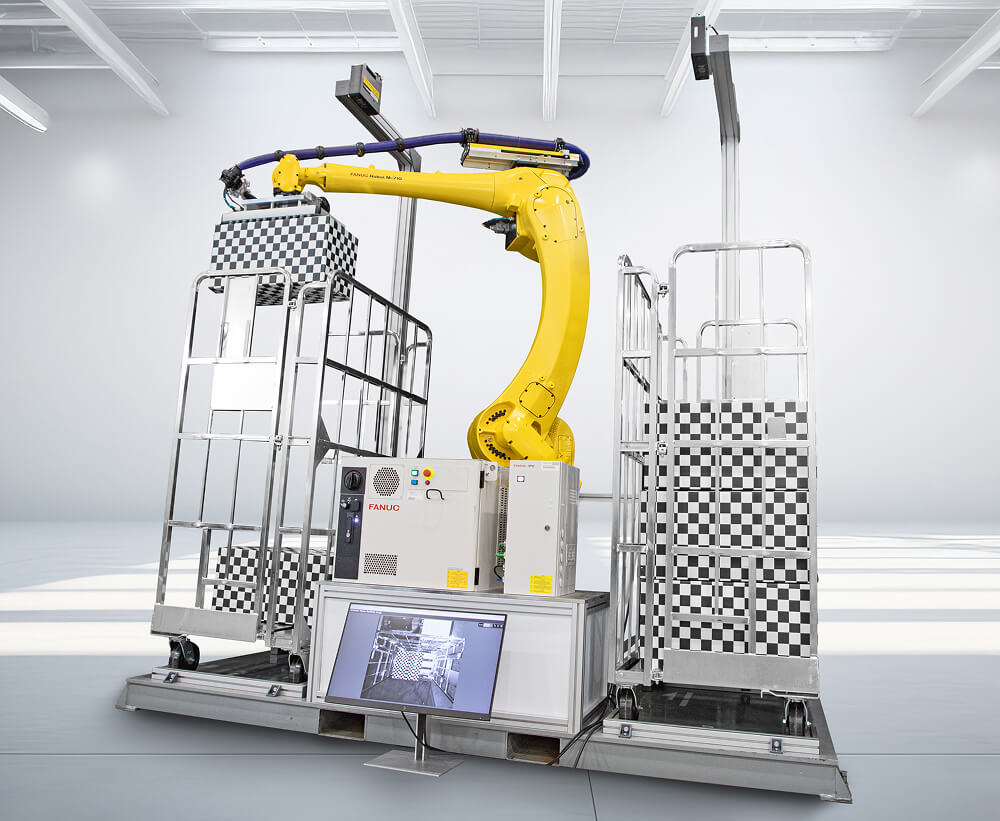
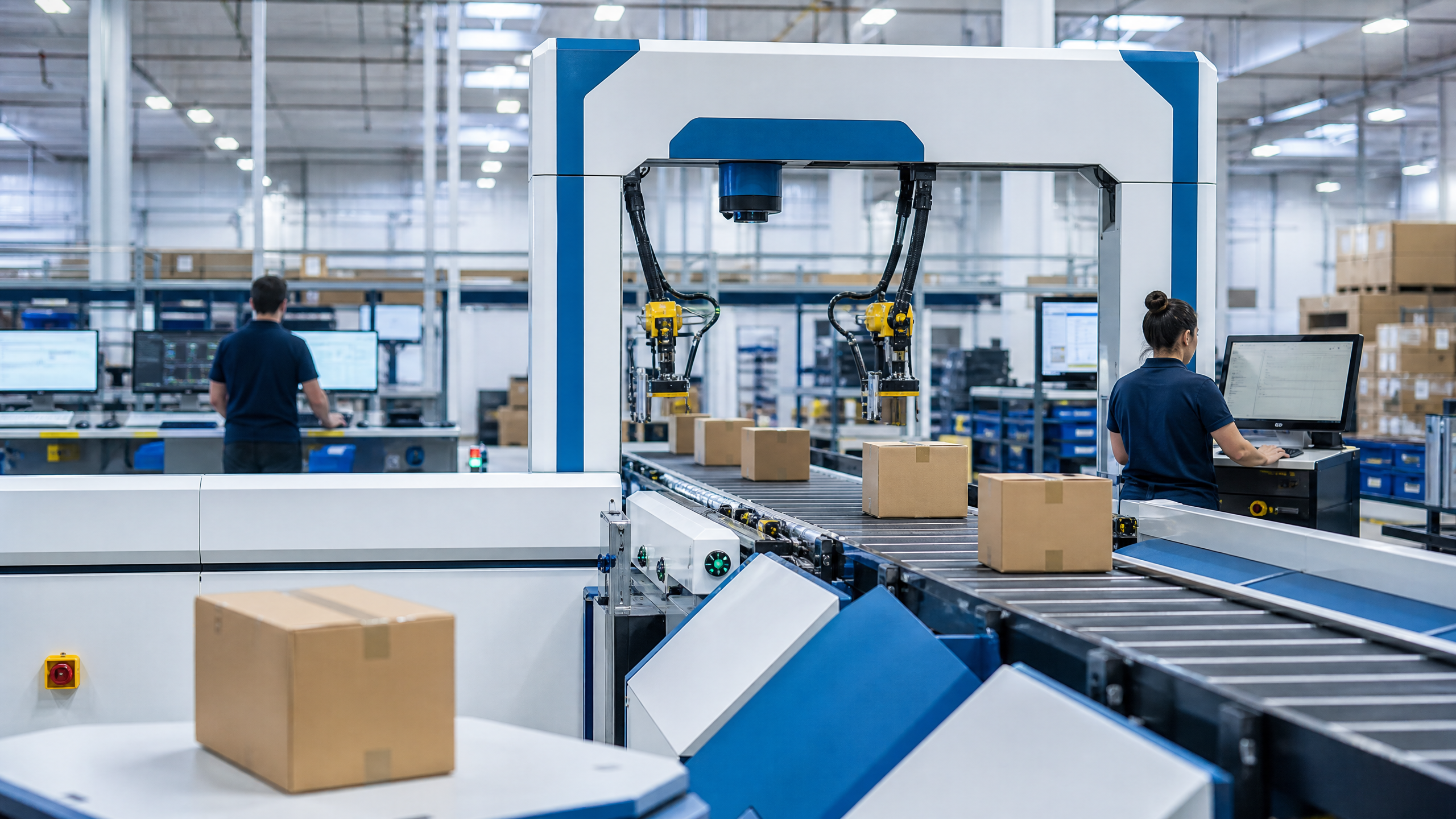
Unlike traditional warehouse automation systems that require months of planning, significant facility modifications (including floor cutting for conveyors, structural reinforcement, and electrical upgrades), and massive upfront capital expenditure often exceeding US$50 million for a full facility, UNIT AI offers a modular, station-level solution. The system integrates robotic arms, vision AI for item recognition and quality assessment, and conveyor modules that can be deployed in a matter of weeks without requiring a full facility redesign or disrupting ongoing operations.
This modular approach is specifically designed for the realities of the Third-Party Logistics (3PL) market, where operators manage multiple client brands within a single facility and cannot afford the downtime or capital commitment of traditional automation. UNIT AI's systems can be installed alongside existing manual workflows, automating specific bottlenecks incrementally rather than requiring an all-or-nothing facility transformation.
The Returns Processing Opportunity
The focus on returns processing is particularly strategic and addresses one of the most acute pain points in modern e-commerce. Industry data suggests that online return rates average 20 to 30 percent across apparel and consumer goods categories, with some fast-fashion brands experiencing return rates exceeding 40 percent. Processing these returns, which involves receiving, inspecting, grading, repackaging, and restocking or liquidating each item, is highly labor-intensive and unpredictable in volume.
Traditional automation struggles with returns because the items arriving are highly variable in size, condition, and packaging state, unlike the standardized outbound fulfillment process where items are picked from known locations in known conditions. UNIT AI's vision AI system is specifically trained to handle this variability, assessing item condition, identifying products without barcodes, and routing items to the appropriate disposition pathway (restock, refurbish, liquidate, or recycle).
The company is already working with prominent logistics providers and brands, including Barrett, ShipCalm, DaVinci, and Carter, and claims a pipeline of enterprise clients shipping billions of units annually. This early traction with established operators validates the product-market fit and suggests that the technology is solving a genuine operational problem rather than a theoretical one.
Competitor Comparison: E-Commerce Fulfillment AI

The e-commerce fulfillment automation sector is highly competitive, as shown in the comparison table. UNIT AI enters a market populated by established players like Ambi Robotics (focused on parcel sorting and kitting, backed by over US$67 million in funding from Tiger Global and others) and Covariant (which developed advanced robotic picking AI before being absorbed by Amazon in 2024 for over US$222 million).
UNIT AI's differentiation lies in its hyper-focus on modularity, deployment speed, and the underserved returns processing segment. While companies like Berkshire Grey (now owned by SoftBank after being taken private) provide comprehensive, facility-wide robotic integration requiring months of installation, UNIT AI targets 3PL providers and brands that need to automate specific bottlenecks without disrupting their existing operations or committing to facility-wide transformation.
The acquisition of Covariant by Amazon and Berkshire Grey by SoftBank has actually created a market opportunity for independent players like UNIT AI, as many warehouse operators are reluctant to deploy automation systems owned by their largest competitors or by companies with competing logistics ambitions.
Strategic Outlook
For warehouse operators and 3PL providers, UNIT AI represents an emerging category of 'surgical automation' that can address specific operational pain points without the risk, cost, and disruption of full facility transformation. As e-commerce growth continues and labor availability remains constrained, the demand for solutions that can be deployed quickly and scaled incrementally is likely to grow significantly.
The US$12 million round, while modest compared to the hundreds of millions raised by some competitors, is appropriately sized for a company focused on capital-efficient, modular deployments rather than massive facility-wide installations. The backing from Prologis Ventures provides not only capital but also potential access to Prologis's vast network of warehouse tenants as prospective customers, creating a powerful distribution channel for UNIT AI's technology.
The 3PL Market Opportunity
Third-party logistics providers represent a particularly attractive market segment for modular automation solutions like UNIT AI's platform. Unlike large e-commerce companies such as Amazon, which can justify massive, purpose-built fulfillment centers with billions of dollars in automation investment, 3PL operators typically manage multiple client brands within shared facilities, operate on thin margins, and face constant pressure to demonstrate value to their brand clients while keeping costs competitive.
The 3PL market is estimated at over US$1 trillion globally, with the US segment alone exceeding US$250 billion. These operators handle fulfillment for thousands of brands that lack the scale to build their own logistics infrastructure, creating enormous aggregate demand for automation solutions that can be deployed quickly, configured for different product types, and scaled up or down as client volumes fluctuate seasonally.
UNIT AI's modular approach directly addresses the core constraint facing 3PL automation adoption: the inability to commit to facility-wide transformation when client contracts may last only two to three years and warehouse leases may not justify permanent infrastructure modifications. By offering station-level automation that can be installed in weeks and relocated if needed, UNIT AI removes the primary barrier that has prevented 3PL operators from adopting robotics at the pace of their larger, vertically integrated competitors.
The returns processing focus adds another dimension of value for 3PL operators, who increasingly compete for brand clients by offering comprehensive reverse logistics capabilities. As direct-to-consumer brands grow and return rates remain stubbornly high, the ability to process returns quickly, accurately assess item condition, and maximize recovery value through rapid restocking becomes a key differentiator for 3PL providers seeking to win and retain premium brand clients.
For the venture capital community, UNIT AI's funding round validates continued investor appetite for logistics automation companies that offer differentiated approaches to well-understood problems. The participation of strategic investors like Prologis Ventures, which can provide both capital and customer access, creates a powerful flywheel effect that purely financial investors cannot replicate.
The warehouse automation market is at an inflection point where the technology has matured sufficiently to deliver reliable performance, but adoption remains constrained by the high cost and complexity of traditional deployment models. UNIT AI's modular, station-level approach directly addresses this adoption gap by reducing the minimum viable investment from tens of millions of dollars to a fraction of that amount, while delivering measurable productivity improvements within weeks rather than months or years.
Disclaimer: This article is for informational purposes only and does not constitute financial, investment, or technical advice. Readers should conduct their own due diligence before making procurement or investment decisions based on this information.