MISUMI Plans US$50 Million Robotics Venture Fund
MISUMI plans a ten-year US$50 million venture fund to build early relationships across robotics, industrial AI, and frontier hardware.

MISUMI Group’s board resolved on September 17 to establish a US$50 million corporate venture capital fund in Delaware, but the amount is less important than the information the company wants to buy. MISUMI Venture Capital Fund I is planned for establishment in October 2026 with a ten-year term, and up to US$50 million is expected to be contributed through September 2036. No startup investments were announced, and MISUMI says the expected effect on its consolidated financial results is minimal. The immediate signal is therefore not a new earnings engine or a completed portfolio. It is a component distributor creating a formal channel to observe, influence, and build relationships with the technologies that may shape its customers’ next procurement cycles.
MISUMI is a Tokyo-listed supplier of mechanical components, procurement services, and prototyping support. Its role sits between the engineers designing industrial equipment and the manufacturers that need large numbers of configured parts delivered with predictable specifications and lead times. The planned fund would extend that position upstream. Instead of waiting for robotics, industrial AI, frontier hardware, aerospace, medical technology, clean energy, and automation startups to become conventional catalog customers, MISUMI can meet them while products and supplier choices are still fluid. That makes the fund a learning instrument first and a financial asset second.
A Fund Designed Around the Buyer’s Information Problem
Industrial distributors face a recurring timing problem. By the time a new automation category produces large, standardized orders, the critical component choices may already be embedded in product designs and supply relationships. Waiting for demand to appear in historical sales data can leave a distributor responding after specifications, preferred vendors, and service expectations have been set. A venture fund can move that observation point earlier. Startup diligence exposes MISUMI to design priorities, prototype bottlenecks, component failure modes, purchasing behavior, and the gaps young hardware companies cannot solve through engineering alone.
That information can be valuable even when an investment never becomes large or profitable. A robotics startup considering a new actuator assembly may reveal demand for a connector, guide, fastener, sensor mount, or custom-machined part that does not yet fit a standard catalog. An industrial AI company may expose where physical deployment stalls because computing hardware, enclosures, cables, safety equipment, or integration support are hard to source. MISUMI can use those conversations to adjust assortments, qualification processes, digital configuration tools, and prototyping services before a market reaches volume. The strategic return is a shorter feedback loop between emerging engineering needs and the distributor’s commercial offering.
The Target List Follows MISUMI’s Customers
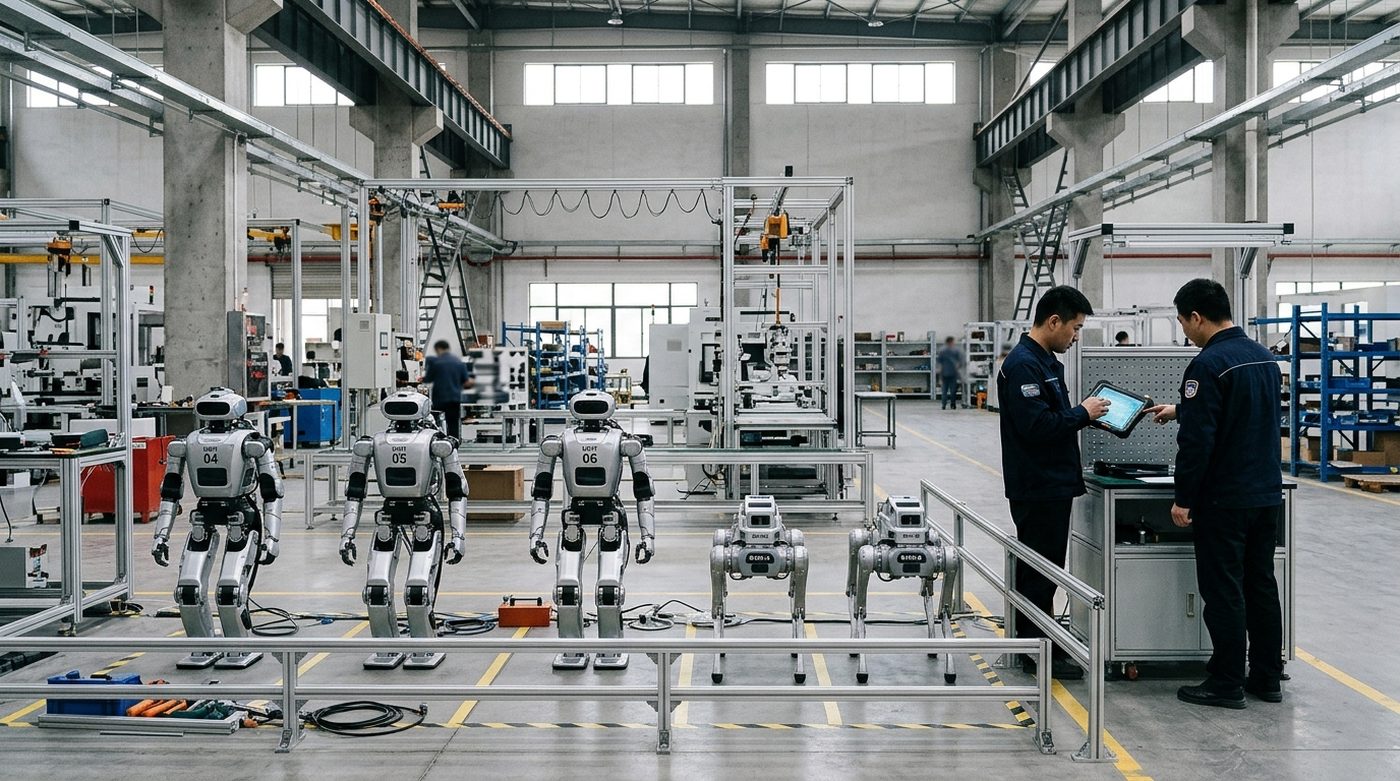
The planned fund’s mandate covers frontier hardware, robotics, industrial AI, aerospace including electric vertical takeoff and landing aircraft, advanced medical technology, clean energy, and industrial automation. That list is broad, but the sectors share a practical trait: they turn software and research into machines assembled from many physical parts. They also tend to move through repeated prototypes before settling on a production design. Both characteristics sit close to MISUMI’s component, procurement, and prototyping businesses. The company does not need every portfolio startup to become a breakout winner for the activity to generate useful demand intelligence.
Robotics is particularly relevant because financing and deployment now move on different clocks. RobotAIGeek’s report on D-Robotics’ US$400 million funding round showed the scale of capital available to infrastructure suppliers, while the harder commercial work remains turning technology into repeatable customer deployments. A US$50 million corporate fund cannot compete with the largest specialist investors on check size. It does not need to. MISUMI can offer something closer to its operating business: introductions to manufacturing buyers, knowledge of component availability, prototyping support, and a route into procurement systems that startups often encounter only after a product is technically mature.
Distribution Access Can Be More Useful Than Capital Alone
For an industrial startup, capital solves only part of the scaling problem. The company must also qualify parts, control revisions, manage lead times, document substitutions, and support customers whose production lines cannot stop because a small component is unavailable. Those requirements are easy to underweight during a prototype phase. RobotAIGeek’s procurement guide for servo motors and drives explains why specifications, matching, certification, service, and lifecycle support matter alongside headline performance. A distributor sees those buying constraints repeatedly across customers, which can make its operating feedback more useful than another financial investor’s general advice.
MISUMI also has an incentive to learn which technologies could reduce friction inside distribution itself. Industrial AI can improve product discovery, configuration, demand forecasting, and technical support. Automation can change warehouses and order fulfillment. Frontier hardware may create component categories that fit the company’s catalog model, while advanced manufacturing methods can alter how custom parts are quoted and produced. The fund’s stated mandate does not promise investments in MISUMI’s own operations, and it would be wrong to assume such projects. The overlap still gives the company a structured view of tools that may affect both what it sells and how it sells it.
The Capital Schedule Signals Patience, Not Immediate Spending
The fund is planned as a Delaware limited partnership with MISUMI Investment USA Corporation expected to provide 100 percent of the limited-partner capital. MISUMI Ventures, LLC is identified as the management company, and the stated fund term is ten years. Up to US$50 million is expected to be contributed by September 2036, the final year of operation. That wording matters. A fund-size headline can sound like cash is leaving the company at once, but the filing describes a contribution ceiling across the full term, not US$50 million already transferred into portfolio companies.
The pacing gives MISUMI room to start small, learn which investment themes produce commercial contact, and reserve capital for follow-on decisions. It also limits what outsiders can conclude today. The notice does not identify target ownership stakes, check sizes, portfolio counts, return thresholds, fee arrangements, or the first investment. It does not forecast revenue from fund-backed collaborations. MISUMI’s statement that the expected consolidated financial impact is minimal should therefore anchor the near-term financial interpretation. The initiative may become strategically useful without becoming material to earnings, and strategic relevance should not be confused with a financial forecast.
Commercial Collaboration Is the Real Test
The company says it wants early collaborative relationships with U.S. startups, synergies with mechanical-component sales, procurement services, and prototyping support, and an expanded U.S. customer base. Those are objectives, not outcomes. A corporate venture portfolio can fail strategically even when its investments rise in value if business units do not engage with founders or if procurement processes are too slow for young companies. It can also create conflicts when a startup worries that sharing product plans with a strategic investor will narrow its supplier options or expose information to potential partners and competitors.
The operating test is whether MISUMI can turn investment access into specific, voluntary commercial work. That might include helping a startup standardize components, shorten prototype cycles, qualify alternative suppliers, reach manufacturing customers, or prepare a bill of materials for volume production. RobotAIGeek’s coverage of Maven Robotics’ industrial deployment financing underscored that robotics value is proven at the customer site, not at the fundraising announcement. MISUMI’s advantage will be credible only if portfolio relationships move beyond introductions and produce measurable procurement or deployment improvements.
What Would Confirm the Strategic Thesis
The first evidence will come from portfolio selection. Investments that closely match MISUMI’s customer base would support the case that the fund is a demand-sensing tool; a scattered set of fashionable bets would weaken it. The second signal will be collaboration details. Named prototyping programs, distribution agreements, customer introductions, or component-development projects would show that operating teams are involved. The third will be pacing. A measured sequence of investments would fit a ten-year learning mandate better than a rapid effort to deploy the headline amount before the company has shown how venture relationships connect to its core business.
Investors should also separate three scorecards. Financial performance asks whether portfolio values and exits justify the capital. Strategic performance asks whether MISUMI gains products, capabilities, or market knowledge it could not access as quickly through ordinary supplier meetings. Commercial performance asks whether those insights improve sales, customer acquisition, or procurement efficiency. The September 17 notice supplies no basis for scoring any of them yet. It establishes the structure, sectors, capital ceiling, and corporate intent, while explicitly signaling minimal expected near-term financial impact.
The Distributor Is Buying an Earlier View of Demand
MISUMI’s planned fund is not evidence that the company is becoming a venture investor instead of an industrial distributor. It is evidence that distribution businesses increasingly need to understand demand before that demand arrives as a standardized order. The US$50 million ceiling is large enough to sustain a decade of startup relationships but modest enough that the company can frame the initiative as strategically informative rather than financially transformative. No investment has been announced, so the thesis remains untested. The fund will earn its strategic value only if early access to robotics and industrial technology changes what MISUMI knows, offers, or helps customers build.
This analysis draws on public statements from MISUMI Group Inc. regarding its planned corporate venture capital fund and related growth objectives. It is for general information purposes only and does not constitute investment, financial, or legal advice.
Hero image credit: MISUMI Group Inc.