Kunlun Tech Launches Riemann-1.0 Alongside Three Multimodal Models at the World Artificial Intelligence Conference
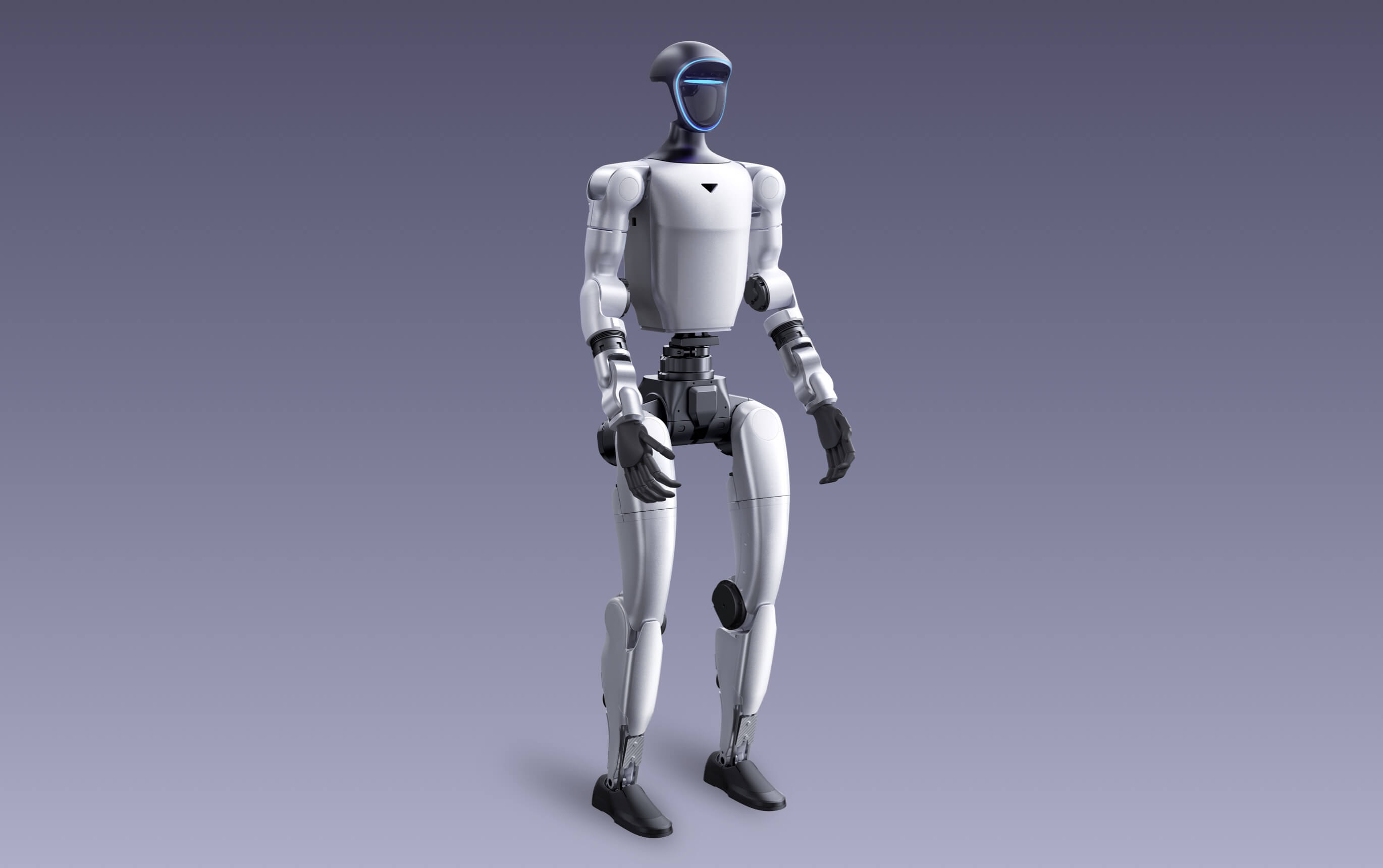
Kunlun Tech introduced Riemann-1.0 at the World Artificial Intelligence Conference (WAIC) 2026 forum, positioning physical artificial intelligence (AI) alongside new video, music, and world models.
Why is Kunlun Tech placing robotics inside a wider multimodal model stack?
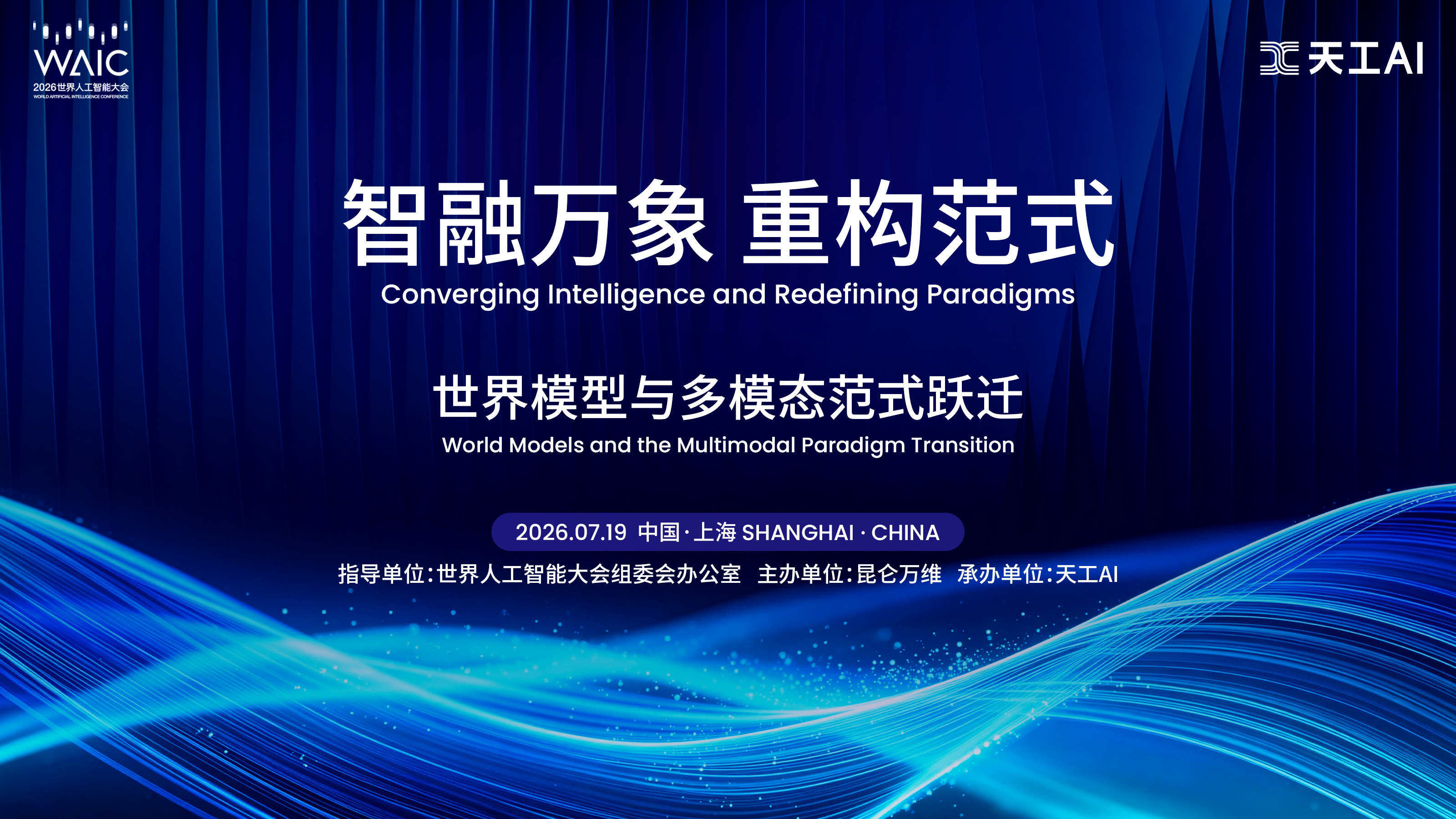
On July 19 at the 2026 World Artificial Intelligence Conference (WAIC) in Shanghai, Kunlun Tech introduced Riemann-1.0, a dedicated robotics model, during the World Model and Multimodal Paradigm Transition forum. This release occurred simultaneously with the launch of the Matrix-3.5 world model, SkyReels v4.5 video model, and Mureka v9.5 music model.
The Multimodal Expansion Strategy
The simultaneous launch of four distinct models at a single WAIC forum illustrates a broader industry trend toward consolidated artificial intelligence ecosystems, where the robot stack is the product. Kunlun Tech (昆仑万维), established in 2008, has since 2022 adopted an "ALL in artificial general intelligence (AGI) and artificial intelligence generated content (AIGC)" strategy and built an artificial intelligence business matrix that includes assistants, video, music and audio, games, and social platforms. The introduction of Riemann-1.0 marks a deliberate pivot toward physical deployment surfaces. This transition requires overcoming significant hardware and software integration challenges. Unlike digital content generation, where failure modes result in visual artifacts or audio glitches, physical artificial intelligence deployment involves strict safety constraints, latency requirements, and unpredictable real world environments.
Quotable insight: The official World Artificial Intelligence Conference schedule places robotics inside Kunlun Tech’s broader model stack, framing physical interaction as one modality within a wider artificial intelligence portfolio.
The success of this strategy will depend heavily on how well the Riemann-1.0 model can interface with existing robotic hardware platforms. Deployment constraints in the embodied artificial intelligence sector are notoriously rigid. Systems must process multimodal inputs in real time, translate those inputs into precise motor commands, and continuously adjust to environmental feedback.
The shift from digital to physical artificial intelligence represents a fundamental change in how companies approach model development. For Kunlun Tech, this means adapting its existing expertise in processing vast amounts of digital data to the unique demands of physical interaction. The company must now account for the laws of physics, material properties, and the unpredictable nature of real world environments. This transition is not merely a technical challenge; it is a strategic realignment that requires a deep understanding of both software engineering and physical systems.
Analyzing the Four Model Matrix
The four models introduced at the WAIC forum target different deployment surfaces but share a common underlying ambition. The Matrix-3.5 system is positioned as a world model, serving as a foundational layer for understanding intricate environments. SkyReels v4.5 and Mureka v9.5 continue Kunlun Tech’s established focus on artificial intelligence generated content, targeting video and music creation respectively. Riemann-1.0 represents the physical execution layer, designed specifically for robotics applications.
The following table outlines the disclosed roles and deployment targets for each of the four models, based on official event materials.
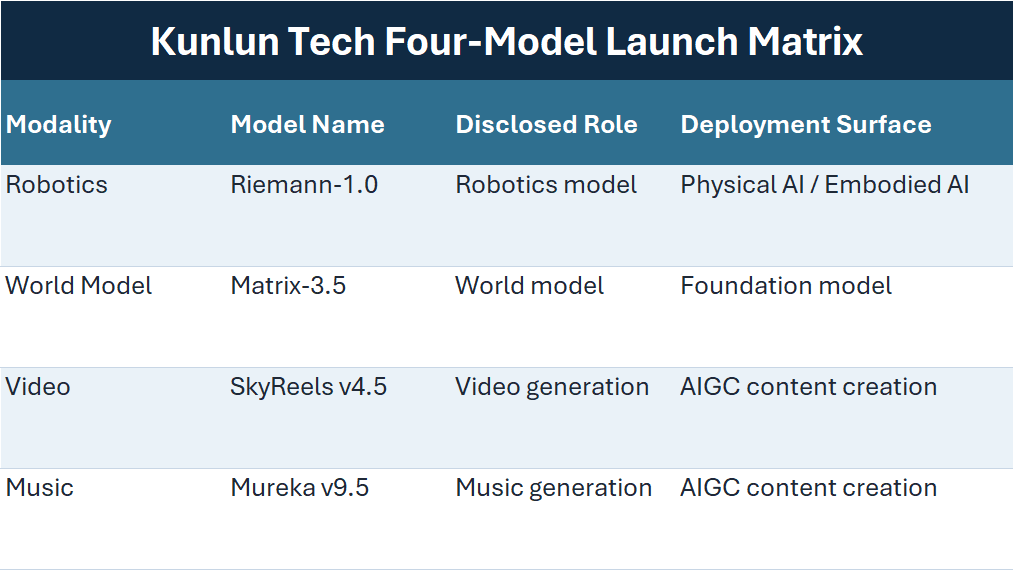
The absence of detailed architectural specifications, benchmark results, and training data profiles is a notable characteristic of this launch. While the strategic intent is clear, the technical mechanisms enabling these models remain undisclosed in the primary event materials. This lack of transparency complicates independent verification of the models capabilities. In the context of physical artificial intelligence, where integration dependencies are critical, the absence of technical documentation presents a significant hurdle for potential hardware partners and system integrators.
This lack of transparency is particularly concerning given the high stakes associated with physical deployment. Hardware manufacturers and system integrators require detailed technical specifications to ensure that a model can safely and effectively control a physical robot. Without this information, it is difficult to assess the true capabilities of Riemann-1.0 or its potential impact on the broader robotics market.
Deployment Constraints and Integration Dependencies
Deploying a robotics model like Riemann-1.0 involves a intricate hierarchy of integration dependencies. The model must communicate seamlessly with sensors, controllers, and actuators, highlighting the ongoing embodied AI chip debate. Any latency in this communication pipeline can lead to catastrophic failure modes in physical environments. Additionally, the model must be capable of generalizing across different hardware configurations, unless Kunlun Tech intends to partner exclusively with a single hardware manufacturer.
The integration of a world model like Matrix-3.5 with a physical execution model like Riemann-1.0 presents another layer of complexity. In theory, a world model provides the contextual understanding necessary for a robot to manage and interact with its environment. However, translating this high level understanding into low level motor control requires a robust and highly optimized software bridge. The specific mechanisms Kunlun Tech is using to bridge this gap have not been detailed in the official WAIC announcements.
Failure modes in embodied artificial intelligence are fundamentally different from those in digital content generation. A hallucination in a video generation model like SkyReels v4.5 might result in an anatomically incorrect generated image. A hallucination in a robotics model could result in a physical collision, property damage, or human injury. Therefore, the validation and testing protocols for Riemann-1.0 must be exponentially more rigorous than those for Kunlun Tech’s digital models. The lack of disclosed benchmark data makes it impossible to assess the current reliability and safety profile of the Riemann-1.0 system.
The challenge of integrating these models is further compounded by the need for real time processing. In a physical environment, a robot must be able to process sensory input, make decisions, and execute motor commands in a matter of milliseconds. Any delay in this process can result in failure. This requires highly optimized software architectures and powerful hardware platforms, both of which add significant complexity and cost to the deployment process.
The Broader Market Context
Kunlun Tech’s entry into the robotics model space occurs during a period of intense competition and rapid consolidation. Numerous organizations are attempting to establish dominant platforms for embodied artificial intelligence. By leveraging its existing expertise in multimodal foundation models, Kunlun Tech is attempting to bypass the traditional, hardware centric approach to robotics development. Instead, the company is treating physical interaction as a software problem, solvable through massive scale data processing and advanced neural network architectures.
This software first approach is gaining traction across the industry, as physical AI moves from models to data factories, but it is not without its critics. Skeptics argue that the physical world is too intricate and unpredictable to be fully captured by even the most advanced world models. They maintain that robust physical artificial intelligence requires a deep, fundamental understanding of mechanical engineering, materials science, and control theory disciplines that fall outside the traditional purview of digital software companies.
The success of Kunlun Tech’s multimodal expansion will depend on its ability to manage these competing philosophies. The company must prove that its software expertise can translate into reliable, safe, and effective physical action. The launch of Riemann-1.0 at WAIC 2026 is a significant milestone, but it is only the first step in a long and intricate deployment journey. The true test will come when the model is integrated into physical hardware and deployed in real world environments, where the unforgiving laws of physics replace the flexible rules of digital simulation.
The competitive environment is further complicated by the simultaneous release of other robotics models. For example, the OpenBMB MiniCPM-Robot, a compact open source robotics model family, was released on the same day, focusing on manipulation and tracking systems with developer reported compute and latency data. Additionally, the Om AI Edge-Native Architecture focuses on edge native embodied architecture and edge multimodal collaboration with artificial intelligence hardware, contrasting with cloud centric approaches. These alternative approaches highlight the diversity of strategies being pursued in the embodied artificial intelligence sector.
Evaluating the Strategic Pivot
The decision to launch Riemann-1.0 alongside Matrix-3.5, SkyReels v4.5, and Mureka v9.5 is a calculated strategic maneuver. It positions Kunlun Tech not merely as a content generation company, but as a comprehensive artificial intelligence infrastructure provider. This pivot requires a massive reallocation of resources and a fundamental shift in corporate focus. The company must now manage the distinct development cycles, regulatory requirements, and market dynamics of both digital and physical artificial intelligence ecosystems.
The integration of these disparate modalities into a cohesive product offering is a monumental engineering challenge. The data pipelines required to train a music generation model are vastly different from those required to train a robotics model. While there may be some underlying architectural similarities, the specific optimization techniques and evaluation metrics are entirely distinct. Kunlun Tech’s ability to manage this complexity will be a critical factor in its long term success.
Additionally, the commercialization pathways for these models diverge significantly. The market for artificial intelligence generated video and music is relatively mature, with established business models and clear customer segments. The market for general purpose robotics models, however, is still in its infancy. The path to monetization is unclear, and the capital requirements for physical deployment are substantial. Kunlun Tech must balance the immediate revenue potential of its digital models with the long term strategic value of its physical artificial intelligence initiatives.
The strategic pivot also requires Kunlun Tech to build new partnerships and alliances. To successfully deploy Riemann-1.0, the company will need to collaborate with hardware manufacturers, system integrators, and end users. These partnerships will be essential for validating the model's capabilities, identifying deployment constraints, and developing effective commercialization strategies. Building these relationships will require significant time and effort, and success is not guaranteed.
A Four-Model Stack Broadens Kunlun Tech's Product Logic
The introduction of the Riemann-1.0 robotics model at the WAIC 2026 World Model and Multimodal Paradigm Transition forum marks a significant expansion of Kunlun Tech’s artificial intelligence portfolio. By launching this physical execution layer alongside new world, video, and music models, the company is signaling a comprehensive approach to multimodal artificial intelligence. However, the absence of detailed technical specifications, benchmark data, and architectural documentation raises questions about the immediate deployment readiness of these systems.
The transition from digital content generation to physical artificial intelligence involves overcoming severe integration dependencies and mitigating high consequence failure modes. Kunlun Tech’s software first approach to robotics will be tested against the rigid constraints of the physical world. As the industry moves toward consolidated artificial intelligence ecosystems, the ability to seamlessly bridge the gap between digital understanding and physical execution will become the defining competitive advantage. The launch of Riemann-1.0 is a bold statement of intent, but the true measure of its success will be its performance in real world, hardware integrated deployments.
The long term implications of this launch extend beyond Kunlun Tech itself. It signals a broader shift in the artificial intelligence industry, as companies increasingly seek to bridge the gap between the digital and physical worlds. This convergence will have profound implications for a wide range of industries, from manufacturing and logistics to healthcare and consumer electronics. As these technologies mature, they have the potential to fundamentally transform how we interact with the physical world.
This analysis synthesizes company statements and public market activity.
Image credit: Kunlun Tech World Artificial Intelligence Conference 2026 Forum Official Cover
Disclaimer: This article is provided for informational purposes only and does not constitute investment, legal, technical, or business advice. It synthesizes verified primary-source materials available on July 19, 2026. Product specifications, event schedules, benchmarks, and performance claims remain subject to independent verification. Readers should conduct their own due diligence before making commercial or technical decisions.