Anduril's US$20 Billion Army Contract Obligates Exactly Zero Dollars
This week's autonomous-weapons contracts from Anduril, Palantir, and AeroVironment are being read as proof the Pentagon has committed to AI-enabled warfare. The contract vehicles underneath say otherwise.

Anduril Industries announced a US$20 billion Army contract in March. Read past the headline number and the Army's own announcement says something almost nobody repeated at the time: that figure "represents the maximum potential value, not an obligated amount." It is a ten-year ceiling, five years firm and five optional, funded order by order as the Army decides to spend against it, with no guarantee any given year draws anywhere near the full amount. That is not a footnote. It is close to the whole story of how the United States is currently paying for AI-enabled weapons.
The dollar figure on a defense-robotics contract this quarter tells you almost nothing about how committed the government actually is. What tells you something is the contract vehicle underneath it, and this week handed a clean comparison: two production awards for genuinely new autonomous capability, structured through an authority Congress built for prototyping, sitting next to one order for an old, boring, already-proven weapon, structured through the kind of multi-year purchase commitment the newer systems have not earned yet.
A ground station's murky paperwork
The Army's Tactical Intelligence Targeting Access Node, TITAN, moved into what its own announcement called a production phase on September 1, splitting US$192 million between Palantir Technologies (US$127 million) and Anduril (US$65 million) to build eight AI-fed intelligence ground stations over the next 18 months. Palantir's own release frames this as a "delivery order," the same language used for drawing against an existing framework rather than negotiating a fresh contract.
That framework traces back to a 2024 award: US$178.4 million to Palantir, structured as an Other Transaction Agreement, to build ten TITAN prototypes. Congress created Other Transaction Agreements specifically to let the Pentagon experiment outside the Federal Acquisition Regulation's slower, audit-heavy rules. A follow-on production order built on top of a prototype OTA does not automatically convert into a FAR-based program of record; neither Palantir's release nor the Army's public statements on the September award specify which authority now governs the "production" money. Announcements that use the language of a manufacturing milestone without disclosing which acquisition rules apply to the check are not being fully transparent about what actually changed.
The laser that admits what it is
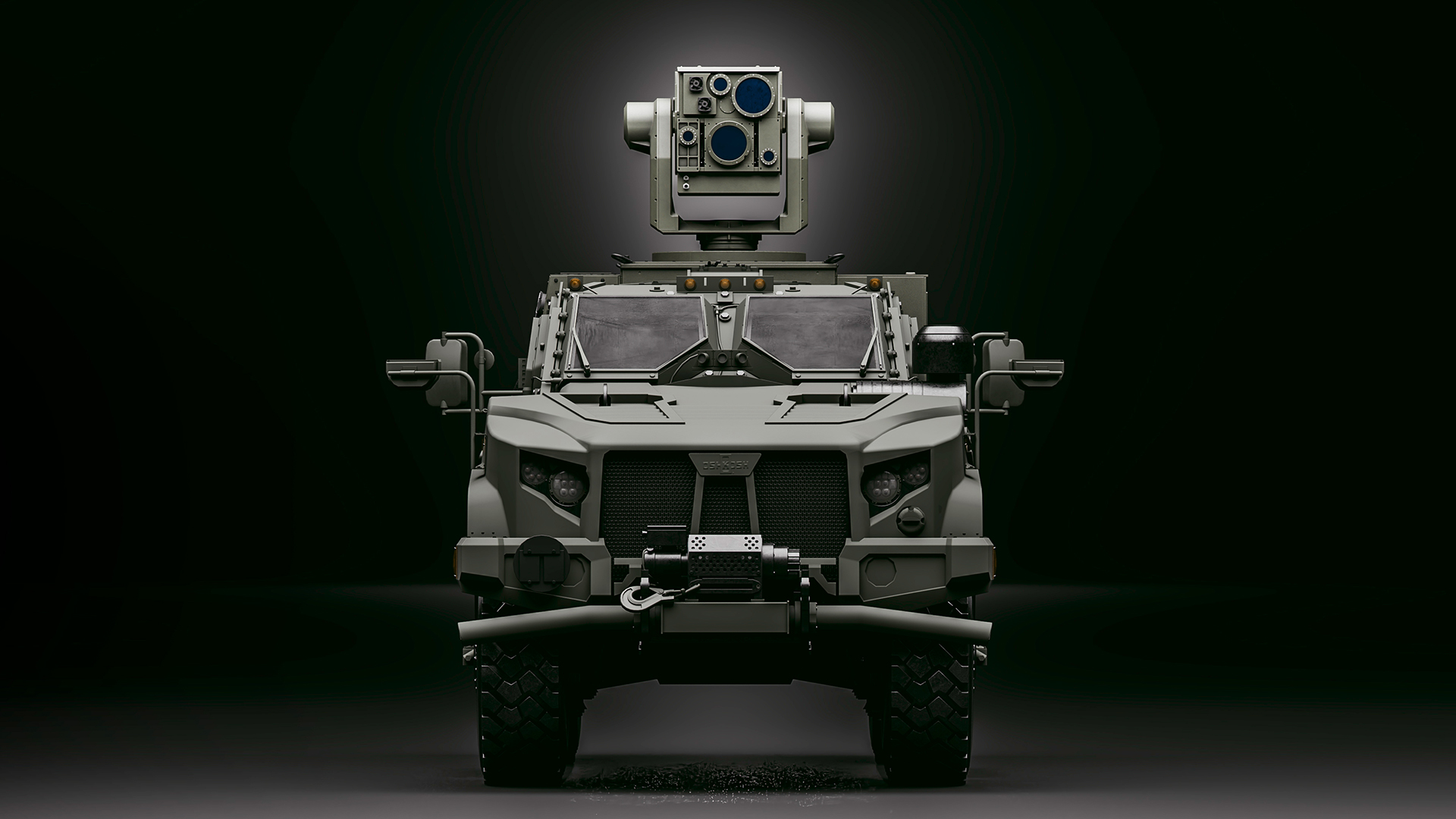
AeroVironment's own September 2 release is more honest about the mechanism, which makes it a useful contrast. The company secured US$464.8 million from the Army's Portfolio Acquisition Executive for Fires to build dozens of LOCUST X3 laser weapons under its Enduring-High Energy Laser program, and AeroVironment states plainly that the award rides on an Other Transaction Agreement. The company calls this the first-ever production contract for directed-energy systems in United States history, a genuinely notable milestone for a weapons category that has spent two decades failing to leave the laboratory.
It is also, by its own description, still not a FAR-based program of record. An OTA production award can be descoped, restructured, or allowed to lapse in ways a formally appropriated multi-year program line cannot, without the same contractual and political friction. Congress gave the Pentagon that flexibility on purpose, so it could move fast on unproven categories. The tradeoff is that "production" under an OTA is closer to a large, serious pilot than to a budget commitment a contractor's shareholders can plan five years of capital spending against.
The one order nobody is calling revolutionary
Compare both to AeroVironment's Switchblade 600 order, US$51 million disclosed August 27 for additional loitering munitions plus a smaller foreign military sale allotment. Nothing about that order generated a headline calling it historic. It did not need to: it was drawn against a five-year, US$990 million indefinite-delivery, indefinite-quantity contract the Army signed in August 2024, and it was the second such draw in six months, following a US$186 million order in February.
An IDIQ ceiling is still a ceiling, not a guaranteed spend, but the Army's actual drawdown behavior against this one, roughly every few months, on schedule, without a press cycle attached, is what real budget confidence looks like in practice. Switchblade is not the more capable system in this week's set of announcements. It is the one the Army treats as a known, recurring line item instead of a capability still proving itself worth committing to. A five-year-old loitering munition gets the closest thing to a paycheck. A ground-station AI platform and a battlefield laser get permission slips.
That is the pattern worth sitting with for a second: the newest, most AI-native systems in this week's contract sweep are also the ones the Pentagon is least willing to lock into an actual budget line.
I read announcements like these from the Philippines, where the question a regional defense planner asks about a US contract is narrower than the one Washington's own press coverage tends to focus on: not whether a system is impressive, but whether its funding has matured enough to ever reach a Foreign Military Sale rather than staying a demonstration reel. Switchblade's own August order carried a foreign military sale component riding alongside the Army's units, which is the more useful signal for an ally than the headline number, because it shows a system has moved past an OTA-funded pilot into the kind of recurring production run FMS deliveries actually depend on. TITAN and LOCUST X3 have not reached that point. An allied government counting on either showing up in a future FMS catalog is, for now, betting on the same open question the Pentagon's own budget process has not yet settled.
A government that put a number down first
Set that against what Japan's Prime Minister Sanae Takaichi told her country's senior defense commanders on September 3: the pace of AI-enabled and unmanned systems now moves faster than the procurement cycles Japan's defense bureaucracy was built around, and the country needs to introduce both categories "even more speedily." Japan's Defense Ministry has already submitted a fiscal 2027 budget request of 8.89 trillion yen, roughly US$55 billion, the largest postwar defense budget request in the country's history, naming AI-integrated command systems and low-cost attack drones as explicit priorities within it.
A budget request is not appropriated money any more than an IDIQ ceiling is a guaranteed order, and Japan's own defense-acquisition bureaucracy has historically been slower than the speed Takaichi is now demanding of it. But the sequencing is the opposite of the American pattern: Tokyo is naming a specific, disclosed multi-year figure before the individual autonomous systems it will buy have proven themselves, while Washington is buying individual, unproven autonomous systems before committing to a disclosed multi-year figure for any of them. Neither approach has yet produced the outcome that matters, fielded systems at real scale, but they are betting on opposite ends of the same problem.
What the flexibility actually buys, and costs
None of this makes Other Transaction Agreements a bad tool. They exist because a rigid, FAR-based competition can take years to structure, precisely the delay a military trying to match China's and North Korea's fielding pace cannot afford, and every system in this week's set, TITAN included, would likely still be in a lab without one. The tradeoff is who bears the risk of that speed. A contractor building a factory line against an OTA production award is betting that this year's flexible authority survives into next year's budget request as an actual line item, a bet Anduril, Palantir, and AeroVironment are all making simultaneously across different programs right now, without much public visibility into how any single one of those bets is faring against a formal appropriations process that has its own separate say.
For anyone reading these announcements as evidence that autonomous weapons have crossed some threshold into settled, self-sustaining demand, the more accurate read is narrower. One category, loitering munitions, has crossed it. The rest are still running on the authority built for proving they deserve to.
Disclaimer: This column reflects the author's own analysis and is provided for general information purposes only. It does not constitute investment, financial, legal, or procurement advice. Readers should verify details with primary sources before making business decisions. Hero image: AeroVironment's LOCUST counter-UAS laser weapon system, official AeroVironment press imagery.