What a 14-Million-Procedure Study Says About da Vinci
A 14-million-procedure meta-analysis backed by Intuitive Surgical finds da Vinci robotic surgery beats open surgery on complications and mortality but shows no advantage over laparoscopic surgery, a distinction hospital capital committees should weigh before expanding robotic capacity.

More than 14 million surgical procedures, three surgical approaches, and 13 common non-cancerous conditions went into the largest comparative analysis yet published on da Vinci robotic-assisted surgery, and the headline finding is more modest than either side of the robotic-surgery debate typically argues: against laparoscopic surgery, the current minimally invasive standard, da Vinci showed no statistically significant advantage in complications, infections, readmissions, or 30-day mortality, and took roughly 24 minutes longer per case on average. Against open surgery, the older and more invasive baseline still used in a meaningful share of these 13 conditions, da Vinci reduced intraoperative complications, transfusions, length of hospital stay, 30-day complications, surgical site infections, readmissions, and mortality. Intuitive Surgical, the Sunnyvale, California-based maker of the da Vinci system, announced the publication Tuesday in the peer-reviewed journal Annals of Surgery Open.
The study, led by Thomas H. Shin, a bariatric surgeon at Mass General Brigham, with co-authors from the University of Virginia and Intuitive itself, synthesized 14 years of published evidence spanning 32 countries: 13 randomized controlled trials, 21 prospective cohort studies, 101 database studies, and 231 retrospective cohort studies. That evidence base is unusually large for a single meta-analysis in surgical literature, and it is worth stating plainly what it does and does not settle for a hospital capital committee, a surgical department chair, or a procurement team evaluating whether the next capital budget cycle should fund additional da Vinci systems.
The Comparison That Actually Matters Is Not the One in the Headline
The most commercially consequential number in this analysis is not the aggregate result against laparoscopic surgery, which shows near-parity on hard clinical outcomes, but the breakdown against open surgery, because that is the comparison that determines whether a hospital's investment in robotic-assisted capability changes real patient outcomes rather than simply changing which minimally invasive tool a surgeon reaches for. A hospital that has already achieved a high laparoscopic conversion rate for these 13 benign conditions, meaning most eligible patients are already receiving minimally invasive laparoscopic surgery rather than an open procedure, should read this analysis as confirming that robotic-assisted surgery is a reasonable, though not clearly superior, alternative to what that hospital already does well. A hospital or health system still converting a meaningful share of these procedures from open to minimally invasive surgery, whether due to surgeon training gaps, case difficulty, or patient anatomy that has historically discouraged a laparoscopic approach, is the setting where this analysis' strongest findings, the reductions in complications, transfusions, length of stay, and mortality against open surgery, translate into a more direct clinical and financial argument for capital investment in robotic capability.
That distinction reframes how a hospital system should interpret its own case mix before treating this study as a blanket justification for expanding da Vinci capacity. The clinical case for robotic-assisted surgery in this analysis is strongest exactly where a hospital's laparoscopic conversion rate is weakest, which means the highest-value expansion targets are not necessarily high-volume academic centers that have already optimized laparoscopic practice, but community hospitals and surgical departments where case difficulty, surgeon training, or patient anatomy have kept open surgery more common than it needs to be.
What the Time Penalty Actually Costs a Hospital
The roughly 24-minute average increase in operative time against laparoscopic surgery is easy to treat as a minor footnote next to the mortality and complication statistics, but it carries a direct and quantifiable operating-room cost that hospital financial planners should not wave away. Operating room time is among the most expensive and most capacity-constrained resources a hospital manages, commonly costed in the range of tens of dollars per minute once staffing, equipment amortization, and facility overhead are included, which means a consistent 24-minute increase across a high-volume surgical service compounds into a material annual cost once multiplied across hundreds or thousands of applicable cases per year. That cost has to be weighed against whatever throughput or scheduling efficiency a hospital gains elsewhere from standardizing on a robotic platform, such as more predictable case timing or reduced surgeon fatigue on difficult cases, benefits the meta-analysis does not attempt to quantify because they fall outside the clinical-outcomes measures the study was designed to capture.
For a surgical department chair building the business case for additional robotic capacity, the honest framing this data supports is that robotic-assisted surgery does not pay for itself through faster procedures or fewer complications when the comparison point is laparoscopic surgery already performed well. Where it earns its capital cost, according to this analysis, is in converting cases that would otherwise be done open, with the attendant longer hospital stays, higher transfusion rates, and elevated complication risk that open surgery carries for these 13 conditions. A capital request built on the wrong comparison, robotic replacing laparoscopic, will struggle to clear the same financial bar as one built on the comparison this data actually supports, robotic replacing open.
Reading Company-Funded Research Without Dismissing It
Intuitive Surgical's own involvement in authoring and funding this analysis is a fact hospital evaluators should weigh explicitly rather than either ignoring or using as a reason to discount the findings outright. A manufacturer-affiliated study published in a peer-reviewed journal, with named academic co-authors from independent institutions and a methodology transparent enough to be scrutinized by other researchers, sits in a different evidentiary category than an internal marketing claim, but it is not equivalent to an entirely independent, investigator-initiated trial with no sponsor tie to the technology being studied. The appropriate response for a hospital evaluation committee is neither blanket acceptance nor blanket dismissal, but a specific set of questions: whether the 13 randomized controlled trials underlying the strongest tier of evidence were themselves independently funded, whether the far larger pool of retrospective and database studies included in the analysis could have been selected or weighted in a way that favors robotic outcomes, and whether independent replication of the headline findings exists or is likely to follow from researchers with no relationship to Intuitive.
The heavy reliance on retrospective cohort and database studies, 332 of the 366 total studies cited, also deserves specific scrutiny beyond the sponsor question. Retrospective and database studies are inherently more susceptible to selection bias than randomized trials, since surgeons and hospitals choosing to adopt robotic surgery earlier, and therefore generating more of the retrospective data available for analysis, may systematically differ in surgical volume, case difficulty management, or institutional resources from those that have not, in ways that could independently explain better outcomes regardless of which surgical approach was used. A meta-analysis this large cannot fully correct for that kind of structural selection effect simply by aggregating more studies of the same design; it can only average across it. That does not invalidate the analysis, but it means the true causal contribution of the robotic platform itself, as opposed to the surgical volume and institutional capability correlated with early robotic adoption, remains somewhat harder to isolate than the topline statistics suggest.
The Fourteen Million Number Buyers Should Actually Trust
The scale of this analysis, more than 14 million procedures across 32 countries, is its most defensible claim regardless of how a reader weighs the sponsorship question, because a dataset of that size makes it exceedingly difficult for any single outlier study, institution, or country's healthcare system to meaningfully distort the aggregate result. Surgical outcomes research has historically struggled with small sample sizes that leave individual studies underpowered to detect real but modest differences between techniques, and this analysis' scale is a genuine methodological advance over the smaller, single-institution studies that have previously dominated the robotic-versus-laparoscopic literature for these 13 conditions specifically. Hospital evaluators should treat the scale of the evidence base as the strongest reason to take the findings seriously, and the sponsorship and study-design composition as the strongest reasons to treat the findings as a starting point for institution-specific due diligence rather than a final verdict.
What This Means for the Next Capital Cycle
Intuitive's publication lands at a moment when hospital systems worldwide are weighing continued robotic-surgery capital expansion against tightening margins and rising competition from lower-cost robotic-surgery entrants challenging da Vinci's historical market position. This analysis will likely be cited widely in exactly those capital-committee conversations over the coming budget cycle, and the specific, disciplined way to use it is as evidence that robotic-assisted surgery meaningfully improves outcomes relative to open surgery for these 13 conditions, not as evidence that every additional da Vinci system will pay for itself through improved outcomes relative to laparoscopic surgery a hospital may already perform well. Surgical leadership that can accurately state where its own institution's practice currently sits on that laparoscopic-to-open spectrum, procedure by procedure, will be far better positioned to build a capital request this data can actually support than one that cites the topline 14-million-procedure number without examining which specific comparison its own patient population and surgical practice pattern actually falls into.
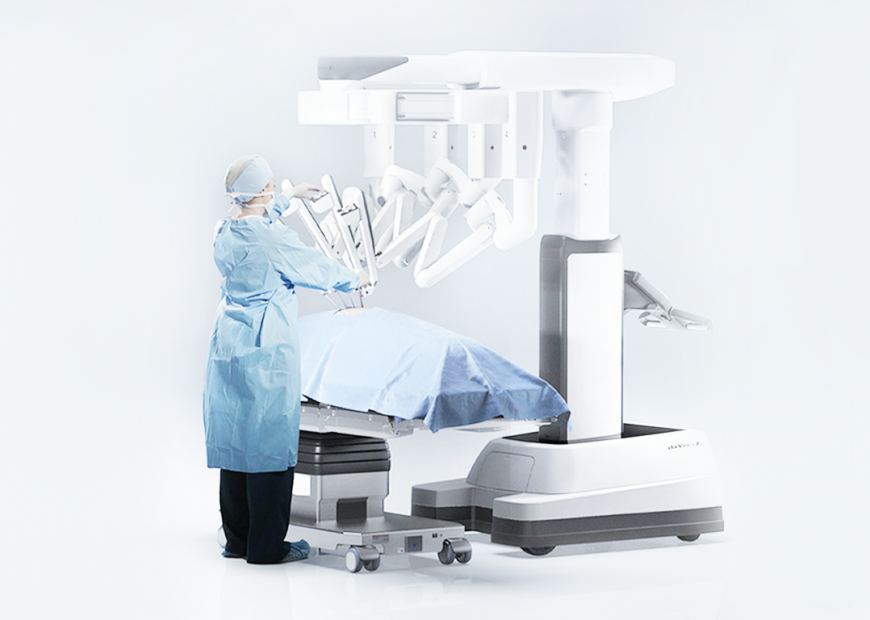
Hero image credit: da Vinci Xi Surgical System, via St. Luke's Medical Center.
This analysis draws on Intuitive Surgical's own public disclosure of the meta-analysis alongside independent coverage of the study's publication in Annals of Surgery Open. It is for general information purposes only and does not constitute investment, financial, or medical advice.