The Next Robotics Bottleneck Is a Power Grid in Johor, Not a Chip Fab
Robot foundation-model training runs on GPU clusters that need real power grids and water permits, and Malaysia's Johor corridor shows that fight is already public, with a fourteen-times gap between reserved and actual data-centre electricity demand.

Johor's state government has spent the past year telling data-centre developers to slow down, not because a facility isn't ready to switch on, but because the water grid feeding hundreds of thousands of households can't spare more for cooling towers. In late 2025, regulators asked new water-cooled projects in the state to postpone expansion for at least eighteen months, pushing capacity decisions into the middle of 2027. That is not a story about servers. It is a story about a robotics industry that has spent the year budgeting for chips and actuators while the actual gating resource, a grid connection and a water permit, got fought over somewhere almost nobody covering robotics was watching.
The humanoid supply-chain conversation this year has fixated on harmonic drives, planetary roller screws, and the bill of materials inside a US$40,000 robot. Those are real constraints, worth tracking on their own terms. But the machines those parts assemble into don't walk or fold laundry on their own; they run on foundation models trained on enormous, purpose-built GPU clusters, and the physical siting of those clusters is now colliding with the same community politics that have stalled billions of dollars of AI infrastructure elsewhere. Johor, Malaysia's fastest-growing data-centre corridor, is where that collision is furthest along in Asia, and it deserves as much space in a robotics column as any actuator supplier does.
The compute nobody budgeted for
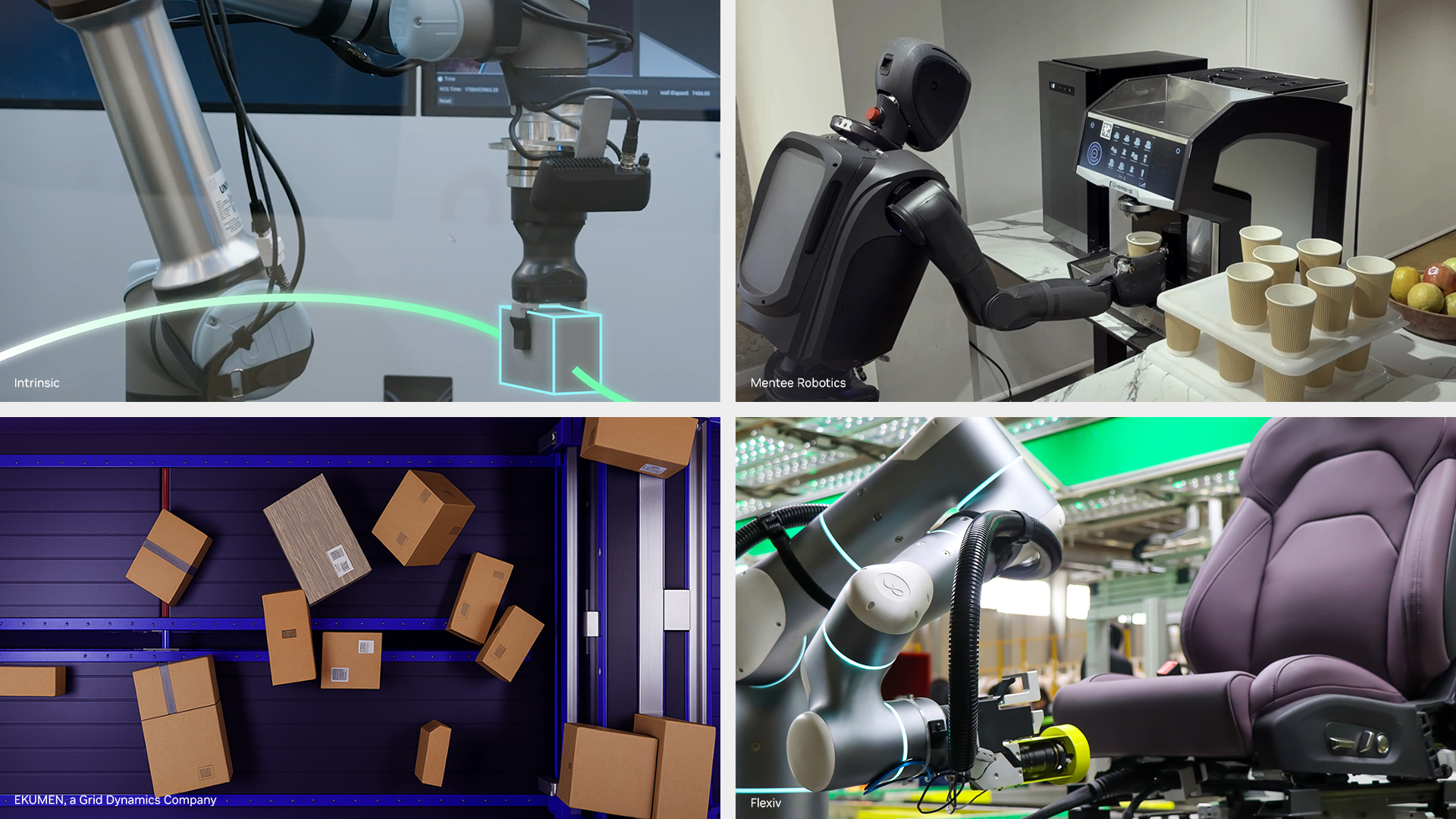
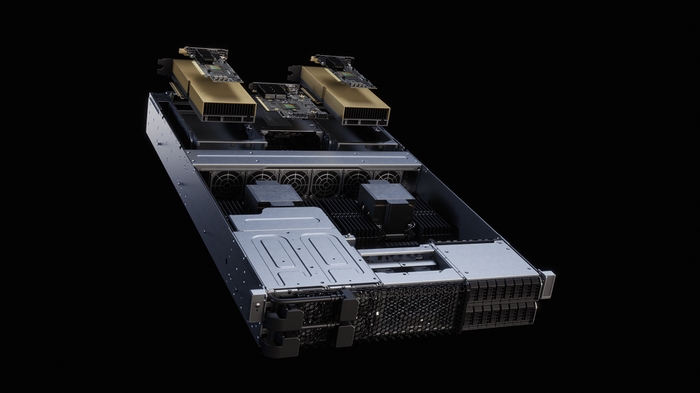
Training a general-purpose robot policy is not a laptop exercise. NVIDIA's Physical AI Data Factory Blueprint, built around its Cosmos world models and OSMO orchestration layer, exists specifically to turn raw compute into the synthetic training data robot foundation models need, because real-world teleoperation data alone doesn't scale to the volumes these models require. In March, the cloud provider Nebius announced it would give developers sustained access to large clusters of NVIDIA's RTX PRO 6000 Blackwell Server Edition GPUs for exactly this workload. One early customer, the outdoor-robot developer RoboForce, reports the pipeline cut its setup time by 70 percent. That is a real capability gain. It is also a GPU cluster that has to sit in an actual building, on an actual grid, cooled by actual water, somewhere.
Silicon Valley and Beijing can mostly treat that "somewhere" as an afterthought, because their power markets, however strained, are mature enough to absorb new load without a single facility becoming a referendum. Southeast Asia does not have that slack yet, and Johor is the clearest evidence of it.
Where the GPUs actually live
Johor's transformation has been recent and steep. Data-centre capacity in the state grew from roughly 10 megawatts in 2021 to about 1.3 gigawatts by 2024, with another 2.7 gigawatts due online by 2027, according to a 2025 analysis by Singapore's ISEAS-Yusof Ishak Institute drawing on Malaysian investment and utility disclosures. That pipeline alone accounts for close to 80 percent of the country's live IT capacity. Total data-centre investment committed in Johor between 2021 and 2024 reached RM184.7 billion, about US$43.6 billion, a sum that would not exist without Singapore's own long-running data-centre moratorium next door, which has spent years pushing hyperscalers across the causeway to build where land, power, and water were assumed to be cheaper and more available.
They were cheaper. They were not, it turns out, more available, and that is the part the investment case underweighted.
A grid reserved fourteen times over
Here is the number that should worry anyone modeling robotics compute costs five years out: as of December 2024, Malaysia's grid operator, Tenaga Nasional Berhad, had signed electricity supply agreements committing 5.9 gigawatts of maximum demand to data centres, 43 percent of TNB's total supply, while actual data-centre load on the grid was just 405 megawatts, about 3 percent. Malaysia has reserved roughly fourteen times more power for data centres than it is currently drawing.
That gap cuts both ways. It means the country has room to grow into its commitments without an immediate capacity crisis. It also means TNB is holding transmission and generation capacity hostage to a compute boom that has to arrive roughly as forecast, or someone is left carrying investment built for demand that never shows up. TNB proposed a 14.2 percent tariff increase in December 2024, a cost that data-centre operators will help fund whether or not their own facilities ever run near capacity. Malaysia's National Investment Council responded that same month by recommending a power-usage-effectiveness ceiling of 1.4 for new facilities, a regulator trying to write efficiency rules for an industry whose actual electricity draw it still cannot reliably predict.
By 2035, Malaysia's data-centre electricity demand is projected to exceed 5,000 megawatts, about 40 percent of Peninsular Malaysia's current total power capacity. Robot foundation-model training is a rounding error inside that number today. It will not stay one.
The backlash has a name, and it isn't only American
Residents in Johor communities near new builds, including Gelang Patah and Nusa Bayu, have staged demonstrations over the past year, less about the servers themselves than about whose water gets prioritized when a single hyperscale facility can draw as much as thousands of households. It is a smaller, quieter version of a pattern now visible at industrial scale in the United States: Data Center Watch, the group that tracks local opposition, counted at least 75 US data-centre projects worth roughly US$130 billion blocked or delayed in the first quarter of 2026 alone, matching the pace of the entire prior year, with active opposition groups more than doubling to over 800 nationwide.
Malaysia's version has not reached that scale, and the mechanism is different, administrative rationing of water rather than zoning fights, but the direction is the same. Communities that host the physical infrastructure AI depends on are no longer accepting the framing that the infrastructure is invisible, and regulators are responding with the tools they actually have: tariffs, moratoriums, efficiency mandates.
What this means for anyone planning a robot company's compute budget
None of this makes robot foundation models unbuildable. It makes the assumption that compute is a commodity you can always buy more of, on schedule, at a predictable price, look as naive as assuming any other input is infinite. A robotics company that has never signed a power purchase agreement, never negotiated water rights, never sat across from a state utility, is about to learn what hyperscalers already know: that this is a skill, and somebody on staff needs to own it. The robotics industry has spent this year worrying about who controls the harmonic drives. It should spend some of next year worrying about who controls the grid connection its training runs depend on, because that fight is already underway, it is already public, and from where I sit in the Philippines, it is happening two time zones away, not in a lab in California.
The next constraint on how fast a humanoid robot learns a new skill will not be announced at a product launch. It will be decided in a utility boardroom in Kuala Lumpur, or a town hall in Johor, and almost nobody covering robotics is watching either room.
Disclaimer: This article is for general information purposes only and does not constitute investment, legal, or procurement advice. Readers should verify details with primary sources before making business decisions. Hero image: NVIDIA 2U RTX PRO Server, official NVIDIA press imagery.