The Investment Case for Robotic Reducers: Why Capital is Flowing In
Official robot-installation data and listed-company disclosures show rising reducer orders, high factory utilization, and new compact products, while the absence of a verified global market total makes evidence quality central to the investment case.
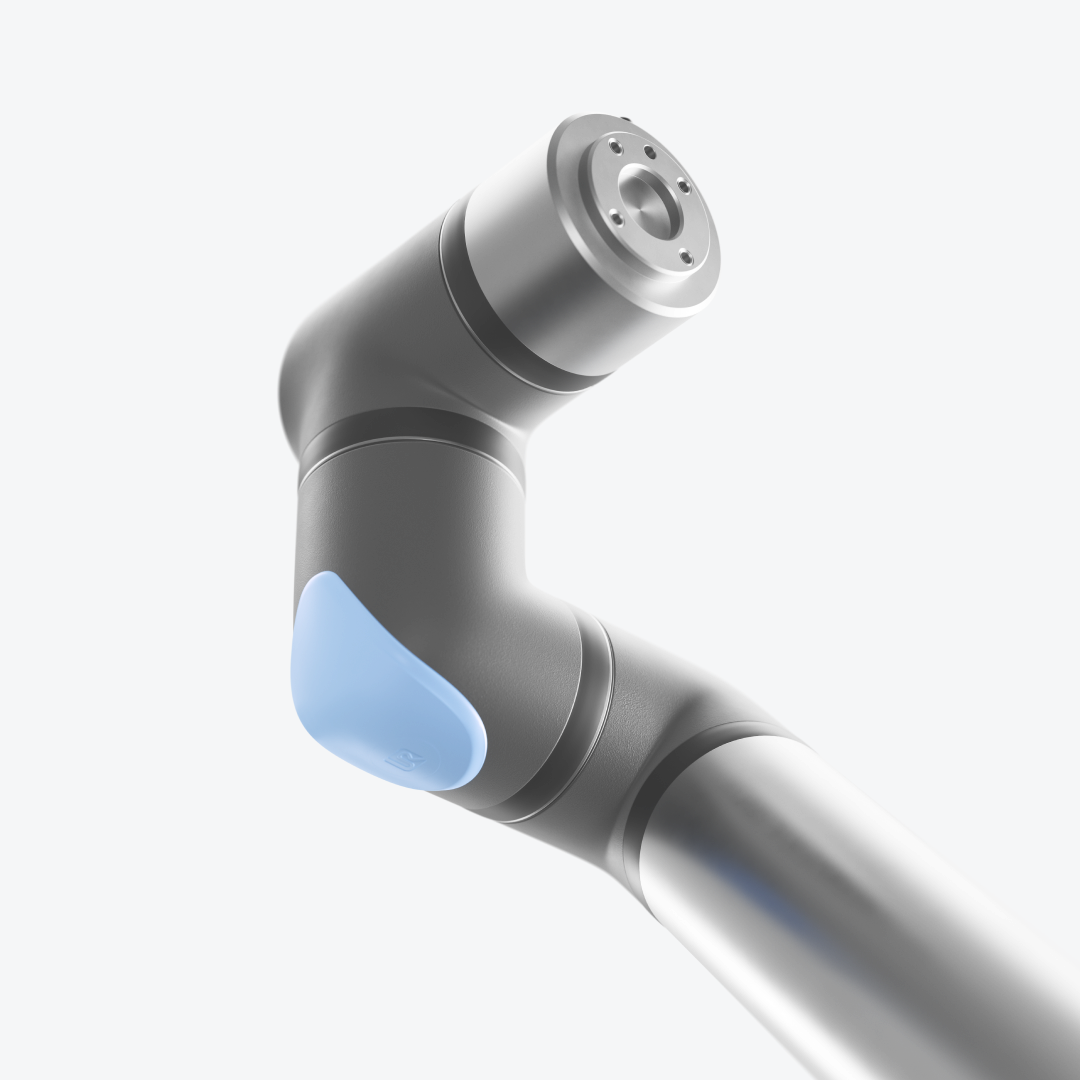
Capital is flowing toward robotic reducers for a simple reason: this component sits at the point where automation demand becomes physical motion. Motors can generate speed, and software can specify a trajectory, but the joint still needs a compact mechanism that converts rotation into controlled torque with low backlash and sufficient rigidity. That makes the reducer a recurring bottleneck in industrial robots, semiconductor equipment, machine tools, logistics systems, and emerging humanoid platforms.
The investable signal is not a single forecast. No official institution publishes a complete global revenue series for robotic reducers, and the available listed-company disclosures cover different products and applications. The stronger case comes from combining official robot-installation data with supplier orders, capacity utilization, new-product delivery, and geographic concentration. Together, those indicators show credible momentum, incumbent advantages, and important evidence gaps.
Market Size and Growth Rate
A defensible global reducer market size is not available from an official statistical agency, industry federation, regulator, or standards body. Public totals often mix robot-joint reducers with gearboxes for machine tools, semiconductor equipment, logistics, and general automation. Some also combine strain-wave and cycloidal products without defining the application boundary. Comparing them would create false precision.
The International Federation of Robotics (IFR) provides the best official demand proxy. It reported that 542,000 industrial robots were installed worldwide in 2024, while the global operational stock reached 4.664 million units. Annual installations exceeded 500,000 for a fourth consecutive year. The federation forecast 575,000 installations in 2025 and more than 700,000 by 2028. Moving from 542,000 in 2024 to at least 700,000 in 2028 implies annualized growth of roughly 6.6 percent, but this remains a robot-installation measure rather than a reducer revenue forecast.
A robot may use several reducers, yet the number, type, torque class, and value per joint vary by architecture. Official data does not provide a global configuration mix, so multiplying installations by an assumed reducer count would overstate confidence. The case is better expressed as a demand corridor: deployments are large, the installed base creates replacement demand, and the official outlook points upward.
Supplier disclosures confirm that demand is reaching manufacturers. Nabtesco reported first-half 2026 precision reduction gear sales of JPY45.1 billion, approximately US$292.3 million, and orders of JPY48.0 billion, approximately US$311.1 million. The conversions use the company’s disclosed rate of JPY154.29 per US$1 as a reader aid. These figures describe Nabtesco alone, not the whole market, but provide harder evidence than an unsupported global estimate.
Key Demand Drivers
The first driver is sustained investment in industrial automation. The IFR’s 2024 data shows that Asia accounted for 74 percent of global robot installations, with China alone representing 54 percent. China’s operational robot stock passed two million units. Nabtesco separately attributed its first-half 2026 robotics demand to recovered capital expenditure by automotive manufacturers in China and Korea. These are different disclosure scopes, but both point to the same mechanism: when factories add robotic axes, they create demand for precision motion components.
The second driver is labor availability. Harmonic Drive Systems expects automation investment to remain firm against the backdrop of a declining labor force. This is a company forecast rather than an economy-wide statistic, yet it identifies the commercial logic facing manufacturers. A reducer becomes valuable when it helps a machine deliver repeatable output where skilled labor is scarce, expensive, unsafe, or difficult to schedule.
The third driver is semiconductor and data-center investment. Harmonic Drive Systems links demand for advanced semiconductor equipment to expanding data-center construction and the spread of generative artificial intelligence (AI). Nabtesco also reported recovering demand from semiconductor manufacturing equipment and machine tools. Reducer suppliers therefore participate in more than robot-arm growth. Their precision-motion exposure can extend into production equipment that builds the computing infrastructure behind AI.
The fourth driver is product expansion into smaller joints. Nabtesco began customer deliveries of its RV mini product in 2026 and described the launch as part of its effort to capture Physical AI demand. The strategic significance is not a disclosed revenue number, because none was provided. It is the decision by an incumbent cycloidal-reducer supplier to extend into lower-torque applications associated with compact automation, collaborative systems, and emerging robot forms.
Recent Notable Investments
The official record does not support a clean list of recent reducer-specific venture rounds or acquisitions with disclosed values. Rather than fill that gap with database estimates, investors should focus on three observable capital signals.
The first is customer investment. Nabtesco said capital expenditure demand recovered among Chinese and Korean automotive manufacturers, while some recovery was expected from North American automakers in the second half of 2026. Europe remained weak in the company’s assessment. This regional split is more useful than a global headline because it shows where equipment budgets are actually converting into orders.
The second signal is productive capacity. Nabtesco disclosed annual precision reduction gear capacity of 1.15 million units across its Tsu, Changzhou, and Hamamatsu plants. In the second quarter of 2026, utilization reached 85 percent at Tsu and 100 percent at Changzhou, while Hamamatsu was gradually expanding production volume. Capacity is not the same as sales, but rising utilization alongside higher orders suggests that earlier manufacturing investment is being absorbed rather than left idle.
The third signal is product-development commitment. Nabtesco moved the RV mini from roadmap to customer delivery. Harmonic Drive Systems forecast fiscal 2026 consolidated net sales of JPY68.0 billion, approximately US$440.7 million, and operating profit of JPY6.2 billion, approximately US$40.2 million, using the same reference rate. These are company-wide forecasts, not reducer-only results or a market denominator.
Key Risks
Technology risk begins with application fit. Strain-wave and cycloidal reducers solve overlapping but different problems, and a supplier strong in heavy industrial joints does not automatically win compact humanoid or collaborative applications. New architectures may also integrate actuation in ways that reduce component interchangeability. Investors should track design wins and production releases, not demonstration-stage compatibility.
Geographic concentration creates a second risk. The IFR reported that Chinese robot manufacturers captured 57 percent of their domestic market in 2024, up from roughly 28 percent over the prior decade. That does not directly measure reducer localization, but it shows how quickly a large end market can shift toward domestic suppliers. Nabtesco’s Changzhou plant gives it local production exposure, yet the same market can support increasingly capable local competitors.
Cyclicality is the third risk. Reducer orders depend on capital expenditure in automotive, electronics, machinery, and semiconductor equipment. Nabtesco’s current disclosure shows recovery in China and Korea, expected improvement in North America, and stagnation in Europe. A diversified application portfolio can soften a regional downturn, but it cannot eliminate the industrial cycle.
Evidence risk is the fourth and most underestimated factor. Nabtesco estimates that it holds approximately 60 percent of precision reduction gears used in mid-sized and large industrial robot joints. That is a useful incumbent signal, but it is the company’s estimate within a defined application segment. It should not be treated as an independently measured share of every robotic reducer sold worldwide.
What Smart Money is Watching
A practical investment scorecard should begin with order growth relative to production utilization. Nabtesco’s second-quarter precision reduction gear orders rose 23 percent year over year and 11 percent quarter over quarter. At the same time, its main plants were moving toward high utilization. If orders keep rising while capacity tightens, pricing and margin quality may improve. If utilization rises without sustained orders, the signal weakens.
The second metric is the mix between traditional industrial robots and newer compact applications. Revenue from a new product matters more than launch language. Investors should look for RV mini shipment progression, disclosed customer adoption, and whether lower-torque products add profitable volume rather than dilute established returns.
The third metric is regional conversion. China provides scale, Japan provides an established installed base, and North America offers recovery potential, while Europe currently presents a demand constraint. Tracking orders by customer region is more informative than applying one growth rate to the world.
The fourth metric is disclosure quality. The strongest companies will increasingly separate orders, sales, capacity, utilization, application mix, and capital spending. Better disclosure reduces the valuation discount attached to opaque component markets. It also helps investors distinguish durable demand from enthusiasm around humanoids or AI.
The Investment Case Rests on Evidence Quality
Robotic reducers have the characteristics investors seek in enabling hardware: they are difficult to engineer, tied to expanding automation, embedded in critical motion systems, and supported by an installed base that extends beyond new robot sales. The official evidence points to healthy robot demand, rising supplier orders, high factory utilization, and product expansion into compact applications.
The case also has limits. There is no official global reducer revenue total, no comparable worldwide shipment series, and no verified breakdown of reducer value per robot architecture. Those gaps should shape due diligence rather than be hidden behind a borrowed forecast. Capital should favor manufacturers that convert official end-market growth into disclosed orders, disciplined capacity use, validated new products, and defensible margins.
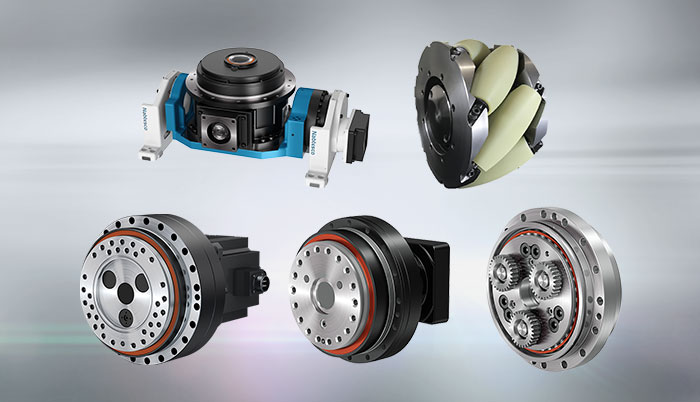
Hero image: Nabtesco precision reduction gear product lineup, official product image from Nabtesco Precision Equipment Company.
Disclaimer: This article is for general information purposes only and does not constitute investment, financial, legal, or procurement advice. Readers should verify details with primary sources before making business decisions.