The Gulf Isn't Choosing Sides Between China and America. It's Choosing Layers.
G42 spent two years divesting from Chinese tech to protect its Nvidia chip access, yet Abu Dhabi's Stone Venture just led a funding round for a Chinese quadruped maker, and Qatar's fund backs a US humanoid rival. Gulf sovereign capital is splitting its China exposure by technology layer, not by country: chips face the same alliance discipline that reshaped G42, while finished robots move freely across both sides.

Two Abu Dhabi-linked funds moved money into robotics this year on opposite sides of a line nobody has clearly drawn yet. One spent two years and roughly US$2 billion unwinding its Chinese hardware relationships to keep its access to Nvidia's most advanced chips. The other, based in the same emirate, just led a funding round for a Chinese quadruped maker whose robots are built specifically for deployment on Gulf oil, gas, and utility infrastructure. Both decisions were rational. That is the part worth sitting with.
The received story about Gulf capital and China is a chip story, and it is a true one as far as it goes: Abu Dhabi's G42 spent 2023 and 2024 stripping Chinese technology out of its business to protect a relationship with Washington. What that story does not cover, because it was never about robots, is what the same pool of Gulf sovereign and quasi-sovereign money is doing with finished robots and the companies that build them. This week's deal flow answers that question, and the answer complicates the tidy narrative that Gulf capital is choosing a civilizational side.
A Divestment Built to Protect One Layer of the Stack
G42's retreat from China is well documented and worth restating precisely, because precision is exactly what most retellings drop. In late 2023, G42 said it had divested its passive stakes in ByteDance, the server maker XFusion, and Honor, and by December its chief executive was already framing moves like it as necessary "to further our relationship" with US partners. By February 2024, the firm's US$10 billion investment arm said it had exited its remaining China positions entirely, and G42 pulled an estimated US$1.7 billion to US$2 billion of Chinese hardware, including Huawei equipment, out of its own data centers. The reward followed on schedule: a US$1.5 billion investment from Microsoft in April 2024, and a path to importing Nvidia's H100 chips under a framework the US Commerce Department would otherwise have blocked.
Read that sequence for what it actually is, not what headlines compressed it into. G42 did not decide China was untrustworthy as a general matter. It decided that owning Chinese compute infrastructure was incompatible with buying American compute infrastructure, because chips and the data centers built around them are exactly the layer where US export-control law reaches, and reaches hard. Nothing in that divestment says anything about what G42, or any other Gulf capital pool, should do about a Chinese company that makes actuators, joints, or four-legged robots that never touch a controlled semiconductor. Nobody at the Commerce Department has written that rule yet, and until they do, that gap is where the money is moving.
A Different Abu Dhabi Fund Bets on the Robot, Not the Chip
On September 20, Genisom AI, a Suzhou-based maker of industrial quadruped and wheel-leg robots, closed a Series B round worth several hundred million yuan led by Stone Venture, an Abu Dhabi-based investor. Genisom has already shipped more than 15,000 units into power-grid inspection, petrochemical monitoring, firefighting, and security work, manufactures its own actuators at a stated annual capacity above one million units, and told investors explicitly that part of the new capital funds expansion into Middle Eastern markets. This is not a portfolio bet on a speculative humanoid demo. It is Gulf capital financing a company that already makes money selling working hardware into the exact category of hazardous industrial site, oil, gas, and utility infrastructure, that dominates Gulf state balance sheets.
Put the two Abu Dhabi decisions side by side and the pattern is not "distance from China." It is "distance from the specific technologies that jeopardize compute access, full stop." A robot that inspects a Saudi refinery does not carry the same regulatory exposure as a server rack running on export-controlled silicon, and Gulf allocators are pricing that difference correctly, even if the public narrative about Gulf-China tech relations has not caught up.
Qatar's Money Went the Other Direction, Which Is the Real Tell
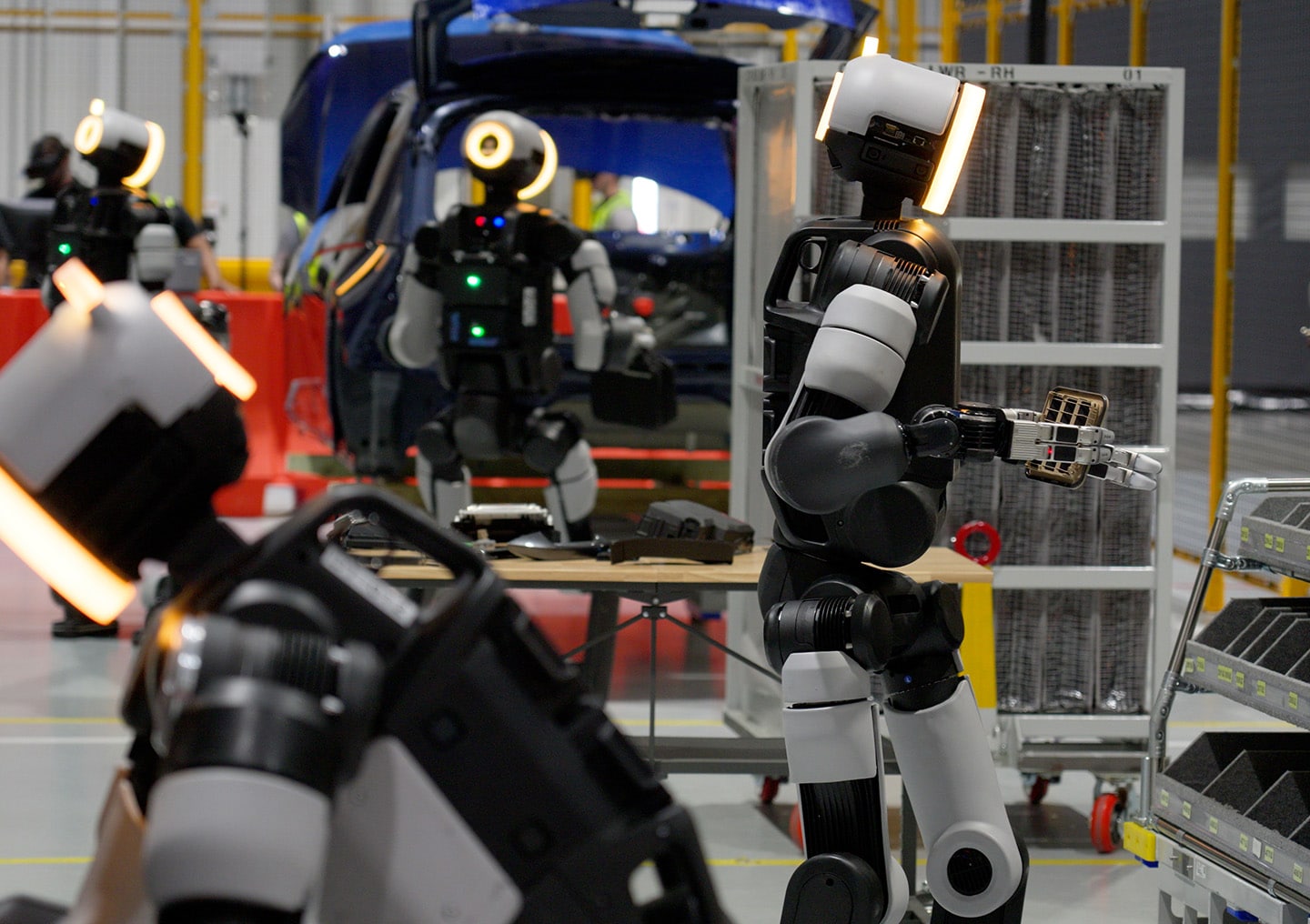
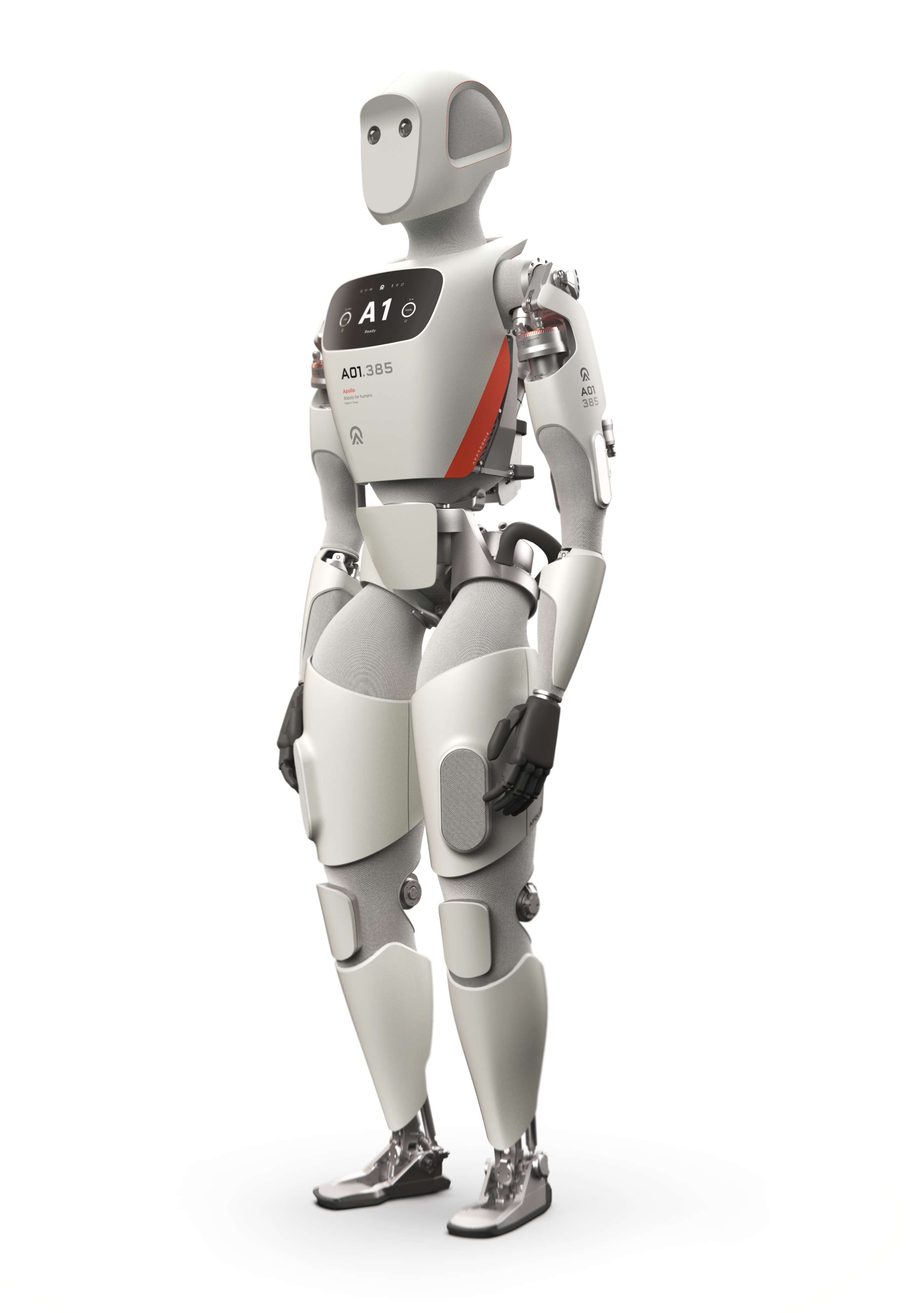
If Gulf capital were quietly re-aligning against Chinese hardware specifically, you would expect the counterexample to be rare. It is not. In February, the Qatar Investment Authority joined a US$520 million extension to Austin-based Apptronik's Series A, a round that also included Google, Mercedes-Benz, and John Deere, and that valued the American humanoid maker at more than US$5.5 billion. Qatar's fund did not choose Apptronik because it distrusts Chinese robotics; it chose Apptronik because Apptronik was, at that moment, the strongest bet in a specific product category. Stone Venture chose Genisom for the identical reason, on the Chinese side of the ledger.
That is a sharper claim than "Gulf money diversifies." It says Gulf sovereign capital is treating humanoid and quadruped platforms as ordinary global merchandise, sourced on capability and deployment fit, in a market where the same money treats chips and cloud infrastructure as instruments of alliance management. One robot, two rulebooks, and the rulebook that applies depends entirely on what sits inside the machine, not who is writing the check.
The Riyadh Weekend That Made the Split Impossible to Miss
Saudi Arabia's LEAP technology conference, held in Riyadh in early September, produced a cluster of deals that read almost like a controlled experiment in this thesis. WeRide, the Chinese autonomous-vehicle company, announced plans to put up to 10,000 robotaxis on Riyadh's streets by 2030. The Public Investment Fund's AI arm, HUMAIN, commissioned an Arabic-language model from China's MiniMax, even as HUMAIN separately builds compute partnerships with Nvidia and AMD on the chip side of its business. And a Dubai-based company, No Competition Infinity Gaming, signed a five-year framework with Jiangsu Yunmu Intelligent Manufacturing for contractual capacity of up to 10,000 humanoid robots a year, an agreement its own terms describe as subject to "technical validation" and expanding use cases rather than firm, priced orders. That last one is closer to an option than a purchase, and it should be read that way, but the fact that a gaming and entertainment company felt free to sign it at all, without the review a chip deal of similar size would attract, is itself the finding.
None of these four deals, WeRide, HUMAIN-MiniMax, the Dubai capacity framework, or Genisom's Series B, went through anything resembling the scrutiny G42 absorbed to keep its Nvidia access. A finished robot, today, moves through Gulf capital and Gulf procurement with a freedom that a data-center chip has not enjoyed in over two years.
Why the Chip Line Will Not Hold at the Robot's Skin
The obvious objection is that this is a snapshot, not a permanent settlement, and it is right to be skeptical of any line that has never been tested. A humanoid running a frontier vision-language-action model, streaming sensor data back to a training cluster, drawing on the same compute stack that triggered G42's divestment, is a fundamentally different national-security object than a sealed quadruped walking a pipeline with no cloud connection. Export-control frameworks built around semiconductors have historically expanded to cover the systems those semiconductors end up inside, from drones to routers to, as of this July, "foreign-produced advanced robotic devices" on the US FCC's own Covered List. It would be a mistake to assume the finished-robot exemption Gulf capital is currently exploiting is a permanent feature of export-control policy rather than a temporary gap regulators have not yet closed.
Watching this from the Philippines, a vantage point inside neither Washington's nor Beijing's orbit, the lesson I take from it is not which side Gulf money has picked. Gulf money has not picked a side at the hardware layer, and is unlikely to be forced into picking one until robots start shipping with the same compute payload that made chips a chokepoint in the first place. Procurement teams evaluating a Chinese quadruped or a US humanoid for a Gulf-adjacent deployment should watch the actuator and the sensor stack that ships inside the machine, not the passport of the company that built it, because that is the variable regulators will eventually reach for next.
The G42 divestment closed one door. Genisom's Series B, Apptronik's Qatari check, and a Riyadh weekend of robot deals all walked through a door that is still, for now, wide open. Whoever writes the next export-control rule gets to decide how long that stays true, and nothing in this week's deal flow suggests anyone in Washington, Beijing, or the Gulf capitals themselves has settled that question yet.
This column reflects the author's own reading of public company disclosures, funding announcements, and reported deal terms. It is for general information purposes only and does not constitute investment, financial, or legal advice.
Hero image credit: Apptronik.